Big Tech’s military bet is paying off


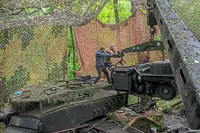
A photo provided by the US Central Command showing Lucas drones made by SpektreWorks. After years of criticism and financial risk, start-ups are generating rewards from their investments in defence tech. — US Central Command via The New York Times

AS the conflict in the Middle East conti­nues, intelligence gathered by the Pentagon is being analysed by technology from an artificial intelligence company on a system run by the data analytics firm.

Drones created by a defence tech startup in Arizona have emerged as a key piece of the US arsenal.

And anti-drone systems made by a California startup have been deployed to protect US forces in the region.

Silicon Valley made risky bets in recent years on developing defence-related technology and providing services to the US military establishment.

Now those bets are paying off.

From behemoths providing data systems to smaller companies offering novel weapons, tech firms such as Google, Palantir and OpenAI have found themselves at the heart of the conflict.

Their central role amounts to an “I told you so” moment.

For years, the tech industry’s efforts on defence-related offerings faced scepticism and opposition, with no clear or immediate business rewards.

Many Silicon Valley engineers opposed the use of powerful technologies for killing, battles and other military purposes – concerns that persist.

Despite those fears, venture capital firms have poured billions of dollars since the 2010s into startups building drones, lasers and other military systems.

In January, Andreessen Horowitz, which was founded by entrepreneurs Marc Andreessen and Ben Horowitz, closed a new, almost US$1.2bil fund to invest in defence technologies.

In recent years, defence tech startups often ploughed ahead with weapons prototypes before they had official government contracts. At the same time, executives including Alex Karp, CEO of Palantir, and others started cultivating more ties with the government.

Former president Joe Biden welcomed military technology, and President Donald Trump has further embraced it.

Last year, Trump issued an executive order calling for the military to update its system for acquiring technology so it could incorporate new tools faster.

His domestic policy bill last year allocated US$1 trillion to defence in 2026, including for technology offered by defence tech firms.

Now the war has cemented that work, most likely leading to more business between the tech industry and the military.

In February, OpenAI CEO Sam Altman agreed to bring his company’s AI systems onto the Pentagon’s classified networks. Google signed a deal to bring AI bots known as “agents” into the Defence Department.

More recently, the US Army said it had awarded Anduril, a defence tech company, a US$20bil deal for AI-backed software to run on military systems.

“People are pointing to this moment as a proof point,” said Garrett Smith, a former lieutenant-colonel and the CEO of Reveal Technologies, which makes mapping technology for the army.

“It has shown us that in creating and selling these technologies to the US military, we are on the right track,” he added. “We have made the right investments.”

Pentagon officials said they were exci­ted about how well new technology like AI-related systems had performed in the US-Israeli conflict against Iran.

Two officers who were not authorised to speak publicly said the conflict was an inflection point in showing how modern technology could work with existing military systems.

But Amos Toh, a senior counsellor at the Brennan Centre for Justice, a New York non-profit focused on law and public policy, cautioned that this gung-ho attitude might lead to little oversight of new systems and an overreliance on just a few tech companies.

The military and the government need “to take a look at the dependencies it is creating”, Toh said.

OpenAI, Google and the Pentagon did not respond to requests for comment.

(The New York Times has sued OpenAI and Microsoft, accusing them of copyright infringement of news content related to AI systems. The two companies have denied those claims.)

Technologies from defence startups are also being deployed.

A system that uses drones to counter other drones, called Merops, developed as a venture project by former Google CEO Eric Schmidt, has become instrumental to protecting US assets in the conflict.

The system, which is small enough to be launched from the back of a pickup truck, uses AI to seek out and intercept drones before they can reach their targets.

Schmidt’s office declined to comment.

Small and lightweight drones called Lucas from SpektreWorks, a startup in Phoenix, have also been deployed in the battlefield.

The Lucas drones, which mimic Iran’s Shahed drones, are designed for one-way flights. They have been effective in overwhelming missile defence shields and engaging in the type of drone warfare first made popular in Ukraine, a US official said.

SpektreWorks declined to comment on its work with the Pentagon.

US Central Command posted footage of rows of the drones as they were readied to be sent to US forces.

“I’d like to point out these drones were originally an Iranian design,” said Admiral Brad Cooper, the head of the Central Command.

“We took them right back to America, made them better and fired them right back.” — ©2026 The New York Times Company

This article originally appeared in The New York Times


Get 20% OFF The Star Digital Access

Monthly Plan

RM 13.90/month

RM 11.12/month

Billed as RM 11.12 for the 1st month, RM 13.90 thereafter.

Best Value

Annual Plan

RM 12.33/month

RM 9.87/month

Billed as RM 118.40 for the 1st year, RM 148 thereafter.

Follow us on our official WhatsApp channel for breaking news alerts and key updates!

Next In Focus

Ukraine ruins Crimean summer
Open war, closed border
The world’s unlikeliest EV frontier
Where the birdsare the business
Plight of the mothers who search
Bowhunting ‘Frankenfish’
City in the kill zone
One strait, one weakness
Health or hunger in the killer heat
Fighting fire with wine

Others Also Read