FROM bolstering public engagement to upholding journalistic standards and rights, the Malaysian Media Council’s (MMM, for Majlis Media Malaysia) goal is clear: to become the foremost media authority in the country through industry self-regulation, akin to several of its counterparts abroad.
And although it may only be less than a year old – following its establishment under the Media Council Act 2025 – the MMM has already roped in representatives from mainstream media organisations, journalists’ groups, civil society and academia to help chart its trajectory.
It is now expected to play a key role in shaping ethical practices within the industry, including in the use of artificial intelligence (AI), while providing an avenue for the public to raise concerns about media conduct, reflecting a broader push for accountability and transparency in journalism.
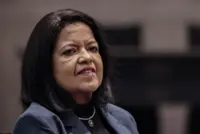
MMM secretary Radzi Razak speaks to Sunday Star about the council’s priorities, how it plans to handle public complaints and the broader role it hopes to play in strengthening journalism in Malaysia.

> The council held its board meeting in January 2026. What were the main priorities or decisions that came out of that meeting?
We formalised our four committees, which are the Code of Conduct and complaints committee, the law reform and media literacy committee, the media sustainability and professional development committee and the council funding and development committee.
We’re planning our first programme after Raya, and our confirmed programme now is the advocacy with the members, where we’re going to all the states to meet our members and advocate our Code of Conduct and the complaints mechanism to the public.
Our members have to agree and buy into the Code of Conduct.
In the end, if they are members, then there is a sort of contract.
We defend them and they have to adhere to the Code of Conduct. It’s easier than just enforcing.
Everything is there but for now our biggest product that is easier for the members and the public to see is the complaints mechanism.
So anyone who wants to complain [about media-related matters] should come to us.
> Can you give us an example of a case of complaint that the council handled?
Someone complained that their image was used inappropriately by a news portal.
So we went to the news portal and said, “This is the complaint against you. Do you have anything to say?”
And the news portal said, “OK, we are going to say sorry.”
It wasn’t even an official complaint, so for this mediation, we can act even without an official complaint.
Another example is that an editor from a news portal called to say they think another news company is stealing their stories, and I offered, “Do you want to lodge an official complaint or do you want to talk to them first to ask about the matter?”
So they agreed to talk to the other party first, and after discussion, everything was resolved.
It wasn’t an official complaint but mediation works because they went through the media council.
We are the mediator, a bit of a regulator and a bit of a defender.
> So even if it’s a complaint from the public seeking compensation, not just an apology, if they go through the council, can you take it up to that level?
Technically we can.
But for example, other media councils, like the one in Indonesia, have a memorandum of understanding with some authority, like the police, to ensure that if it involves the media, just talk to the council first before going through the authority.
So maybe in the future we will do that.
But having that sort of power [to enforce] without the presence or backing of the industry is wasted.
You don’t want to be another MCMC [Malaysian Communication and Multimedia Commission] or MACC [Malaysian Anti-Corruption Commission].
You want to be something that raises the standards.
So to do so, you have to cooperate.
You have to ensure the message is: “Come join us, and we will walk through this together, think about this together, and go through this together.”
As opposed to just being some sort of authority body that just says, “Hey, you cannot do this, you cannot do that”.
I mean, there’s always the carrot-and-stick approach.
How much can you use the stick?
How do we move it forward? Do we need to be just another authority?
But we are not on the side of the government. We are on the side of the industry.
We want the standards to be there. That’s where the word “self-regulation” came from.
> Other than certifying journalists, what else do you think the council should focus on?
It’s not certifying journalists. It is to accredit and train journalists who can do the work.
Again, for example, in Indonesia, they have an exam every year where you go through the examination set by their press council, and they will certify you.
It’s not compulsory, but having that means you are better than someone who doesn’t have that.
During our long, long, long discussion for this Act, Japen (Department of Information) didn’t want to relinquish their powers [of accrediting journalists].
However, they said they will use the media council as part of the body to help accredit journalists.

> How does the council ensure ethical standards are upheld across different platforms, while managing journalists’ accreditation?
The secret is our members. Our members are very diverse.
We have about 70% of the mainstream media as members now.
They themselves are ensuring that they’re on top of the problem.
For journalists and media groups, we have diverse representatives.
We have the very vocal groups like Geramm [Gerakan Media Merdeka] and we have NUJ [National Union of Journalists], we have CIJ [Centre for Independent Journalism], we have academicians, and we have PR people.
So we will speak up, but we are not defending things that should not be defended.
> When it comes to ethics, does the media council intend to come up with guidelines for AI use?
Yeah, we are. We have a committee looking at it, and some of our members are in several discussions with academics and with the Digital Ministry.
We are focusing mostly on the originality of work.
Our members have their own AI standards, and they are bringing this up to ensure we adopt the best policies, but we are still waiting for some discussions with the academics.
For now it is still under the Code of Conduct, but we are going to endorse it with the board.
> Now that there is growing public scrutiny and pressure on the media, how is the media council helping journalists and media organisations navigate this landscape?
Same as before. The media council are the ones who will speak up even when they are being scrutinised.
For example, in the Rex Tan case, we agreed that it was controversial. That is why we defended it.
The Rex Tan case was very detrimental. It’s not just about journalists.
You have to remember during the Rex Tan case, it was also about FreeMalaysiaToday (FMT).
FMT has been scrutinised so much that even their shareholders were a bit afraid because of the relentless harassment, but we do defend them because it’s their right.
And remember there were some media [entities] that were famous for not paying their staff; they are not our members now, and we never defended them.
> Does the council intend to establish any sort of crisis response or advisory mechanism for situations where major reporting errors or enforcement actions have occurred?
Yes. We are just waiting for the board to endorse it.
We don’t want to be seen as a reactive council.
We want to be really proactive, like, OK, this is happening, so we are ready to act and give out statements when necessary.
During the Rex Tan controversy, our secretariat was everywhere, talking to people and ensuring things were OK.
Our priorities at that time were not statements but making sure these things were being handled correctly.
The public might not see it, but the ones who are going through it, the people in the industry, will see it.
> How does the council define its boundaries involving international media operating in Malaysia, including when there are reports of issues related to international media?
Our stand is always that you don’t arrest media members for doing their job.
But there is also an evaluation of what is happening.
We could always state our principles, which is to let the media do its job. Don’t arrest the media and don’t stop the media from doing its job.
They are not members, but we can still defend our principles in journalism.
We can’t defend anyone if they break Malaysian law, because we are still Malaysians.
We can state our principles, but it doesn’t mean we have to agree with everything.
It would be on a case-by-case basis.
People should know that we are open and we are transparent.