BEFORE dawn last Saturday, Caracas went dark. By sunrise, Nicolas Maduro was no longer Venezuela’s sitting president, but a detainee en route to New York, seized by US Delta Force in what Washington insists was a law enforcement operation. The image was blunt and the message blunter. In a world that once prized restraint, force has returned as a primary language of statecraft.
US President Donald Trump framed the operation as both a necessity and a warning, pledging that the US would “run” Venezuela until a proper transition could be arranged.
For South Korea, this is not a distant Latin American drama. It is a predawn alarm.
The seizure of a sitting head of state by military means, conducted without congressional authorisation or international mandate, punctures assumptions that have underpinned the global order for seven decades. Export-driven allies that thrived on predictability must adjust to volatility.
The first test lies in geopolitics. When borders and leaders can be altered by force, the vulnerability of states without strategic depth grows. Beijing has already denounced the Caracas operation as a violation of sovereignty and international law, echoing language Washington has long used against Chinese actions near Taiwan.
The risk is not immediate imitation, but moral justification. If the United States can unilaterally “clean up” its neighbourhood, rivals may feel licensed to apply the same logic closer to home, whether in the Taiwan Strait or the South China Sea. South Korea sits uncomfortably close to these fault lines, allied to Washington yet economically intertwined with China.
Security concerns sharpen this point. North Korea’s Kim Jong-un wasted little time responding to the Caracas shock. On Sunday, he oversaw a hypersonic missile launch and explained why. The spectacle appears to have reinforced Pyongyang’s belief that nuclear weapons are the only reliable insurance against external coercion. Denuclearisation diplomacy, already fragile, has dimmer prospects.
Economics offers fewer immediate shocks but deeper currents.
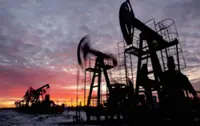
Markets registered a brief tilt toward safe assets, yet oil prices remained steady. Venezuela holds the world’s largest proven reserves, but its output is barely one million barrels a day and constrained by sanctions. South Korea’s direct trade exposure is negligible.
More revealing was Trump’s assertion that Venezuela’s oil wealth would serve as “reimbursement” for US damages. The language signals a shift toward openly transactional, even predatory, energy diplomacy, where access and supply are conditioned on political alignment. For South Korea, energy security can no longer rest on assumptions of neutrality. Diversification across liquefied natural gas, nuclear power and renewables is not just economic prudence, but strategic necessity.
Venezuela also serves as a cautionary tale. Decades of populist redistribution, nationalisation and institutional erosion turned a resource-rich state into an economic ruin marked by hyperinflation, poverty above 80% and mass emigration. The lesson is not ideological, but practical. Fiscal discipline, industrial vitality and the rule of law are national security assets.
All this converges on Seoul’s immediate choices. Self-reliance and multilateralism must be combined. Strengthening intelligence and defence capabilities should proceed alongside tighter coordination with Japan and other partners through flexible, purpose-driven groupings. President Lee Jae Myung’s diplomacy will test this balance. Pressure to “choose sides” will intensify. The country must respond with clarity that its security is non-negotiable.
The Caracas operation opens a rougher era, where alliances are more transactional and force more explicit.
For South Korea, resilience will hinge on reading hard realities clearly and acting with disciplined pragmatism in a world that has rediscovered brute power. — The Korea Herald/ANN