




WITH the Philippines as the 2026 Asean chair, it might impress upon many that security issues central to the Philippines like the South China Sea (SCS) will take centre stage in Asean’s agenda. Now that the ball is in the Philippines’ court, there is a natural expectation from its domestic audience that there will be substantial progress on the Code of Conduct of (COC) in the SCS to prevent further incidents such as restrictions of fishing activities and resupply missions, water-cannoning usage and ramming manoeuvres.
As chair, therefore, the Philippine government would be remiss not to maximise its convening powers to shape the outcome of the COC.
No less than Philippine President Ferdinand Marcos Jr has expressed his hope for the COC to be finalised and for Chinese President Xi Jinping to be present in Manila in its signing. Notably, regardless of the chairmanship, the Philippines has consistently advocated for a legally binding COC to enhance regional stability, which also redounds to the benefit other South-East Asian claimant-states and maritime stakeholders such as Malaysia, Vietnam and Indonesia.
With an effective COC and stable SCS, there will be less incentive for extra-regional powers to intensify their military posturing and minilateral activities. Certainly, South-East Asia or Asean is not just about the SCS or high politics. A wide range of issues affects individual member states and the region as a whole. Against this backdrop, the Philippines must strike a balance in setting the agenda and ensure that its plans and programmes align with the Asean Community Vision 2045.
The Philippines’ chairmanship will be shaped by three main factors: its own concerns, interests and priorities; continuity with Malaysia’s agenda as 2025 Asean chair and ongoing intra-Asean, regional and global challenges.
At the official launch of the Philippines’ Asean chairmanship in Manila last November, under the theme “Navigating Our Future Together”, President Marcos Jr outlined three strategic priorities: peace and security anchors, prosperity corridors and people empowerment.
First, peace and security anchors involve the use of emerging technologies such as artificial intelligence for early warning systems, maritime domain awareness, humanitarian assistance and disaster relief and climate risk management. This is especially critical for the Philippines given its frontline exposure to increasingly frequent and intense typhoons.
Second, prosperity corridors will leverage AI for trade facilitation and digital transformation to boost regional competitiveness and support micro, small and medium enterprises (MSMEs). This should go hand in hand with Green AI (eg renewable-powered green data centres, energy and grid digitalisation and water-efficient infrastructure).
Third, people empowerment will focus on education, healthcare and youth empowerment. President Marcos Jr has also designated Foreign Affairs Secretary Tess Lazaro as the chair’s special envoy to Myanmar and reaffirmed the importance of the five-point consensus.
In relation, the secretary announced that the Philippines’ Priority Economic Deliverables (PEDs) will focus on strengthening trade and investment linkages, accelerating digital transformation, integrating Asean’s MSME development agenda, harnessing the creative economy and promoting sustainable and inclusive growth in line with the Asean Economic Community Strategic Plan 2026–2030.
Key PEDs also include the conclusion of the Asean–Canada Free Trade Agreement (ACAFTA), the upgrading of the Asean–Korea Free Trade Agreement (AKFTA) and the signing the Asean Digital Economy Framework Agreement (DEFA), the world’s first regional digital agreement. In fact, the proposed FTA with the European Union should also be actively pursued.
Additionally, the Philippines seeks to establish the Asean Center of Excellence for MSMEs and Creative Industries and to operationalise Asean Single Window 2.0.
As for the sociocultural pillar, it encompasses the Asean Network for Family Development, digital literacy initiatives for youth and the development of an Asean Strategic Plan on the Environment to accelerate action on climate change, biodiversity loss and transboundary pollution.
Malaysia’s chairmanship delivered several milestones that should be sustained or replicated. It facilitated the first-ever Asean –China–Gulf Cooperation Council (GCC) Summit, Regional Comprehensive Economic Partnership (RCEP) Summit, advancing the Asean Power Grid project and the creation of the Asean Task Force on Geoeconomics.
It also oversaw upgrades to the China–Asean FTA (CAFTA 3.0) and Asean Trade in Goods Agreement (ATIGA), and brought BRICS leaders to attend the Asean Summit.
Based on these, Asean is neither a mere “talk shop” nor a “noodle bowl” of regional arrangements. Yet, Asean as a liberal institutionalist entity continues to suffer from political realist power plays, from the Myanmar crisis to the fragile peace between Cambodia and Thailand, which strain Asean unity.
Compounding these challenges are transnational scamming rings in Thailand and Cambodia involving the abduction of Chinese and Korean nationals, a problem that has also afflicted the Philippines. More broadly, great power politics, trade wars and Cross-Strait tensions persist, posing major concerns for Asean countries like Indonesia, Malaysia, Philippines, Thailand and Vietnam which have substantial number of migrant workers in Taiwan.
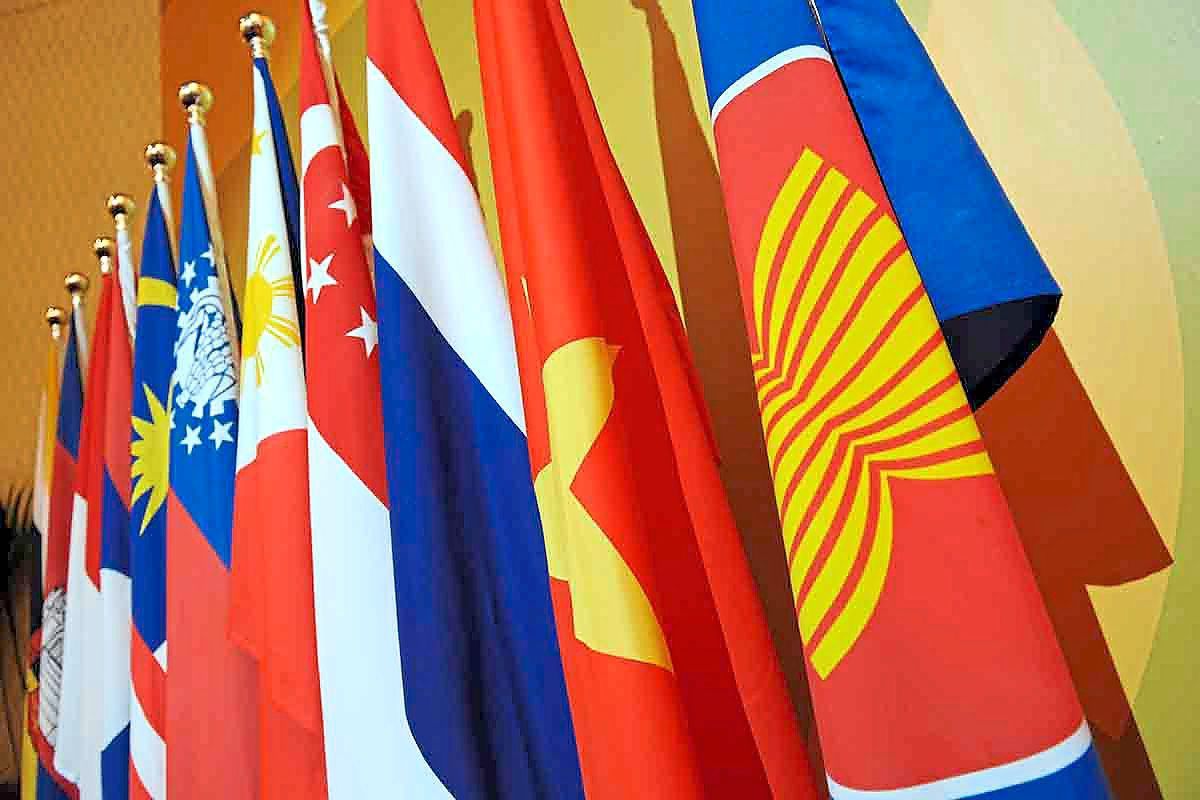
Strengthening “Asean Centrality” through diversification and hedging should incorporate economic security. Amid rising geopolitical risks, Asean needs to move beyond supply chain connectivity toward supply chain resilience especially on semiconductors and critical minerals.
This warrants closer integration among existing mechanisms and institutional platforms such as the Asean Framework for Integrated Semiconductor Supply Chain (AFISS), Asean Minerals Development Vision, Asean Minerals Cooperation Action Plan 2026–2030 (AMCAP-IV), Asean Minerals Investment Forum and Asean Ministerial Meeting on Minerals. Similarly, institutionalised cross-sectoral cooperation between Asean’s digitalisation efforts and Asean’s defence cooperation on Critical Underwater Infrastructure (CUI) security is imperative as the protection of submarine cables is a core cybersecurity concern.
With regard to the Palestinian issue, Secretary Lazaro has affirmed Asean’s stance for a two-state solution and welcomed the United Nations Security Council resolution establishing a transitional administration and an International Stabilization Force in Gaza as steps toward Palestinian statehood.
Finally, the recent signing of the Biodiversity Beyond National Jurisdiction (BBNJ) Treaty can be harmonised with the Asean Maritime Outlook, inter-regional cooperation mechanisms with Central Asia and the Americas can be formalised, and strategic partnerships with the EU and the UK can be forged as with other Asean dialogue partners.
The chairmanship is an opportunity for the Philippines to secure diplomatic gains, project soft power and bring Asean to greater heights. — The Jakarta Post/ANN
Aaron Jed Rabena is assistant professor at the Asian Center in the University of the Philippines. This piece was adapted from his presentation in a recent conference hosted by CSIS Indonesia and the ROK Mission to Asean.



