
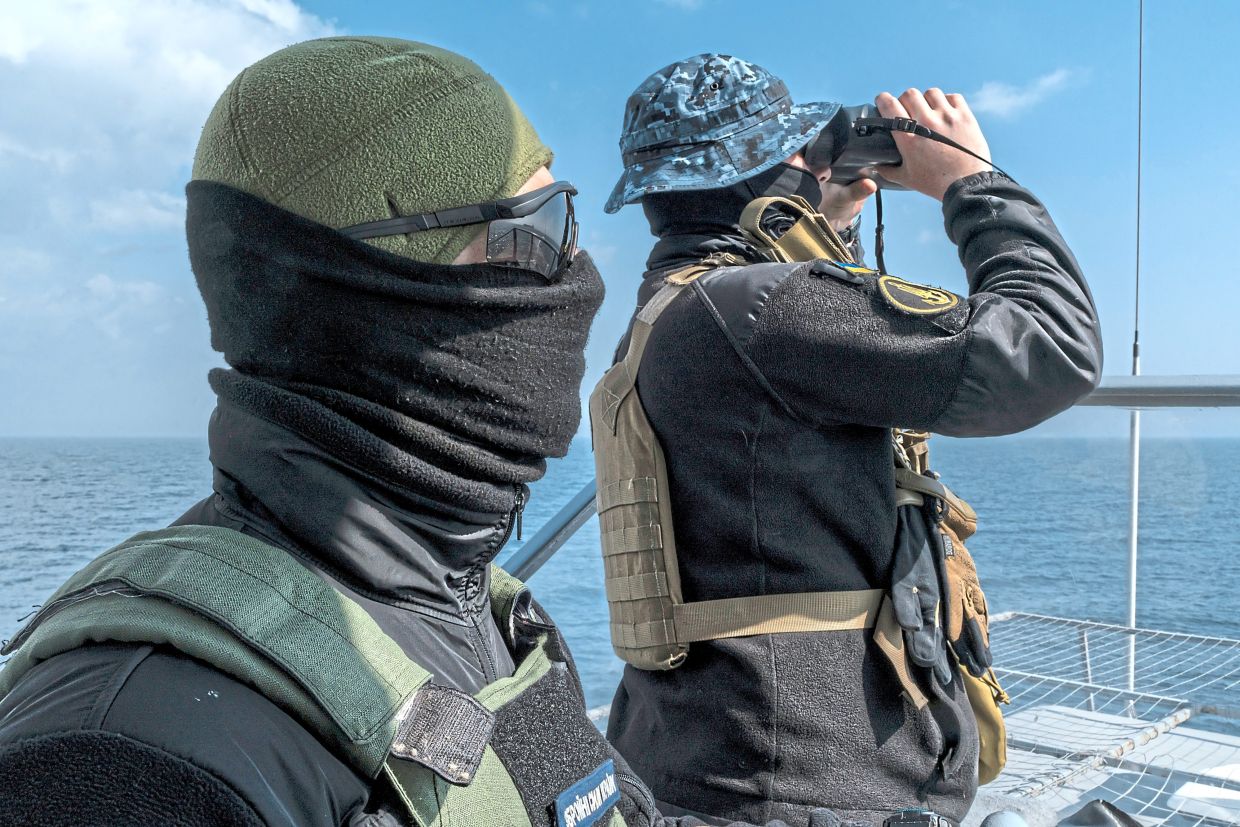
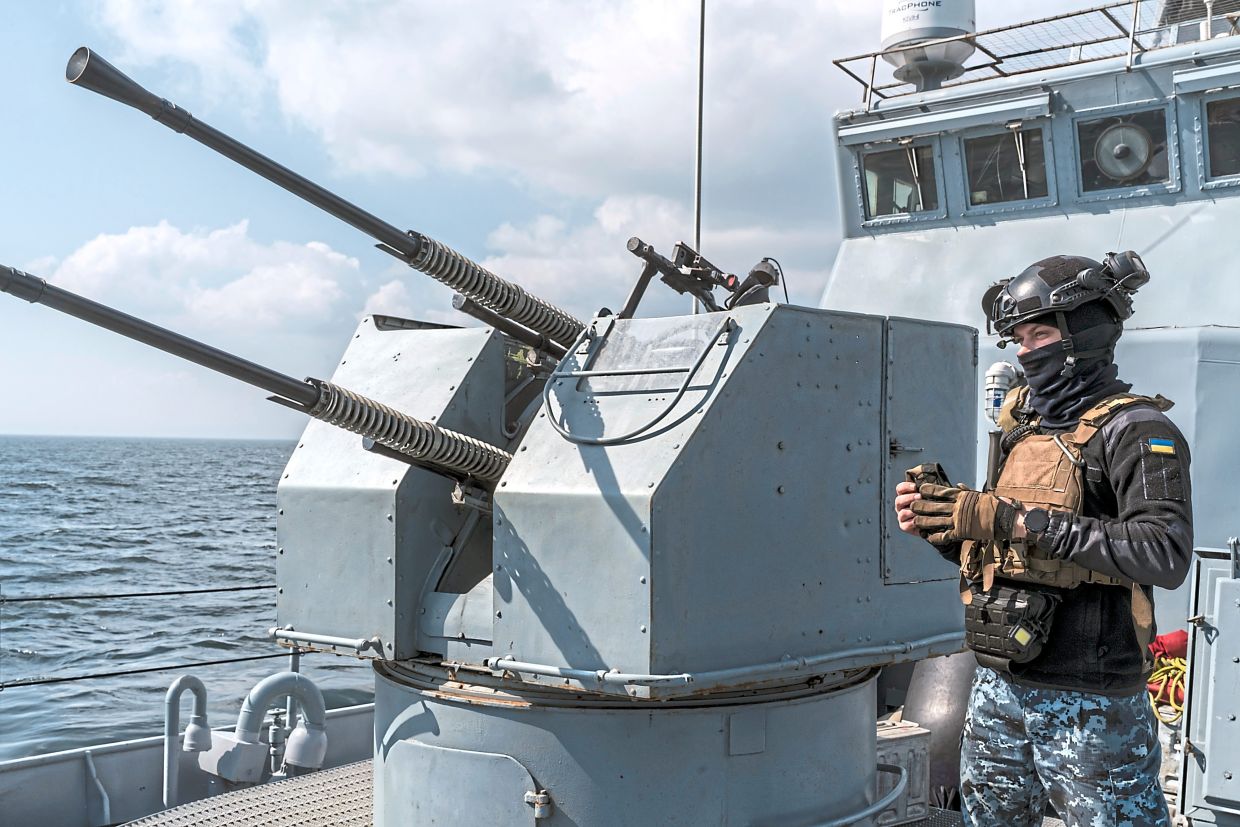
THE Ukrainian patrol boat sliced through the Black Sea, its 25mm dual-barrelled machine gun trained on the horizon. Russia’s warships were invisible but omnipresent.
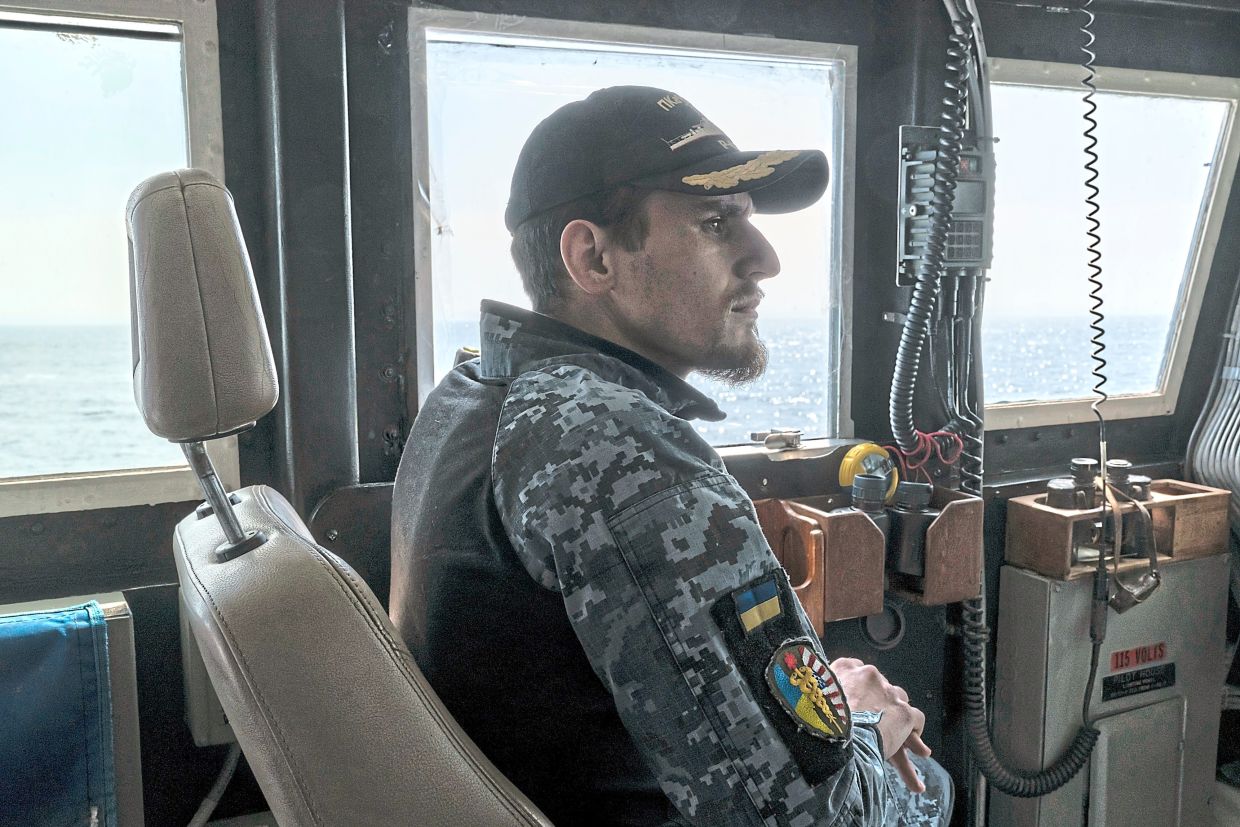
In the command room, Capt Mykhailo, 27, and his crew monitored screens mapping danger: colour-coded zones marked Russian minefields, while red arrows tracked enemy drones.
Their mission? To defend the waters off Odesa, Ukraine’s largest port, and keep commercial shipping alive.
It’s been relentless – clearing mines by day, downing drones by night – but after a year of patrols alongside other vessels, they’ve clawed back control.
Russia’s fleet now lurks far from Ukraine’s coast, enabling a resurgence in trade.
On April 1, their efforts paid off: a 226m Panama-flagged cargo ship glided toward port, ready to load grain.
“Big ship. Nice,” said Mykhailo, identified only by his first name per military protocol.
Last month, Ukraine and Russia tentatively agreed to a US-mediated Black Sea ceasefire.
Yet Kyiv’s naval victories have left Odesa divided: does a truce offer safety or surrender its only battlefield edge?
While both sides pledged to halt strikes, negotiations over implementation drag on.
For Odesa’s navy and businesses, the delay fuels debate. A ceasefire could shield ports from missiles – but might also force Ukraine to cede dominance in its sole area of advantage.
“I don’t want a ceasefire,” said Tariel Khajishvili, head of shipping firm Novik LLC. “The only side that wants this is Russia – they’ve lost control here.”
Moscow’s demands – lifting Western sanctions and reviving a UN deal letting Russia inspect Ukrainian ships – are “non-starters”, Kyiv insists.
“Why concede now? We’ve closed the Black Sea ourselves,” said Pavlo Palisa, a senior adviser to President Zelenskyy.
Distrust simmers. Both accuse the other of breaching a provisional pact to spare energy infrastructure.
And though Russian strikes on ports have paused since March, officials warn it’s too soon to declare peace.
Ukraine’s defiance underscores a dramatic reversal.
Three years ago, Russian ships prowled just 22km offshore, shelling Odesa’s outskirts.
Mykhailo recalled a strike levelling a reconnaissance post; residents piled sandbags, fearing invasion.
Though Russia failed to take the city, its blockade strangled Ukraine’s economy.
A 2022 UN deal reopened shipping – but allowed Moscow to throttle inspections. By 2023, barely two dozen ships monthly braved the corridor.
Kyiv fought back. Sea drones and missiles crippled over a quarter of Russia’s Black Sea Fleet, per British intelligence, forcing its retreat eastward.
Ukraine carved a new route hugging its coast before reaching Nato waters.
Now, Mykhailo’s US-donated patrol boat escorts commercial vessels, shielding them from mines and air attacks.
Traffic now exceeds UN-era levels, with Black Sea food exports nearing prewar volumes – 42 million metric tonnes shipped in 2023, 80% of pre-invasion totals.
Experts see scant upsides in a ceasefire.
Beyond halting port strikes – which have slashed Odesa’s export capacity by 20% – Kyiv gains little.
“Russia offers nothing new,” said navy spokesman Capt Dmytro Pletenchuk.
Moscow, analysts suspect, aims to reposition warships into central Black Sea zones – a move Ukraine vows to counterattack.
White House statements on the truce notably omitted guarantees for port security, deepening scepticism.
“A maritime ceasefire won’t happen,” said Andrii Klymenko of the Black Sea Institute of Strategic Studies. “Their demands are irreconcilable.”
Back aboard Mykhailo’s vessel, ceasefire hopes feel remote.
Machine-gun rounds sit stacked on deck; crews still blaze through ammunition nightly fending off drones.
Recently, they failed to intercept several drones – though none struck port targets.
“For me, nothing changes,” Mykhailo shrugged. “It’s fighting as usual.” — ©2025 The New York Times Company
This article originally appeared in The New York Times
Already a subscriber? Log in
Get 20% OFF The Star Digital Access
Cancel anytime. Ad-free. Unlimited access with perks.