
SHE was boxing for money. Even at 13 years old, she knew that.
Why else, said Janjaem Suwannapheng, would she commit to a sport in which a boy smashed her nose in, back when she was shorter than the stalks of rice in the fields near home?
“Anyone who becomes a boxer does it because they come from a poor background,” she said. “It hurts, it’s tiring, it’s exhausting.”
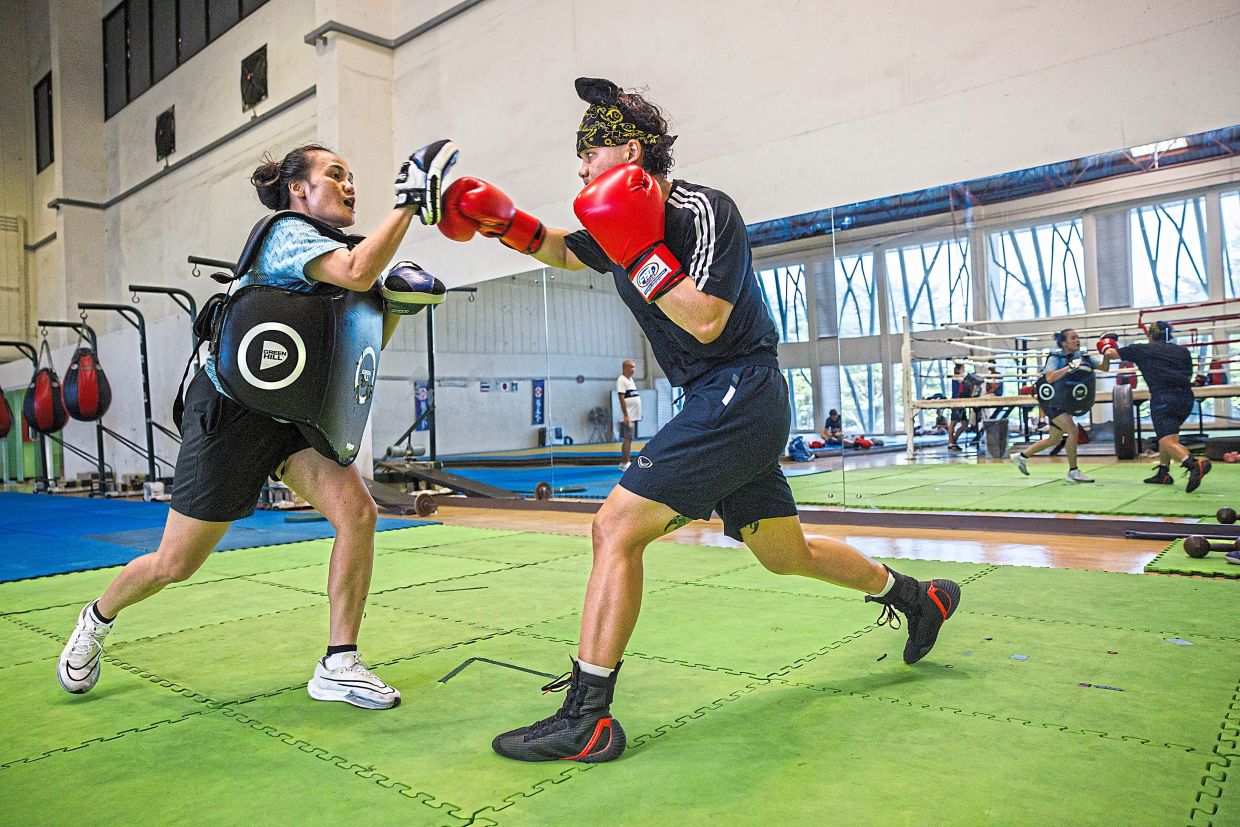
Of course, Janjaem is really good at boxing. She was the first girl to train at her local gym in Thailand’s rural northeast. She loves the sport now, she said.
At last year’s world championships, she won a silver medal in her welterweight division (66kg). She also represented the country at the Paris Olympics.
Boxing has saved her, said Janjaem. Now 24, she has bought land and gold for her parents and a pickup truck for herself. She scored an athletic scholarship to a university.
Her older brother, by contrast, left school at 15 to work with their father, a truck driver.
Boxing is a national passion in Thailand, where the confluence of hardscrabble living and a fondness for illegal gambling – on anything from cockfighting and buffalo racing to a fin-snapping standoff between Siamese fighting fish – has made the sport tremendously lucrative.
The local variety, Muay Thai, or Thai boxing, relies on lightning strikes with legs, knees, elbows and fists first honed by ancient warriors dedicated to the “way of the eight limbs”.
Muay Thai boxers wear no protective gear on their heads.
In 2018, a 13-year-old fighter died of a brain haemorrhage after he was knocked out in a bout. Legislators talked about tightening regulations for minors.
Not much happened. The sport continues to gird the illegal gambling economy.
In a country with the highest income inequality in East Asia and the Pacific, according to the World Bank, boxing allows young people to vault fast from subsistence farming to the climate-controlled privilege of Bangkok.
By winning bouts, Thai prisoners can earn early release, as one flyweight boxer who competed in the 2008 Beijing Olympics did after his sentence for robbery was commuted.
Thailand’s impoverished northeast, known as Isaan, cultivates the majority of the country’s boxers. The region’s labour force is scattered around the country and the world because there aren’t enough jobs back home.
Last October, about two dozen Isaan workers were kidnapped from Israeli farms near the Gaza Strip; more than 40 Thai farmhands were killed by Hamas.
“From working in the fields, from working in the sun, we get the fighting spirit,” said Thananya Somnuek, who started boxing as a young teenager in Isaan.
Thananya won a national championship at 16 and later a gold medal at the Youth Olympic Games. Her nickname in Thai is Butter, because her mother had a premonition that her daughter would one day go to a foreign country where people ate such foreign ingredients.
One of Thananya’s boxing squad teammates, another Isaan native, is nicknamed Cream. Both Butter and Cream made it to Paris.
Officially, children in Thailand can enter the Muay Thai ring at age 10. If they are healthy, they can box for money every 21 days.
But in Isaan, locals say, standards are more lax. As long as farmhands aren’t needed for the harvest, children can fight every 10 days.
“The strict rules are made by men sitting in air-conditioned rooms,” said Suthep Saengngoen, as he sat in his family’s sweltering Muay Thai gym, rubbing his grandson’s body with a cooling mentholated liniment. His six sons all fought, too.
The family is from Isaan, but the gym is in the outskirts of Bangkok, amid industrial warehouses and scraggly fruit farms. Boxing purses in the Thai capital are at least triple those back home.
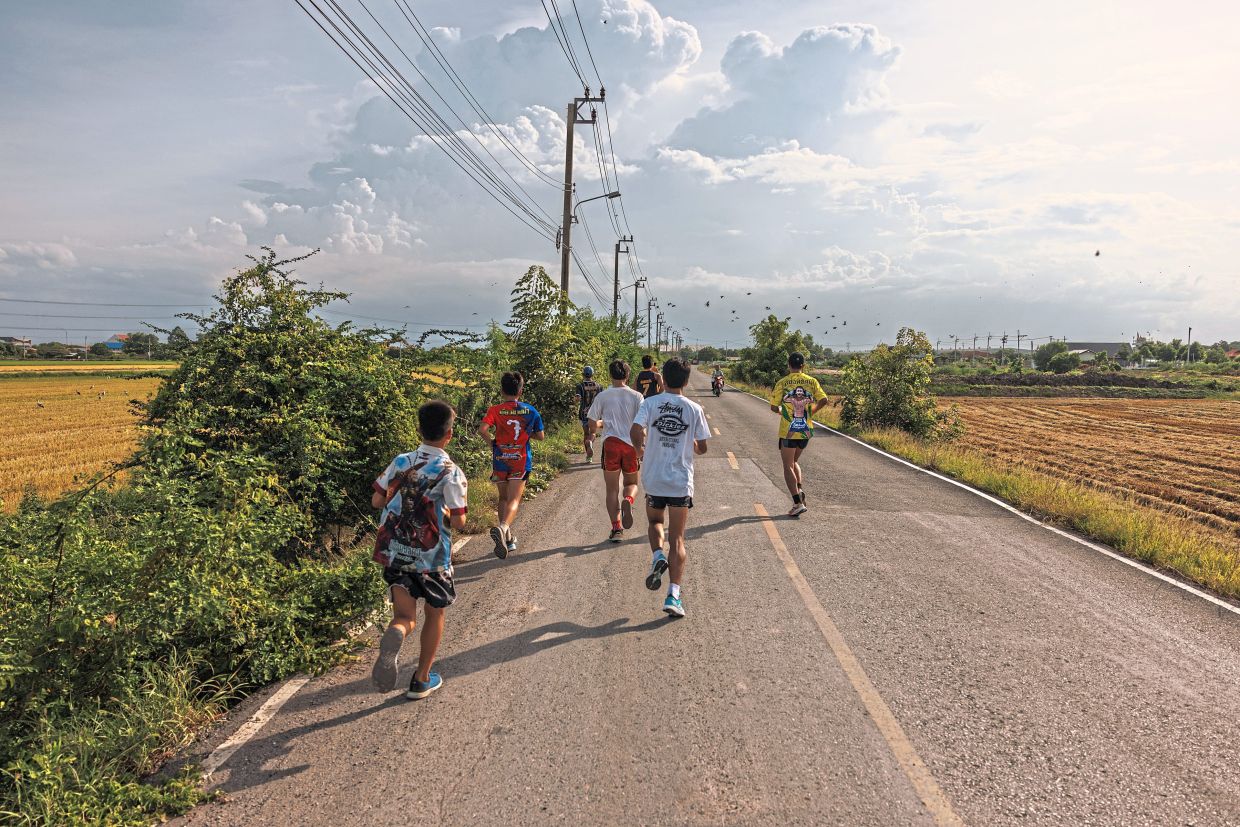
The children at the gym train from 5am to 7am, before going to school. Then they return for afternoon practice until the mosquitoes start swarming at dusk. That’s not counting 10km of running twice a day to build stamina.
By the end of the day, their young arms shiver from smacking the bag – and each other – hundreds of times. Hundreds of roundhouse kicks leave their legs quaking, too. Still, they return for more.
Nutthapol Anuphap, 10, has been boxing since he was three, he said. At five years old, he appeared on a local TV talent show. One of his Muay Thai videos has nearly two million views. His nickname is Fist.
“I’m going to be rich,” he said.
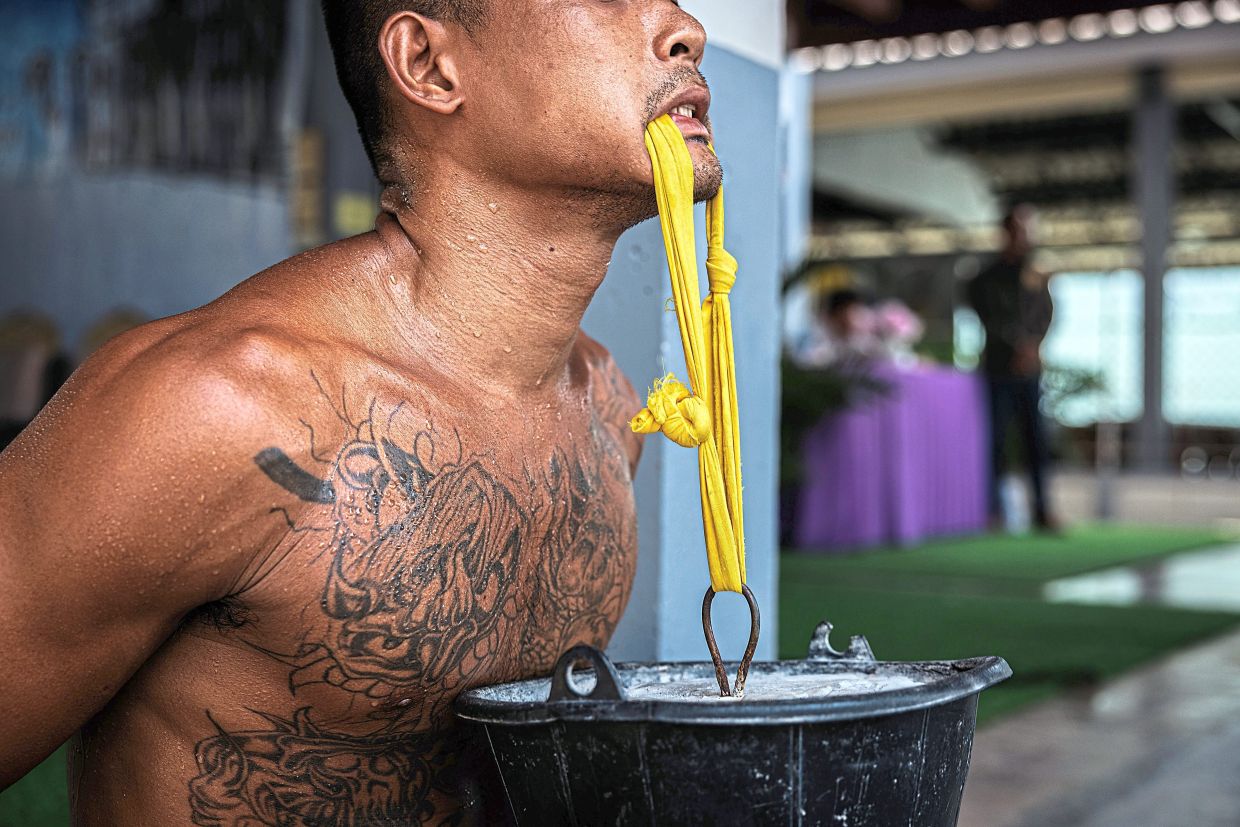
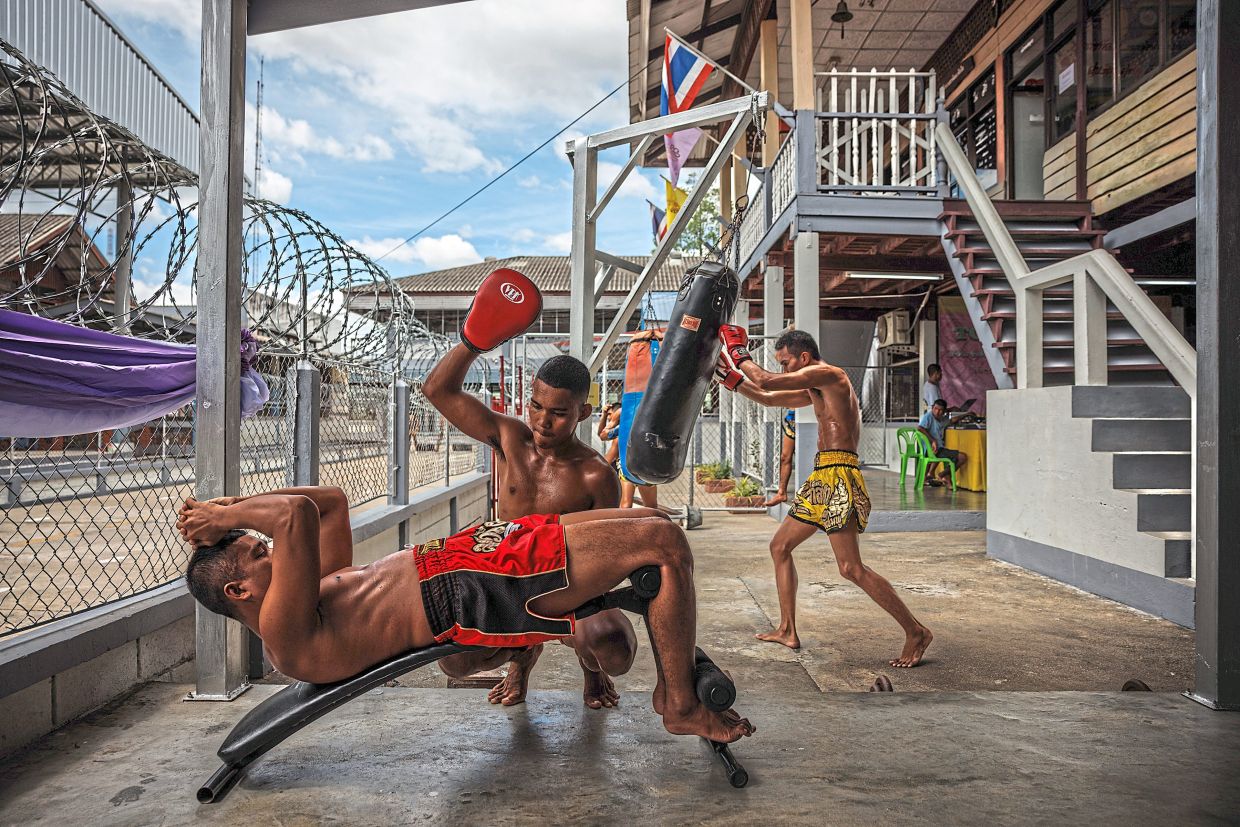
At the Chaiya District Prison in southern Thailand, in a concrete yard flanked by razor wire, a group of inmates heaved, kicked and punched in the day’s heat. One lifted a cement-filled bucket with his teeth, strengthening his jaw and neck with each 10kg rep.
Out of the more than 900 inmates at Chaiya, 15 men and five women have qualified for a prison Muay Thai programme, one of 10 in the country. They train for eight hours a day and receive extra rations of eggs, meat and milk.
“Muay Thai training gives the prisoners resilience,” said Sathika Samsri, the superintendent of Chaiya. “We want to build them into professional boxers or trainers who will not return to prison.”
The fighters can keep their prize money, and prison officials allow them occasional perks such as KFC spicy chicken wings, a local favourite.
Successful bouts at local stadiums, which they attend with prison officials in tow, count as good behaviour in parole hearings.
Jomyud Sowangchompu, 21, was sentenced to four years in prison for drug dealing and possession.
He left school in sixth grade and could only find a job making less than US$15 (RM66) a week during the fruit harvesting season, he said.
In a town match in June, he lost in the first round.
Still, he earned US$55 (RM244) for fighting, enough to pay for months of prison necessities: soap, toothpaste, laundry detergent, haircuts.
“I don’t have to ask my parents for money.
“It makes me feel like a better man,” he said.
At the Bangkok Muay Thai gym, the children and coaches seemed mystified by the Olympic boxing rule limiting participation to amateurs.
“What’s the point of boxing if you can’t make lots of money?” said Suthep, the gym family patriarch.
Besides, he said, without the kicks, knees and elbows of Muay Thai, Olympic boxing seemed like only half a sport.
Muay Thai demonstrations took place on the sidelines of the Paris Games. But the sport, while gaining in popularity overseas, has nowhere near the profile of international boxing.
And for all the money to be made – and gambled – in Muay Thai, the professional boxing circuit is far more developed. Many Olympic boxers retire and go pro.
Wijan Ponlid began training in Muay Thai at age nine, then won flyweight gold at the 2000 Olympics in Sydney.
A parade of elephants greeted him upon his return, and he was handed a cushy job as a police officer.
Today he’s a national coach.
“I switched to international boxing because with Muay Thai, I got to a point where I was the world champion, but I wanted to be part of a national team with the flag on my chest,” Wijan said. — ©2024 The New York Times Company
This article originally appeared in The New York Times
Already a subscriber? Log in
Get 20% OFF The Star Digital Access
Cancel anytime. Ad-free. Unlimited access with perks.