



THE wet suit was made for a person with two legs, but Volodymyr Kuzmenko felt ready to improvise.
He took the loose fabric hanging where his right leg had been and tied it into a knot at his hip.
Then he hopped down the dock on his left foot, jumped into the seat of a waiting speedboat and whooped with glee.
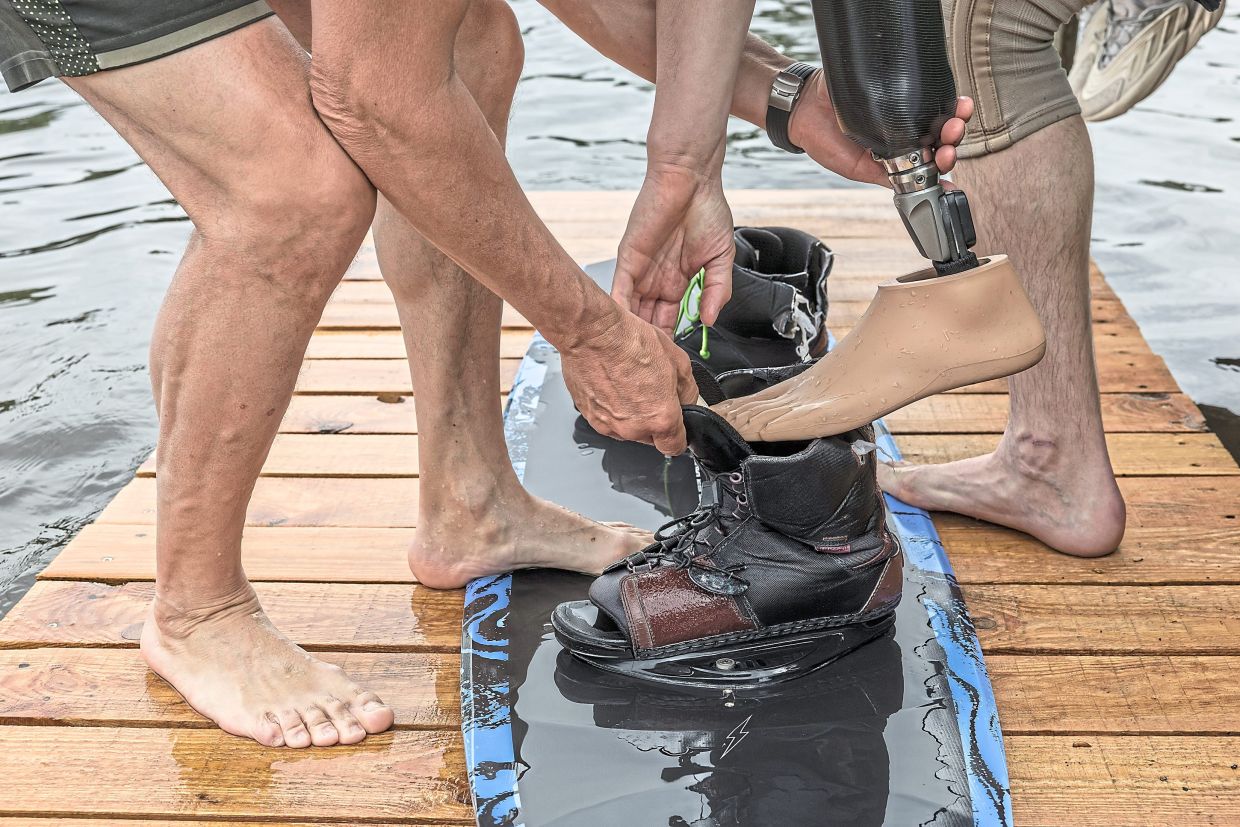
Kuzmenko, 29, a wounded special forces sniper, was about to try wakeboarding for the first time.
The early days of summer in Kyiv have sent Ukrainians who survived a brutal winter rushing to embrace the outdoors.
Parks are filling with picnickers and sunbathers are returning to the sandy banks of the Dnieper River, even as Russian bombardment of the capital continues.
As shorts and T-shirts replace fleece-lined pants and bulky parkas, the cost of Russia’s invasion is visible in the missing limbs of soldiers back from the front.
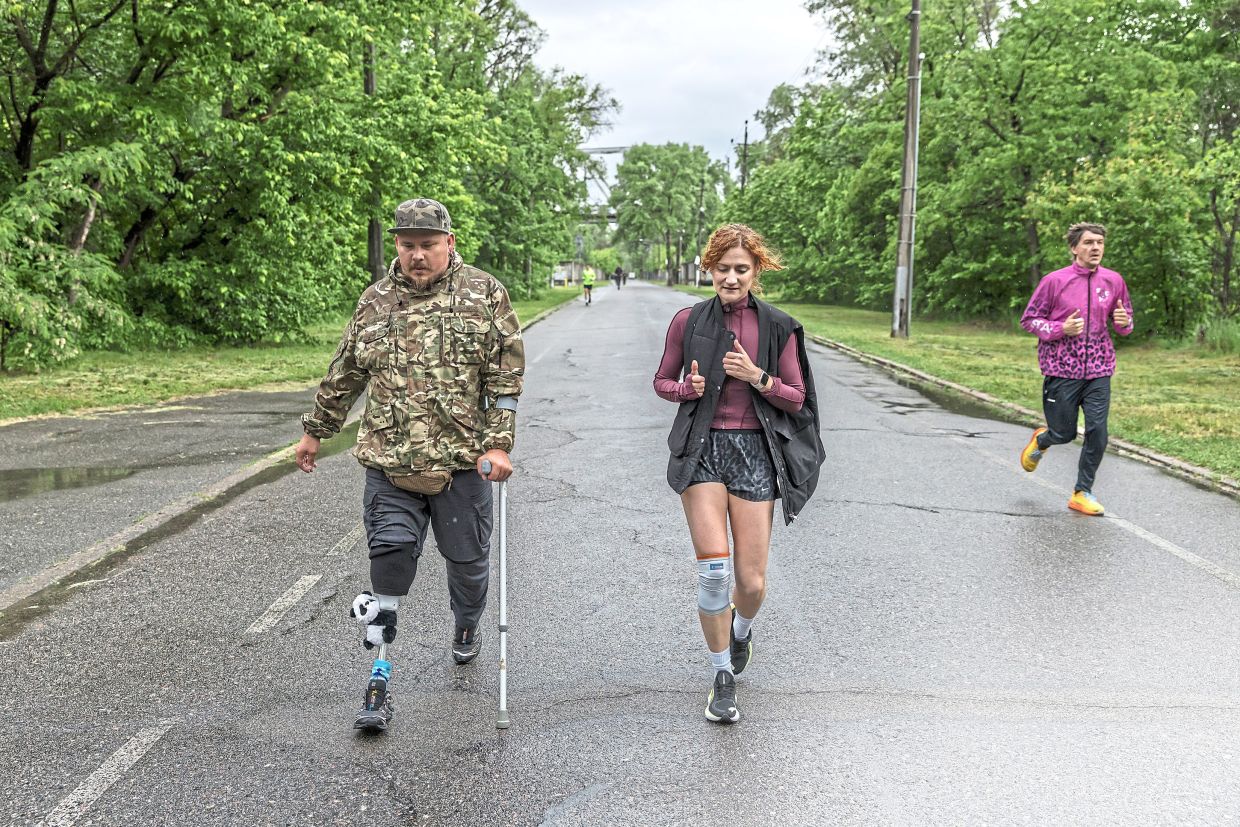
Ukraine keeps its toll of military dead and wounded secret, but Superhumans Centre, a clinic that provides prostheses and rehabilitation, estimates there are now at least 100,000 amputees in the country.
Some soldiers have suffered multiple amputations. Several have lost all four limbs.
Ukrainian doctors describe most amputations as minor wartime surgeries.
The harder part is typically what follows: first painful rehabilitation, then the wait for a modern prosthesis and later the adjustment to life in a society that no longer feels built for you.
Returning home to friends and family who cannot relate to combat can intensify feelings of isolation.
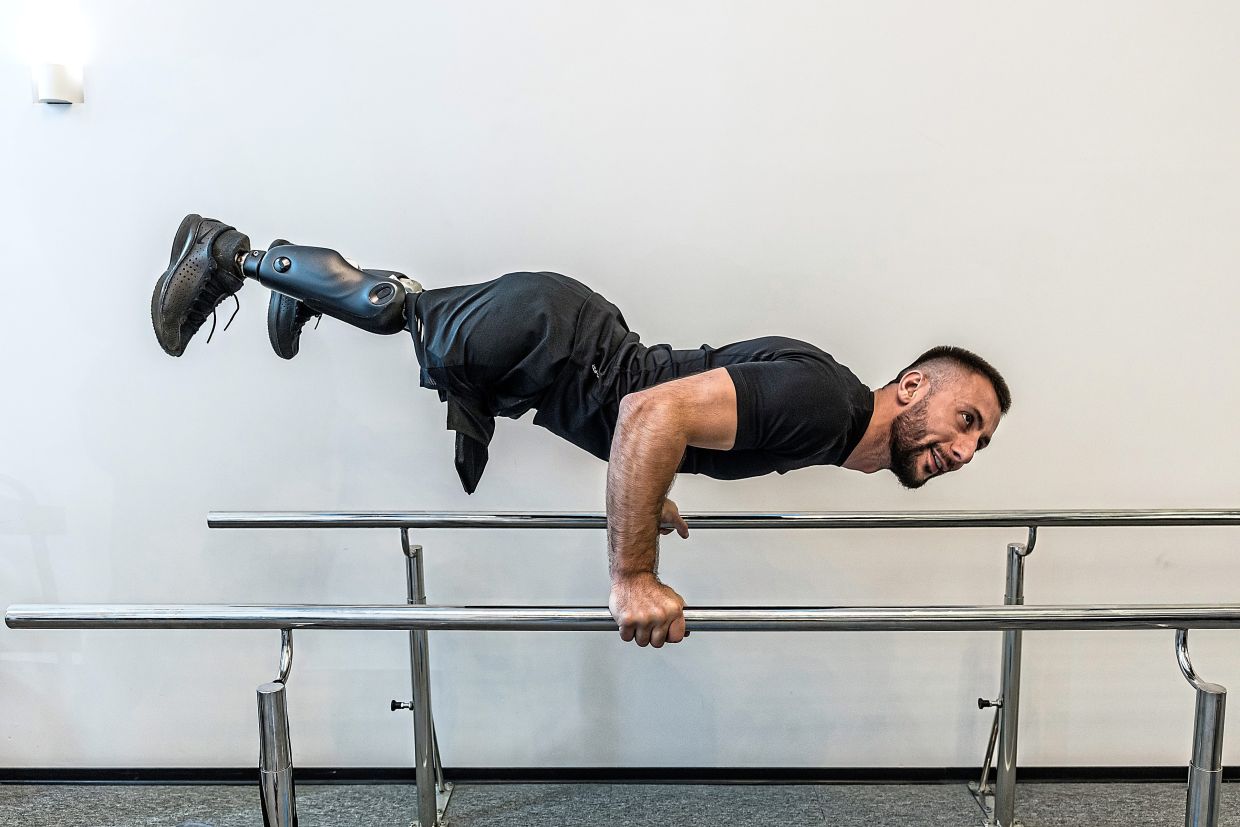
As Ukraine’s amputee population grows, soldiers like Kuzmenko are finding community in one another and in athletics they might have thought they had lost forever.
New initiatives, most of them privately funded, are bringing together Ukrainian veterans, including amputees who are finding joy in playing football on crutches, golfing, CrossFit training, paddleboarding, salsa dancing, motorcycle riding, running and hiking.
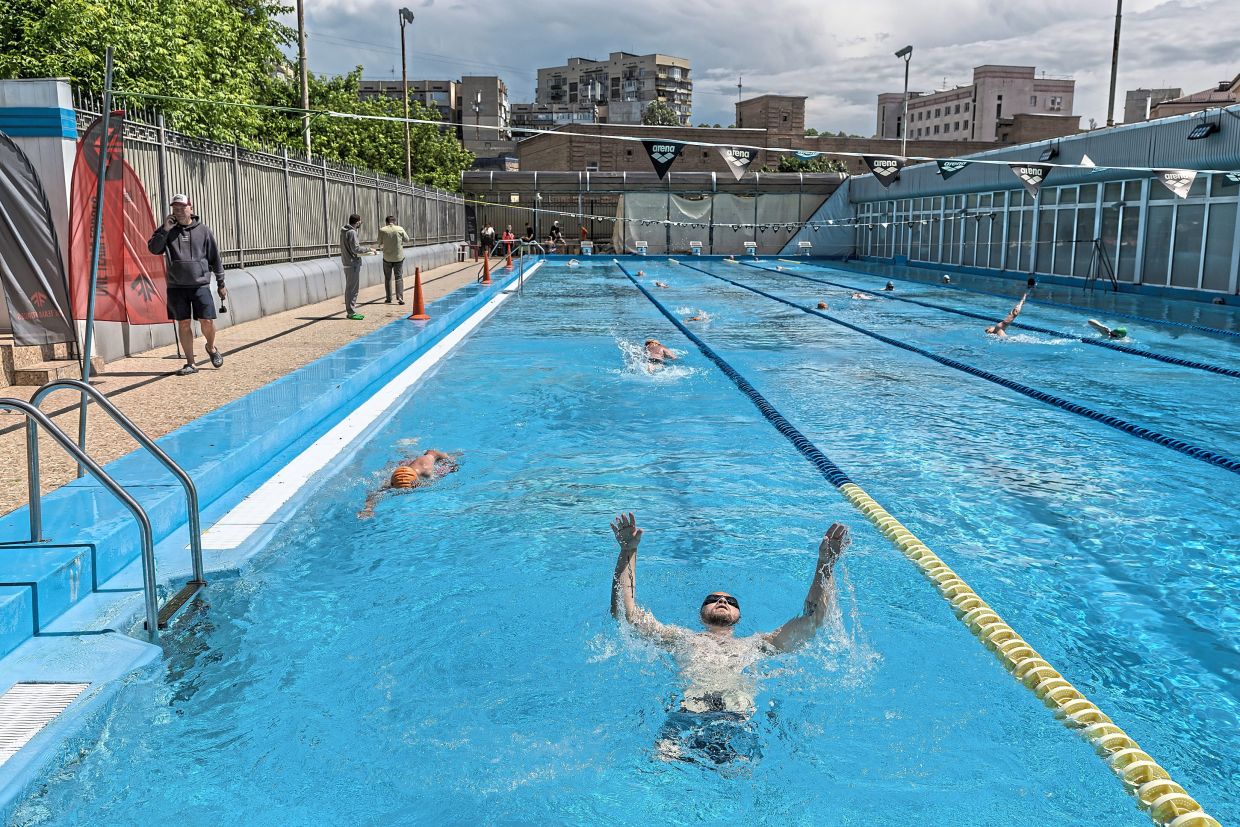
Kuzmenko has learned to use an adapted wakeboard, competed in a swim race and practised Brazilian jujitsu, all alongside other amputees.
Two Ukrainian war amputees have already climbed to Mount Everest’s base camp. Another group is training to swim from Spain to Gibraltar this fall.
The programmes help wounded soldiers rebuild physical strength and confidence and form bonds like those forged in battle.
Some plan to redeploy to positions that can accommodate prostheses. Others are still finding their way as they transition to civilian life.
Such options were not available in 2019, years before Russia’s full-scale invasion, when Artem Grot stepped on a mine in Ukraine’s eastern Luhansk region and lost his left foot.
The war then was a limited conflict confined to the east. Serving on the front itself was rare. Losing a limb there was even rarer.
Grot, a dissident from Belarus who moved to Ukraine in 2014 to join the military, had to do a lot of his own recovery research.
He found a job as an instructor on a training base and searched for sports to help him adapt to the loss of his foot.
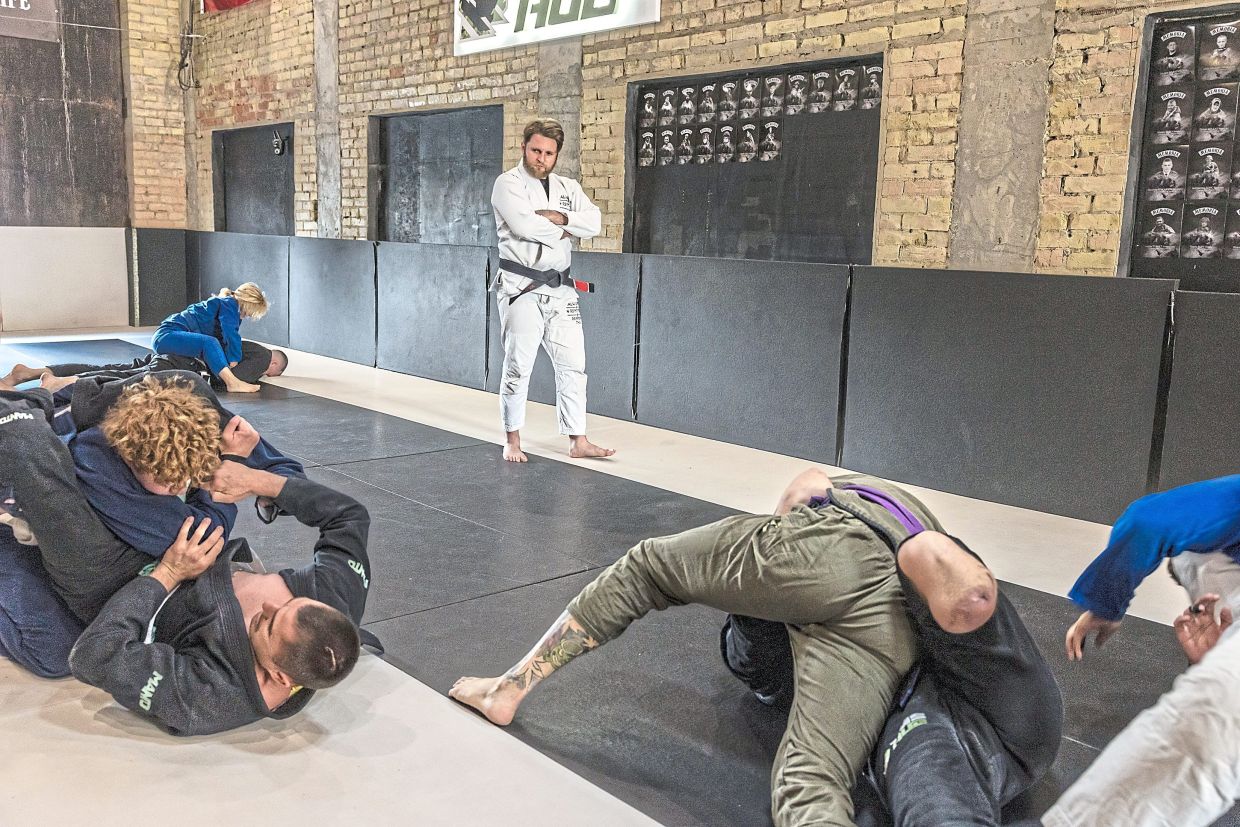
That’s how he discovered Brazilian jujitsu, which, unlike most martial arts, does not require extended periods of standing.
A long trip to Brazil for intense training hooked him.
“I felt like I was able to win over healthy guys because I didn’t have a leg,” said Grot, who now has a black belt.
After the 2022 Russian invasion, Grot wanted to expand access to the sport.
In 2023, he teamed up with a local jujitsu programme to have a new gym built in Kyiv where soldiers and veterans could practise together. It was financed in part by grants and donations, including from the US-based charity Nova Ukraine.
Since it opened, about 200 veterans have come through the gym, TMS Hub, where they feel understood, he said.
Such a space is important in a society where, as Grot said, “we have a big gap between the guys who went to the war and the ones who didn’t”.
That gap is visible even in friendly training, said the gym’s main coach, Oleh Iskra, who has trained both civilians and soldiers.
“I need to teach them to be able to lose,” he said. Even while practising, he said, “they turn it into a battle”.
The athletes he now coaches have spent months learning to use a prosthetic limb. He tells them to take it off and then teaches them how to fight without it.
“I need to separate what they cannot do because they don’t know how to do it right now from when they can’t do something because they can’t do it,” Iskra said.
The barriers they face in the fight are often more mental than physical, he said.
Bohdan Ivasyshyn, 24, said of a land-mine explosion that took his left arm and eye: “I thought I would die, and that’s it. I accepted it. I couldn’t understand why I survived.”
The community he found through jujitsu, he said, has returned colour to his days.
On a recent Saturday at TMS Hub, he grappled with Oleksandr Dashko, 29, who lost his left leg at the front and later climbed to Everest base camp on a prosthesis.
In May, when the club organised a day out on the river, Ivasyshyn built up the courage to try a standing wakeboard.
He crashed several times but eventually kept himself upright with just one arm. From the dock, his friends, many with missing legs, cheered him on.
Oleksandr Yaremenko, 39, was on the other side of the river that day, trying out a paddleboard.
Since losing his leg last year, he had been frustrated by a clunky prosthesis that got in the way of sports.
Within days of getting a lighter one from the Protez Foundation, he had joined a morning group run. He headed straight to jujitsu training that afternoon.
“The main thing was to get out alive,” he said of the day he was wounded. “Losing a limb is not a problem.”
Yaremenko still hopes to return to a military role, probably in air defence, as soon as he can stand on his prosthesis for a 12-hour shift.
Kuzmenko, on the other hand, knows his special-forces days are most likely over.
For months after losing his leg in the eastern city of Toretsk in 2024, he could remember every second of the 13 hours he waited for rescue – collapsing when a Russian bullet pierced his hip bone, dragging himself into an abandoned house, the pain of tightening tourniquets around his limp leg, using his own blood to write a message for help.
The hardest part, though, was learning that his friend Roman, one of the soldiers who eventually saved him, was killed when he returned to collect ammunition from the same area the next day.
Time, along with the community Kuzmenko has built, has helped.
When he took off on the wakeboard, he wasn’t thinking about his injury. Instead, he remembered Roman, who loved a good adventure.
Kuzmenko said he hoped his friend was watching from above and thinking, “OK, not bad.” — ©2026 The New York Times Company
This article originally appeared in The New York Times
