



COLLEGE student Nina (not her real name) loves to party. And when she parties, she really likes to “party”.
“It used to be that you could only get ‘party paraphernalia’ if you knew somebody who knew somebody who knew somebody,” says the 21-year-old.
“But now it’s easy to get them directly online yourself.”
The danger of illegally manufactured party drugs, however, has made her wary.
“You can’t trust the sellers will give you what they say they are selling. The danger of overdosing is real, and now we are especially scared of them being laced with fentanyl, as we hear about online,” she says.
Fentanyl is a super-potent synthetic drug that has been driving the opioid crisis and deaths by overdose in the United States. It is generally consumed as a nasal spray, eye drop or candy.
International think-tank Council of Foreign Relations reports that as of December last year, fentanyl was the “top killer” in all regions in the United States across age and ethnic groups.
“More than 1,500 Americans a week die from taking some type of opioid, making the drug by far the leading cause of fatal overdoses. In recent years, the crisis has become defined by illicit fentanyl, an extremely lethal synthetic opioid.”
Malaysia’s closest brush with the substance was last year’s seizure of over 800kg of liquid fentanyl at the KLIA Cargo Complex. The market value of the shipment, which had arrived from Bombay and was bound for Dubai, was estimated to be worth about RM45mil. Bukit Aman Narcotics Crime Investigation Department director Comm Datuk Seri Mohd Kamarudin Md Din was reported to have said that the police have yet to detect the specific abuse of fentanyl among addicts in the country. He also said there have yet to be any related seizures of the drugs.
“Based on the raids and seizures we carried out so far, the department has yet to find fentanyl addicts. But we will do our best to combat drug abuse despite its complex challenges.”
Criminologist Kamal Affandi Hashim, however, believes that the seizure might just portend what is suspected to have already taken place in Malaysia: the consumption of fentanyl in its adulterated forms through the synthetic drugs methamphetamine pills or syabu.
Stirring worry
Synthetic opioid abuse in Malaysia has been ongoing for decades. Described by experts as a crisis, its first wave hit hard in the late 1980s and the 1990s, particularly among youths and factory workers during the industrial boom back then.
The go-to drug was available at stores and easily purchased – a bottled cough syrup containing codeine, a mild analgesic used in cough suppressants. The high it gave back then was sought after by the experimental, as well as the rebellious lot as an alternative to hard drugs such as cocaine or heroin.
Fast forward to the future, the codeine threat still looms; from the total of 862kg (in liquid form) seized in 1990 nationwide, the number has risen to more than two tonnes by 2016, according to Kamal Affandi, who was formerly with the Malaysian Crime Prevention Foundation. He warns that opioid abuse does not stop at codeine as something worse is making its way to the country’s shores.
There are two types of fentanyl: pharmaceutical fentanyl, which is prescribed by doctors to treat severe pain, especially for cancer patients (including in Malaysia); and illegally-made fentanyl, which is used to manufacture cheap and highly addictive drugs.
In the United States, it has been reported that the illegally- made fentanyl is largely supplied from China and Mexico.
Fentanyl is also known to be rendered into cocaine, heroin and methamphetamine for extreme potency, says Kamal Affandi.
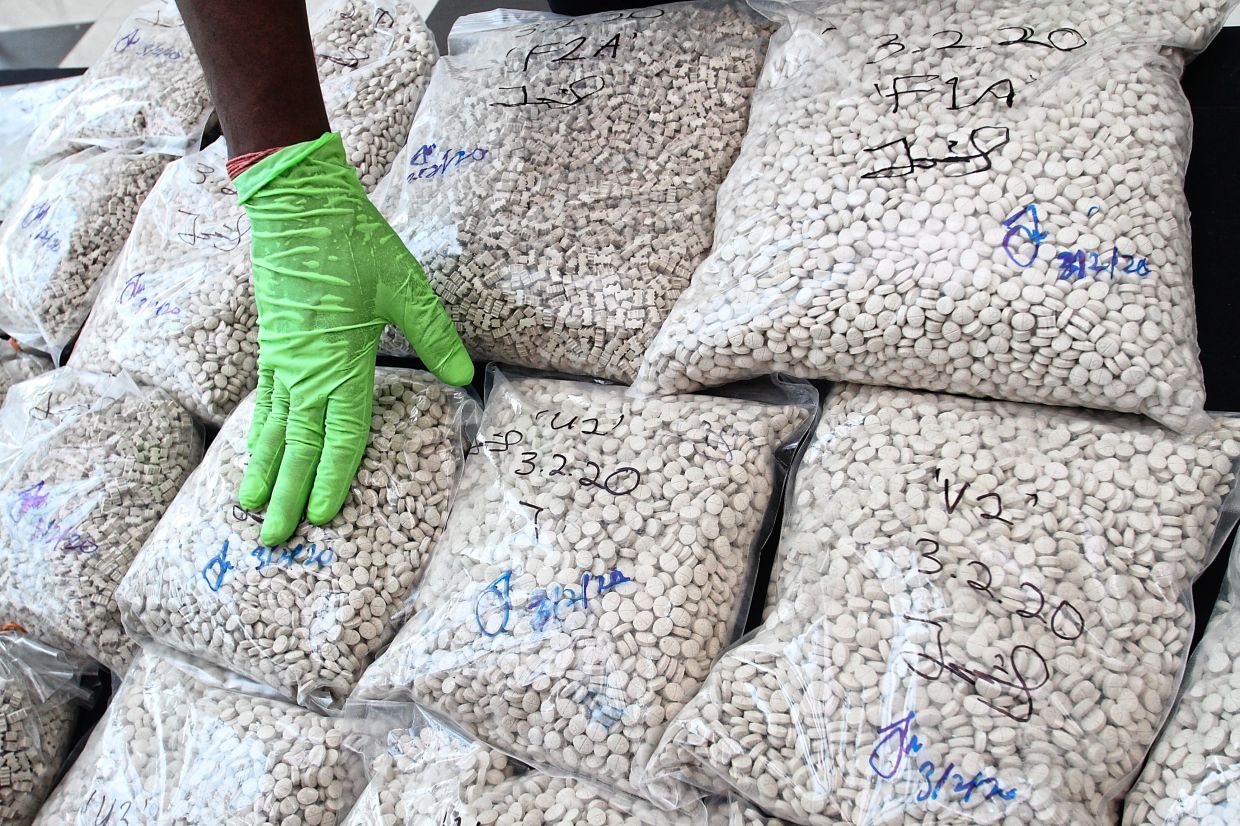
“It is highly possible that the fentanyl crisis is already taking place here through different forms. Methamphetamine pills are commonly laced with fentanyl, resembling prescription drugs.
“Young drug abusers, mostly students and youths, can easily purchase such drugs online, from the dark web and social media. And we know that fentanyl is being used to make the drugs more addictive and provide a greater high.
“It is also extremely dangerous because many people, including recreational drug users, are not aware that fentanyl is used to make the drugs they consume.”

The World Health Organisation, in a report last August, says fentanyl has been associated with a spike in deaths from opioid overdose.
“There is evidence that drug dealers may be adding fentanyl to increase the potency of their products [such as heroin] and selling fentanyl as counterfeit tablets, created to look like authentic prescription medications.
“Therefore, many users who test positive for fentanyl and its analogues do not realise that they took the substance.”
Greater threat looms
And true to its moniker as a “zombie” drug, the US National Institute of Drug Abuse says fentanyl works by binding itself to the receptors found in the brain in areas which control emotions and pain.
“After many times, the brain adapts to the drug, diminishing its sensitivity, making it hard to feel pleasure from anything besides the drug. When people become addicted, drug seeking and drug use take over their lives.”
Among the effects of fentanyl are drowsiness, confusion, breathing difficulty, unconsciousness, sedation, extreme happiness, and nausea.
Kamal Affandi says fentanyl is similar to morphine, but up to 100 times more potent.
“It is all the more dangerous when the illegally made ones, either in powder or liquid forms, do not subscribe to standard ingredient lists or doses.”
He also says another mixture of fentanyl with an animal tranquilliser, xylazine, is fast becoming a new threat, in the United States especially.
“Even in small doses, the use of fentanyl is dangerous if abused.
“For example, there is a version of fentanyl which is used to tranquillise animals called carfentanil. A mere 2mg of carfentanil can knock out an average-sized elephant. The same amount can kill 50 people. This should give you a picture about its potency.”
To illustrate spikes of deaths from synthetic opioid abuse (including fentanyl) worldwide, Kamal Affandi says there were 5,544 deaths due to overdose recorded in 2014; the number jumped to 20,145 by the end of 2016.
Kamal Affandi implores the authorities to equip themselves with improved knowledge of the illegal drug industry as well as strategies to counter future challenges.
“They need to be trained consistently to be better prepared.”
Meanwhile, a source from the National Anti-Drug Agency confirms that, as of now, the online market on the dark web is flooded with methamphetamine pills usually purchased by youths and students.
“These are readily available. And it is almost too easy to purchase. This is dangerous. At the same time, it is difficult to detect an abuser from his or her appearance alone.
“They do not appear gaunt or sickly.”
The source also confirms that there has yet to be a specific fentanyl addiction case recorded in the country.
Kamal Affandi warns abusers, including recreational users, about the dangers of methamphetamine pills laced with fentanyl.
“It takes five minutes to get your high. But at the same time, that five minutes can determine whether you will live for another day, or otherwise.”
Already a subscriber? Log in
Get 20% OFF The Star Digital Access
Cancel anytime. Ad-free. Unlimited access with perks.

