
JUST 72km from the Fort McDermitt Indian Reservation where Daranda Hinkey and her family corral horses and cows, a centrepiece of President Joe Biden’s clean energy plan is taking shape: construction of one of the largest lithium mines in the world.
As heavy trucks dig up the earth in this remote, windswept region of Nevada to extract the silvery-white metal used in electric-vehicle batteries, the US$2.2bil (RM10.3bil) project is fueling a backlash. “No Lithium. No mine!” proclaims a large hand-painted sign in Hinkey’s front yard.
The Biden administration says the project will help mitigate climate change by speeding the shift away from fossil fuels. But Hinkey and other opponents say it is not worth the costs to the local environment and people.
Similar disputes are taking place around the world as governments and companies advancing renewable energy find themselves battling communities opposed to projects that threaten wildlife, groundwater and air quality.
Hinkey, 25, is a member of the Fort McDermitt Paiute and Shoshone Tribe and a leader of a group known as People of Red Mountain – named after the scarlet peak that overlooks her house. The group says that in addition to environmental impacts, Thacker Pass mine would desecrate a site where the US Cavalry massacred their ancestors after the Civil War.
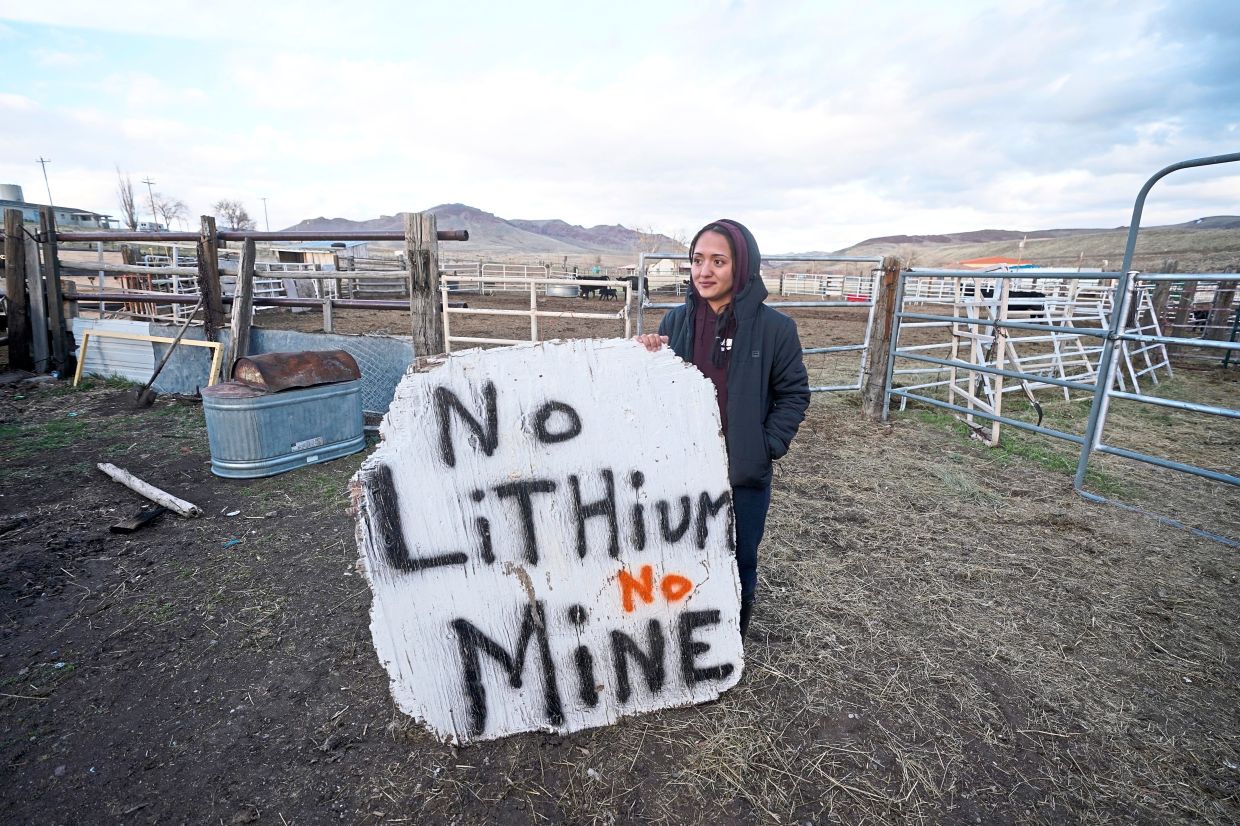
“Lithium mines and this whole push for renewable energy – the agenda of the Green New Deal – is what I like to call green colonialism,” Hinkey said. “It’s going to directly affect my people, my culture, my religion, my tradition, my children and children after that.”
Protests near the mining site have flared up for more than two years, and the project has sparked legal challenges, including an appeal to a federal court.
Hinkey had hoped Interior Secretary Deb Haaland – the first Native American Cabinet member – might rally to the side of opponents. But that has not happened.
Haaland, whose department oversees Thacker Pass, said that while she supports the right to peaceful protests, her agency is in favour of the mine because “the need for our clean energy economy to move forward is definitely important”.
The project was approved in the waning days of the Trump administration but is central to Biden’s goal for half of all new vehicles sold in the US to be electric by 2030.
Lithium batteries are also used to store wind and solar power.
Haaland said that when her agency inherits a project from a previous administration, “It’s our job to ensure things are done according to the science, to the law.”
Hinkey sees her activism as a continuation of her leadership on basketball teams in high school and in college, where she guided her Southern Oregon Raiders to a 20-win season as a senior point guard.
“Corporations are scared of an educated Indian,” said Hinkey, who hopes to become a teacher. Her athletic experience, education and tribal background make her “someone who can stand up against them”, she said.
Hinkey said she is especially disappointed because she voted for Biden and expected his administration to slow down the project that was fast-tracked under President Donald Trump. She said she and other tribal members “feel very lost, very shoved underneath the carpet”.
The project does have the support of some leaders of Hinkey’s tribe, who point to the promise of jobs and development on a reservation where unemployment is far above the national average.
“This could help our tribe,” said Fort McDermitt tribal chairman Arlo Crutcher, who recently went to Washington with company executives to meet with the Interior Department. Still, he is sceptical about how many jobs will go to impoverished tribe members.
Despite ongoing protests, Crutcher called the project “a done deal”. Biden and Trump don’t agree on much, he said, “but there’s one thing they agreed on: They both supported this. Big money talks.’’
Lithium Americas, the Canadian company that is developing the project, signed an agreement with the Fort McDermitt tribe – the closest to the mine among more than two dozen federally recognised tribes and bands in Nevada – to ensure local hiring, job training and other benefits. It also agreed to build a community centre that includes a preschool and playground for the reservation, where close to half the population lives in poverty.
The October 2022 agreement “is a testament to our company’s commitment to go beyond our regulatory requirements and to form constructive relationships with the communities closest to our projects,” Lithium Americas president and CEO Jonathan Evans said in a statement.
General Motors has pledged US$650mil (RM3bil) to help develop Thacker Pass, which holds enough lithium to build one million electric vehicles annually.
Opponents, including other tribes and environmental groups, argue that the US Bureau of Land Management, an Interior Department agency, violated at least three federal laws in approving the mine.
BLM director Tracy Stone-Manning defended her agency’s actions, saying the Biden administration allowed construction to begin “because the proposal is solid, and the country needs that lithium”.
The National Historic Preservation Act requires tribal consultation in all steps of a project on or near tribal land. But Hinkey and other mine opponents say the mine was hastily approved when tribal governments were largely shut down due to the Covid-19 pandemic.
In its 2021 decision approving the project, the agency said it wrote letters in late 2019 to at least three tribes – including Fort McDermitt – inviting comments. Two online meetings were conducted in August 2020, but no objections were raised by the end of an environmental review in December 2020, the agency said.
Michon Eben, historic preservation officer for the Reno-Sparks Indian Colony, said the agency’s actions fell far short of genuine consultation.
“This is the biggest (lithium) mine in the country – and there’s 28 federally recognised tribes and bands in the state of Nevada that all have relationships – and you only send a letter to three tribes? There’s something wrong with that,” Eben said.
“The consultation kind of skipped us,’’ said Gary McKinney, a spokesman for People of Red Mountain and a member of the nearby Duck Valley Shoshone-Paiute Tribe. “Nobody knew about the lithium. They taped a notice on the door and called that” adequate notice”, he said.
In an interview near the mine site, McKinney said the project will cause irreparable damage, while conservationists said groundwater and soil could become contaminated with heavy metals. The area is also a nesting ground for the dwindling sage grouse.
“The water will be lower. Life will be scared away,” McKinney said. “Our culture, our sacred sites will be gone. We’re facing the annihilation of our identity.”
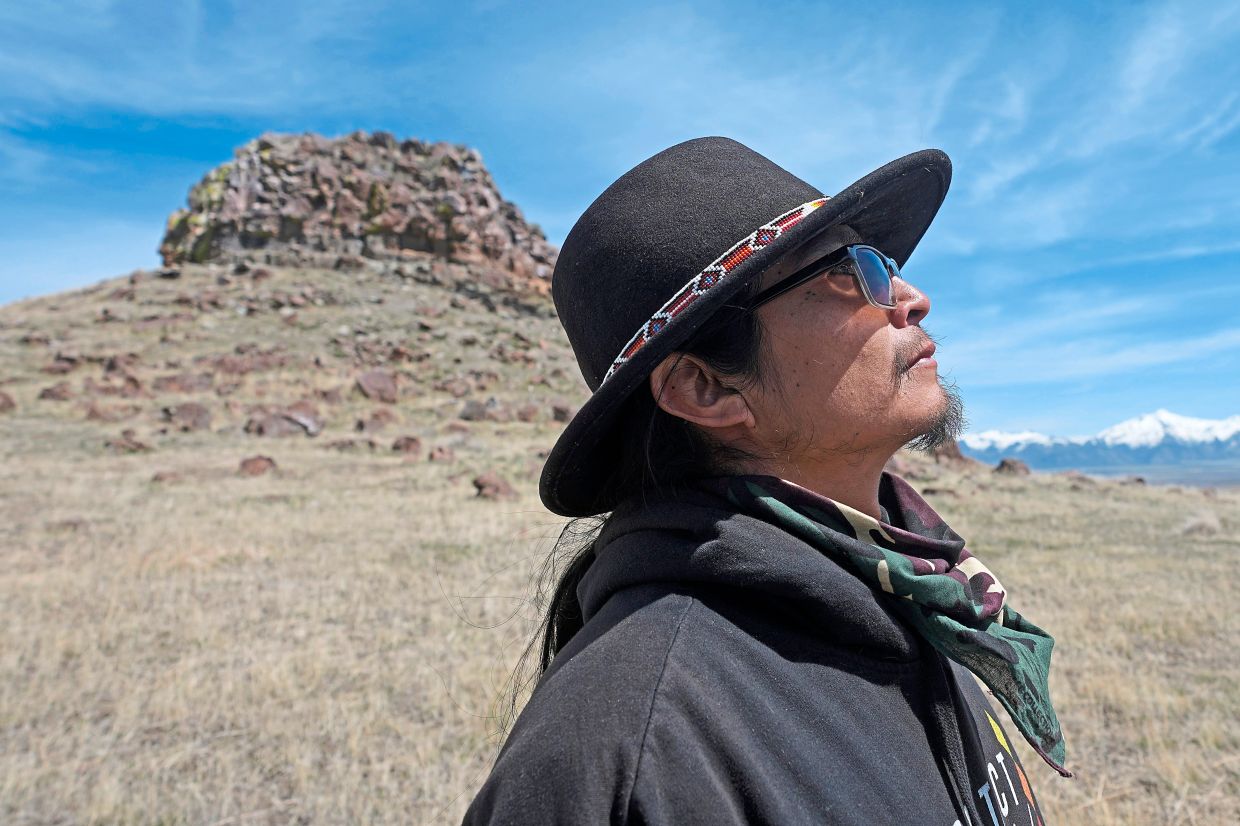
He and other opponents say the BLM office in Nevada failed to assess the project’s likely impact on the massacre site near Sentinel Rock, which juts above sagebrush used by roaming cattle herds.
“What happens to those who were massacred and buried here?” Eben said at Sentinel Rock.
The exact location of the massacre, where federal soldiers killed at least 31 Paiute men, women and children, is unknown, although it is generally recognised to be within a few miles of the mine. Tribes call the site Peehee Mu’huh, or “Rotten Moon” in the Paiute language. — AP
Already a subscriber? Log in
Get 20% OFF The Star Digital Access
Cancel anytime. Ad-free. Unlimited access with perks.