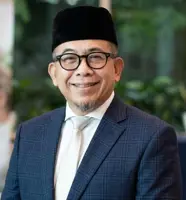
THE Enforcement Agency Integrity Commission (EAIC) is a federal statutory body gazetted in 2009 and established in 2011 to replace the Independent Police Complaints and Misconduct Commission Bill 2005. Its goal is to enhance integrity among law enforcement officers, and strengthen public confidence by investigating complaints.
This week, Sunday Star speaks to EAIC chairman Tan Sri Mohd Sidek Hassan, who was former chief secretary to the government, on the challenges faced by the commission, and what steps are needed to effectively combat misconduct within enforcement agencies.
> How would you describe the purpose and mission of the EAIC?
Our name, the Enforcement Agency Integrity Commission, actually explains the purpose. Our scope only involves enforcement agencies and there are 21 agencies which we cover. This includes the big agencies as well such as the police, the Road Transport Department (JPJ) and others. If there are issues or things of concern happening within these enforcement agencies, it is our role to make sure that we investigate complaints and come out with recommendations. The second is to be proactive and see what long-term measures can be taken to ensure that such complaints don’t happen again.
> Although the EAIC has the power to conduct investigations, it cannot prosecute and can only make recommendations to the disciplinary authorities of the enforcement agency in question, and submit its findings to the attorney-general’s (A-G) chambers for prosecution. What is your response to claims that the EAIC’s lack of prosecution powers limits its ability to be effective in responding to misconduct of enforcement officers?
I think prosecution powers should not be given to just anyone. For example, the Malaysian Anti-Corruption Commission (MACC) does not have prosecution powers, but you wouldn’t want to meddle with the MACC. The lack of prosecution powers is not a factor for the lack of effectiveness so long as the prosecution happens. Like the MACC, the EAIC also has officers from the A-G’s office and they are very senior people. So long as we have the willingness to prosecute, it doesn’t matter where that power resides.
Let’s say for example, people in the A-G’s office were to prosecute someone but the bench [judiciary] throws the case out. Would people therefore say that although the A-G’s office has prosecution powers, it is not effective because they do not have judicial powers? You need to have that separation of powers in order to have check and balance.
> With only 78 staff members to monitor 21 enforcement agencies, including some 150,000 policemen, how does the EAIC strive to conduct its job effectively?
I suppose you need to be selective. Petty complaints that can be cleared through other means should be done so. Therefore, we focus on big issues, those that would have a bigger impact on the nation. For example, death in custody. To not only resolve the issue of death in custody but to make sure our recommendations prevent such deaths from occuring again.
The second part is that I don’t believe in having a big office. The reason being you have to work with others. Even if you expand us by ten times and you increase our budget by ten times to RM70mil, the issue of effectiveness can still be there. Because with 780 people, even if we were to only supervise the police, it would still be challenging.
Therefore, we work with agencies like the police. After all, the Inspector-General of Police (IGP) and state chiefs of police (CPO) do not like there to be hanky-panky going on. If you are a CPO, you wouldn’t want [integrity issues] to happen. You need to have the same resolve to fix the issues at the level where it matters. Unless that resoluteness exists in the department that matters, be it the police, customs department, and so on, particularly at the leadership level, you wouldn’t get anywhere even if you multiplied us by a hundred.
> How is your relationship with enforcement agencies? How cooperative are they in investigations?
If you look at the complaints that we receive, the great majority of them were against the police. And I can understand why; there are more policemen than any other enforcement agency and they interact more with the public. In 2021, [EAIC CEO] Norhayati Ahmad took the initiative together with the deputy IGP to start discussions about this. They have had regular discussions since, which have now expanded to the state contingent levels. Therefore, the motivation and philosophy for the EAIC is to work with others, because sometimes they can be more effective than us. This is because “naughty” policemen, if you can say so, are more afraid of the IGP and CPOs than they are of us.
> How about other agencies, is there a similar ongoing initiative?
We are working on them.The Immigration Department, the National Registration Department (JPN), the National Anti Drug Agency and so on. Given the limited resources that we have, we are now focusing on the police but will be using that template to work with other agencies.
I am 71 now, and I have grown wiser to know that you don’t have to do everything yourself. You do it through others and with others. When this happens, it becomes more permanent. It becomes inbuilt within the system so when you have the police doing it [maintaining integrity] themselves, there is more credibility on their part.
> Members of the public have called for the establishment of the Independent Police Complaints and Misconduct Commission (IPCMC) to address accusations of misconduct among the police. Meanwhile, the Independent Police Conduct Commission Bill 2020 (IPCC) may be up for debate in the Dewan Rakyat. What is your view on both these initiatives since a lot of their scope may overlap with the EAIC?
When establishing either the IPCMC or IPCC, there won’t be any overlap anymore. We have 21 agencies now. So if you establish either the IPCMC or IPCC, you will be carving out the police from the EAIC and there won’t be any overlaps.
> How would you feel if the police were no longer under the EAIC’s purview?
If that’s what the people and the parliamentarians want, it is good. Then we can focus on the other 20 agencies. We are not interested in territory. In terms of public service and the big picture, what you want is integrity. And if it is decided that the best way of getting it is by having either the IPCMC or the IPCC, then so be it. I think that would be good.
> The EAIC’s findings that there is no evidence of a cartel within the police force was not well received by former IGP Tan Sri Abdul Hamid Bador and among some of the Malaysian public. What is your response to this?
I have nothing more to add beyond the statement that was jointly done with six other commissioners [on Feb 28]. To his credit, Tan Sri Hamid Bador came and we asked him questions. We also asked questions from other serving policemen and retired policemen, who were recommended to us by Tan Sri Hamid. We spoke to them all, but it is as per what is written in the statement because that speaks for itself.
> The EAIC’s investigation into the cartel allegations did, however, find supporting evidence that some police officers were involved with criminal syndicates. What is the follow up to these cases?
Action has been taken, and I know that the MACC and police themselves took action. Those involved have been prosecuted.
> From January to April this year, there have already been fifteen custodial deaths. Human rights organisations further claim that the number of custodial deaths are severely underreported. Critics claim that this issue is not being taken seriously enough, and the government is only taking reactionary steps. How does the EAIC plan to address this matter?
We are undertaking a study on death in custody, and looking into how we can address this issue. Malaysia has done well in terms of having Standard Operating Procedures (SOPS).
In jails and prisons, there are a lot of SOPs, but are they being followed? That’s why we are working with the police on this, and if SOPs were not being followed, what could be the recourse. Unless SOPs are enforced, they become meaningless. It’s not about coming up with a lot of new directives, it is about enforcement (of SOPs).
> When will the study be published?
By this year.
> Opposition leaders and human rights activists claim that there is a lack of transparency in the issue of custodial deaths and its subsequent investigations. How do you plan to address this?
Treat others the way you like to be treated. In English they call it empathy. It starts from the top. When we meet the IGP, when we meet the CPOs, we talk to them about having that empathy. If something is wrong, it is wrong. Therefore, we put ourselves in the shoes of the family of the person who died.
In our dealings with the police, we use this language. And then they [high ranking officers] in the police department will also speak that language, “I am not going to cover you if you are wrong, because you are tarnishing the image of the police”.
And if this message is communicated from the top down, what is the message received by police officers? “You better be careful because IGP [Datuk Seri Acryl Sani Abdullah Sani ] spoke that language and he means it.
I think of the 150,000 policemen and women, the great majority of them are good people and even they don’t like to see wrongdoings taking place within the force.
When the top leadership of the police speak that language, therefore the need to have EAIC with 20,000 people, and the need to have IPCMC with 200,000 people is no longer there and is no longer necessary.. Because the policemen are having the IPCMC in themselves.
> In your view, what else can be done to curb misconduct and corruption among enforcement officers and agencies in Malaysia?
We should focus on education. Educating the people about doing what is right, and talking about it all the time. Educate the people at the top, so that they can educate others working under them.
I find solace in the fact that I think the great majority of us are good people. Let us talk about the good things that they do and encourage the good things.
Already a subscriber? Log in
Get 20% OFF The Star Digital Access
Cancel anytime. Ad-free. Unlimited access with perks.