Our timeless national icons


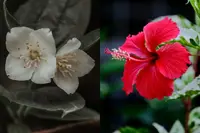
Hibiscus flowers blooming brightly at the Taman Persekutuan Bukit Kiara in Kuala Lumpur. The park is managed and maintained by the National Landscape Department.

More needs to be done to promote Malaysia’s symbols – our national flower, the hibiscus, and the merbau as our national tree. The National Landscape Department is urging local authorities to grow more hibiscus along roads and in places of interest while it will also promote the merbau tree as part of our natural heritage.

MALAYSIA’S national flower, the regal bunga raya or hibiscus, deserves to be in full bloom in our own country.

More efforts should be made to elevate the status of the flower (known scientifically as Hibiscus rosa-sinensis) as a national symbol, says National Landscape Department director-general Rotina Mohd Daik.

“We encourage local authorities nationwide to plant the hibiscus at strategic places to project its image as our country’s icon and where its beauty can be admired.

“For example, hibiscus shrubs can be planted along roads leading to places of significance or buildings of interest, such as roads leading to Parliament or state assembly buildings all over the country.

“Tourist areas like museums should also be decorated with such blooms as those are places where our national flower can be introduced to foreigners and citizens alike,” she tells Sunday Star.

CLICK TO ENLARGE
CLICK TO ENLARGE

There have been previous efforts to line roads and surroundings in Malaysia with the beautiful bunga raya.

In 2019, the Raub District Council in Pahang planted 2,000 hibiscus shrubs along main roads to raise the flower’s profile in the state.

There was also a Nationwide Hibiscus Planting Campaign in 2005 whereby all local authorities were urged to grow them in parks and public areas, aside from encouraging every household to plant at least one hibiscus tree.

“Over 4.5 million hibiscus trees were successfully grown by the authorities involved during the campaign which lasted until 2016,” says Rotina, adding that the department had recorded the data in the initiative.

However, she stresses that such efforts to promote the flower should be continuous and updated.

It should be done by various agencies and ministries to instill the flower’s status in the minds of citizens now and in the future.

“Malaysians should know it, and feel proud of it like how we are proud of our flag, not just during Hari Merdeka and Malaysia Day,” she says.

Petals of principles

The hibiscus has been Malaysia’s national flower since July 28, 1960, after being declared so by the nation’s first Prime Minister, Tunku Abdul Rahman Putra Al-Haj.

The flower defeated other candidates for this spot, including the jasmine, lotus and rose, after a study was conducted to get public feedback on this matter.

In the end, the government decided on the hibiscus, which was already well-known among the people as “bunga raya” throughout the country and admired for its interesting shape. Most importantly, it wasn’t the national flower of any other country in the world at that time.

The red variant of the flower was chosen specifically, as the colour is part of the Malaysian flag.

“It also symbolises courage, life, and the rapid growth of Malaysia. The five petals represent the five National Principles, or the Rukun Negara, of Malaysia,” Rotina explains.

Describing it as the pride of the nation, she says the bloom symbolises many aspects of our country, namely the people’s unity, sovereignty and democracy.

CLICK TO ENLARGE
CLICK TO ENLARGE

“As an inspiration in shaping our national identity, we can find its image on our National Coat of Arms, logos, badges, flags, embroidery, stamps, housing estates, roads, buildings and currency,” she adds.

Rotina suggests that the hospitality and tourism industry can play its role in promoting the hibiscus to foreign visitors by using the flower as part of its landscaping and experience for guests.

“Just like how the people in Hawaii put flowers behind their ears, we should also be proud to display our hibiscus. The blooms can also be placed on the beds of hotel guests to welcome them to our country,” she says.

Malaysians can also plant the hibiscus in their own homes, including those in apartments or condominiums if their units have balconies.

“People in stratified buildings can plant it in pots. But as it is a plant that requires a lot of sunlight, it cannot be placed indoors,” Rotina says.

A merbau tree (Malacca teak) stands tall at the Taman Persekutuan Bukit Kiara in Kuala Lumpur. The merbau was named as Malaysia's national tree on Aug 23, 2019 by our then Prime Minister Tun Dr Mahathir Mohamad.


The mighty merbau

Aside from the bunga raya, more effort should also be made to shine the light on our national tree, the merbau, or Malacca teak, which is indigenous to Malaysia.

The tree was named Malaysia’s national tree on Aug 23, 2019, by then Prime Minister Tun Dr Mahathir Mohamad because of its strong and sturdy nature.

“The merbau is a big tree and can grow up 50m tall while its roots can be up to 4m in height. As such, it cannot be planted along roads because there will not be enough space for it and may even become a road safety hazard.

“But it is suitable for parks and other wide spaces as a meaningful green element in the landscape,” Rotina says.

Moving forward, she says the department will work together with the Forestry Department to promote the merbau as a tree species which can be planted in suitable spots.

“Just like the hardy merbau, I hope all Malaysians will stay strong and unite to work together to get through this pandemic,” Rotina adds, referring to sentiments many surely hold ahead of Merdeka Day on Tuesday and Malaysia Day on Sept 16.

She adds that everybody should stay united to make our nation a better place.

“We should work on improving our country in all aspects such as our economy, technological advancements, living environment and landscape. We have a country blessed not to have major natural disasters and so we should take care of it to preserve its natural beauty and cleanliness.

“But ultimately, Malaysia’s beauty also lies in our diverse culture and people, who respect and care for one another,” she says.

Get 20% OFF The Star Digital Access

Monthly Plan

RM 13.90/month

RM 11.12/month

Billed as RM 11.12 for the 1st month, RM 13.90 thereafter.

Best Value

Annual Plan

RM 12.33/month

RM 9.87/month

Billed as RM 118.40 for the 1st year, RM 148 thereafter.

Follow us on our official WhatsApp channel for breaking news alerts and key updates!
national flower , the hibiscus , Bunga Raya , Merbau ,

Next In Focus

Planning for a fit take-off
Different risks with little travellers
Holiday hiccups
Ukraine ruins Crimean summer
Open war, closed border
The world’s unlikeliest EV frontier
Where the birdsare the business
Plight of the mothers who search
Bowhunting ‘Frankenfish’
City in the kill zone

Others Also Read