WHILE technical skills are important for doing a job, they are rarely enough in the workplace, say industry and human resource (HR) practitioners.
Graduates are also expected to exercise judgement, take responsibility for their decisions and continue learning as their roles evolve, they stress.
Qualities such as integrity and a willingness to learn, they add, are more fundamental to building employees who can be trusted, while technical skills can be developed through training and experience.
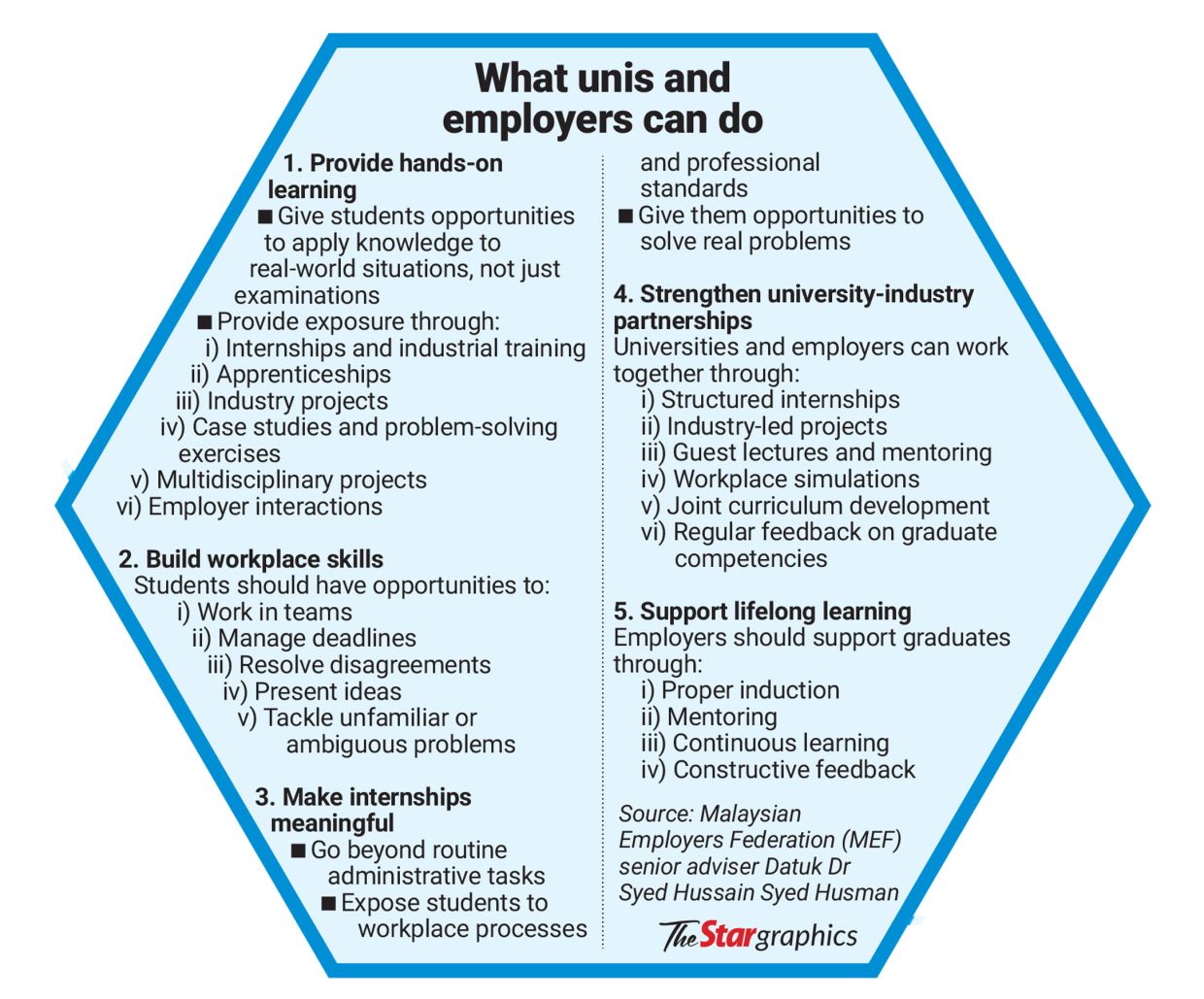
“This is why we believe universities should focus not only on what students know, but also on how they respond when things do not go according to plan,” said Malaysian Employers Federation (MEF) senior adviser Datuk Dr Syed Hussain Syed Husman.
Graduates, he added, must understand that doing the right thing remains essential even when nobody is watching.
“The workplace is different from the university. There are deadlines, customers, colleagues, supervisors, commercial considerations and consequences arising from decisions.
“Accountability means taking ownership rather than simply completing an assigned task,” he said.
He added that as technology increasingly takes over routine and technical tasks, employers will place greater value on uniquely human capabilities such as critical thinking, judgement, creativity, empathy, ethical decision-making, communication and collaboration.
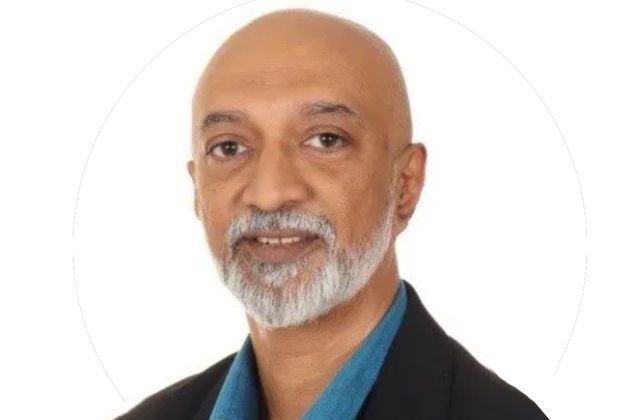
Agreeing, HR management practitioner and author Asohan Satkunasingham said the focus should not be on resisting technology, but on ensuring that human development keeps pace with technological development.
“A graduate must therefore ask not only, ‘Can I do this?’, but also, ‘Should I do this, how should I do it, and am I prepared to take responsibility for the outcome?’” he said.
In this regard, he said universities should help students develop progressively towards greater maturity, judgement, capability and responsibility rather than focusing solely on technical knowledge.
Asohan, who has over 35 years of experience in HR, added that technical competence may determine whether a person can correct an error, but character determines what happens first.
“Will the person disclose it, accept responsibility and take corrective action, or conceal it and hope nobody notices?” he said.
Asohan noted that such qualities become particularly evident when graduates encounter situations where there is no straightforward or predetermined answer.
“The workplace constantly presents situations where there is no model answer –mistakes happen, priorities change, people disagree, and difficult choices have to be made. That is when the character becomes visible,” he explained.
The ability to navigate such situations, he said, is also what separates simply being employed from remaining employable.