Many of us remember teachers who believed in our potential and, with patience and care, guided us through uncertainty so we could realise our true capabilities.
While Teachers Day is a meaningful reminder, the impact of teachers extends far beyond a single day of appreciation.

The work of an educator is immeasurable – while we often see them as those who teach our children, much of their effort lies in bridging gaps between students of different backgrounds, abilities and access to resources.
This challenge has become increasingly visible and urgent. Malaysia has achieved near-universal access to primary education but World Bank data shows that 42% of pupils do not meet minimum proficiency by the end of primary school.
Malaysia’s Programme for International Student Assessment 2022 performance also remains below the Organisation for Economic Co-operation and Development averages in reading, mathematics and science, with socioeconomic background continuing to influence outcomes.
These figures remind us that improving education is not only about raising standards, but also about ensuring every child is supported to reach them.
While policies and systems play a critical role, it is teachers who navigate these realities directly – adapting learning for students with different abilities and learning paces, extending opportunities to underserved communities, and finding creative ways to make education more inclusive, engaging and meaningful despite varying levels of resources.
Across Malaysia, these efforts are already taking place quietly but consistently.
Since 2021, I have had the privilege of meeting remarkable teachers from across the country whose ideas and initiatives respond directly to the challenges many students continue to face – whether in access, inclusion, confidence, or meaningful learning.
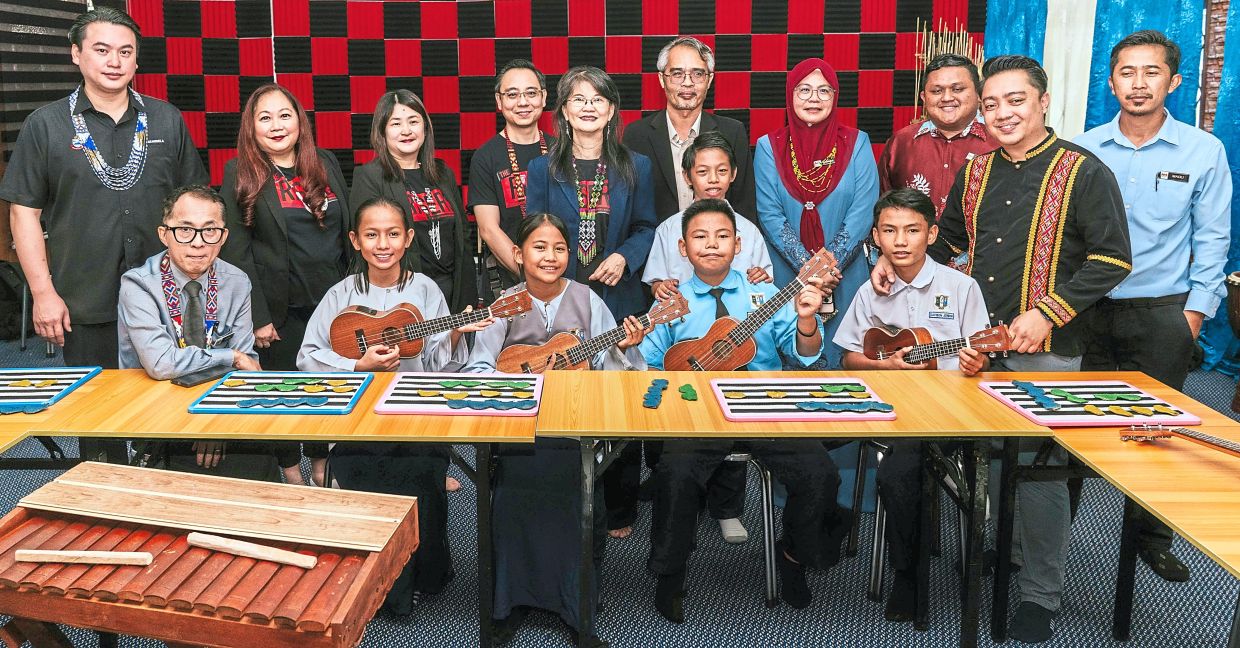
Take, for example, last year’s RISE Educator Award recipient, SK Pendidikan Khas Kota Kinabalu, Sabah, special education teacher Cikgu Stefanus Lucas.
Faced with the challenge of making music education accessible for pupils with hearing impairment, he reimagined how learning could take place by creating an environment that enabled pupils to learn through rhythm, vibration and visual cues.
What began as a small, resourceful effort has since grown into Sabah’s first inclusive music room for deaf pupils, expanding opportunities for pupils who are often underserved in traditional learning environments.
But stories like his are not isolated. Across rural and underserved communities, teachers are finding creative ways to bridge gaps in access, confidence and opportunity – whether by introducing immersive learning experiences to broaden students’ exposure or by helping students in vocational and special education pathways build the skills and independence needed for life beyond school.
These efforts reflect a broader truth: many of the gaps we continue to discuss in education are already being addressed every day in classrooms across the country – not only through policies or system reforms, but also through teachers who understand their students deeply, adapt to their different needs, and continue finding ways to help them move forward despite challenges and resources.
Yet, much of this work remains unseen. While Teachers Day offers an important moment to reflect, meaningful recognition must go further. Recognising teachers is not only about appreciation – it is about acknowledging the role they play in helping ensure that no student is left behind.
Our role is not simply to celebrate teachers, but to support and elevate the work they are doing.
Through initiatives such as the RISE Educator Award, we hope to provide a platform for these efforts to be seen, supported and expanded so that more students and communities can benefit.
Because beyond every statistic, policy discussion or national aspiration are teachers working quietly in classrooms – helping students see possibilities that they may not have seen before.
And perhaps that, more than anything else, is what continues to shape the future we share.
Josephine Tan is Taylor’s College campus director with over 30 years of experience in both corporate and education sectors. Her extensive experience in the field of media and communication encompasses organisational culture, corporate communication, human communication, as well as crisis and conflict management. She has also established the South East Asia Research for Communication and Humanities (SEARCH) Journal, which has been indexed by Scopus since 2009. The views expressed here are the writer’s own.