FOOD scarcity is one of the most pressing issues in our world today, with millions of people going hungry every day.
Food systems are under increasing pressure to feed a growing global population while facing challenges such as climate change, resource depletion and waste.

Molecular gastronomy is a field that explores the science behind food production at the molecular level. It has the potential to revolutionise not only what we eat, but also how we create produce and prepare food.
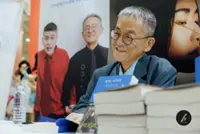
At the forefront of this scientific-culinary innovation is Prof Hervé This, a French chemist and one of the pioneers of molecular gastronomy.
Prof This was on campus recently, where he gave a full-house lecture and a live demonstration that explored the chemical reactions and physical changes that occur when ingredients are combined and heated, manipulating the texture, flavour and appearance of food.
Attending his lecture felt like watching a mad scientist at work.
It can be summed up as what Wendell Steavenson, who interviewed Prof This in 2014, wrote in her article Understand Cooking with the World’s Weirdest Chef: “He had the look of a harried café waiter and the manner of the mad scientist.”
For his demonstration, the working area looked like a cross between a science laboratory and a kitchen.
Culinary breakthroughs
Prof This emphasises the importance of understanding food at the molecular level, highlighting that such knowledge can lead to more efficient and sustainable ways of feeding the world.
Rather than focusing solely on taste or presentation, he seeks to understand how food preparation methods can be optimised to use fewer resources while still delivering high-quality meals.
This has led to breakthroughs in understanding food textures, flavours and cooking methods that reduce food waste, improve nutrient retention and lower energy consumption.
Take his note-by-note cooking, a new art of food preparation that does not involve the use of meat, fish, vegetables or fruits, but instead employs compounds such as water; proteins like gluten, gelatine and powdered egg; oil; sweeteners such as glucose; colouring; salt; flavour extracts; and essential oils.
This method may in the future offer promising solutions to improving food security for an ever-growing global population.
Some ways molecular gastronomy can contribute to combating world hunger include nutrient extraction and preservation from plant-based sources; repurposing commonly discarded parts of plants such as stems, leaves and seeds into edible products; reducing waste across the supply chain; improving staple crops; and creating entirely new food forms that require fewer resources to produce.
Ending food scarcity
While it may be hard to imagine eating scientifically created food, the fact remains that there is a global hunger crisis, with an estimated 295 million people facing acute hunger last year, according to the Global Report on Food Crises 2025.
The United Nations’ Sustainable Development Goal 2 is Zero Hunger. The field of molecular gastronomy represents a forward-thinking strategy that has the potential to help achieve it.
As the global population grows and environmental challenges continue to mount, scientific approaches to food production offer hope for a more sustainable future.
With figures like Prof This leading the way, we may be on the cusp of a culinary revolution that changes the way we experience food while paving the way for the world’s most vulnerable communities to access nutritious, sustainable and affordable meals.
For him, resources will eventually run out, and it is our collective responsibility – for our children and our children’s children – to ensure that everyone, everywhere, has food to eat.
Prof Datuk Dr Elizabeth Lee is the chief executive officer at Sunway Education Group. A veteran in the field of private higher education, Prof Lee is also an advocate for women in leadership. She has been recognised both locally and internationally for her contributions to the field of education.
The views expressed here are the writer’s own.