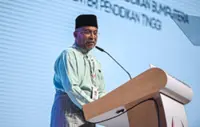
The discovery of social media pages displaying inappropriate content involving school students has once again thrust the issue of reproductive health education into the spotlight.
Education Minister Fadhlina Sidek has since called for swift action against such pages, and emphasised the need to increase reproductive health awareness among students, teachers and parents.
While the government’s initiative to enhance the Reproductive and Social Health Education Guidelines (PEERS) module and incorporate it more extensively into the 2027 school curriculum is commendable, we cannot rely solely on institutional efforts.
The responsibility for comprehensive sexuality education must begin at home, with parents taking the lead.
Too often, Malaysian parents shy away from discussing sexuality with their children, driven by cultural taboos and the misguided belief that ignorance equals innocence. This mindset is not only outdated but dangerous in our digital age.
With Internet access ubiquitous among young people, children are inevitably exposed to both accurate information and harmful misinformation about sexuality.
The question is not whether they will encounter such content, but whether they will receive proper guidance to process it.
Parents must abandon the fear of “putting unwanted ideas” into their children’s minds. Knowledge does not rob children of their innocence; rather, it equips them with the tools to navigate an increasingly complex world.
True innocence lies in a child’s capacity for wonder and trust, not in their ignorance of basic biological and social realities. Effective sexuality education is not a single “birds and bees” conversation but an ongoing dialogue that evolves with the child’s development.
Parents should embrace teachable moments that arise naturally in daily life through news stories, movies, or simple questions from their children. These organic opportunities make conversations feel more relevant and less intimidating for both parties.
When children ask questions, parents should resist the urge to deflect or change the subject. It is perfectly acceptable to say, “I don’t know, but I will find out and let you know.” This honesty not only provides accurate information but also models critical thinking and lifelong learning.
Importantly, parents need not be experts to engage in these conversations as sincerity and openness matter more than encyclopaedic knowledge.
Given that we cannot completely shield children from questionable online content, parents must focus on developing their children’s critical thinking abilities. Teaching children to distinguish between fact and opinion, to question sources, and to understand family values and boundaries will serve them far better than attempting to control their information intake.
The goal should be establishing such strong communication with children that parents become their primary source of information about sexuality, rather than allowing them to seek answers from unreliable Internet sources.
The ministry’s decision to introduce the PEERS module to address increasing cases of teenage pregnancy represents a crucial step forward. However, school-based programmes can only be effective when supported by parallel efforts at home.
Parents should view the enhanced PEERS curriculum as a complement to, not a replacement for, their own educational responsibilities. Furthermore, parents should actively engage with schools to understand what their children are learning and to ensure continuity between home and classroom messages.
This partnership approach will create a more coherent and supportive environment for young people’s sexual development.
Fadhlina’s call for parents to play a proactive role in protecting children from sexual exploitation cannot be achieved through silence and avoidance. Malaysian society must undergo a cultural shift that recognises comprehensive sexuality education as a fundamental aspect of child welfare, not a threat to traditional values.
The recurring discovery of inappropriate social media content involving students serves as a stark reminder that our current approach is insufficient. We cannot afford to wait for the next scandal to prompt action.
Parents must step up now, engaging their children in honest, age-appropriate conversations about sexuality, relationships, and personal safety. The stakes are too high for continued inaction.
Our children’s physical and emotional well-being depends on our willingness to move beyond cultural discomfort and embrace our responsibility as their primary educators. The time for change is now.
EUNICE DHARMARAJ,
NUR NADIA HANAPI and
PROF DR SIVABALA NAIDU
Faculty of Social Sciences
Quest International University
Note: On June 10, a social media group was found to be circulating photos of underage students with sexually charged comments. The “Group Budak 2 Sekolah Rendah” had around 12,000 members and has since been deleted from Facebook. On June 13, Fadhlina called for social media pages with pornographic and immoral content to be reported immediately. The ministry, she said, took a serious view of recent media reports about such pages linked to paedophilia and featuring schoolchildren.