PETALING JAYA: After his scholarship ended, deaf teacher Dr Lee Tur Chung worked part-time, surviving on his savings and community support while struggling to complete his PhD in the United States – all so he could return and contribute to the country’s special education system.
Now teaching while helping to empower the deaf community through advocacy, he aspires to work with the Education Ministry to improve special education in Malaysia.
“My struggles through this six-and-a-half-year journey taught me persistence and perseverance because I was really out of my comfort zone,” Lee, who is in his 50s, said in an interview.
A firm believer that success comes to those who refuse to give up, he said the speed of progress is not important.
“Just keep moving. And no matter how many times you fail, stand up.
“I took the Sijil Pelajaran Malaysia three times before passing the Bahasa Melayu paper,” said Lee, who believes he is the country’s first deaf teacher to complete the entire PhD overseas.
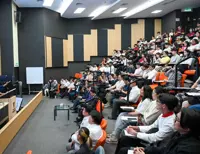
On April 11, he held a party here to celebrate two milestones – his birthday and his graduation – with family, friends, teachers and the deaf community.
Lee, who is the eldest of three siblings, was born deaf.
He was among the first batch of disabled teachers accepted into the profession.
He had been teaching for 13 years before being awarded a scholarship under the Fulbright Foreign Student Programme to pursue a PhD in deaf education at the University of Tennessee, Knoxville, in 2019.
The university, which recently made Time magazine’s “The World’s Top Universities of 2026” list, has many interpreters and academic staff who are deaf.
On Aug 11, 2019, The Star highlighted Lee’s appeal, through the National Union of the Teaching Profession, to the then education minister Dr Maszlee Malik to intervene after his study leave application was rejected by the ministry.
A day after the story was published, he was informed that his leave had been approved.
Lee returned to Malaysia in August 2024 after his study leave ended.
He resumed teaching while continuing to work on his dissertation titled “The Relationship Between Signed Languages and the Quality of Life of Deaf Adults in Malaysia” before finally receiving his hard-earned scroll on Dec 13 last year.
“I faced many challenges, but funding and having to learn American Sign Language (ASL) and improve my English proficiency were the hardest.
“ASL is tough as it’s very different from Malaysian Sign Language (known by its Malay acronym, BIM or Bahasa Isyarat Malaysia).
“And I really needed to work on my English because it was deemed basic and equal to the American high school standard,” he said.
As Lee’s scholarship only covered tuition and visa fees for two years, he had to take on part-time work as a graduate assistant at the university midway through his doctorate.
“I had wiped out my savings and was relying on churches, community outreach programmes and public generosity for food,” he said, sharing how Covid-19 turned out to be a blessing in disguise because the university had provided its students with food, basic necessities and clothing until the pandemic was over.