
In a breakthrough that challenges long-held scientific assumptions, researchers from Universiti Malaya (UM) have detected a key life-building molecule – formaldehyde (H2CO) – in one of the most hostile environments in our galaxy: near the Milky Way’s centre.
Led by the Radio Cosmology Research Laboratory (RCL) under the Centre for Astronomy and Astrophysics Research (CAAR), the UM team observed formaldehyde in dense molecular clouds just 0.2 kiloparsecs from the galactic core – a region long considered too violent and unstable to support the chemistry needed for life.
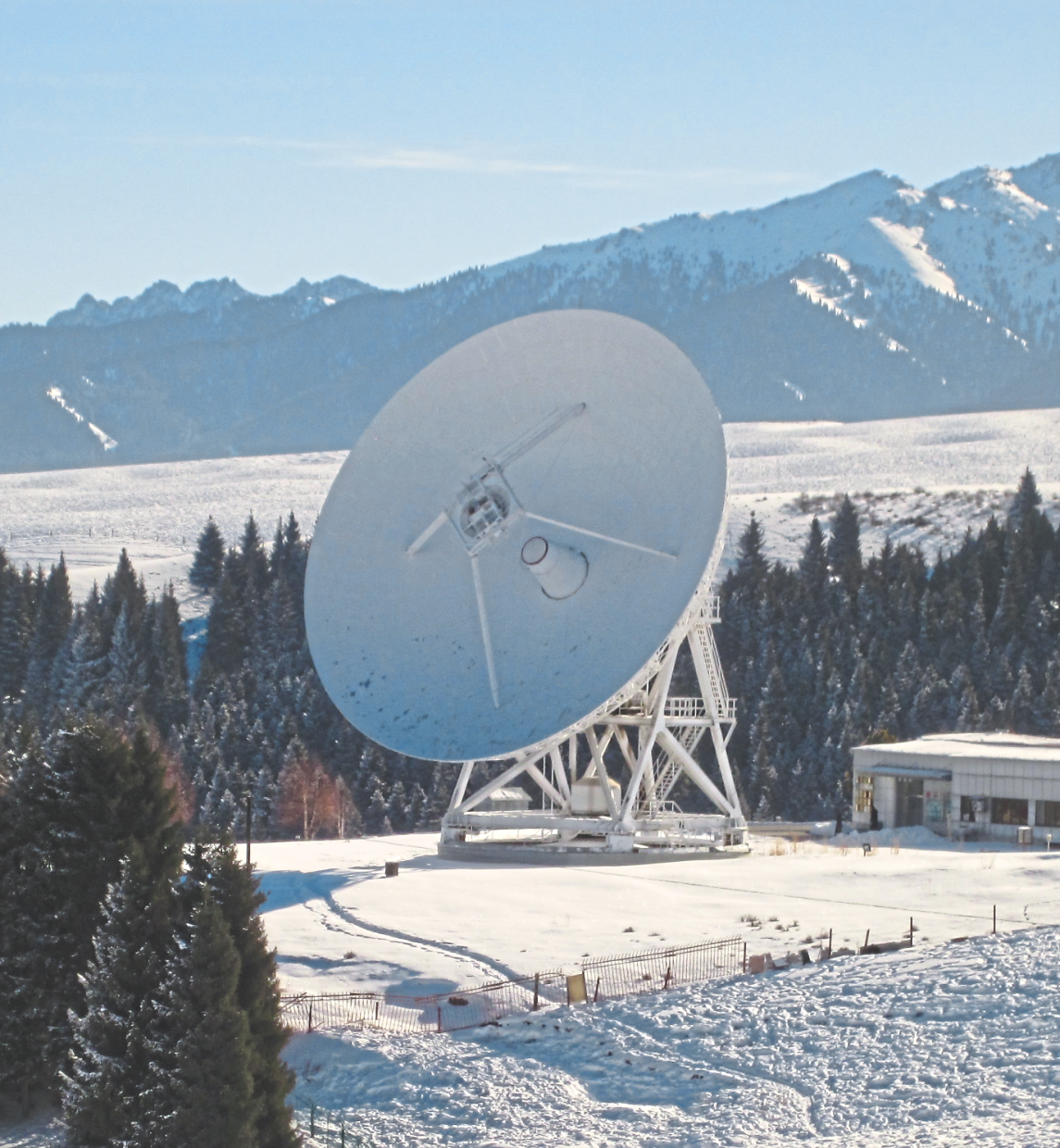
The discovery, made using a 25-metre radio telescope in Nanshan, China, suggests life’s building blocks may be more resilient than previously believed.
This finding was recently accepted for publication in The Astrophysical Journal, a Tier-1, Web of Science-indexed journal.
This, said Nursyazela Badrina, lead author of the study, changes how we think about the boundaries of where life could potentially emerge.
“Formaldehyde is essential in forming sugars and amino acids – key components of RNA and proteins. Finding it so close to the galactic centre forces us to reconsider the limits of the so-called Galactic Habitable Zone (GHZ),” she said in a press release dated July 4.
The GHZ refers to areas in a galaxy where conditions are thought to support life.
Typically, the centre of the Milky Way has been excluded due to intense radiation from the supermassive black hole, Sagittarius A*, and frequent supernovae.
But the UM discovery raises the possibility that complex molecules – and perhaps life – can exist even in these high-risk environments.
The milestone is part of a decade-long collaboration between UM and the Chinese Academy of Sciences (CAS), formalised in 2015.
RCL head Prof Dr Zamri Zainal Abidin said the success was the result of combining Malaysia’s strength in molecular spectroscopy with CAS’s world-class radio telescope facilities.
“This is not just a scientific achievement; it’s a testament to the power of international collaboration, and signals Malaysia’s rising role in global space science,” said Prof Zamri.
Building on this momentum, UM is spearheading Malaysia’s first national radio astronomy facility in collaboration with the Malaysian Space Agency (MYSA).
The project aims not only to advance scientific research but also to train the next generation of Malaysian astrophysicists through new postgraduate programmes.
“We are not only building telescopes – we are building a future. This initiative will help retain local talent and create a thriving space science ecosystem in Malaysia,” Prof Zamri added.
The team’s next steps include studying other complex molecules like methanol in the same region, potentially uncovering further evidence that life’s chemical precursors are more widespread than ever imagined.
This landmark discovery opens up exciting possibilities in the search for life in the universe – and puts Malaysia on the map as a growing force in space science.