
Zambry: Learning institutions must work as one


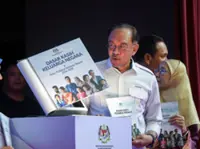
Shaping leaders: Zambry signing a poster to launch the event as (from left) Karisma programme for Madani Young Leaders head Prof Datuk Dr Aldrin Abdullah, Universiti Sains Malaysia vice-chancellor Prof Datuk Dr Abdul Rahman Mohamed, Higher Education director-general Prof Dr Azlinda Azman and deputy secretary-general (policy) Datuk Dr Haji Megat Sany Megat Ahmad Supian, and (far right) Academy of Higher Education Leadership director Prof Dr Harshita Aini Haroon look on. — LOW BOON TAT/The Star

THE Malaysian higher education system must no longer be viewed as fragmented silos of universities, polytechnics and community colleges, but rather as a cohesive ecosystem with shared goals, said Higher Education Minister Datuk Seri Dr Zambry Abd Kadir.

He urged educators and society to shift their mindset and see all institutions – regardless of type – as part of a single, collaborative framework.

“Unity in diversity must be our strength.

“All institutions – whether universities, polytechnics or community colleges – must be part of one holistic ecosystem,” he said.

Stressing equity across the education sector, Zambry said it is time to put an end to outdated hierarchies.

“There should no longer be any sense of inferiority between universities and technical and vocational education and training (TVET) institutions.

“We have a mission to prepare a future generation that can compete in a challenging global world,” he said during a dialogue session at the 2025 Karisma programme for Madani Young Leaders in Putrajaya on May 26.

The audience comprised academic staff from the Polytechnic Education and Community Colleges Department (JPPKK) as well as representatives from 20 public universities.

The Karisma programme aims to prepare emerging leaders in higher education to become principled decision-makers who can serve the community and the nation.

During the event, Zambry also launched the “Karisma: Aspiring Madani Leaders; The 3H Leadership Module”, which will serve as a foundation for higher education institutions in grooming future talent.

He stressed that the country’s strength lies in the diversity of its academic landscape.

“The key is to strengthen cross-disciplinary efforts and institutional networks, not compete in isolation.

“Whether it’s a polytechnic or a research university, each plays a critical role in developing the nation’s intellectual and economic capacity,” he said.

Addressing a question about how academic staff – especially those from East Malaysia – often feel overlooked in higher education discussions, Zambry said inclusivity is essential across the board.

“We must not look at who is more or less important; we are all in the same ecosystem and no one should feel sidelined,” he said, adding that empowerment must be felt across all regions, including Sabah and Sarawak.

Rejecting ageism in academic leadership, he also countered the perception that leadership must come only with seniority.

“I don’t believe someone must be a certain age to be a leader, give them a chance from as early as age 27 instead of waiting until they’re in their 50s.

“I want to produce new leadership and new thinking. There are leaders who do not think, and thinkers who don’t want to lead.

“Imagine if our universities could produce groups of thinkers, leaders, debaters, those who accept differences in opinion, and act based on the right values.

“The next generation needs education that can address the complex challenges of the world,” he said.

Meanwhile, Zambry said the federal government has no objections to Sarawak’s initiative to provide free higher education to its people through state-owned higher education institutions.

He said this is because the state has the financial means and administrative capability to do so.

The federal government, he said, will always cooperate with the respective states to further improve the quality of education, whether at the primary or higher education level, as long as it does not involve constitutional issues or contravene existing laws.

On March 20, the Sarawak Cabinet approved a proposal paper for the implementation of the Sarawak Free Tertiary Education Scheme, which will be implemented next year.

Follow us on our official WhatsApp channel for breaking news alerts and key updates!

Next In Education

Education remains a national priority, says Anwar
Over 400,000 children embark on primary school journey as 2026 academic year begins
Ministry to step up anti-bullying measures in new school session, says Education sec-gen
Anwar wishes students a happy return to school
Road fatality shadows start of new school term
Relief efforts may delay some Sarawak school classes
Smooth start for Group A
Has caning lost its sting?
Fadhlina: Teachers, students integral to school reforms
Train is vital lifeline for students

Others Also Read