Immersive technologies and how they change learning experiences


The Vortex XR Lab is an experimental space that allows students to practise their industry craft in a safe and controlled environment.

AS HYBRID and online learning become mainstream methods of learning due to Covid-19 accelerating digital adoption, the latest emerging learning trend is immersive learning.

Immersive learning can be summed up as using cutting-edge technology like virtual reality (VR), augmented reality (AR), extended reality (XR) and mixed reality (MR) to help students learn more effectively by creating an online environment that motivates them to do so.

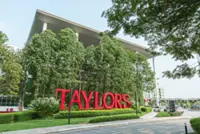
To facilitate this new learning experience, Taylor’s University launched its Vortex XR Lab on Aug 9 this year, equipped with augmented, virtual and extended reality software and hardware to drive varsity-wide adoption of XR and immersive technologies in teaching, learning and research.

The lab features facilities like a green screen studio, XR application and LED stage powered by Zero Density, mixed reality immersion rooms, VR head mounted displays powered by Meta Quest and HTC, and a HoloLens2 station.

During the launch of the Vortex XR Lab, located in Taylor’s Lakeside Campus, the public got the chance to immerse themselves in experiences like with the virtual welding and woodworking workshop, kayaking in Antarctica as a virtual tourist, attending a virtual moot court simulation, viewing AR Barbie dolls dressed in fashion designed by Taylor’s Fashion Design Technology students, and exploring the human anatomy through a hololens.

The experience was demonstrable proof that immersive tech can help create a participatory environment in which educators and students actively experience scenarios and simulations relevant to their industry.

Taylor’s University deputy vice-chancellor and chief academic officer Prof Dr Pradeep Nair said that the university had invested over RM1mil in the lab to enable the creation of XR content and facilitate XR research.

The HoloLens2 station demonstrates how mixed reality can allow bioscience students to study human anatomy without using cadavers.

“This will allow students to engage and experience their learning in a 360° immersive manner and provide them with the exposure needed to meet the demands of the XR job market.”

He continued: “Students are no longer satisfied with just an information download from lectures and sitting in a class for hours. They want to see, feel, touch and experience.

“We’re witnessing a shift in learner expectations, where they expect learning to be flexible, on demand, personalised, engaging and immersive.

“With Vortex, all students across the university and college will be exposed to some form of immersive technology. This is part of our journey in transforming the curriculum and pedagogy to embed tech skills and modules into our degrees to prepare our graduates for jobs of the future.

“Industrial training, work-based learning and lab-based learning are important in developing psychomotor skills and hand-eye coordination to produce a skilled worker.

“The challenge is in enabling students to continually repeat the learning process in a practical environment without the constraints of time and space. For instance with virtual welding or virtual surgery, I can practise repeatedly at any place at any time.

“Immersive technologies help transcend that problem of time and space, and aren’t a replacement for traditional lab training.”

Taylor’s University Design School senior lecturer and Vortex XR Lab director Dr Charles Sharma Naidu said at at the launch: “The lab will also function as an XR incubation centre consisting of XR services that train and provide technical support for academics; XR action which facilitates projects and seeks funding and commercialisation for XR products; and XR advocacy and research.

“Taylor’s is the first university to be part of the Zero Density Educational Partner Programme for training and certification,” he added.

Zero Density regional manager Serkan Acar expressed at the launch: “With an ever-growing footprint in virtual production, there’s immense demand for Reality Engine professionals worldwide so we’ll be able to bring this technology to students with our years of experience and technical guidance.”

Vortex XR Lab also signed an agreement with Tabung Ekonomi Gagasan Anak Sarawak (Tegas) Digital Village to raise awareness about and promote XR technologies in Sarawak.

Get 20% OFF The Star Digital Access

Monthly Plan

RM 13.90/month

RM 11.12/month

Billed as RM 11.12 for the 1st month, RM 13.90 thereafter.

Best Value

Annual Plan

RM 12.33/month

RM 9.87/month

Billed as RM 118.40 for the 1st year, RM 148 thereafter.

Follow us on our official WhatsApp channel for breaking news alerts and key updates!

Next In Education

Unfair, highly restrictive tax-exempt conditions imposed on TAR UMT, says MCA president
TARC Education Foundation receives three-year tax exemption extension
PM congratulates 17 Malaysian students on hauling 22 medals at Olympiad finals in Macau
Selangor Education Dept gives full cooperation in police probe over school stabbing incident
Stabbing incident at Kuala Langat secondary school leaves student injured
Year 4 learning matrix for early intervention, not pupil, school ranking, says Exams Board director
TAR UMT tax exemption only approved for three years, not 10 as announced, says Dr Wee
International students account for 12.6% of higher education institutions' enrollment, says ministry
Why teachers stay
AI for care support

Others Also Read