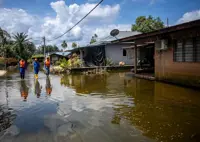
Whenever the water level of Sungai Kinta near Teluk Intan, Perak, rises during the rainy season, Anuar Osman knows it is time to head to the river and set up traditional fish traps in anticipation of the arrival of ikan lundu (a type of catfish).
For the inland fisherman, catching the catfish species Arius maculatusis is not his main occupation but rather a seasonal opportunity.
With catches sometimes exceeding 100kg a day, the ikan lundu brings in extra income when sold to wholesalers.
Anuar, who also manages an oil palm smallholding, said the large-scale appearance of ikan lundu typically lasted for about a week.
He explained that the traps were positioned along the river in areas where the fish moved into as the water rose.
“When we see the water rising, the fish will appear for about a week, but once the river level drops, we stop fishing,” he told Bernama when met in Kampung Permatang Pelanduk.
He added that using the traditional fish trap called belat was more effective than nets for catching ikan lundu, as the fish have sharp spines that make them difficult to remove from nets.
Another inland fisherman, Shahril Yeop Mat Sibi also takes advantage of the opportunity.
Based on his observations, the fish migrate from the lower reaches of Sungai Perak into the Kinta river, eventually entering the belat set up at strategic locations.
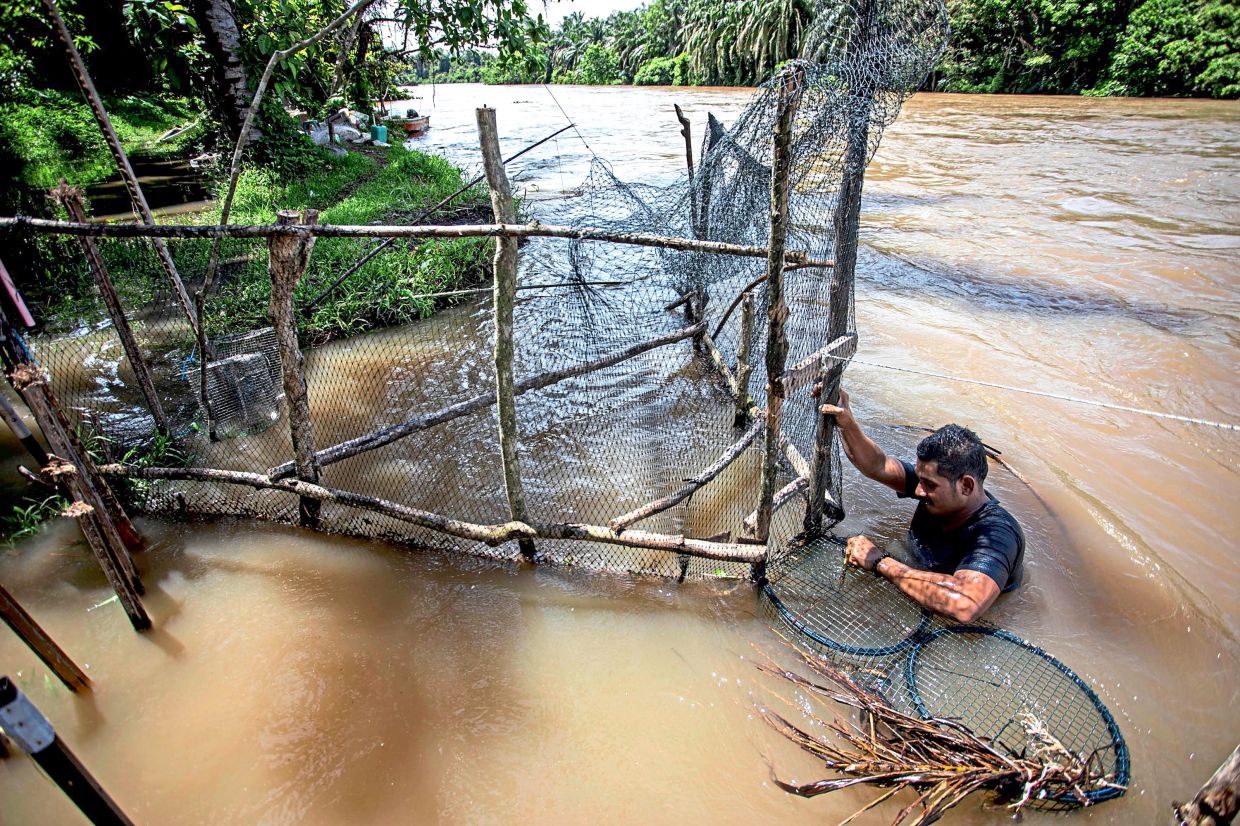
He said the traps did not require bait, as the ikan lundu moved in schools and entered them by following the river’s current.
“As long as the belat is not full, the fish will continue entering.
“Once it is full, we quickly pull it up because more fish from downstream will keep moving upstream.
“That is the bounty brought by the floods. As long as the river remains deep, ikan lundu appear in large numbers,” he said.
Shahril, who works as a school canteen assistant, said the catch could reach up to 100kg a day, providing a lucrative supplementary income despite the short fishing season.
Fish trader Mohd Jasnurol Iznal Zainal Abidin said ikan lundu was among the main species sold at his freshwater fish collection and distribution centre, operated under the Fisheries Development Authority of Malaysia (LKIM) in Parit 9, Kampung Gajah, during the flood season.
He could sell between 300kg and 600kg daily at about RM30 per kilogramme.
“The highest volume I have ever sold was about two tonnes in a single day last year,” said Mohd Jasnurol, who also supplies the fish to Pasar Borong Selayang in Selangor.
However, the fishing activity is not without risks due to the presence of crocodiles in the river.
Mohd Jasnurol advised those involved to remain vigilant and never underestimate river conditions, especially when water levels rise and currents became stronger.