Tech helps growers optimise fertilisation, lower labour costs
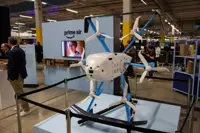
FARMERS can complete certain types of fieldwork up to 80% faster using drones, making technology an increasingly useful tool in modern agriculture.
Malaysian Plant Protection Society (MAPPS) president Assoc Prof Dr Muhammad Saiful Ahmad Hamdani said drones could spray crops with fertilisers and treatments with higher precision, while helping farmers identify areas affected by pests, weeds or excessive fertiliser.
“Previously, farmers needed to hire workers to spray their crops, which can be time-consuming.
“With a drone, the same work can be done 70% to 80% faster, taking just a day or even less,” he said at a press conference for the 13th International Conference on Plant Protection in the Tropics, in George Town, Penang.
Muhammad Saiful urged farmers to adopt technological advances such as Internet of Things (IoT), drones, geographic information systems (GIS) and global positioning system (GPS) instead of relying solely on conventional methods.
“Whether we like it or not, we have to move forward and embrace new technologies.
“We cannot depend solely on traditional agriculture anymore.
“We have to work with government agencies, industries and communities to take the next steps forward,” he added.
The two-day conference themed “Redefining Plant Protection: Crop Resilience Through Sustainable Innovation”, brought together about 200 participants from around the world to discuss moving from traditional plant protection methods toward more holistic and environmentally friendly approaches.
Muhammad Saiful gave the example of drones equipped with GPS-guided flight paths enabling farmers to spray crops accurately while reducing time and labour.
“Technology also gives us better control over where we apply fertilisers and treatments, without farmers having to break a sweat,” he said.
He noted that combining drones with technologies such as IoT, GIS and GPS could help farmers identify soil areas with excessive or insufficient fertiliser.
“Instead of doing it the old-school way, where soil samples must be collected and sent to a laboratory for testing, drone imaging can help us identify differences across a field.
“The images can also show areas with more pests or weeds.
“Farmers can then create a map and focus their attention on areas that need treatment, rather than applying it across the entire field.
“This will save farmers both time and money,” he added.
Muhammad Saiful also stressed the importance of educating communities on sustainable crop management as agriculture moved towards greater technology adoption.
Also present were Penang trade and national unity committee chairman Goh Choon Aik and conference chairman Dr Mohd As’wad Abdul Wahab.