THE inscription of George Town as a Unesco World Heritage Site in 2008 is arguably one of the most important developments in the state’s capital in decades.
As the exodus of residents following the repeal of the Control of Rent Act 1966 in 1997, which sent rent soaring, the global recognition brought back business and life into the city.
In an effort to manage George Town’s development and shape its future, the state introduced a number of measures.
Dedicated state agencies now oversee the capital’s ongoing preservation and growth.
To manage George Town’s growth, the state introduced several key conservation bodies.
These included George Town World Heritage Incorporated and the George Town Conservation and Development Corporation.
The George Town Special Area Plan was later gazetted in 2016 to enforce these efforts.
State agencies partnered with local groups to rebrand specific enclaves, boosting tourism and heritage preservation.
Prime among these is the Street of Harmony along Jalan Masjid Kapitan Keling.
StarMetro goes along this narrow thoroughfare to see six historic Christian, Muslim, Hindu and Taoist sanctuaries that have stood side by side for over two centuries.
Rather than existing as isolated monuments, these structures formed the initial anchors around which diverse immigrant communities settled, traded and built their livelihoods.
St George’s Church
One of the first orders of business undertaken by Captain Francis Light when he arrived on Penang’s shores in 1786 was to build a fort.
Originally constructed with vegetation, Fort Cornwallis was rebuilt with bricks in the early 1800s and space was given in the south-western corner for an Anglican chapel in 1805.
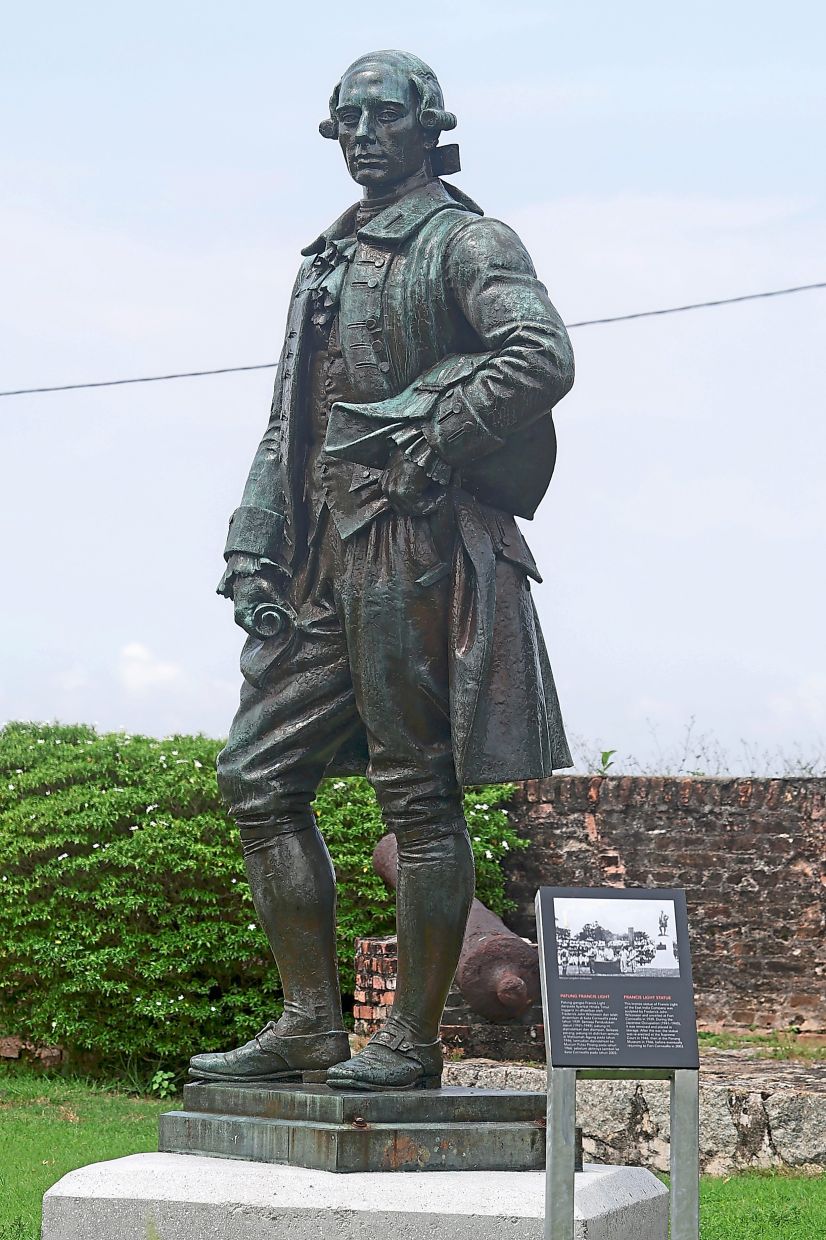
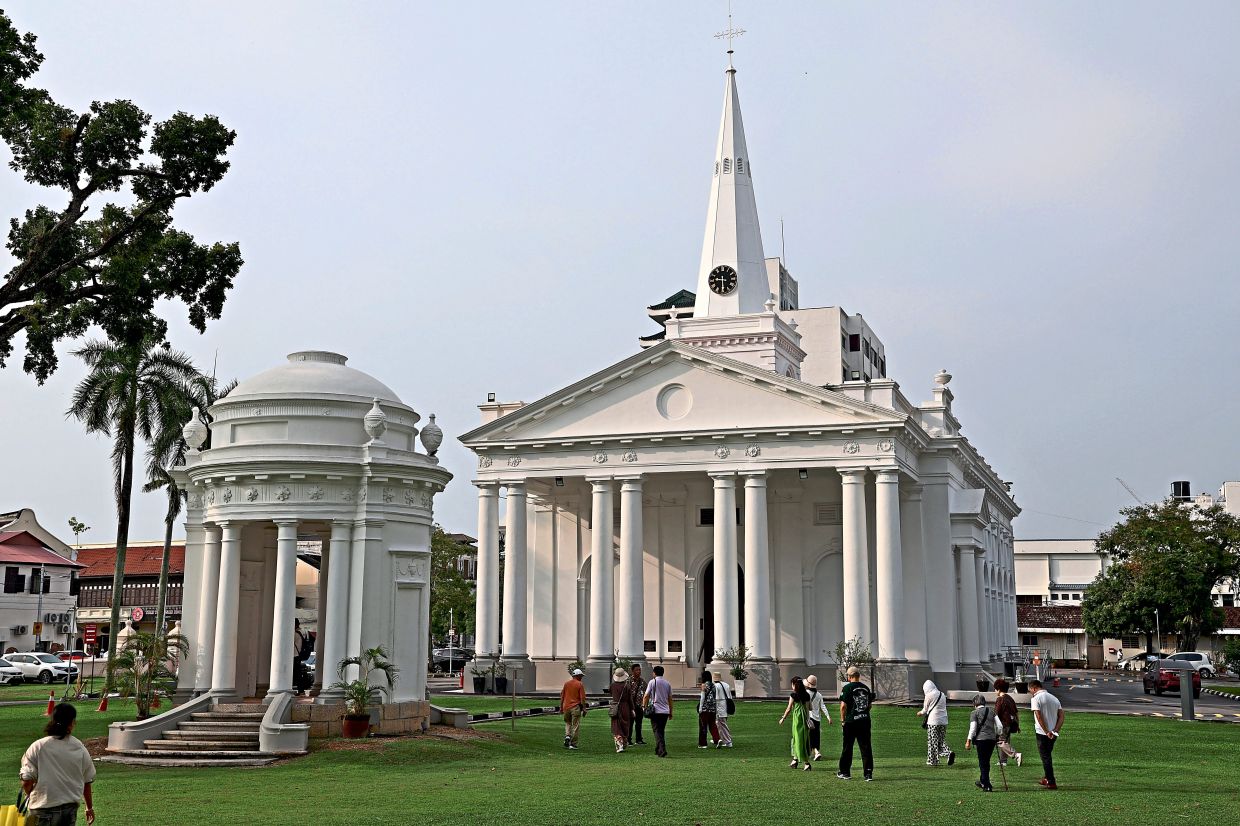
It is there, according to the records of the Anglican Diocese of West Malaysia, that Anglicanism officially arrived in the state with the first Anglican church in South-East Asia constructed in George Town in 1817.
It stood for over a century until World War II when Japanese bombs hit the building in 1941 and destroyed the historic pipe organ.
Although the building was rebuilt in 1948, it would be another 70 years before a pipe organ would grace the church’s balcony again.
In 1996, the Penang Museum Department officially gazetted the church as a historical site. In 2007, it was named one of Malaysia’s National Heritage Treasures.
Essential repairs and restoration have happened over the years with the help of state and government grants.
The church was elevated in status in 2023 with the official title of Pro-Cathedral of St George the Martyr and also received the Penang Centennial Heritage Excellence Award for its outstanding contributions to the state’s development the same year.
Kapitan Keling Mosque
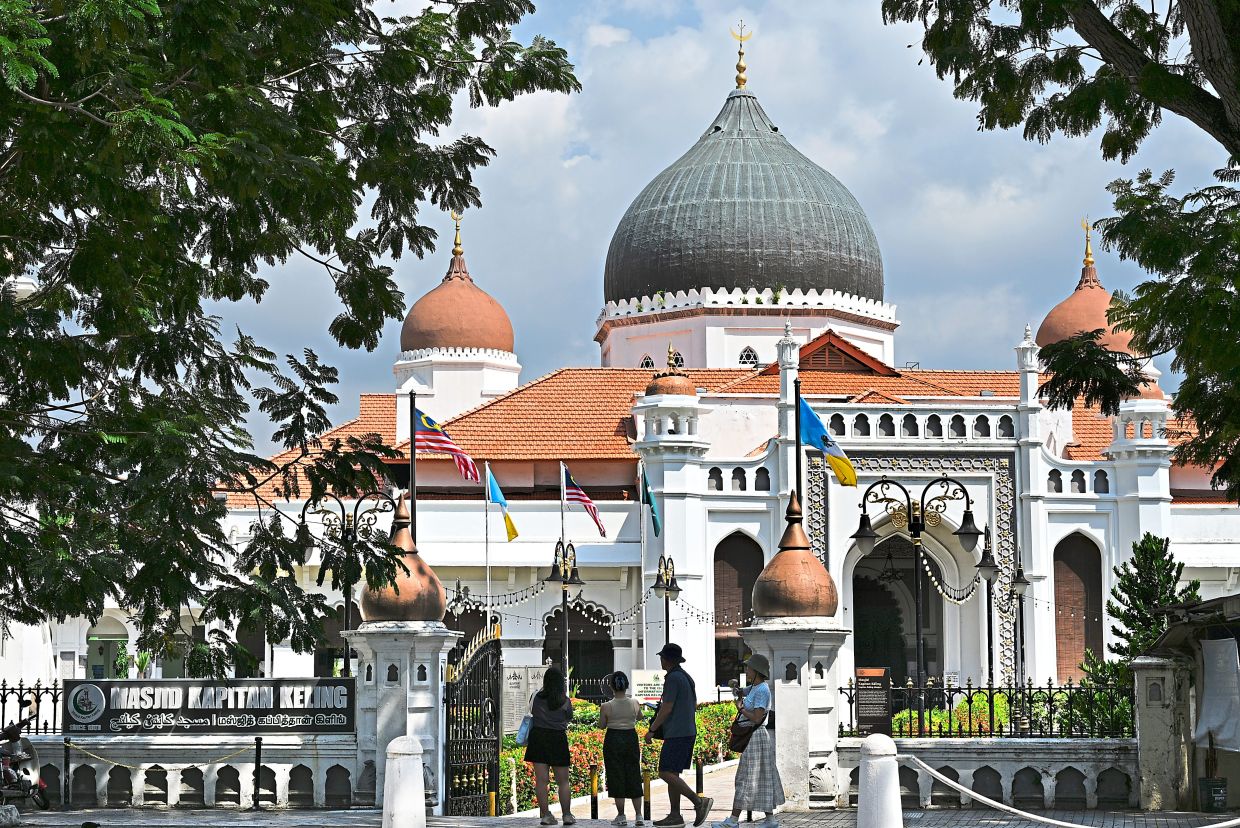
The mosque not only lends its name to the road where the Street of Harmony buildings are located, it also sketched the blueprint for the area that is now known as Little India.
According to the Penang State Museum and Gallery, the mosque was commissioned in 1801 by south Indian trader Cauder Mohudeen Maicar.
Built with Moorish architectural design features, it contains a main dome dominating the centre of the mosque and flanked by two smaller and taller domes.
The government’s Malaysia Mosque portal states that the Kapitan Keling Mosque first served the Indian Muslim community that primarily worked as traders and labourers for the East India Company.
The site also became a centre of faith for foreign Muslim traders who stopped at the entrepot to trade spices, timber and fabric.
Over the century, the historic mosque saw changes and was enlarged in the 1930s to the version visitors see today.
In 2012, a project of more than RM1mil under the Federal Government’s George Town Grants Programme was used to fix its leaking roof.
The strong religious foundation the Kapitan Keling Mosque created over the decades eventually attracted many Indian Muslim traders to settle down in the city, opening businesses such as money changing, restaurants as well as gold and spice shops.
Everything from delicate, traditional Indian clothing to one of the best nasi kandar can be found in the area.
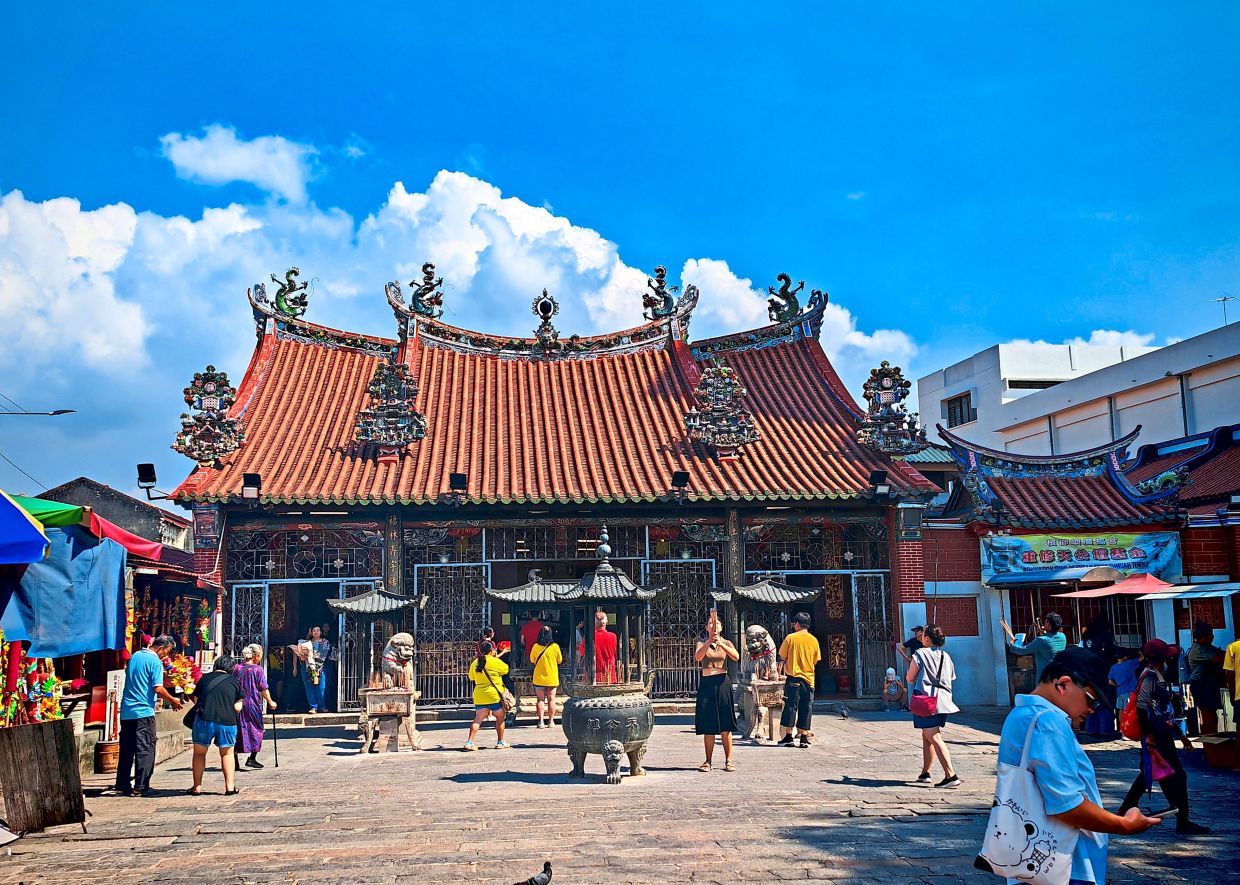
Goddess of Mercy Temple
The temple also known as Kuan Im Teng is undoubtedly one of the most famous and beloved temples in the state, despite its petite size and lack of parking.
Officially known as “Kong Hock Keong”, the building was constructed in 1800 on land given by the East India Company to early Chinese settlers.
Now known for its unwavering devotion to the Goddess of Mercy or Kuan Im as its main deity, the temple is said to be dedicated to another goddess – Ma Chor Po – at its inception.
In Chinese folklore, Ma Chor Po watches over seafarers, making her a popular deity for travellers who arrived on the island by sea.
In the early days, the temple served as a neutral ground for clashing Chinese clans to settle disputes.
By good fortune or divine intervention, it was spared during the World War II bombings.
Though more than two centuries have passed, the temple’s structure has remained largely unchanged, though some renovation and expansions have occurred, like in 1824 when the inner hall was broadened and statues of different deities were welcomed into the temple.
In 2013, it underwent a major RM8mil restoration project that restored the roof, beams and other parts of the interior.
Although not a day goes by without the temple receiving visitors, large crowds usually flock to the site on Wesak Day as well as the three birthdays of the Goddess of Mercy that fall on the second, sixth and ninth months of the Chinese lunar calendar.
Sri Mahamariamman Temple
The Hindu temple has stood proudly in the heart of Little India for almost two centuries, though its history stretches back even further.
According to temple officials, Indian labourers who were brought to Penang in the 1700s first built a small temple in Greenhall – a small, nearby road that leads to the George Town seafront.
As they settled down for good in the city and became traders and entrepreneurs, these Hindu faithful embarked upon building a bigger place of worship.
The Penang Hindu Endowments Board said the site began as a shrine, attracting worshippers as early as 1801, and officially became the Sri Arulmigu Mahamariamman Temple in 1833 (though it is popularly known by its shortened name).
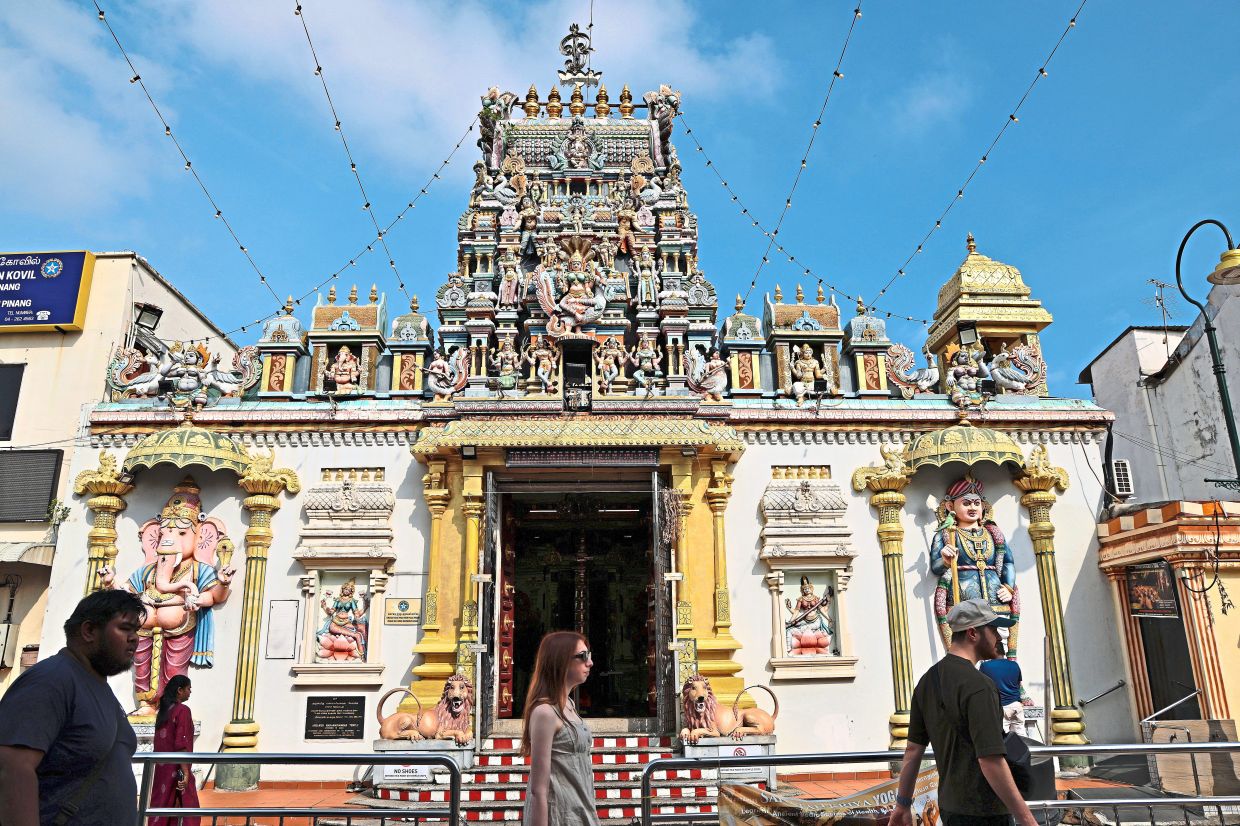
The deity is a Hindu goddess overseeing rain, health and fertility and is believed to protect devotees from diseases like smallpox and cholera, which were particularly deadly in Penang’s early entrepot years.
Officially located in Queen Street, the back entrance of the temple looks out onto Jalan Masjid Kapitan Keling, where four of five of its Street of Harmony neighbours can be found.
While the main structures of the temple are its original construction, beautiful and intricate statues and finishing were added over the decades.
This includes a massive renovation project on the temple’s centennial anniversary in 1933 where the gopuram (tower) at the entrance and vimanam (dome) were constructed.
Another round of renovations began in 1997.
The Sri Mahamariamman Temple is at the centre of prominent festivals, including the annual Thaipusam festival, where kavadi bearers start their journey to make their way to the Arulmigu Balathandayuthapani Temple on Waterfall Road.
Acheen Street Malay Mosque
Due to its strategic location, calm waters and organised infrastructure, Penang received a steady stream of visitors in the 19th century as a bustling entrepot city.
Attracting not only those from the far east and west, the hub was extremely popular for Malay traders all over the region and welcomed ships from places like Sumatra, Rawa and Jawa.
Records from the National Archives state that Tengku Syed Hussain Al-Aidid, a member of the royal family from Aceh in Indonesia, established a Malay village of over 6,000sq m around Acheen Street in 1792.
He is believed to have visited the city with a royal delegation under an invitation from Captain Light.
Houses, shops and even an Islamic education institution were built here along with a mosque constructed in 1808.
Within the compound of that mosque – now known as the Acheen Street Malay Mosque – were six houses, one of which was the first site of the noted Al-Mashoor schools that still continue the proud legacy of education in the state.
The mosque was built with a combination of Moorish, Chinese and classical architecture, as shown in its minaret and traditional five-ridged house roof.
In the early days, the mosque became known as ‘Little Mecca’ or ‘Second Jeddah’ as pilgrims heading to perform the haj first congregated there before boarding Mecca-bound ships.
Together with six other mosques (including the Kapitan Keling Mosque) built in the state in the 1800s, Penang government gazetted the Acheen Street Malay Mosque as a heritage building in November last year.
Church of the Assumption
Although located a stone’s throw from Street of Harmony, this structure represents the oldest Catholic church in Penang.
Its story began as a humble wooden chapel in the nearby Church Street.
According to the Catholic Diocese of Penang records, Catholicism took root in neighbouring Thailand in the mid-17th century.
Facing persecution, the faithful moved down to Kuala Kedah where the sultan of the state provided them a house, which later became the church.
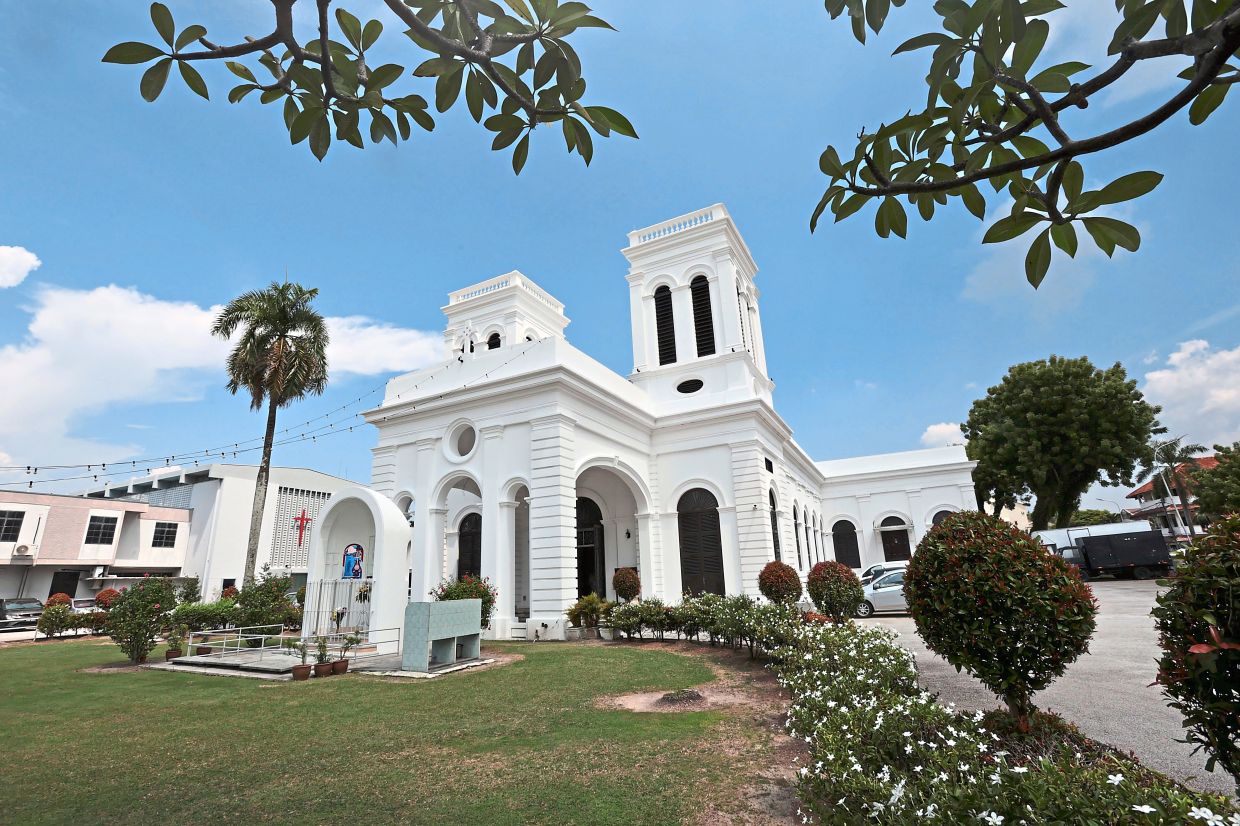
When Captain Light built the British outpost in Penang, he sent a ship to Kuala Kedah with an invitation to Catholic priest Father Arnold Garnault to help develop the island.
As they arrived on an important Catholic feast day, the church was named ‘Church of the Assumption’ in honour of the celebration.
When the number of faithful grew, the church was moved to a larger, cross-shaped building in Farquhar Street in 1861.
It now contains one of only two pipe organs in the state, the other being housed just down the street in St George’s Church.
In the early years, Church of the Assumption acted as the base for other historical Catholic sites in George Town, most notably St Xavier’s Institution and Convent Light Street – the state’s early education pillars.
In 2016, an ambitious RM2.5mil restoration project to reconstruct the sanctuary to its original state was undertaken, where the church was closed for over a year and reopened with parts of the original altar and front doors reinstated.
The construction of a new Roman Catholic Diocesan Museum in the old bishop’s office ran concurrently with the restoration, and now houses historical artefacts and antiquities related to the church’s history in the country.
Church of the Assumption was added to the Street of Harmony last year in recognition of its significant contribution to Penang and located near the other historical houses of worship.