



TYPEWRITERS, cassette players and first-generation mobile phones have largely given way to computers, streaming services and touchscreen smartphones.
However, some young Malaysians continue to use these older devices for writing, listening to music and everyday communication.
While modern alternatives offer greater convenience, these users have found reasons to keep their ageing equipment in service, despite the occasional difficulty of finding replacement parts or keeping decades-old machines functioning.
For some, the interest began with childhood memories and family possessions, while others discovered the devices online or through second-hand shops.
Typewriting poetry
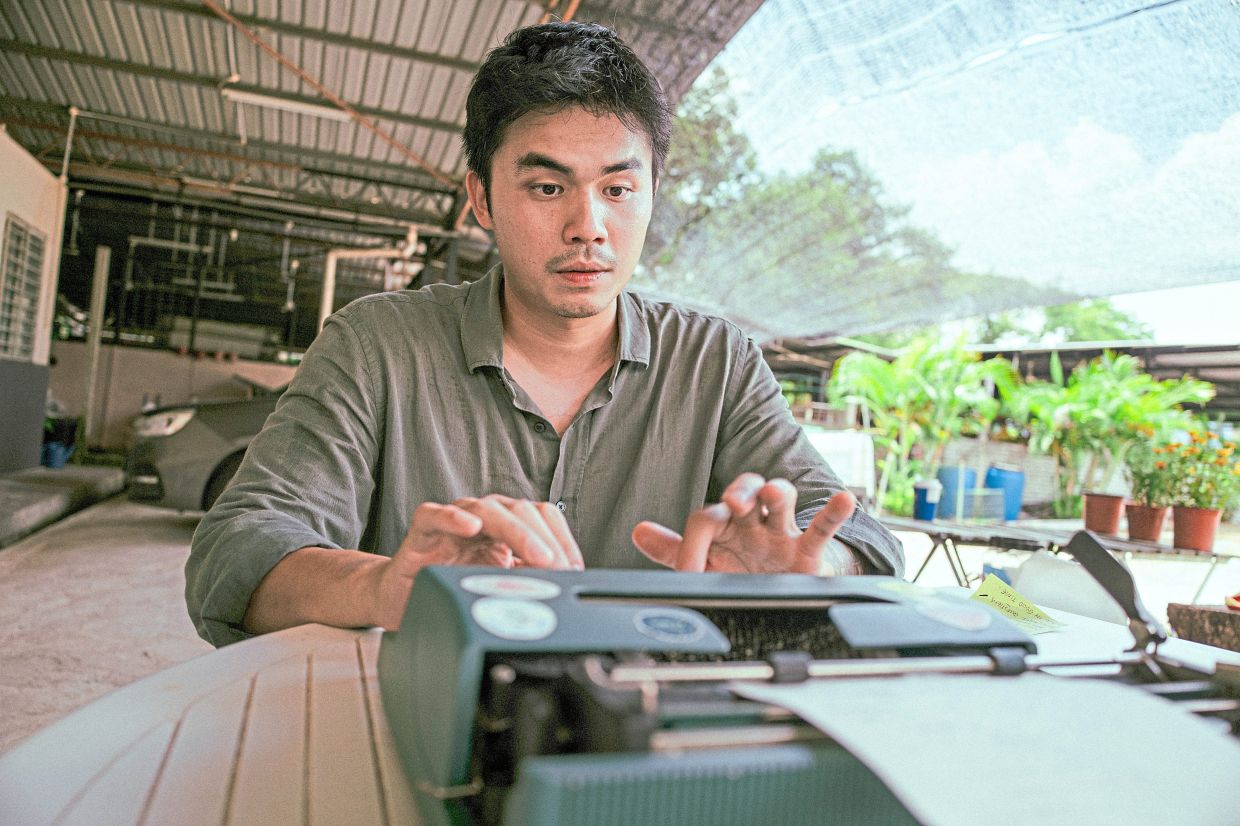
For Gaia Tan, 29, from Mantin in Negri Sembilan, a typewriter has been part of his writing routine since he was 17.
He first encountered one at a shop in Bangsar, Kuala Lumpur, where a light-blue machine caught his attention.
Twelve years later, he continues to use typewriters to compose poetry and occasionally write letters.
His current machine is a portable Olivetti, purchased for RM300 from a vendor in Petaling Jaya, Selangor, three years ago.
“If I open a laptop, for example, I can use it to do many different kinds of things.
“But with a typewriter, it’s built for writing,” he said.
Tan said the mechanical nature of typewriting encouraged him to concentrate on his words, particularly as mistakes cannot be easily erased.
“I think I write more honestly.”
He also brings his typewriter to events, where he writes personalised poems for visitors after speaking with them.
Visitors can pay what they wish; most contribute between RM30 and RM35.
For Tan, keeping the machine functioning has been relatively straightforward, apart from its number one key, which no longer works.
He visits a typewriter repair shop in Brickfields, Kuala Lumpur, to replace its ink ribbon approximately once a year.
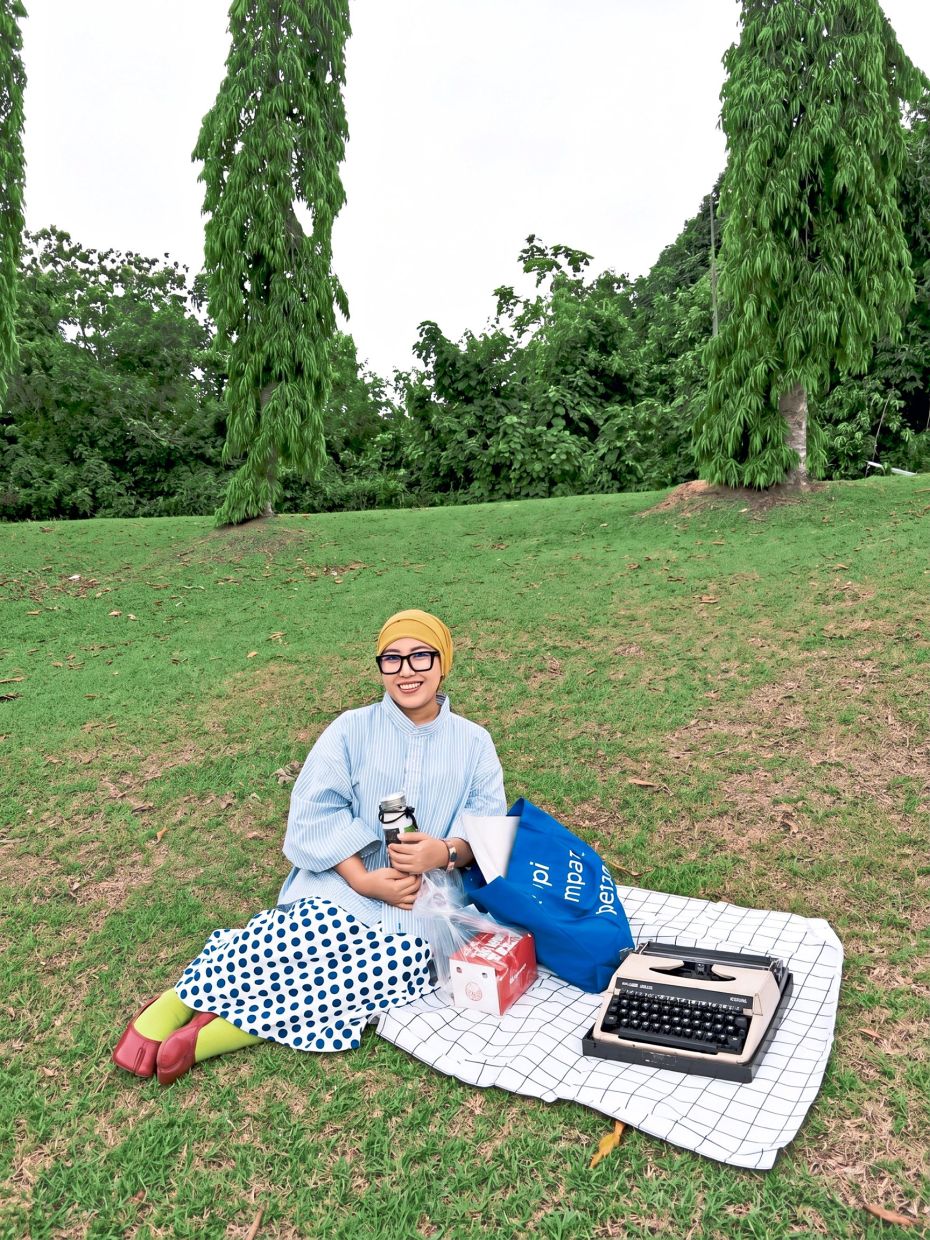
Another typewriter enthusiast, Helyna Shahar, 27, developed an interest in the machines after growing up with a cream-coloured typewriter belonging to her father.
The machine was usually kept in a cupboard; Helyna and her siblings were occasionally allowed to use it.
After wanting one for a decade, Helyna finally acquired a Silver Reed, a Japanese typewriter manufactured around the 1970s and named it Tuah.
The name, she said, reflected her good fortune of finally owning a machine that had long been on her wish list.
Maintaining Tuah requires regular checks on the ink ribbon, keys and paper roller.
Helyna also owns nearly 30 music cassettes, several cameras and other vintage items.
Sadly a collection of old books and magazines was lost to flooding several years ago, she said.
Despite being relatively new to typewriting, Helyna hopes to continue using Tuah for another 40 years.
Extending lifespan of phones
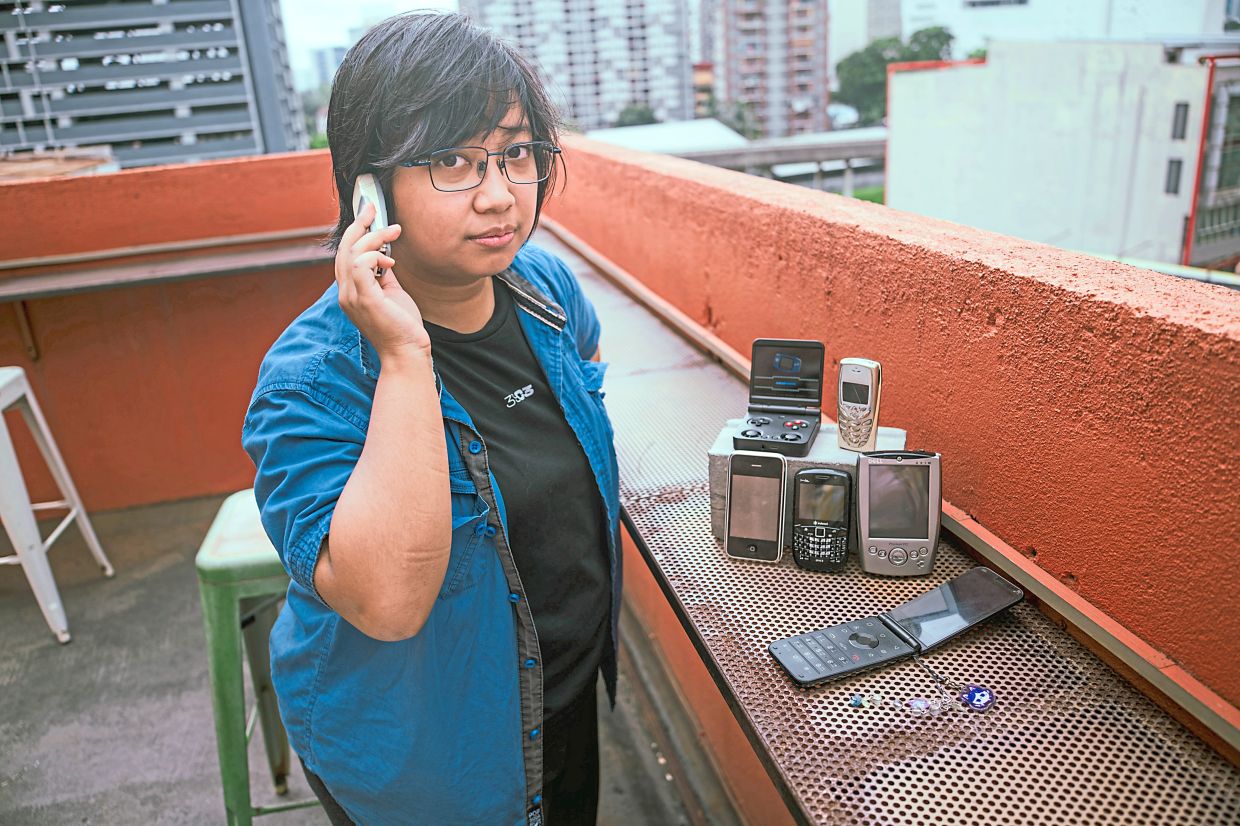
For Dee Emeralda, 23, from Damansara Damai in Petaling Jaya, mobile phones with physical buttons have remained a favourite since her secondary school days.
While her classmates were using iPhones and other touchscreen smartphones, Dee was still using a BlackBerry Curve bought by her grandparents.
She recalls writing fan fiction and watching YouTube videos on the device, which sparked an interest in older mobile phones.
Over the years, she has kept several of her previous handsets, including a Nokia 1100, BlackBerry Curve 9300 and a Vodafone phone.
Her collection has also grown with hand-me-downs from her parents, who noticed that she would occasionally return to using her older devices.
“I try to be as non-consumerist as possible,” said Dee.
Rather than actively buying vintage phones, she prefers keeping those she owns or accepting unwanted devices from family members.
She occasionally browses an online marketplace for older models and hopes to own a Nokia N-Gage, a mobile phone designed for handheld gaming.
However, keeping the devices functional has become increasingly difficult.
Several handsets inherited from her parents no longer work, while ageing batteries can swell and pose safety risks.
Dee occasionally uses her BlackBerry Curve, purchasing replacement batteries when necessary.
She misses the variety of designs that characterised older mobile phones, particularly sliding keyboards, flip mechanisms and physical navigation buttons.
Although she acknowledges that older handsets cannot fully meet the demands of modern communication, she continues to use and maintain those that remain functional.
Analogue music
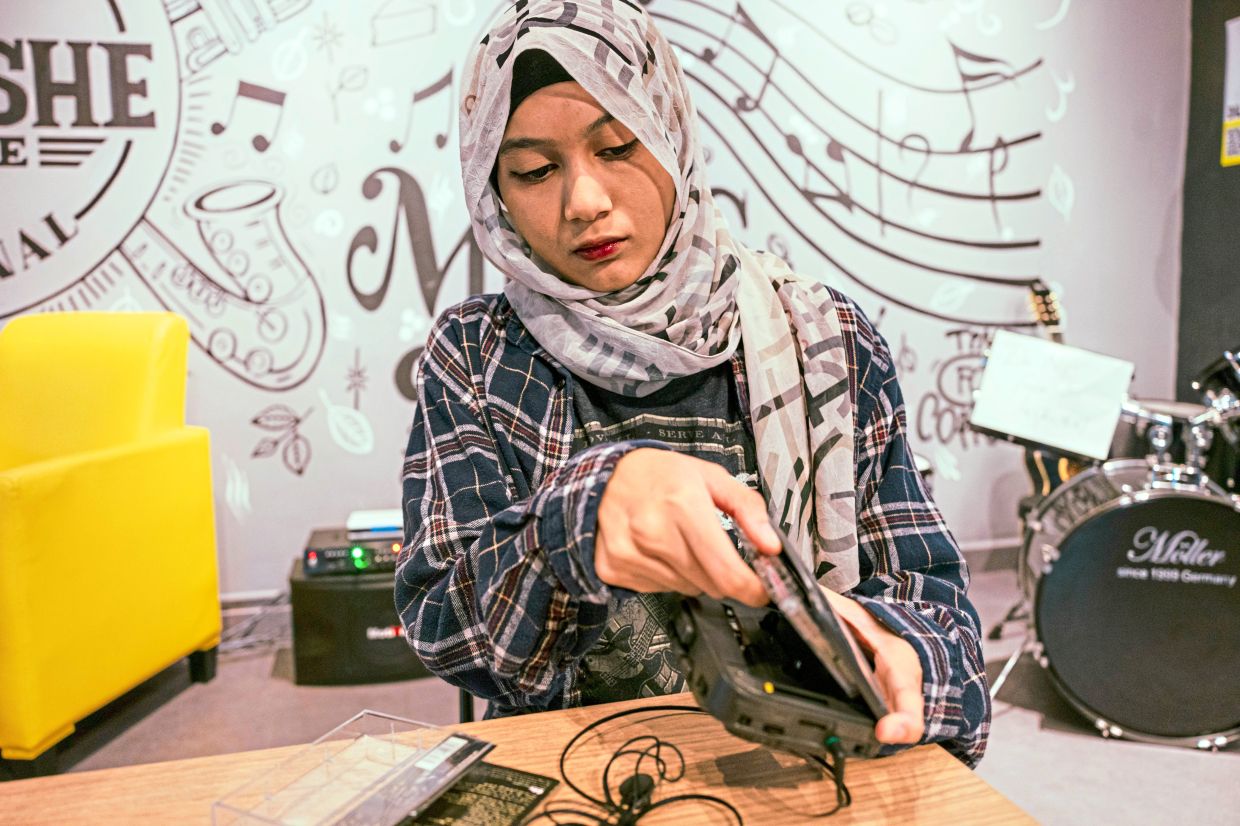
For Emira Rania Mohd Fazli, 18, from Semenyih in Selangor, her interest in cassette tapes began after watching videos of people recording songs in that format.
The local indie music enthusiast, who writes fanzine Flannel & Band Tees, started collecting tapes around 2021 or 2022.
“I thought the crackly static noise cassettes were kind of cool,” she said.
Emira owns fewer than 20 cassettes, although only about half remain in regular use.
Most were purchased from second-hand sellers.
Among her favourites is Blur’s Parklife, which she bought for RM10, although the cassette is no longer playable.
She said finding affordable working players could be difficult, while attempts to repair damaged tapes had sometimes ended unsuccessfully.
Despite these challenges, she said she had noticed local independent bands continuing to release music on cassette.
Sarah Sahadan, 25, from Miri, Sarawak, developed her interest in physical music media through her father, who kept numerous boxes of cassettes at their family home.
She now keeps about 15 tapes in Kuala Lumpur, alongside CDs and vinyl records.
Her collection includes almost every cassette release by Australian rock band Silverchair, apart from the band’s final album.
Sarah mainly purchases recordings – particularly rock music from the 1990s – online and at thrift events.
She occasionally plays her tapes on a radio, partly to ensure that the machine remains functional.
For Pengiran Eemran Abdullah Pengiran Muhammad Ramadhan, 20, cassette tapes are closely connected to his interest in music.
A member of the band Nilangsuka, Eemran enjoys listening to the production quality and transitions between songs on cassette recordings.
He sources tapes from online sellers and record shops, including one in Sungai Petani, Kedah.
He shares the hobby with bandmates and his most sought-after cassette is Generasi Biru by Indonesian rock band Slank.
Although their reasons for using older technology differ, these young Malaysians continue to find practical and personal uses for machines that have largely disappeared from mainstream use.
Whether it is producing a poem, making a phone call or playing an album, their devices remain functional parts of their lives rather than simply objects kept for display.


Emira says collecting cassette tapes has encouraged her to appreciate music beyond simply listening to tunes on streaming platforms.
Eemran says finding cassette tapes requires knowing what to look for and where to search, particularly when hunting for specific recordings.
Tan hopes to organise poetry and letter-writing workshops where participants can explore creativity using traditional typewriters.
Helyna believes minor mechanical faults are part of owning a typewriter and accepts those imperfections. — Courtesy of Helyna Shahar
Dee says older mobile phones remind her of a time when manufacturers experimented more with hardware designs because mobile software was still relatively limited.
Sarah showing her cassette collection featuring mainly recordings by Silverchair, an Australian rock band formed in 1992, which she purchases online and at thrift events.
