WHEN a bus breaks down in the middle of a busy road, there is little time to waste.
Within minutes, a Rapid Penang rescue team is on its way – carrying tools, equipment and sometimes spare parts.
They have to consider whether the bus can be fixed by the roadside, or does it need to be towed?
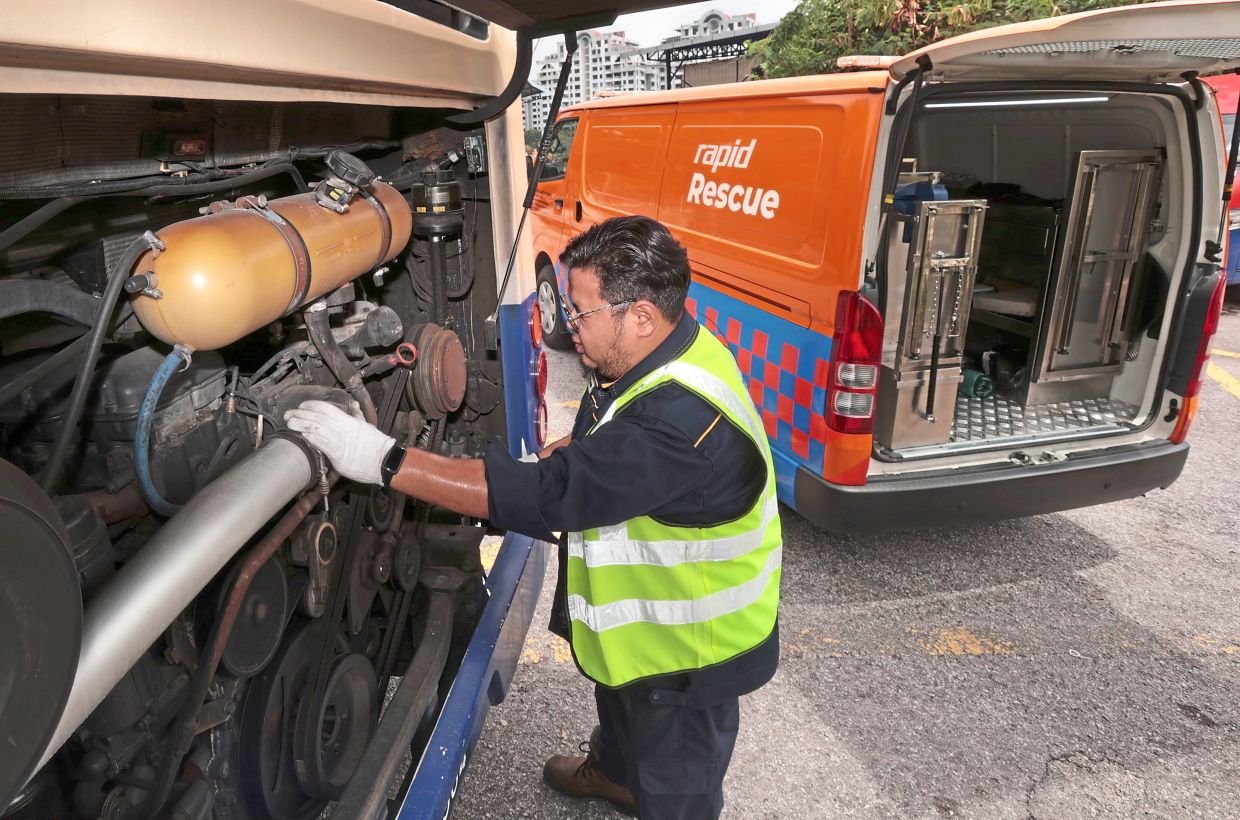
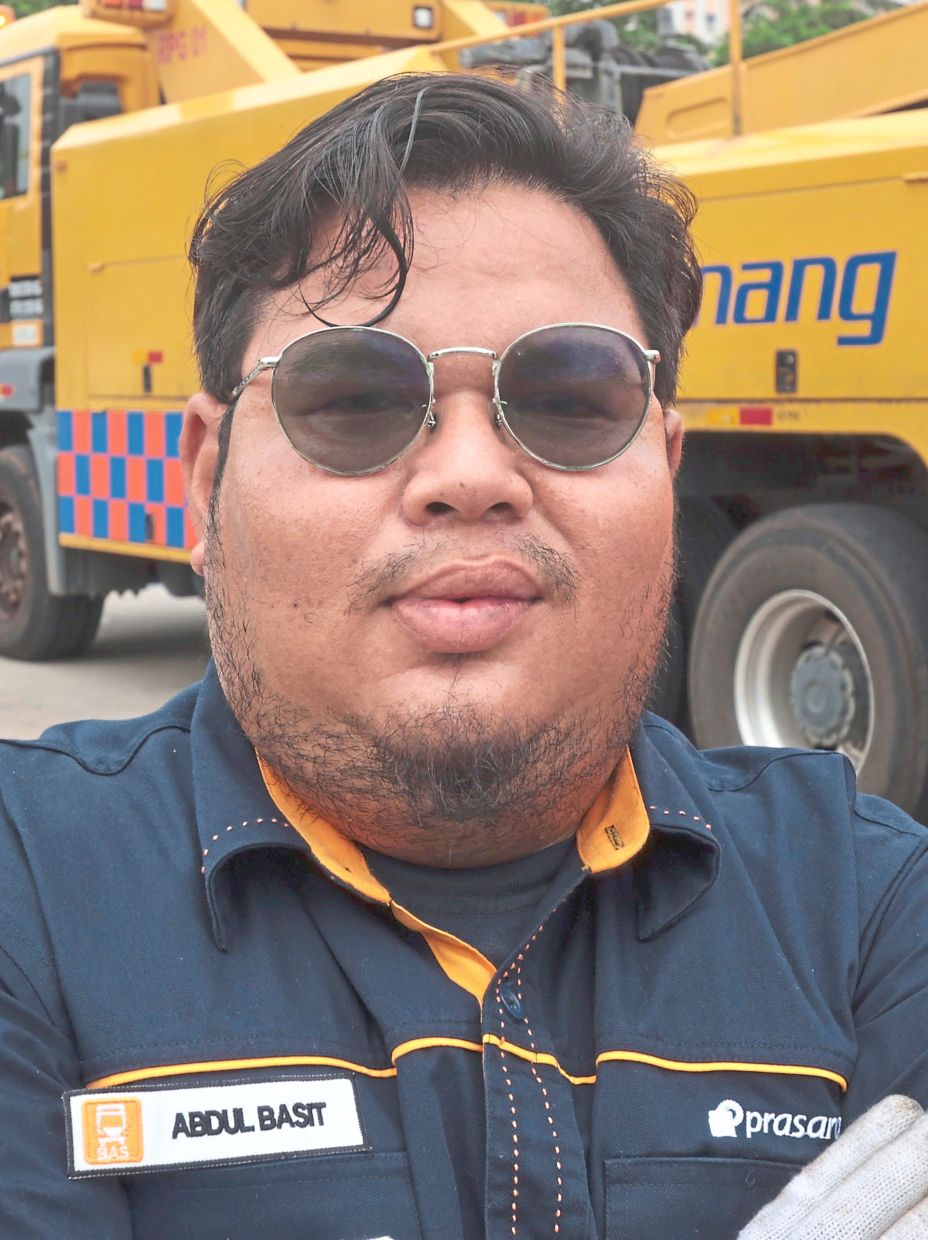
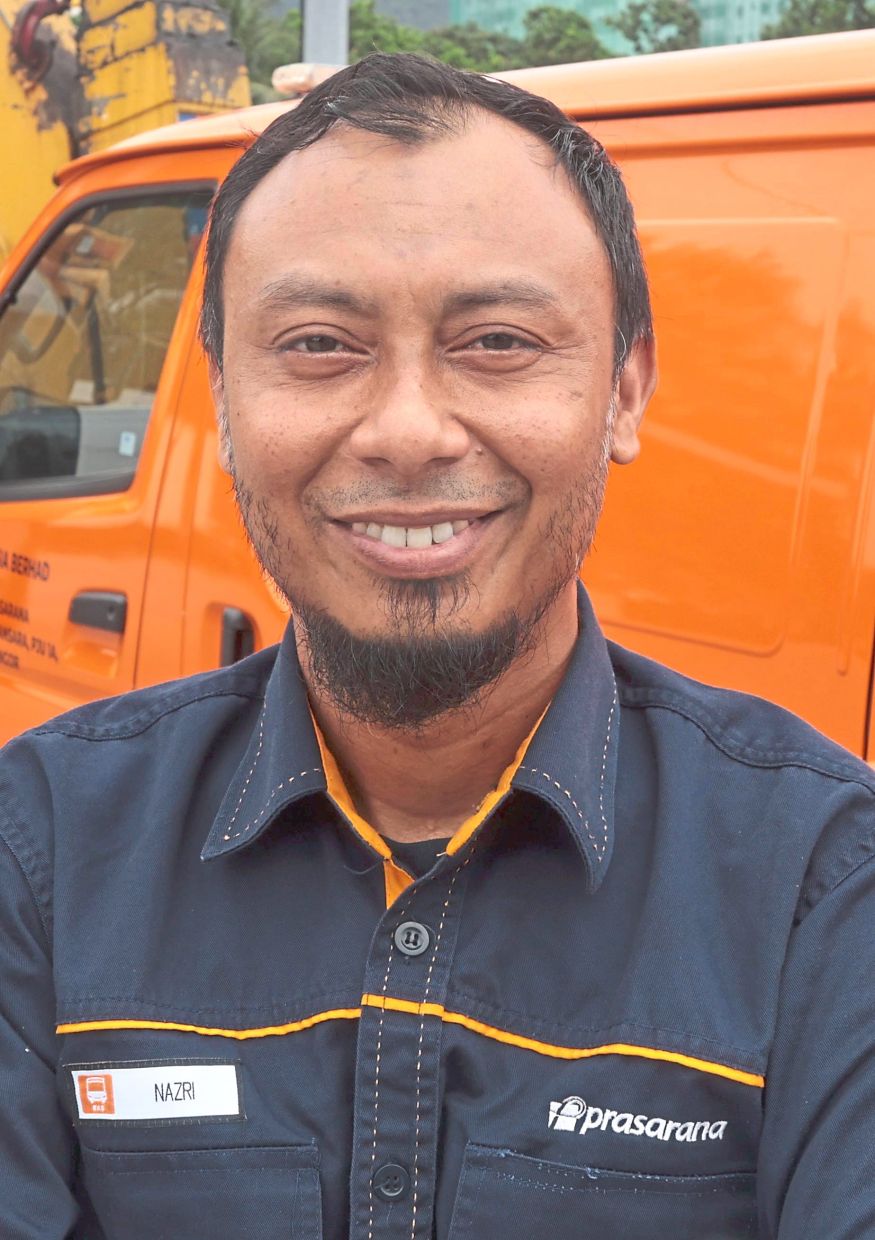
For Muhd Nazri Ilias and Abdul Basit Azizan, making that call is part of the job.
Both are members of Rapid Penang’s Rescue and Towing Truck Unit.
It has four team members each on the island and mainland, supported by two towing specialists covering the state.
Nazri, who joined Rapid Penang in June 2009, wears several hats: technician, tow-truck driver and rescue team member.
“When the driver reports a breakdown, he will first do a visual check and tell us what he thinks is wrong.
“Based on that information, we prepare the tools, equipment or spare parts before heading to the location.”
Rapid Penang bus drivers are trained to identify basic problems, such as coolant leaks.
This gives the rescue team a head start but what awaits them on the road is not always what they expect.
“Sometimes we bring a spare part based on the information given, but when we arrive, we find that the problem is something else,” Nazri said.
And they often have to work with traffic moving around them.
Once at the scene, the team puts safety first – for themselves, passengers, the bus and other road users.
They wear safety vests, put out cones and may have to control traffic while working.
If the problem is minor, the bus could be back on the road within about 30 minutes.
But if the repair is complicated or likely to take more than two hours, the towing team is called to tow the bus to a workshop.
Rapid Penang has workshops at Sungai Nibong and Weld Quay on the island, and at Mak Mandin in Butterworth.
It also operates depots at Tanjung Bungah and Balik Pulau on the island, as well as Nibong Tebal in South Seberang Perai.
For Basit, who joined Rapid Penang in 2011, being a rescue technician means knowing a little bit of everything.
“We need basic knowledge of engines, air-conditioning, electrical systems and other areas because our job is to get the bus moving or return it safely to the depot,” he said.
Basit had experience in welding and bodywork, but has since picked up other skills through training and guidance from colleagues.
Rapid Penang also conducts regular technical training, including monthly refresher courses at its academy in Nibong Tebal.
Technicians who specialise in one area are trained in other fields, including how to fix wiring, gearboxes and engines.
The job becomes trickier when a heavy bus has to be towed along a busy road or slope.
“When towing, we need at least five cones to warn other road users, but we cannot assume that everyone will see them,” Basit said.
He recalled one incident where an overturned bus had blocked a road, forcing the team to manage traffic while working to recover the bus.
Nazri also remembered helping police remove a trailer that had become stuck near Sungai Pinang and caused a traffic jam.
Although their main duty is to keep Rapid Penang buses moving, team members sometimes lend a hand to other agencies when needed.
Behind the scenes, the Bus Control Centre receives breakdown reports from drivers and coordinates the response.
Emergency services are contacted in the event of injuries.
When a bus cannot continue its journey, passengers may be transferred to another bus on the same route.
And while commuters may see only a stalled bus and an inconvenient delay, the rescue team sees a problem that needs solving – quickly and safely.
For these men, getting a bus moving again is not just about fixing a machine.
It is about getting passengers back on their way and keeping traffic moving.