
Residents: Develop Batu Pahat alongside preserving its ‘Penggaram’ heritage
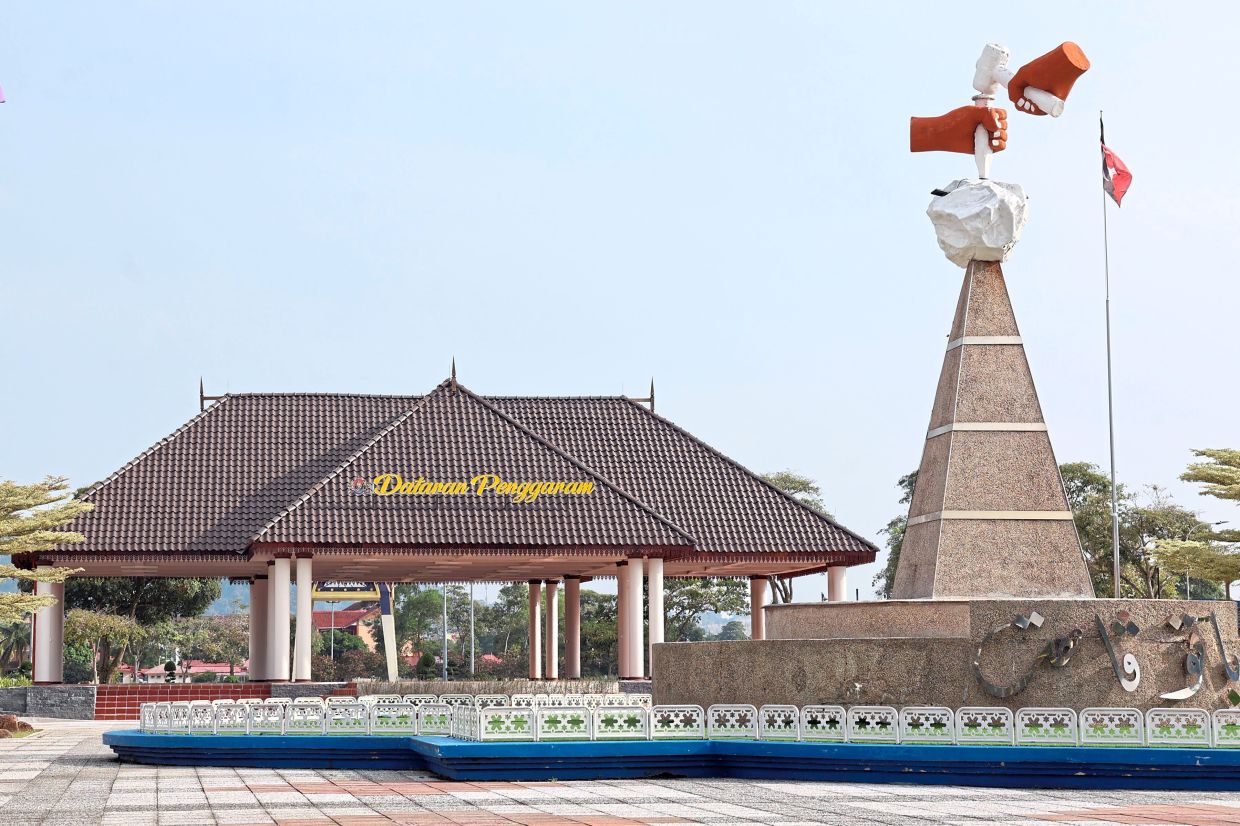
LONG before Batu Pahat became known for its bustling commercial centre and famous local delicacies, it was known as Bandar Penggaram – the town of salt makers.
The name Penggaram came after early settlers harnessed the area’s coastal salt resources to produce salt and salted fish.
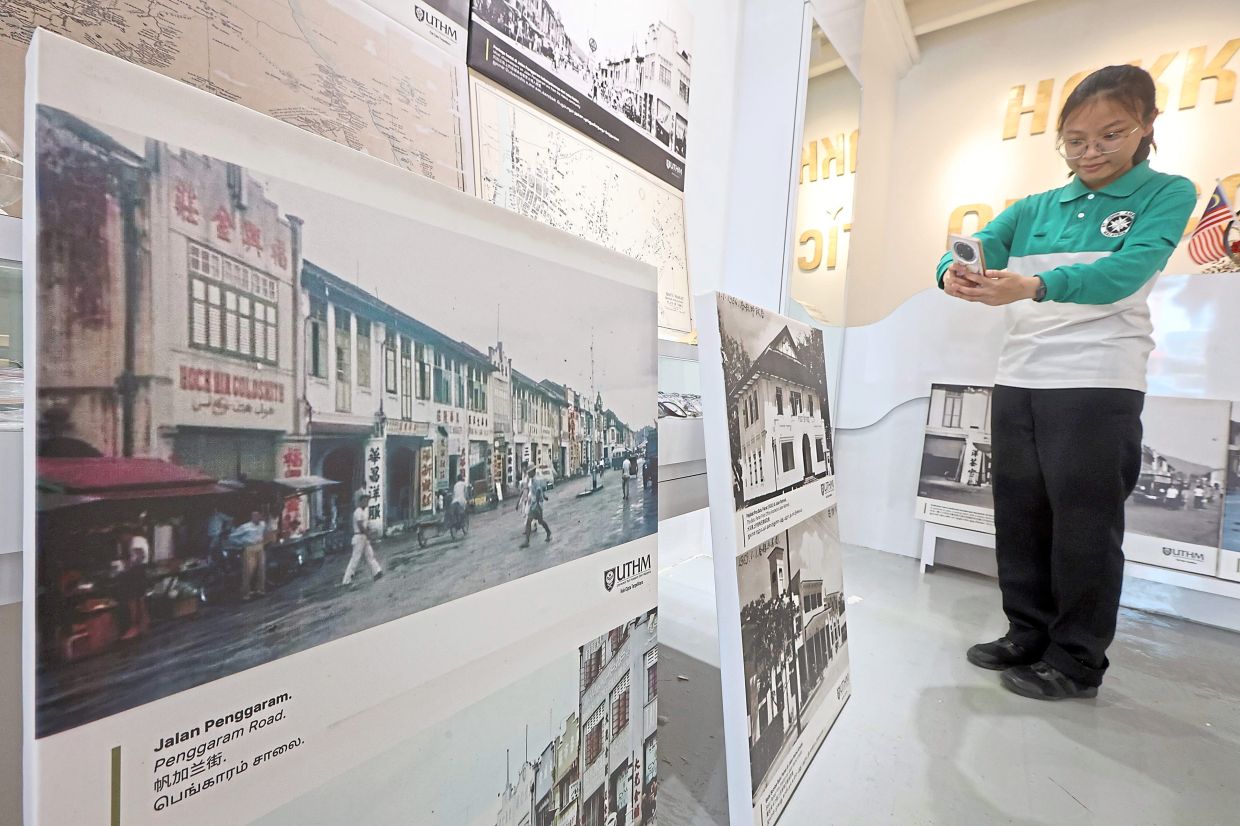
The legacy lives on through Jalan Penggaram, one of Batu Pahat’s oldest streets dating back to around 1894.
Lam Chia Hui, 36, whose family business of selling textile and wedding items is in Jalan Penggaram, said preserving Batu Pahat’s rich history should go hand in hand with future development.
“The street was once widely known as Hakka Street because many of the businesses were operated by Hakka settlers, including my ancestors.
“The shops were mostly textile stores, optical shops and goldsmith trades that were commonly associated with the Hakka community.
“Over the years, much of this heritage has slowly disappeared as the older generation passed away or sold their shoplots.

“Only a handful of these traditional businesses remain today,” she told StarMetro.
Lam said while there were efforts by Universiti Tun Hussein Onn Malaysia to document the area’s history, she hoped more could be done through heritage walking tours and tourism- related activities to raise public awareness of Batu Pahat’s historical significance.
According to records, Jalan Penggaram used to also be known as “textile street” due to the robust textile industry there.
As Batu Pahat continues to modernise, many residents hope development will not come at the expense of its heritage, while also calling for stronger economic opportunities to keep young people from leaving the district.

Haikal Zulkarnain, 22, said many young locals like him had left Batu Pahat in search of better-paying jobs.
After working in Singapore for two years, he returned to Batu Pahat and now works at a restaurant preparing beverages.

“The good thing is I’m close to my family again, but the salary is much lower compared to what I earned in Singapore because of the exchange rate,” he said.
Haikal hopes greater efforts will be made to promote Batu Pahat as a tourism destination, citing attractions such as Minyak Beku beach, which is popular with families, as well as the district’s well-known food, including mee racun and asam pedas.
“If tourism grows, it can help boost the economy and create more jobs for youths,” he said.
Construction worker K. Rajan, 50, welcomed the emergence of new cafes and young entrepreneurs in Batu Pahat, but said more investments were needed to create quality jobs.
“The opening of new businesses is a good sign but I am also worried after a factory here recently closed, affecting many local workers.
“We hope more investments can come into Batu Pahat to create employment opportunities for the younger generation so they will not have to leave for work elsewhere,” he said.
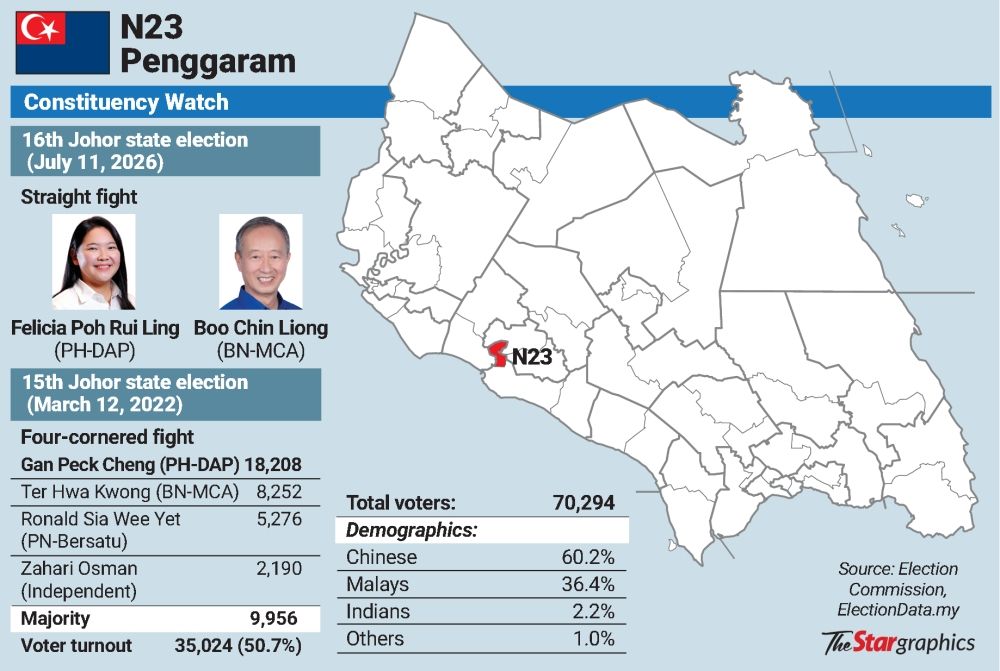
The Penggaram state seat has 70,294 voters, with 60.2% Chinese, 36.4% Malays, 2.2% Indians and 1% others.
In the 2022 Johor state election, Pakatan Harapan’s Gan Peck Cheng defended Penggaram in a four-cornered contest by receiving 18,208 votes, giving her a 9,956 majority.
Ter Hwa Kwong from Barisan Nasional received 8,252 votes, Perikatan Nasional’s Ronald Sia Wee Yet earned 5,276 votes while Independent candidate Zahari Osman had 2,190 votes.
The 16th Johor state election will see a straight fight between Pakatan’s Felicia Poh Rui Ling and Barisan’s Boo Chin Liong.