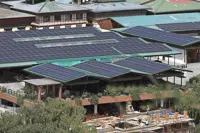
A DESPERATE bid to avoid having the electricity supply cut off and to save on cost has led Johor Baru schools to embrace solar energy for their daily operations.
The green energy has proven to help many such establishments save thousands of ringgit in utility costs each month.

SJK(C) Kuo Kuang 2 headmistress Phang Oi Mei, 58, said the school’s move to turn to solar power was the right thing to do.
The school, she said, began exploring renewable energy solutions after facing mounting electricity costs that threatened its daily operations.
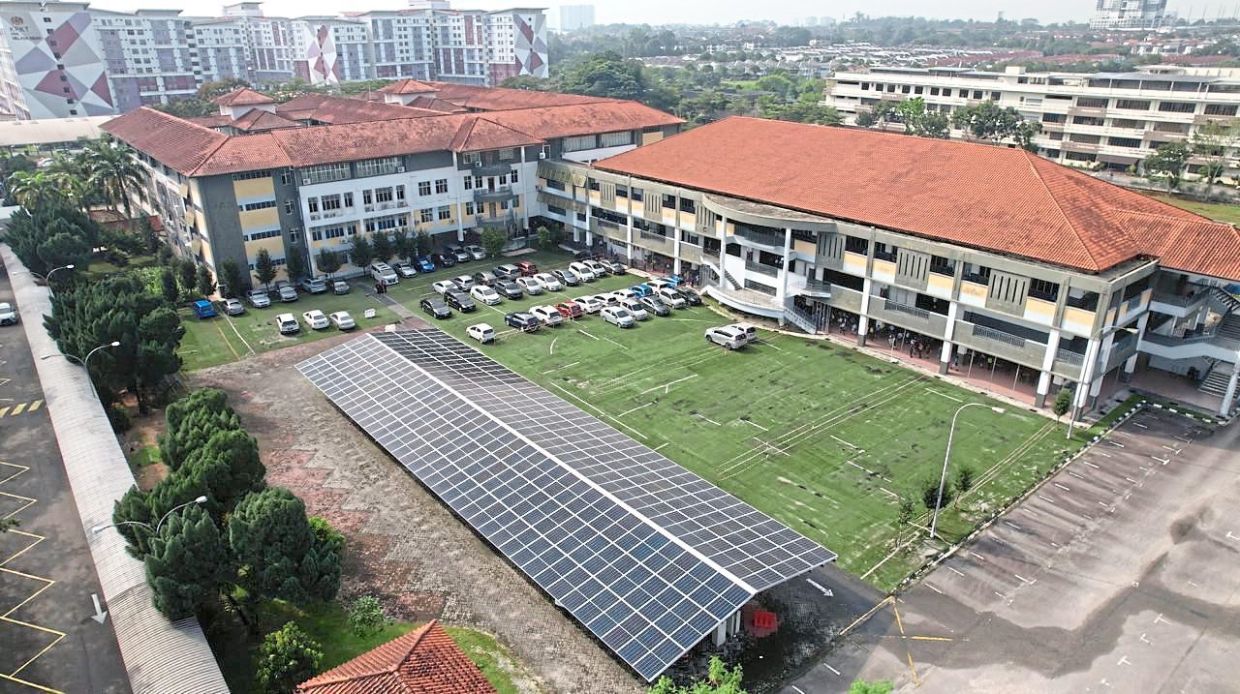
“When I took over the school in 2022, it was saddled with about RM350,000 in outstanding electricity bills owed to Tenaga Nasional Bhd (TNB), putting the school at risk of having its power supply disconnected.
“To prevent that from happening, the school installed a 134kW solar panel system earlier this year which is able to power up the entire school,” she said.
She said the RM500,000 project was funded through contributions from the parent-teacher association (PTA) as well as from charity events and golf tournaments organised by the school.
“The solar panels help us save about RM7,000 on electricity bills every month,” she said.
“Although the installation cost was high, we see it as a long-term investment.”
Phang added that pupils were also exposed to renewable energy through the system, allowing them to monitor electricity generation while learning about environmental sustainability.
Another school that started using solar as an alternative is SMK Taman Pelangi.
Its sustainability education coordinator Hairul Anuar Sobikin, 40, said the school had begun incorporating solar powered facilities into its buildings and planned to expand their use.
As one of the older schools in the city, he said parts of the school’s wiring had deteriorated over time, leaving certain areas without electricity.
“Some sections of the wiring have been damaged due to age, and restoring the electrical system would require significant costs.
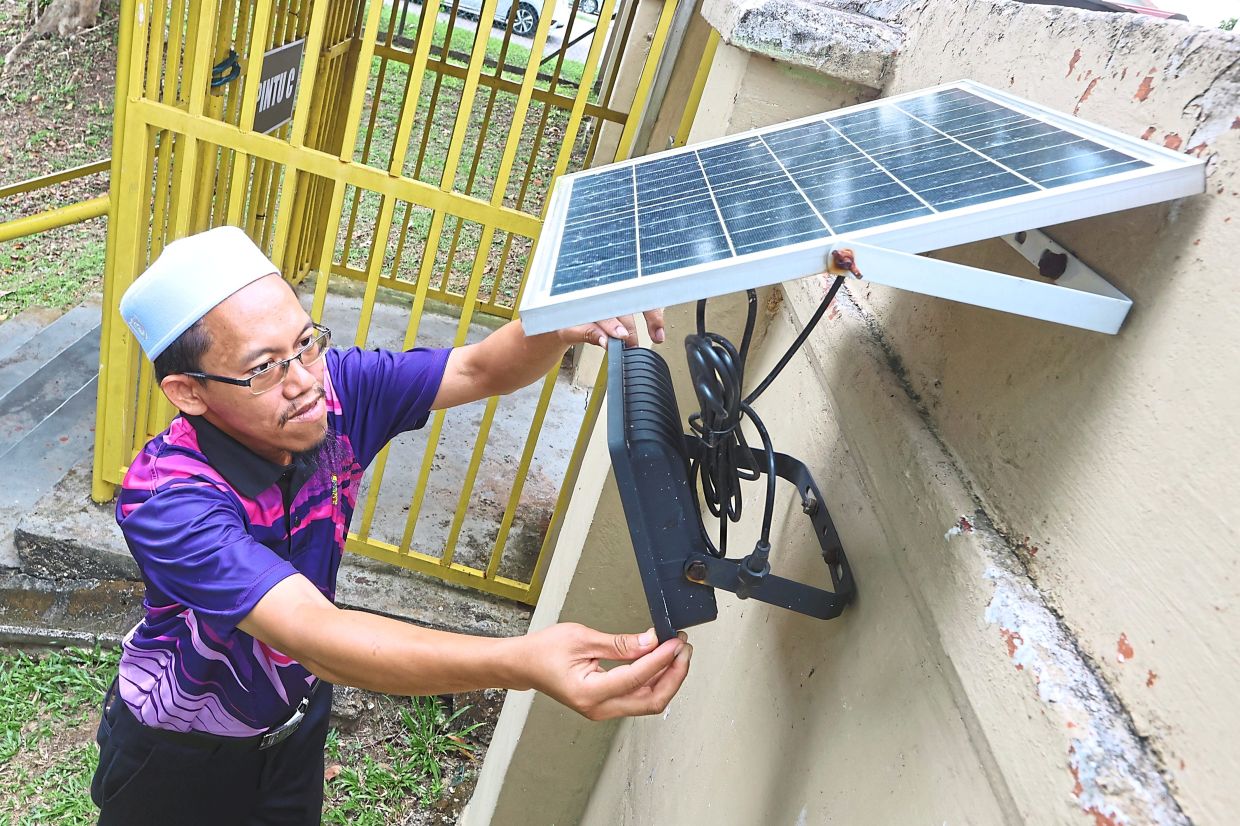
“That’s why we decided to use solar-powered facilities in areas without electricity,” he said.
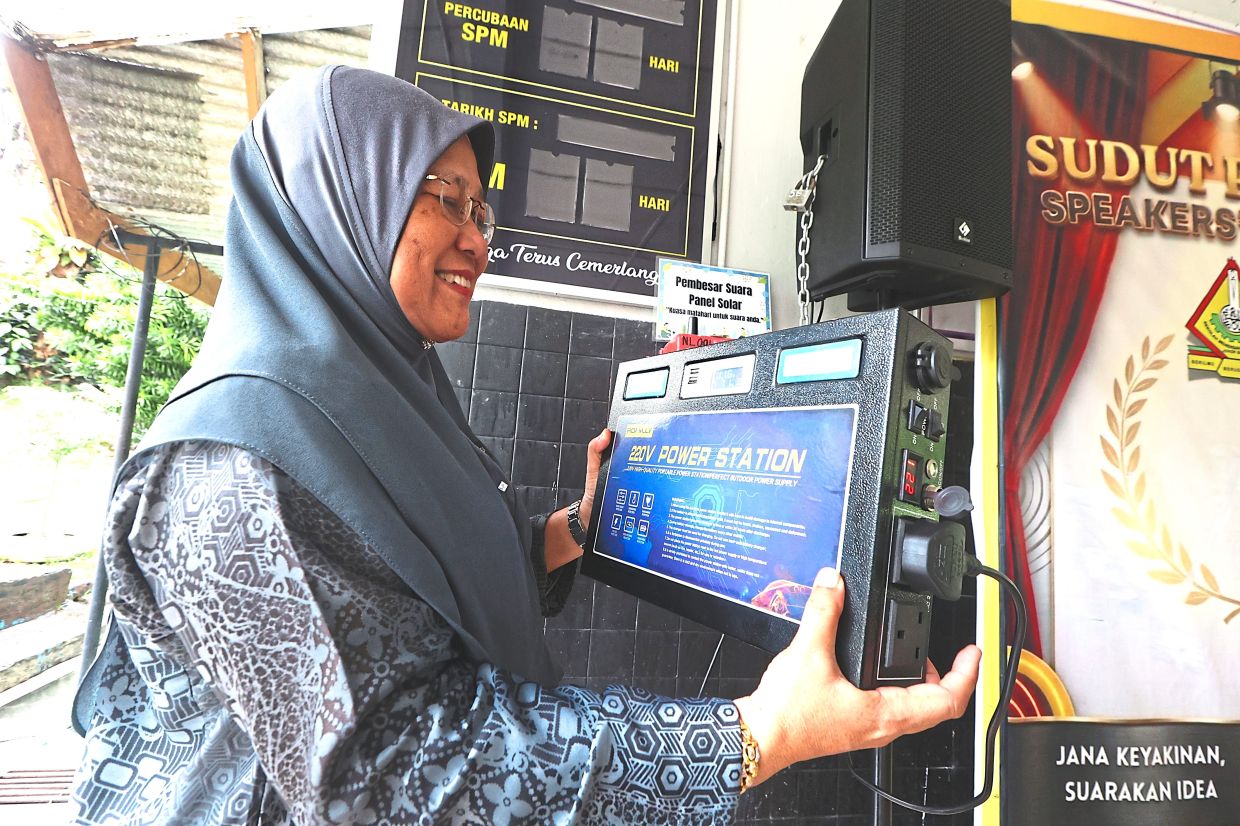
Among the facilities installed are a solar-powered public address (PA) system costing about RM600 and five solar-powered lights worth an estimated RM1,000.
“We chose solar-powered facilities because they are environmentally friendly and help reduce dependence on conventional electricity sources.
“Students are also able to observe how the system works and whether the equipment is functioning properly.
“This indirectly creates awareness about renewable energy and environmental sustainability,” he added.
However, Hairul said weather conditions remained one of the main challenges affecting their effectiveness, particularly during prolonged cloudy or rainy periods.
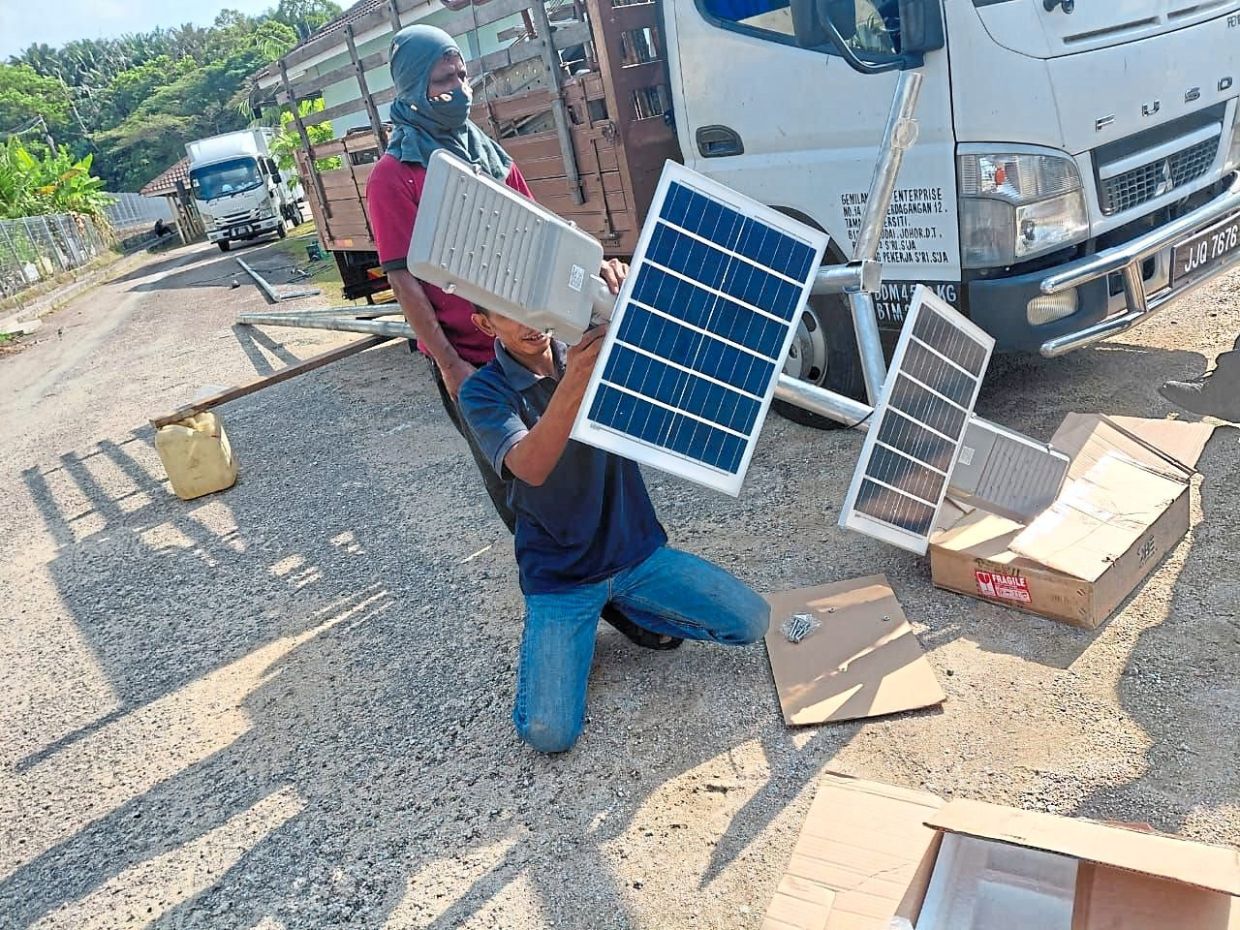
In the case of SMK Mutiara Rini, its move to go green was due to a grant the school obtained from the local council.
Principal Zanariah M. Yasin, 53, said the school joined a solar energy initiative introduced by Iskandar Puteri City Council (MBIP) this year as part of efforts to promote sustainability in schools.
Under the programme, MBIP allocated RM10,000 for installation of solar-powered facilities, including walkway lights around the school compound.
Zanariah said the school recorded savings of about RM500 in electricity costs since implementing the initiative from January this year.
Two more schools in the city – SMK Dato’ Usman Awang and SJK(T) Kangkar Pulai – also hope to go green and get the necessary grants to instal solar on their premises.

SMK Dato’ Usman Awang principal Aerma Nurazalina Musa, 47, said the school was aware of MBIP’s Low-Carbon Community Grant programme.
Although supportive of renewable energy initiatives, she said the school currently had no immediate plans to instal solar panels due to limited financial support from its PTA.
Nevertheless, Aerma believes solar energy can help reduce electricity consumption while exposing students to sustainability practices.
SJK(T) Kangkar Pulai headmaster S. Mayachandran, 58, is hopeful his school would be able to find the funding to instal solar panels.
“This green initiative is aligned with the school’s commitment towards sustainability and environmental education.
“Solar panels could help reduce long-term electricity costs while allowing more funds to be channelled into programmes for the pupils like science, technology, engineering and mathematics (STEM) and technical and vocational education and training (TVET) activities, innovation projects and facility improvements,” he said.
Power buy-back
Foon Yew High School is now working with a private solar company to instal infrastructure and then sell the excess power generated to TNB.
The school board of directors chairman Tong Sing Chuan said the institution began installing solar panels across its three campuses in late 2023 as part of its long-term commitment towards sustainability and energy efficiency.

“We worked out a deal with the solar company, which invested some RM5mil to instal the solar infrastructure for free for the school and its campuses.
“So over the next 20 years they will maintain and sell the extra energy to TNB.
“We also get electricity to power our campuses. However, whenever there is a shortfall, we will have to pay for the electricity charges,” he added.
Tong said the project, initiated by the school’s board of directors, was implemented at the Johor Baru main campus in Stulang, and the two branch campuses in Bandar Seri Alam and Kulai, with the systems gradually commissioned between September and December 2024.
“The increasing demand for electricity, especially after classrooms were equipped with air-conditioning, prompted us to look for a more sustainable solution that could also help reduce operating costs,” he said.
Tong said the three campuses collectively recorded electricity savings of more than RM690,000 since the systems were commissioned.