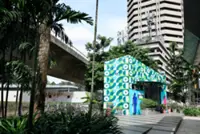
Combining art, functionality and sustainability, the pilot Kuala Lumpur Art Toilets are set to beautify urban spaces with attractively designed, compact, street-side amenities.
The project is a collaboration between Kuala Lumpur City Hall (DBKL) and the private sector as part of the Art in the City programme.
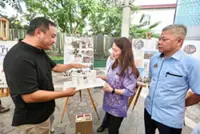
Kuala Lumpur mayor Datuk Seri Fadlun Mak Ujud said DBKL has identified three locations to implement the initiative.
The locations for the special designed toilets are at high-traffic areas of Plaza Batik along Jalan Tun Perak, Jalan Masjid India and Jalan Saloma.
“Construction for the toilet projects are expected to start this month and will take about three months to complete.
“Once completed, the toilets will be handed over to DBKL to manage,” he said in a press conference at Plaza Batik.
Also present was Minister in the Prime Minister’s Department (Federal Territories) Hannah Yeoh.
Fadlun said DBKL’s collaboration with young local architects demonstrated how public amenities could add value through quality design that emphasised user experience.
“The toilets emphasise comfort, safety and accessibility for Persons with Disabilities (OKU),” he said.
The toilets will integrate natural ventilation, optimise lighting and green elements, he said, adding that each toilet project would have their own unique identity and design approach.
Yeoh said the initiative was a response to a joint meeting with Tourism, Arts and Culture Minister Datuk Seri Tiong King Sing to make Kuala Lumpur a more tourist-friendly city with clean toilets.
“Collaborations like this prove that urban transformation can be accelerated when the government and private sector join forces to deliver tangible impact to the people.
“Besides upgrading public toilets, we are exploring various forms of collaboration with the private sector to revitalise public spaces in Kuala Lumpur such as public showers.
“Among the initiatives being identified are improving street furniture, creating more comfortable bus and e-hailing stops, and developing murals that reinforce the city’s identity and character,” she said.
Lateral Architects partner Nicholas Ling, whose team designed the toilet project at Jalan Saloma, said it was similar to the Tokyo Toilet Project in Japan.
“We want to change the perception of public toilets, and to us, it is an opportunity for art.
“The toilets adopts a modular system for rapid installation where concrete culverts and infill precast panels are used to minimise site disruption,” he said.
The Plaza Batik project is designed by Tangu Architecture Sdn Bhd while Syarawi Architect is involved in the Jalan Masjid India facility.
Separately, Fadlun also announced a RM7.8mil allocation this year to upgrade existing 60 public toilets rated three-star and below.
Most of those toilets, he said, are located in parks and public areas.
“Kuala Lumpur has 168 public toilets and 97 of them are rated below three stars by the Housing and Local Government Ministry (KPKT)
“For the first phase, we have allocated RM7.8mil of internal budget, on top of a KPKT budget, to refurbish 60 of these toilets.
“The remaining toilets will be refurbished next year,” he added.