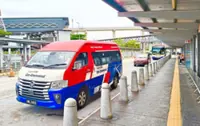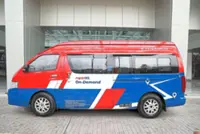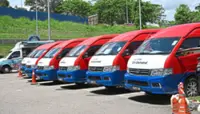
COMMUTERS have raised concerns over the viability of Selangor’s RM30 monthly subsidy for the demand-responsive transit (DRT) service from June.
Student Aqiel Mohd Sharifizal, 20, said with Rapid KL charging RM2 per trip, the RM30 subsidy would only cover a week and a half for daily commuters (not including weekends).
He added that the initiative could also place an unnecessary burden on the state’s coffers.
“Subsidising DRT forces the state government to spend more than it should on an inefficient service as users often face unpredictable waiting and journey times.
“The funds should have been spent on improving the existing pedestrian and bus infrastructure,” he said.
In an exclusive interview with StarMetro, Selangor investment, trade and mobility committee chairman Ng Sze Han disclosed that the proposed subsidy would adopt a similar mechanism as the Budi95 subsidised petrol programme, allowing users to top up the amount after finishing their monthly RM30 entitlement.

He also said the mechanism was still being finalised, adding that the state allocated RM5.4mil for the initiative this year.
Food scientist Eugene Lai said the subsidy cannot succeed without optimising DRT’s waiting times.
“Currently, I do not use DRT on working days as I find it too unreliable due to the long waiting time during peak hours. I prefer using the bus service, which runs on fixed schedules.
“The subsidy would drive up the demand for DRT, which could further lengthen its waiting time.
“The state government should work on enhancing the public transport services that run on fixed schedules such as buses and trains. This could be achieved by upgrading walkways and establishing dedicated lanes for cyclists and those who are using micromobility vehicles,” he said.
Malaysian Land Public Transport Fans chairman Zac Cheong said the scheme failed to address the service’s primary issue, which is the removal of Rapid On-Demand from the My50 travel pass in February.
“By subsidising the users, the state government is absorbing additional costs without fixing Rapid KL’s flawed model.

“The state should negotiate with the Federal Government or Prasarana Malaysia Bhd, Rapid KL’s parent company, to reintegrate DRT with the My50 pass rather than creating a parallel and complex e-wallet subsidy system,” he said.
Cheong also urged the state to address the logistical inefficiencies currently facing the DRT service.
“I have seen reports of a 2.5km journey taking over an hour due to algorithmic inefficiencies and detours.
“The state can consider establishing mobility hubs at LRT stations or condominiums’ exits where users only need to walk a short distance to a DRT virtual stop.
“Instead of having the vans travelling across different neighbourhoods to collect single passengers, they could run on short and fixed routes between these hubs to increase their efficiency,” he added. — By LEW GUAN XI