



ALMOST half a year after devastating floods hit Aceh Tamiang in Sumatra, Indonesia, villagers are still grappling with a lack of clean water and damaged infrastructure.
Remote communities also say support has been inconsistent and insufficient, particularly for those cut off from main access routes.

“We depend on the river, but it is not safe, especially for the children,” said mother-of-three Mauleni Sayid Ibrahim.
The 48-year-old from Kampung Permatang Durian said it was because the village was far from town and difficult to access.
Her home was swept away during the disaster last November, which displaced about a million people while more than 1,000 were killed or missing.
Mauleni is among the fortunate few; a religious teacher helped her find land near her village to build a new home.
Another villager, Seri Widayat, 31, from Kampung Sulom, said the damaged infrastructure hampered daily life and slowed economic recovery.
“The roads and some bridges have not been repaired.
“It affects our ability to work and send our children to school.”
The farmer said clean water was also crucial but villages were still relying on unsafe sources months after the disaster.
“We have to depend on river water and rainwater, but it’s not always clean or reliable.
“Sometimes we have to travel far just to get clean water,” he said, adding that the situation has taken a toll on both health and livelihoods.
Seri Widayat said many were struggling to rebuild their homes and restart farming activities.
“The aid that came in the early stages helped, but now it feels like we have been left on our own.
“What we need is consistent support, especially for water and infrastructure,” he added.
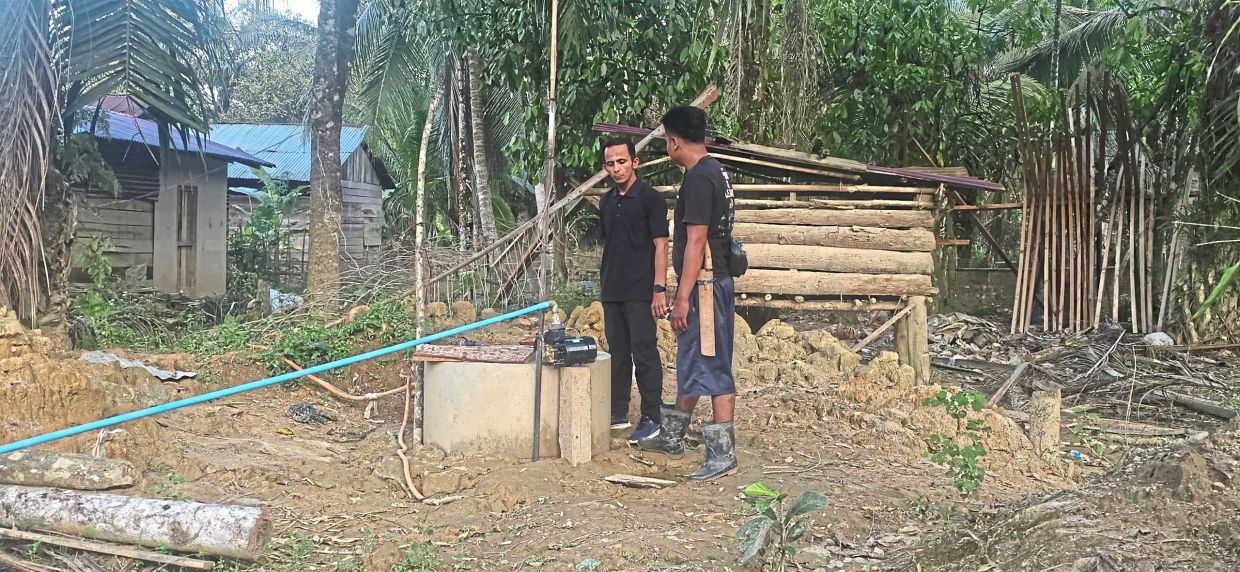
District representative Abdul Rahman Muhammad Alim Shah, 38, who works closely with a Malaysian non-governmental organisation (NGO), admitted that there were challenges reaching scattered settlements.
“The scale of the disaster means recovery is taking longer than expected.
“Some interior villages are still difficult to access, especially during bad weather,” he said, adding that contaminated wells posed a significant health risk as almost all villages in the district suffered 100% damage.
In response to the ongoing crisis, Malaysian NGO Gebok Rezeki Kite based in Penang has stepped up with targeted assistance.
Project coordinator Kamaruddin Shah said the NGO had successfully raised almost RM40,000 to construct 13 wells in several affected villages.
“Our focus is on sustainable solutions.
“By building wells, we aim to provide long-term access to clean water rather than temporary aid,” he said, adding that construction was expected to be completed by June or July.
However, Kamaruddin noted that logistical nightmares persisted.
“Some locations require hours of travel over damaged roads and rough terrain.
“It slows down the delivery of aid and construction work,” he said, calling for further collaboration with local authorities to scale up the initiative.
The floods that struck parts of Sumatra last year were triggered by days of intense rain, causing rivers to burst their banks and inundate low-lying areas.
