Systems, assets in place to respond quickly to emergencies, says Malaysian Fire and Rescue Department director-general
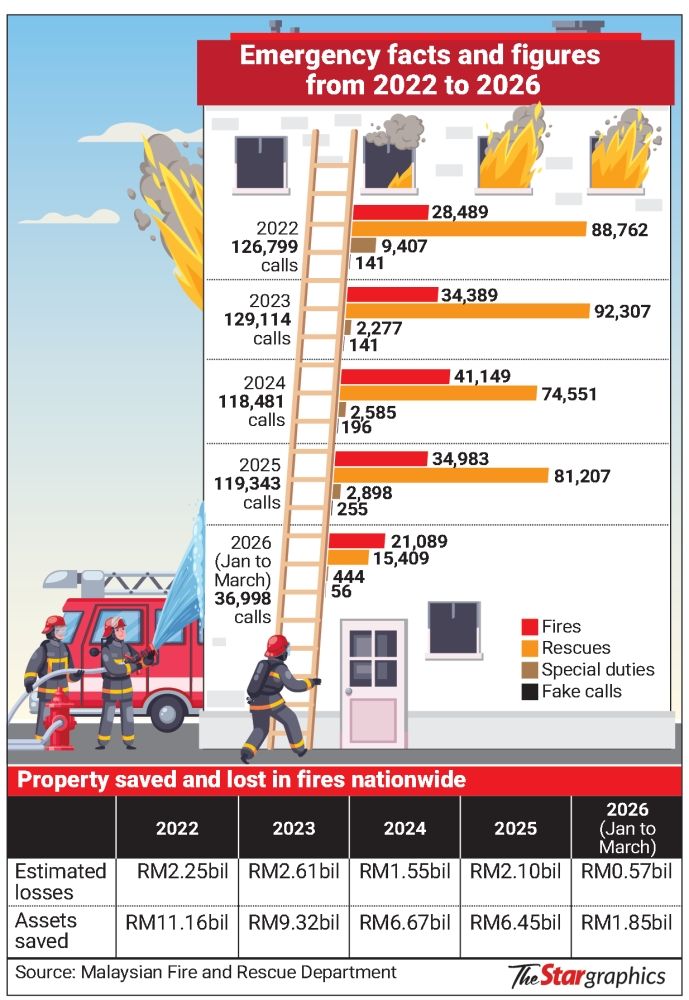
The Malaysian Fire and Rescue Department responded to an average of 400 calls nationwide daily in the first three months of this year.
Last year, the quick action of firefighters managed to save some RM6.4bil worth of property, said department director-general Datuk Seri Nor Hisham Mohammad.
In conjunction with this weekend’s national-level celebration in Johor Baru to mark International Firefighters Day on May 4, he tells StarMetro about how the department is continuously making improvements to its core duties of saving lives and carrying out rescue operations, while forging smart partnerships with the private sector.
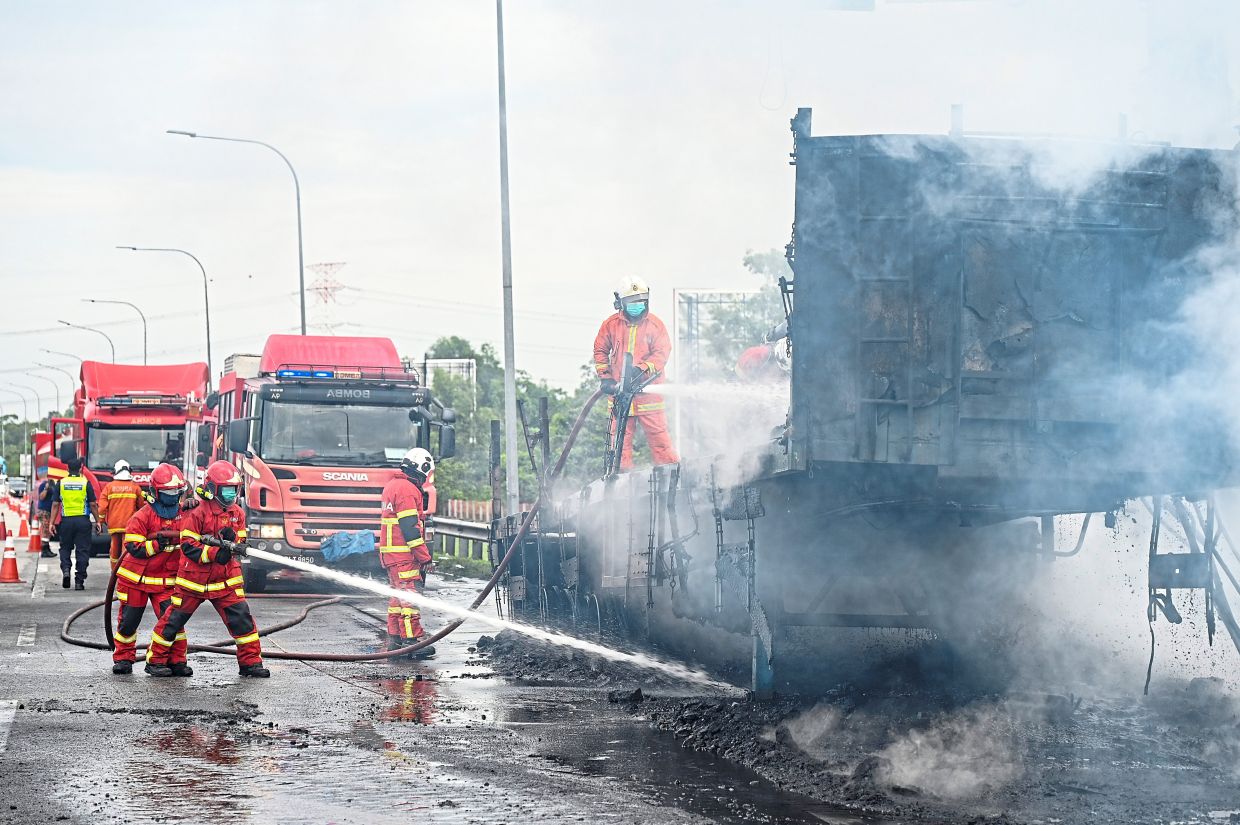
The department has been kept busy handling a huge increase in house fires, especially in the first four months of this year. How bad is the situation and what else can be done?
A: Based on our findings, most fatalities are not caused by burns, but because victims are trapped and succumb to smoke inhalation.
We therefore emphasise simple but critical habits such as placing house or grille keys in a consistent, easily accessible location, avoiding multiple locks that can delay escape and ensuring household members know where the keys are kept.
These simple practices can make the difference between life and death during a fire.
To improve awareness, the department is also investing in smoke escape tents, allowing the public to experience realistic fire conditions and understand how to respond during a fire.
A special allocation of RM2.5mil has been set aside, with multiple units procured and deployed nationwide.
Bush and forest fires are also on the increase this year. How bad is the situation and what steps can the department take?
A: The number of bush fire incidents has risen, but the greater concern is the size of affected areas.
Some incidents now involve more than 100ha, making them significantly more challenging.
We work closely with other agencies such as National Disaster Management Agency (Nadma), the Drainage and Irrigation Department (DID) and Forestry Department.
We focus on several key elements, including deploying drones to assess the situation, identifying water sources and creating firebreaks such as temporary roads or trenches using heavy machinery.
We also deploy high-capacity pumps to douse the fires.

What are the major community programmes undertaken by the department to help spread fire safety awareness?
A: We emphasise early education and community engagement through various programmes.
These include Kelab Bomba Cilik for kindergarten-level children, Cadet Bomba for secondary school students and Siswa Bomba for university students.
Community outreach programmes such as Suri Rumah focus on housewives who are often at home and play a key role in preventing the spread of fire.
We have also introduced the Community Fire Learning Centre (CFLC), developed in collaboration with our corporate partners.
Presently we have 15 such centres at all major fire stations nationwide, and hope to expand this to 38 centres in future.
These centres provide interactive learning experiences using digital tools, games and simulations.
The public can also use the department’s facilities for events, with a requirement to include a short fire safety briefing as part of the programme.
This year, we are focusing more on two key areas.
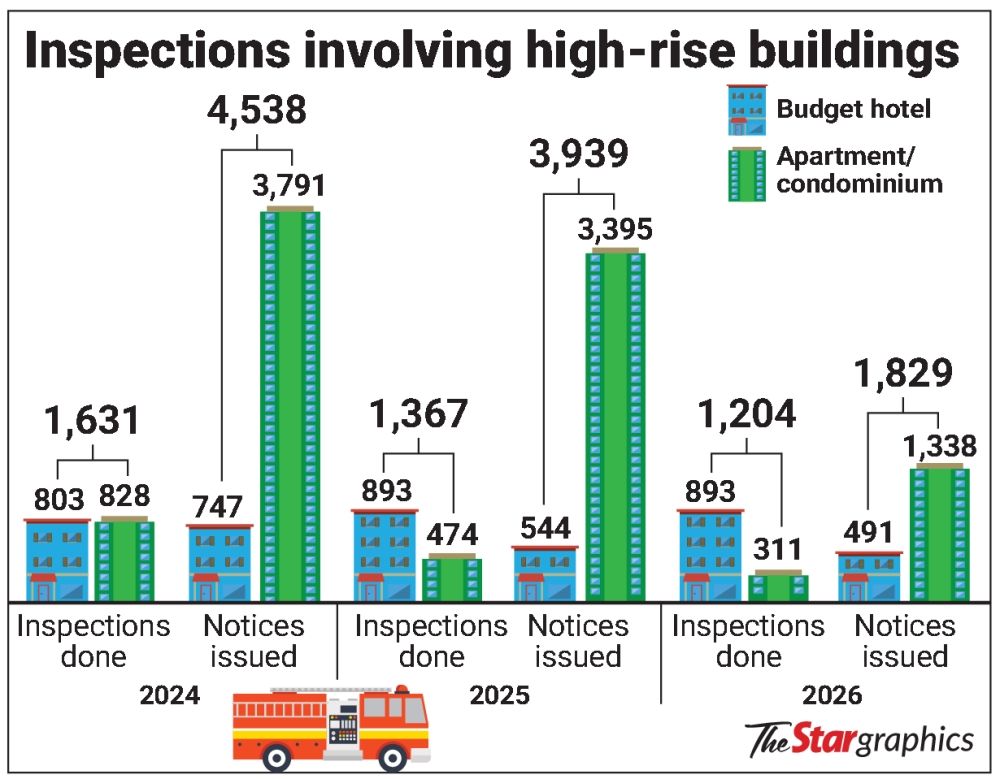
The first is enforcement, particularly in high-rise residential buildings, ensuring that systems such as lifts and pumps are properly maintained.
The second is improving operational capability, including introducing compact fire rescue tenders (CFRT) or smaller fire engines, which are easier to manoeuvre in congested residential areas compared to traditional ones.
In addition, we are also getting two more helicopters under a leasing arrangement, bringing the fleet to 10 aircraft, including units configured as flying hospitals, to transport patients.
At the same time, we continue to emphasise public education and awareness programmes.
We have set a target of 12,000 programmes nationwide, including via talks, drills and public demonstrations this year.
However, each year we will exceed these numbers – last year our engagements touched 36,000 programmes.
The goal is not just awareness, but to move people from awareness to action – understanding risks and taking preventive steps.
How many volunteer fire brigade members are there nationwide and how effective are they in handling fires? How does the department monitor them?
A: There are about 360 volunteer fire brigades nationwide, comprising 8,965 members. They play a critical role, especially in areas where response times may be longer.
In states such as Penang, Kedah and Selangor, volunteer brigades are active and well-organised, with strong community support.
These teams are equipped not only with fire engines, but also ambulances and specialised equipment.
Some even operate advanced assets such as rapid intervention motorcycles (RIM), double-decker buses − which serve as mobile surau or changing or resting places − while one team in Selangor even has its own helicopter.
All these are supported through community funding. They are an important extension of the department’s capabilities and contribute significantly to emergency response efforts.
During the recent floods in Hat Yai, Thailand, our volunteers also took part in rescue efforts.
On monitoring, there is a scoring method and each year the government provides grants of RM3,000 to RM5,000 to active volunteer brigades.
What are the highlights of this year’s International Firefighters Day that will be celebrated in Johor Baru on May 9 and 10, at Plaza Angsana?
A: This year, we are introducing a different approach by organising a community-focused carnival instead of the usual parade format.
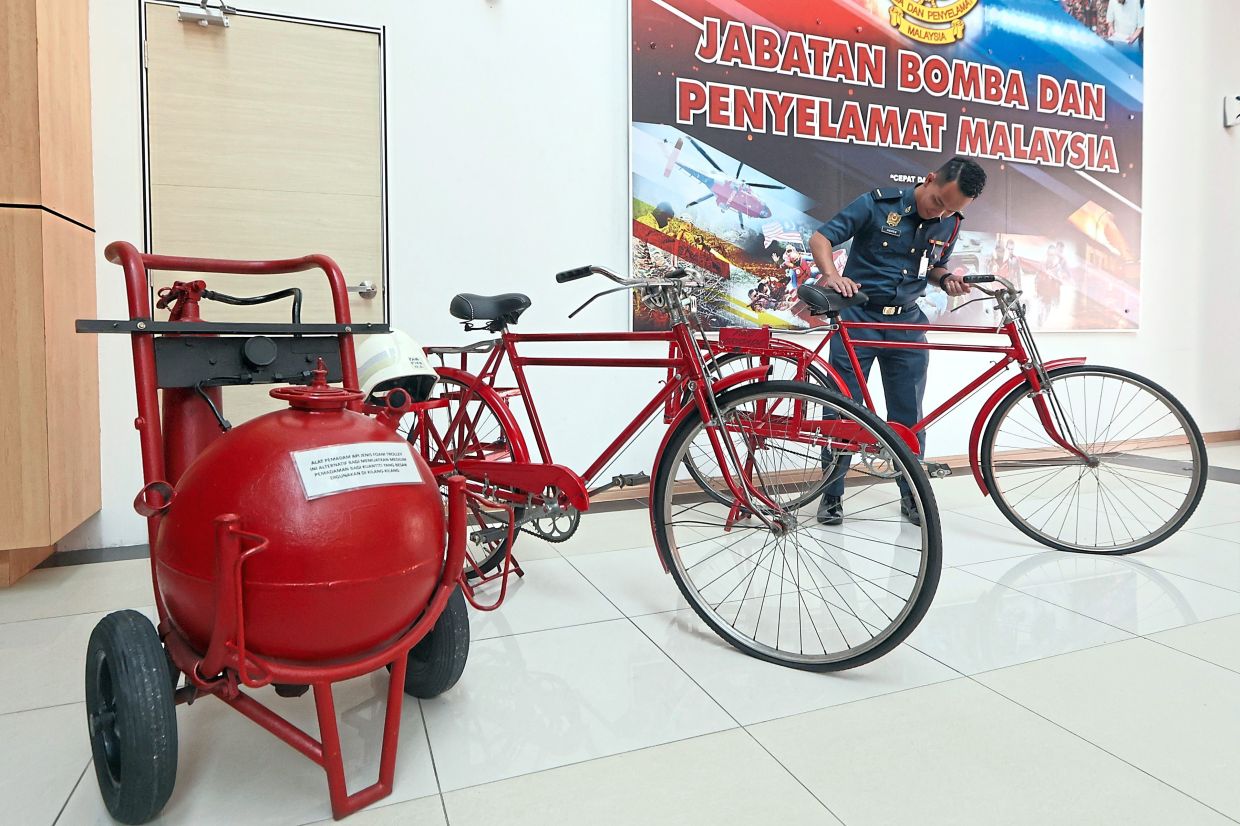
This includes live demonstrations and exhibitions, including displaying antique fire engines.
We will also have interactive fire safety stations where participants can complete tasks and learn practical skills; competitions involving emergency response teams, cadets and the public; and activities such as CPR (cardiopulmonary resuscitation) demonstrations, fire handling exercises and educational games.
Assets including fire engines and helicopters will also be on display and we expect about 10,000 visitors over the two days.
The carnival will include food vendors and exhibitions by industry partners.
We will also be hosting challenges such as allowing people to try to pull a fire engine, and portable pools to teach children how to swim.
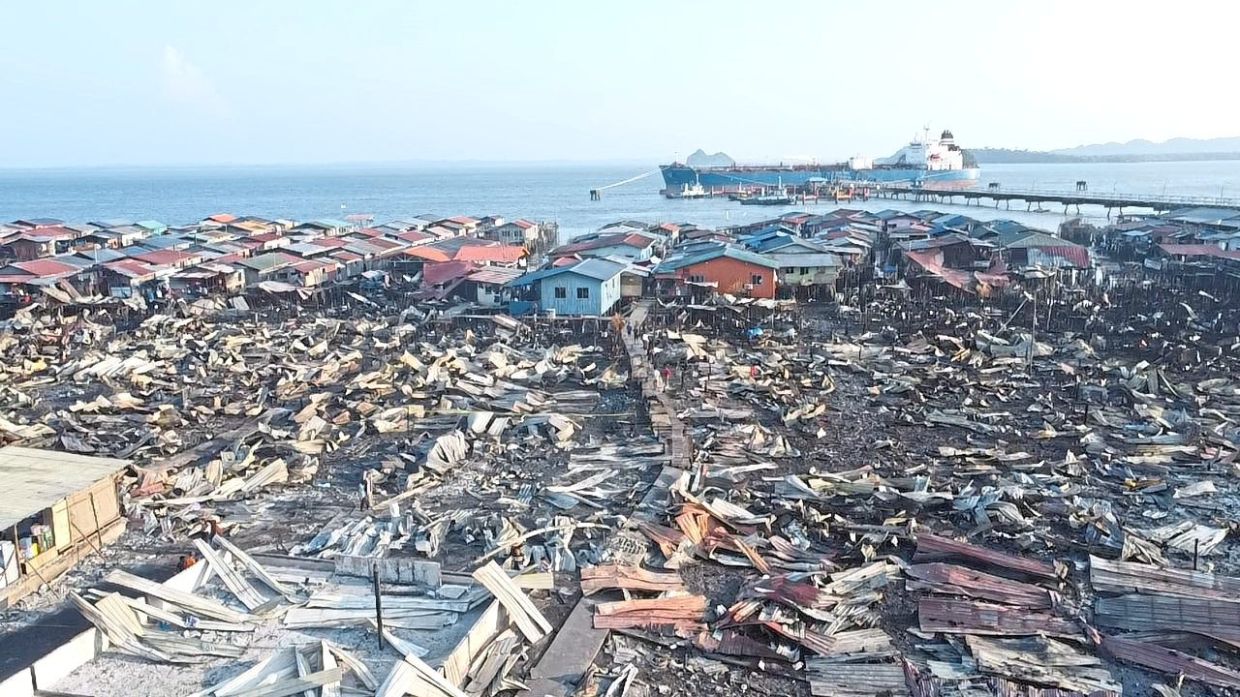
The April 19 fire in Sandakan, Sabah, which razed more than 1,000 houses and made more than 9,000 people homeless, was a major wake-up call about the risks in such squatter settlements. Do you have figures on how many such water colonies there are nationwide?
A: In the past, Sabah Fire and Rescue Department had mapped out at least 86 squatter colonies on stilts in that state alone.
There are also two major settlements beside rivers in Sarawak and one in Bukit Malut, Langkawi in Kedah, and another in Pulau Ketam, Selangor.
We do not have exact population figures for Sabah, but Kampung Bahagia (the affected area) alone has a population of about 9,000 people.
If we estimate each colony’s population to be around 5,000 to 10,000 residents, the population in these 86 water colonies can easily be hundreds of thousands of people.
This comprises both locals and foreigners who are mainly Filipinos and Indonesians.
What are the biggest challenges that the Fire and Rescue Department faces in tackling such fires?
A: The probability of a fire occurring in these places is very high.
One of the main contributing factors is shoddy electrical wiring. In many cases, installations of cables were not done by qualified professionals. That is why electrical-related issues account for 60% of such house fires.
One of our major challenges is accessibility.
Roads leading into these squatter areas are often narrow, with vehicles parked along both sides, making it difficult for fire engines to manoeuvre.
The second challenge is access.
In some areas, there may be one main road which is usually via wooden jetties, which are highly flammable and can be destroyed in a fire.
Another issue is the structure of the houses themselves. If hardwood is used, the spread of fire is slower, but in many cases cheap materials are used, making the structures highly flammable.
The houses are also built very close to each other, with minimal gaps between roofs. This makes it difficult to assess and predict the movement and spread of fire.
Fire hydrants are also often located far from these settlements. Even when we connect to them, the water pressure may be insufficient due to the size of the pipes.
I have seen all this first-hand while I was stationed in Sabah for two-and-a-half years.
Will there be steps taken to address fire safety issues in such colonies?
A: If you visit these communities, you will observe that residents are highly aware of fire risks.
They know that fires can occur and spread rapidly, and they are always alert as fire occurs regularly in such places.
There is also a strong sense of community.
Neighbours know each other well, including how many people live in each household. This enables them to act quickly when a fire starts.
Our key message to the people is that they must always prioritise saving themselves, alert others and move to a safe location, rather than attempting to save belongings.