ON WEEKENDS, the quiet surroundings of Kampung Orang Asli Sungai Tonggang in Perak are often shattered by the loud roar of engines.
It is not unwelcome as it signals a new source of income for the Orang Asli who started the Kayuh D’Tonggang recreational area in 2023, with help from Global Environment Centre (GEC).
Funding for the project was sourced from Hasanah Foundation, Finance Ministry, the Orang Asli Development Department (Jakoa), Perak Islamic Religious and Malay Customs Council (MAIPk) and the state government.
Last year, the all-terrain vehicle (ATV) riding was introduced to boost ecotourism.
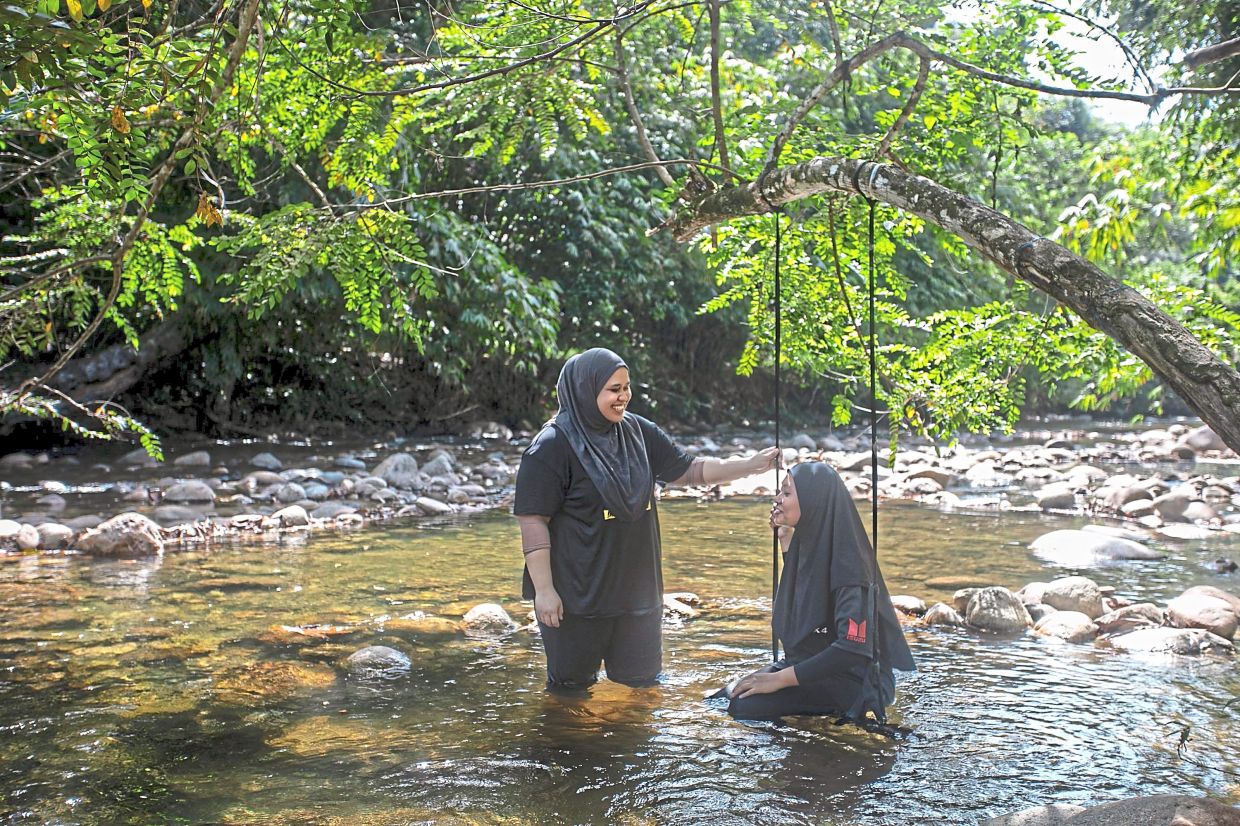
Previously, they offered just chalet accommodation and a few nature-based activities at the site where Sungai Seno’oi runs through.
“So far, the response to the ATV rides has been very encouraging,”tok batin Che Wan Alang told Bernama.
The Kayuh D’Tonggang recreational area opened to the public, with the aim of generating income for the Temiar community.
Home to 137 families comprising 453 people, the village is located just 6km from Tanjung Rambutan.
Before this, many had depended entirely on the forest for their livelihood.
Che Wan, 41, said the ATV rides became a reality following a RM100,000 “Sejati Madani” grant last May.
“We purchased eight ATVs with 125cc engines and two with 200cc engines, along with a goods trailer, safety jackets and helmets.
“An ATV garage was also built,” he said, adding that the idea for the ATVs came from the villagers.
Che Wan said the ATV track from the recreational site to the outskirts of the village was rather challenging as it passed through hilly terrain.
He said that although some visitors were initially nervous, many who tried the ride said it enabled them to explore the area in a unique way.
“From Kayuh D’Tonggang, visitors ride to the village (about 20 minutes), circle it and head back. It’s about 1km,” he elaborated.
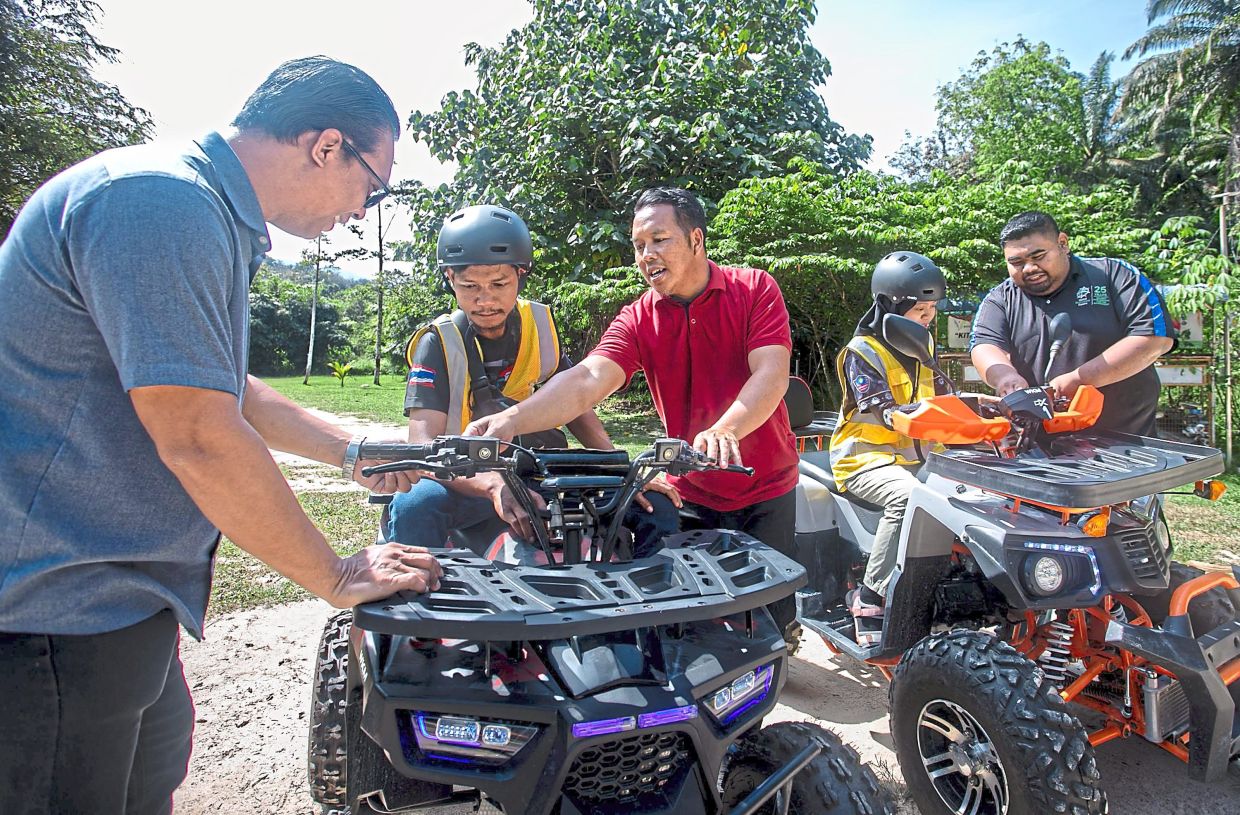
The rental rate is RM30 for the 125cc ATV and RM40 for the 200cc model.
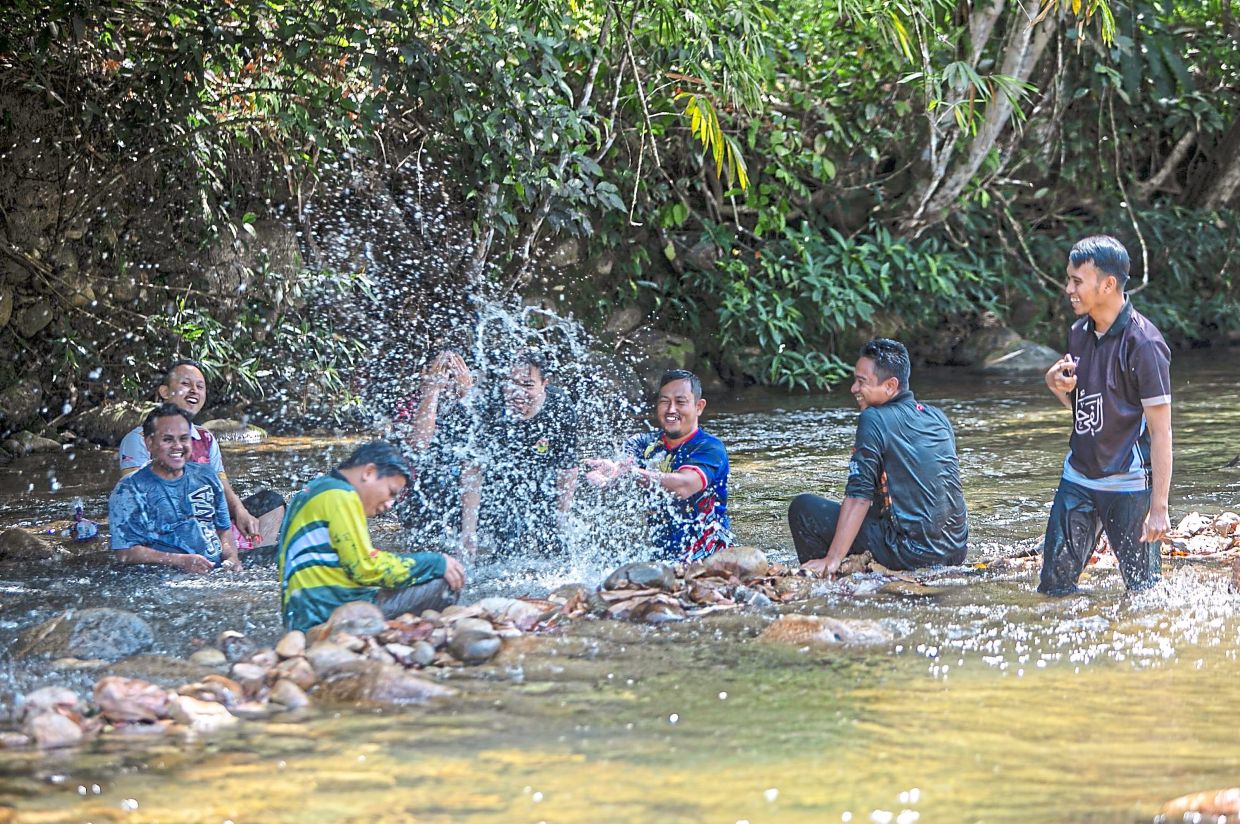
Che Wan said Kayuh D’Tonggang also offered activities such as bathing in the river, nature walks and demonstrations of traditional Orang Asli activities that included weaving, animal trapping and hunting with a blowpipe.
“We also have an observation tower for birdwatching.
“There are around 25 species,” he said.
He added that binoculars were provided to those who didn’t have their own.
Visitors who wish to stay overnight can rent a chalet or set up a tent for camping.
The area is managed by 19 villagers, including youths who work part-time.
“We are open every day, but we usually see more visitors over the weekend,” Che Wan said, and expressed gratitude for the latest grant from the government.
“I hope it will further improve the socio-economic conditions here by helping generate income for residents and giving our youths the opportunity to work in their own village.”
Sejati Madani is a new initiative aimed at stimulating economic activities at the community level by providing funding of up to RM100,000 to eligible communities.
Che Wan said close cooperation with Jakoa had ensured that basic infrastructure such as electricity, piped water and a tarred road help make stays comfortable.
Kinta and Kampar District Orang Asli Development officer Mohd Farizal Mohd Zakhri said Jakoa increased its support for the community after realising their efforts to develop ecotourism as an additional source of income.
“When they built the chalets, Jakoa provided electricity, water supply and toilet facilities to ensure convenience for visitors,” he said.
“We also conduct financial classes and workshops to help them understand and manage administrative work involving finances, so that there will be no leakage in spending,” he said, adding that Jakoa also assisted the community in applying for the “Sejati Madani” grant.
Farizal said the department monitored the project’s progress and the income generated from the ATV activity.
“We can see that there is demand and it is increasing every month,” he said.
Meanwhile, GEC senior programme officer Norazrin Mamat said the non-governmental organisation recognised and developed the potential of the area using the sourced funds.
“When GEC entered the area in 2021, we realised it could be developed for the community here.
“We wanted the community to monitor Sungai Seno’oi.
“And we must also give something back to the community.
“That was how the idea emerged to develop ecotourism for them while the Orang Asli continue to protect the area, including the river, biodiversity and the environment.
“It is a win-win situation.”
Norazrin said that most visitors’ feedback had been positive, with some suggesting that extreme activities like ziplining be offered.
Amira Hanis Mohd Asri, 38, who was visiting for the first time, said she was initially sceptical about going to the village because the road to the area was challenging.
However, she said it was all worth it once she saw the beauty of the place.
“It is very beautiful, and the river is shallow, making it suitable for children. Families are highly encouraged to come here.
“The area is also very clean and we really like it.
“Anyone planning a family day or relaxing outing should definitely come here,” she added.
Amira Hanis suggested more promotion for the area, adding that even she as a resident of Ipoh had not known about the place until recently.
Meanwhile, her sister-in-law Khairul Anisah Khairul Anuar, 32, said she was interested in the ATV activity.
“I want to try it next time,” she declared.