
VETERAN journalist, Low Sock Ken, is a former reporter with nearly four decades of experience.
The 68-year-old began her career in 1982 and went on to serve in several local and international publications before retiring in 2021.
Low, who lives with her husband and son in Taman Ungku Tun Aminah, Skudai, Johor, said she had no regrets choosing journalism despite the modest pay when she first started.
“I began as a reporter in 1982 with Nanyang Siang Pau.
“Later, I moved to several other publications, including stints in Singapore and Indonesia for a few years.
“Over nearly 40 years, I worked with six agencies, including newspapers and magazines.
“I chose this career because I loved writing, even though my starting salary was only RM215 a month,” she said.
One of her most unforgettable assignments, she said, was covering the 2002 Bali bombings for more than a week.
“I witnessed the aftermath of the explosion and the impact it had on victims’ families, both locals and tourists.
“What I remember most was the quiet, calm atmosphere, even during the funeral ceremonies.”
Throughout her career, Low also covered five prime ministers, from Tun Dr Mahathir Mohamad to Datuk Seri Ismail Sabri Yaakob.
She advised young journalists to never stop learning and keep adapting to new technologies.
She was speaking after receiving a visit from Communications Minister Datuk Fahmi Fadzil, who presented contributions under the Tabung Kasih@Hawana initiative at her home.
Another veteran, former Media Prima cameraman Idrus Rahmat, 55, shared that he was diagnosed with liver cancer last year and also suffers from heart disease, hypertension and diabetes.
He expressed appreciation for the government’s concern for media practitioners.
“I was quite surprised to receive this good news.
“I am very grateful that the government, through the Communications Ministry, continues to care for us even though we are no longer on duty,” he said when met at his home in Kampung Skudai Kiri.
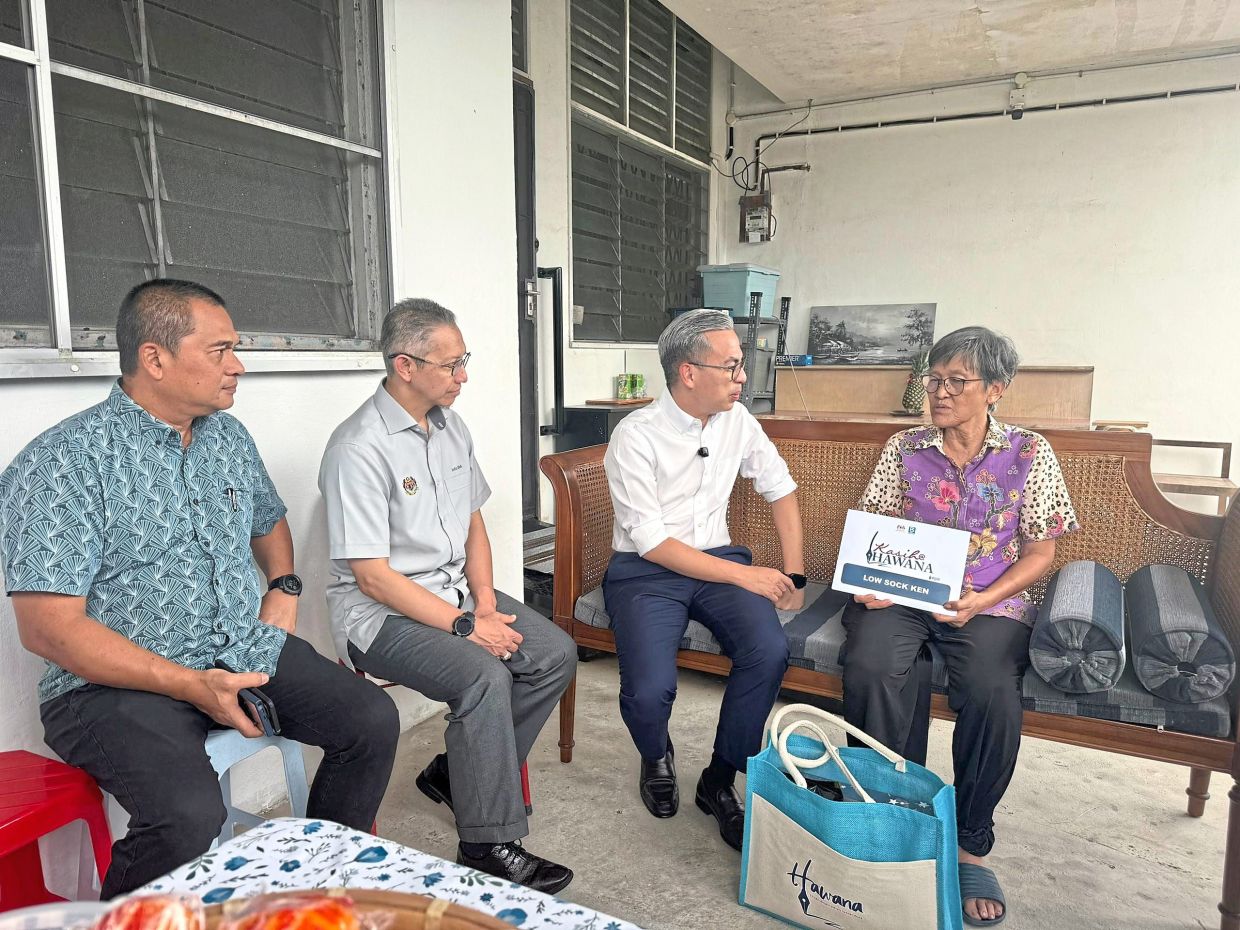
Tabung Kasih@Hawana is an initiative implemented by the Communications Ministry and managed by the Malaysian National News Agency (Bernama).
It is designed to provide financial assistance and welfare support to former journalists and media practitioners in Malaysia.
According to Fahmi, Tabung Kasih@ Hawana, which was launched in April 2023, had since benefitted 644 veteran journalists who had contributed significantly to the media industry.
“Media work has changed greatly, especially with the use of the latest technologies such as artificial intelligence (AI).
“However, experience and the human touch cannot be replaced,” he said.
Meanwhile, seven former Johor journalists received aid and a visit from members of Kelab Media Johor (KMJ) during the recent Hari Raya and Chinese New Year celebrations.
KMJ president Mohamad Fauzi Ishak said at the heart of the annual initiative was the welfare of media colleagues, especially former practitioners facing health problems.
“We are also trying to secure assistance from the Tabung Kasih @Hawana.
“We have media colleagues who are unwell and we are working to alert the authorities so that financial support can be provided,” said Mohamad Fauzi.
One journalist who received a visit from KMJ was Mohd Saat Yaacob, 66, who worked in Utusan Malaysia for 16 years.
Mohd Saat, who is from Kulai and has heart problems, described life as a journalist in the 1980s and 1990s as “challenging”.
“We used film cameras and had to develop and send the pictures to the office by taxi.
“For our stories, especially breaking news, we had to call in and get someone to take it down over a telephone call,” he recalled.
He said technology had made media work easier as these days, journalists were able to get stories via statements from the authorities, with pictures attached.
“Photographs and news articles can also be sent easily through various applications on the mobile phone.”
Mohd Saat said his top story was about timber theft in Mersing that made front-page headlines.
He advised budding journalists to be courageous and not be afraid of threats or adversaries.
China Press stringer Liew Ngan Yoon, 60, who has been a journalist for 26 years, agreed that reporting used to be significantly more difficult.
“Now it’s so much easier, because all the information can be obtained from social media.
“In the past, if there was an accident, we had to go to the scene to conduct interviews.
“Now, we often write the news based on press releases,” Liew said expressing gratitude for KMJ’s visit and aid.
KMJ also visited former Radio Televisyen Malaysia (RTM) reporter and announcer A. Madhavan, better known as Dee Jay Dave.
“I started at the age of 23 in 1982 and worked at RTM for 37 years until 2019.”
He said he was proud to be the only Indian at RTM in Johor Baru.
“Whenever they had functions, they would prepare food specially for me, knowing that I don’t eat beef.”
He also advised younger journalists to take genuine interest in their work and to pursue it with dedication.
Madhavan, who retired in 2019, wears many hats now such as being a registrar of marriages, prison-visiting judge and a counsellor with the National Registration Department.
“I also do a lot of freelance work as a deejay for events,” he said.