




PENANG’S streets have turned a striking shade of red this Chinese New Year, as lanterns, temple lights, and modern projections combine to usher in the Year of the Horse with colour and energy across the state.
From the heart of the mainland to the island’s heritage enclave, familiar neighbourhoods have been transformed after dark, drawing vast crowds eager to soak in the festive atmosphere.
Visitors to the state are being encouraged to explore a trail of photo-worthy “check-in” spots that link various districts, each offering a unique interpretation of the Spring Festival.
The most recognisable of these sights remains the iconic installation in Jalan Raja Uda, Butterworth.
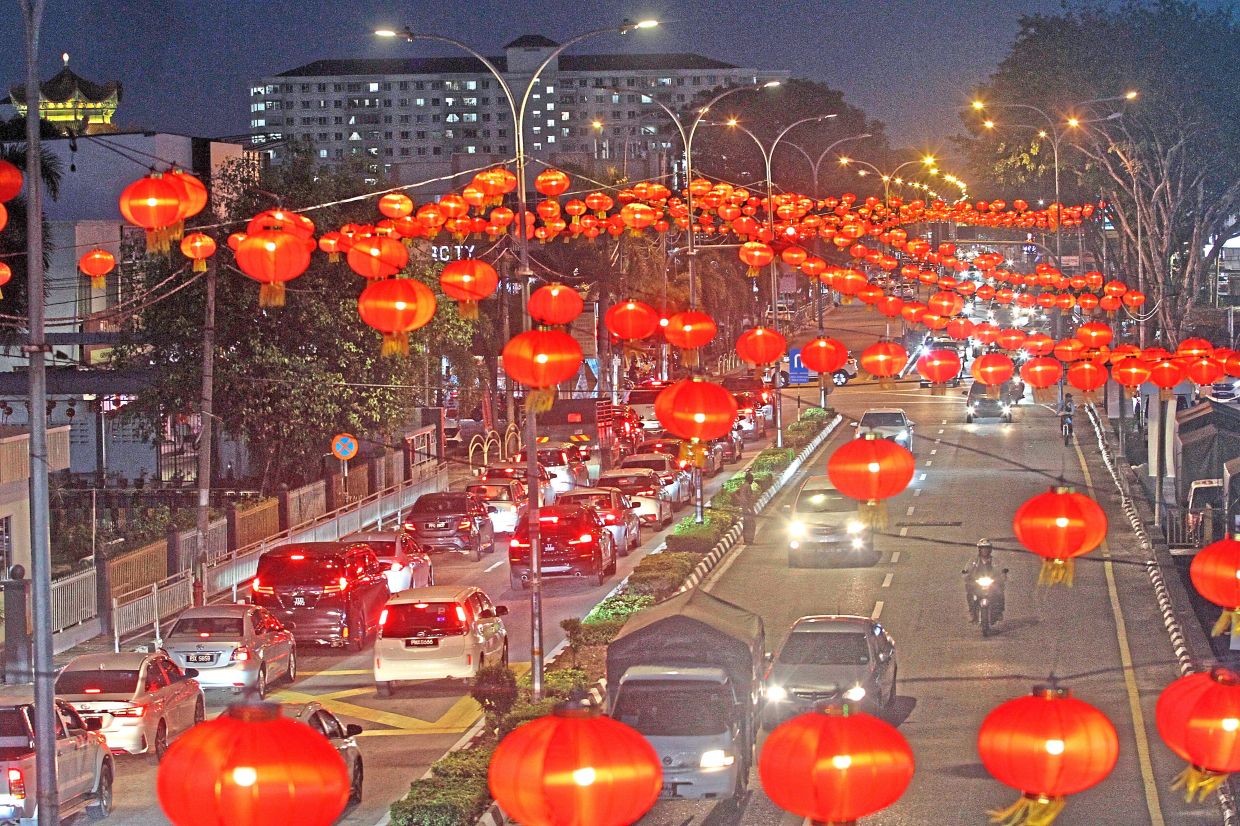
Here, an estimated 10,000 red lanterns form a continuous, glowing canopy over a 3km section of the busy thoroughfare.
This installation, often described as the country’s longest lantern street, is the result of a long-standing collaboration between private and public partners that has been sustained for approximately 15 years.
Bagan Jermal assemblyman Chee Yeeh Keen said the sheer scale of the display served to unify the local community.
“The lanterns create an unbroken canopy of red once night falls, lending warmth and a celebratory feel to an area dominated by shops, markets and several major Chinese temples,” he said.
The presence of these lights has become a vital economic driver for the Seberang Perai region, turning a standard commercial artery into a destination in its own right.
Culture and charity
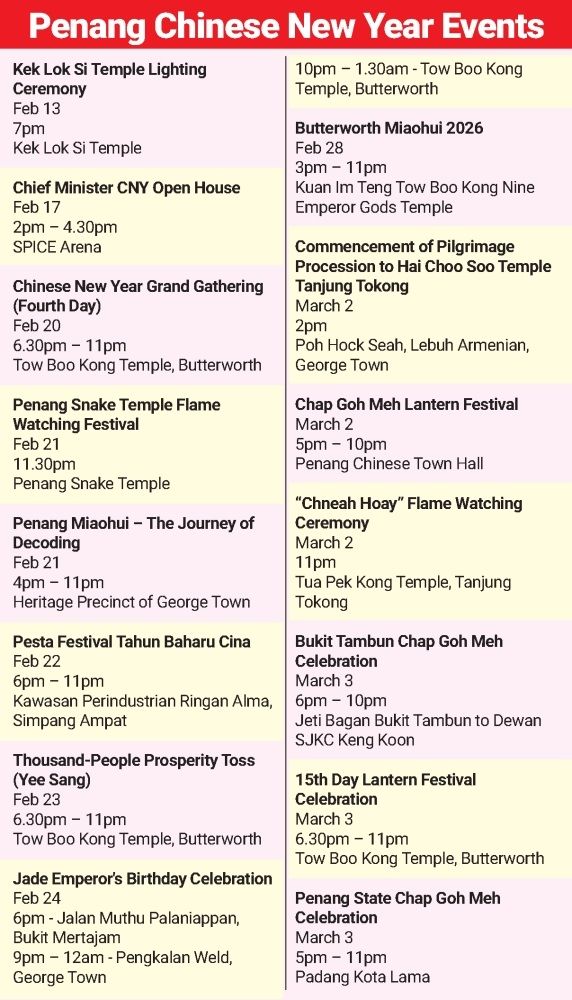
The festive mood in Butterworth is expected to reach its zenith later this month with the Butterworth Miaohui (Temple Festival) at the Kuan Im Teng Tow Boo Kong Nine Emperor Gods Temple on Feb 28.
This event alone is expected to attract more than 20,000 visitors from across the northern region.
The festival programme is a curated showcase of heritage, featuring traditional performances such as lion dance, the mysterious art of “face changing”, Chinese war drums, and full orchestral sets.
Alongside the spectacle, hands-on cultural workshops will allow the younger generation to engage with calligraphy and traditional crafts, before the day-long celebration concludes with a massive fireworks display.
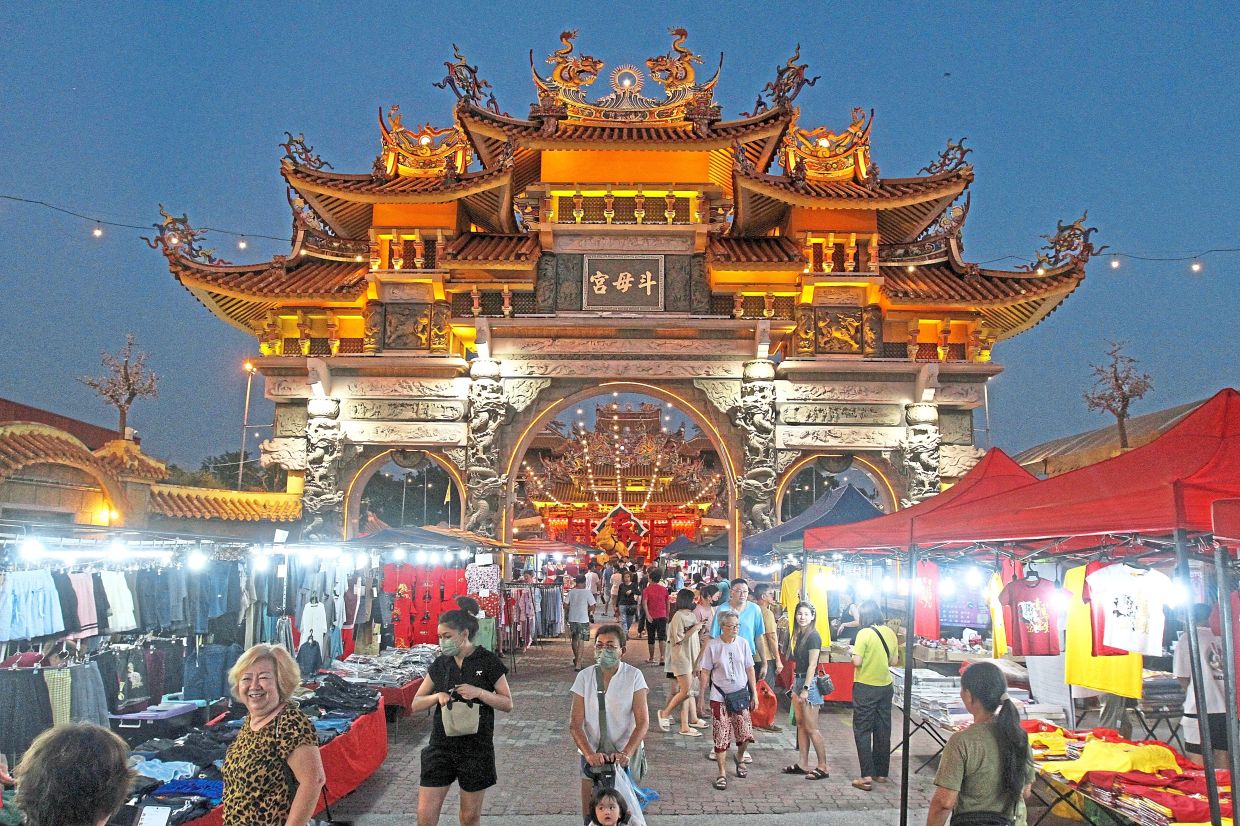
Nearby, the Tow Boo Kong Temple – one of Malaysia’s largest Nine Emperor Gods temples, sprawling over 40,000sq ft – greets visitors with a bustling market and a sea of warm lights.
Temple secretary Lee Chong Leong said this year’s decorations were specifically tailored to the zodiac cycle.
“A horse sculpture has been installed at the entrance in keeping with the zodiac year, while the temple grounds are illuminated with rows of lanterns, glowing arches and about 10,000 oil lamps,” he said.
However, the temple’s involvement goes beyond mere aesthetics.
In a season defined by the spirit of giving, the temple is continuing its extensive charitable outreach.
Noting that the festivities serve as a platform for philanthropy, Lee said: “Funds raised this year will benefit about 1,200 people, including 1,000 elderly folk and 200 students, each receiving about RM80 worth of food items and ang pow.”
The temple grounds also host a month-long night market, where 300 traders offer everything from traditional festive delicacies to contemporary fashion.
Stalls offer a variety ranging from food and drinks to clothing and festive decorations.
Some vendors sell household items essential for the celebrations while others offer ornaments and festive fashion bearing auspicious messages or horse zodiac motifs.
Enduring old town spirit
Further south on the mainland, Bukit Mertajam’s old town has taken on a nostalgic glow.
In the area surrounding the Pek Kong Cheng Temple, also known as Hock Teik Cheng Sin, an installation of more than 300 fish-shaped lanterns has been put up.
These lanterns represent the Chinese proverb nian nian you yu, symbolising abundance and wealth.
The temple itself stands as a symbol of resilience.
Originally dating back to 1886, the structure was severely damaged by a fire in 2019.
Its subsequent reconstruction has restored it as a key cultural landmark, and its lantern-lit facade now serves as a reminder of the community’s enduring spirit.
Similarly, in Jawi near Nibong Tebal, some RM70,000 has been spent to string 650 lanterns across a 450m stretch of Jalan Atas, ensuring that the festive spirit reaches every corner of the state.
World heritage attraction
Across the Penang Bridge, the island’s celebrations are concentrated within the Unesco World Heritage site of George Town.
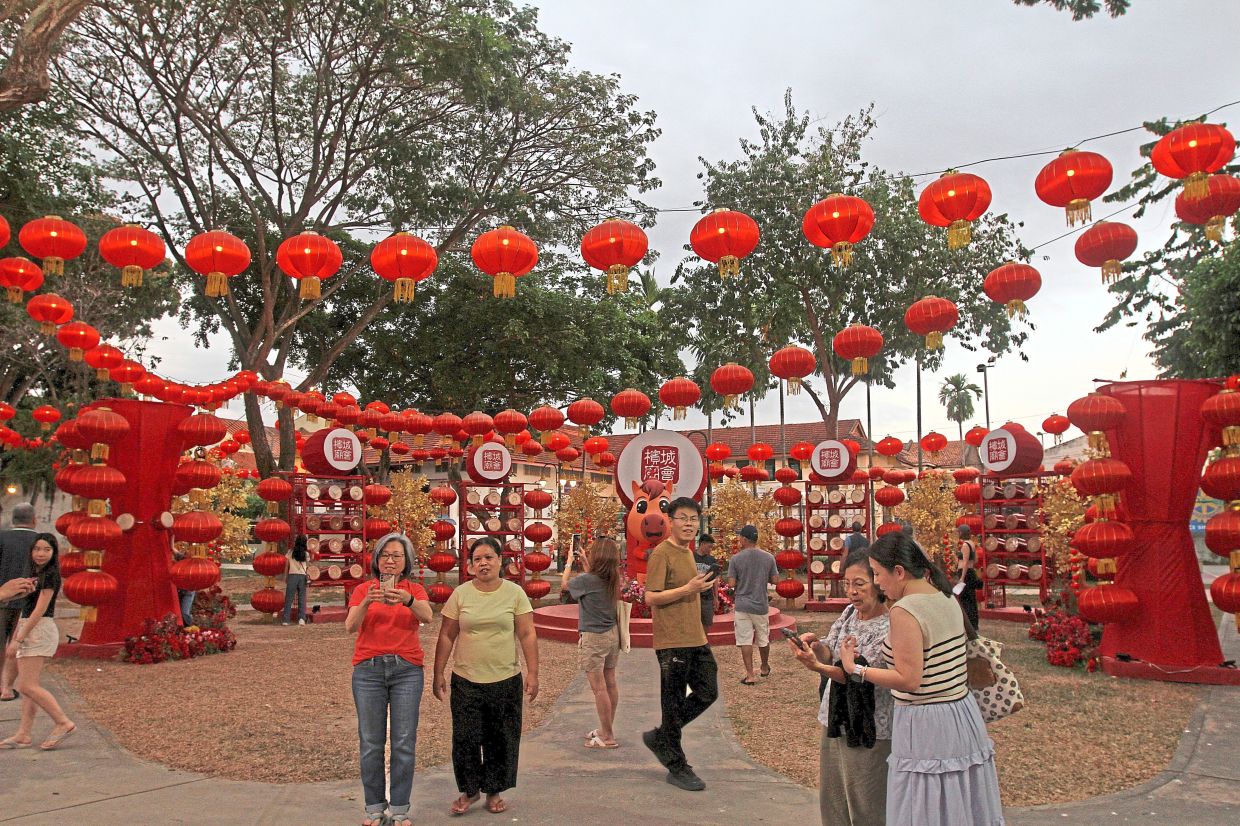
More than 2,000 red lanterns have been installed ahead of the annual Penang Miaohui (Temple Festival).
These lights illuminate 12 major roads within the heritage zone, including the four primary thoroughfares of the Tanjong parliamentary constituency.
Festival master planner Chong Jian Mei said the decorations at Armenian Park would complement the street displays and serve as a central gathering point.
“The lantern displays would be suspended across key streets to create an immersive experience for visitors as they move through the heritage zone,” she said.
This year’s festival theme, “The Journey of Decoding,” invites everyone to rediscover the timeless wisdom behind Chinese culture, meanings and values that connect generations.
The main event, scheduled for Feb 21, is expected to draw a staggering 200,000 visitors to the narrow streets of the enclave.
Modern twist on tradition
While the heritage zone focuses on history, other parts of the city are embracing modern luxury and technology.
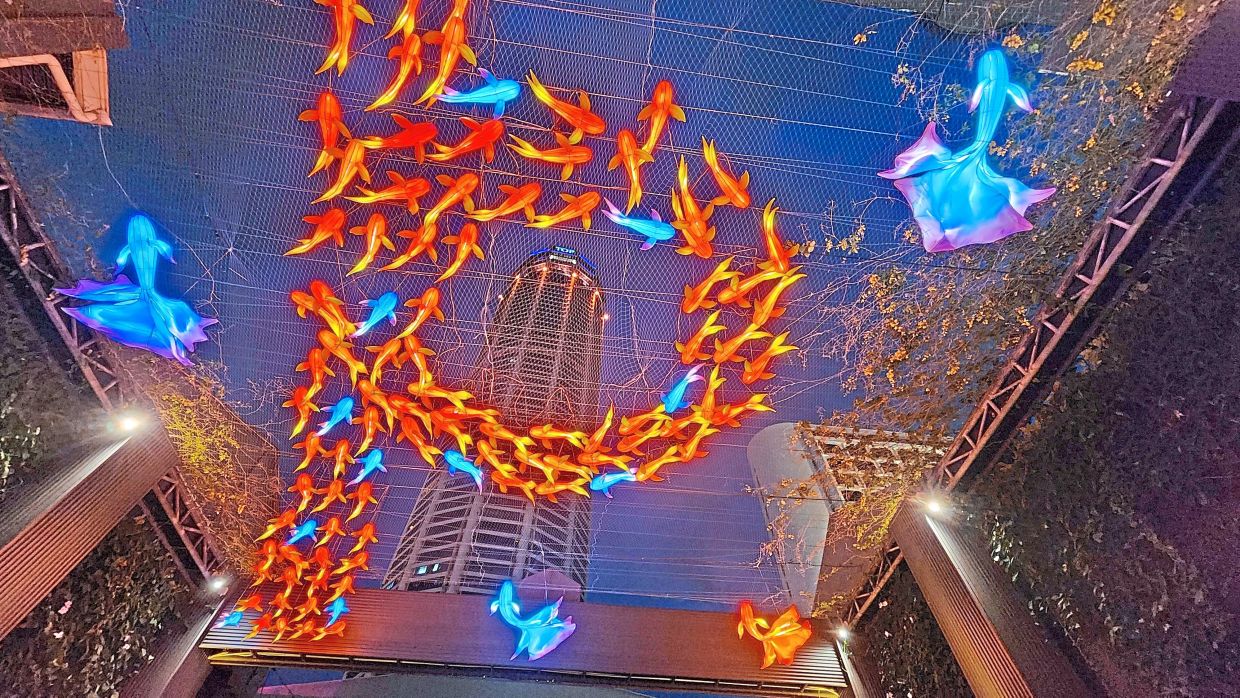
Overlooking the Komtar tower, The Granite Luxury Hotel has invested RM40,000 in a “Fish Pond in the Sky” display.
Rows of illuminated fish lanterns are suspended over the driveway, accompanied by a giant festive ribbon and a 6m-tall tree decorated with fish-themed ornaments and a prominent Fu (blessing) symbol.
In the nearby nightlife hub of Love Lane, figurines of two giant inflatable Gods of Prosperity and a horse stand guard over the street’s bars and restaurants.
These decorations, combined with overhead lanterns, have provided a much-needed boost to the local hospitality sector, drawing tourists into the area’s many establishments.
The crowning jewel of the island’s lights remains the Kek Lok Si Temple in Air Itam.
On Friday, Feb 13, the country’s largest Buddhist temple will hold its annual lighting-up ceremony.
Millions of LED lights and traditional lanterns will be draped across its pagodas, halls and terraces.
Perched on the hills, the temple’s cascading lights create a vivid spectacle that can be seen for miles, acting as a beacon for photography enthusiasts and worshippers alike.
The 2026 celebrations also mark a significant investment in digital art.
At the Esplanade Linear Park, a RM476,530 interactive laser projection system has been introduced.
Spanning a 142m walkway between the Medan Renong food court and The Cenotaph, the system uses 25 projectors and motion sensors.
As visitors walk through the park, their footsteps trigger animated visuals that ripple across the ground, ranging from floral transformations to playful heart motifs.
Operating daily from 7.30pm to 1am, the installation features 70 different animated loops.
A global invitation
Penang tourism and creative economy committee chairman Wong Hon Wai said the state’s packed calendar of over 30 major activities was a testament to the collaboration between the state government, temples, associations and private groups.
“Chinese New Year celebrations in Penang are spread across the entire state, allowing residents and visitors to experience the festive atmosphere in heritage streets, temples, shopping areas and community spaces,” he said during a recent unveiling at Gurney Paragon Mall.
These displays are a core component of the Visit Malaysia 2026 campaign, he emphasised.
“The initiative enhances the overall visitor experience and reinforces Penang’s reputation as a lively, culturally rich and visitor-friendly destination,” he said.
Wong added that local and foreign visitors were welcome to experience the rich cultural layers of their Chinese New Year celebrations.

