
WALKING through the streets of Sentul, Kuala Lumpur, is akin to reading chapters of a shared history between two nations, Indian High Commissioner to Malaysia BN Reddy says.
Reddy said the development of Kuala Lumpur’s railway infrastructure relied heavily on skilled Indian labour, many of whom eventually settled in the area.
“What we see today is not just heritage structures, but the imprints of endurance and aspirations for a better future.
“The Indian community played a key role in early industrial growth, infrastructure development and urbanisation.
“Despite limited resources, these communities forged strong bonds and vibrant neighbourhoods rooted in cultural identity and mutual respect,” he said, adding that Sentul remained a thriving hub of Indian cultural life today.
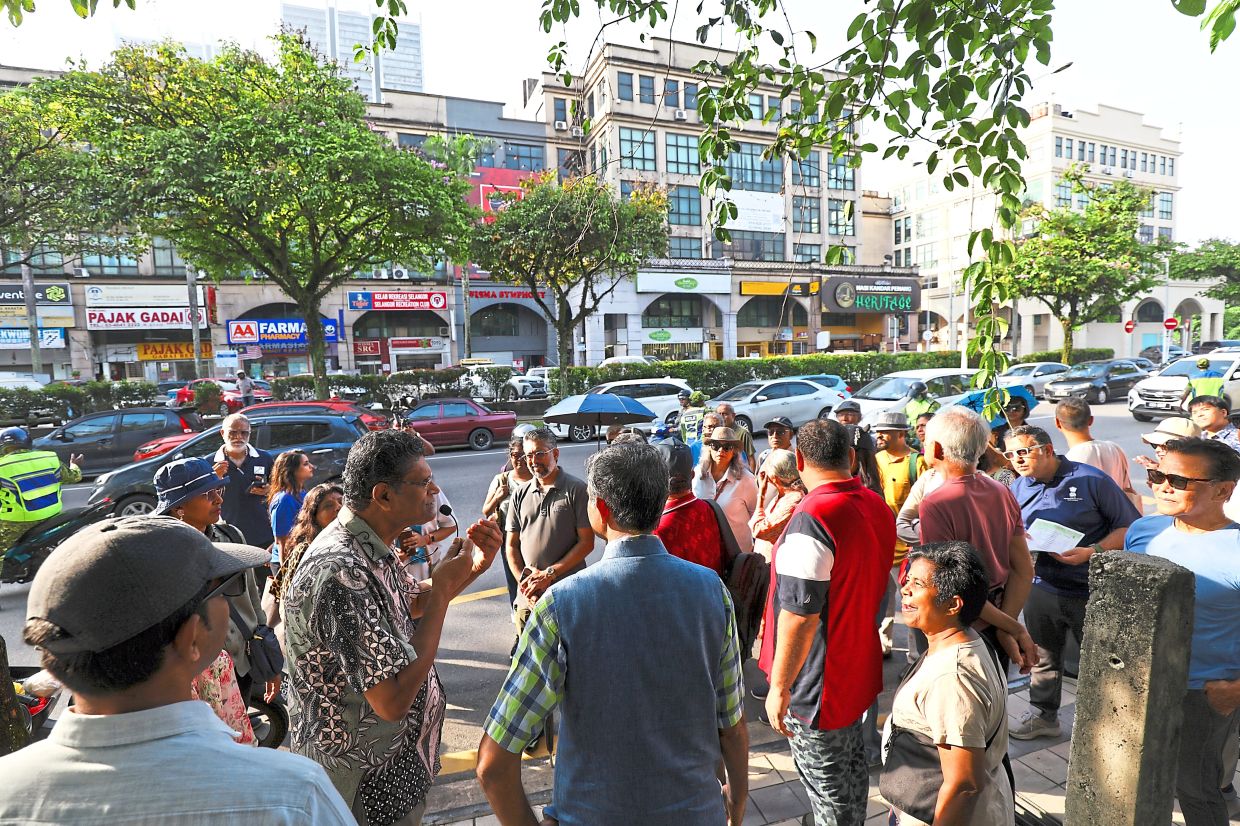
Reddy was one of 70 participants who joined a heritage walk through the historic railway neighbourhood to revisit the deep-rooted ties between Malaysia and India.
Organised by the Indian High Commission in Malaysia in collaboration with the Malaysia-India Heritage Society (MIHS), the walk was the fifth in a series celebrating decades of diplomatic and cultural connections.
Reddy said Sentul was a living cultural landscape shaped by the railways, plantation life and the resilience of migrant families.
He said it reminded him of the era of railway workshops, labour settlements and neighbourhoods formed around temples, schools and markets.
“These everyday spaces bore witness to the Indian diaspora’s role in laying the foundation of modern Malaysia,” he said.
MIHS founder and president Prabhakaran Nair said several significant events linked to India and the Indian community took place in Sentul.
Among the notable figures who visited the neighbourhood was then-Tamil Nadu Congress president K. Kamaraj, who addressed a gathering at the Railway Sports Club in March 1954.
“In his speech, Kamaraj made it clear that neglecting Indian workers, who formed the backbone of the community, would be self-destructive.
“Shortly after his return to India, Kamaraj became chief minister of Madras, now Tamil Nadu,” said Prabhakaran.
Another prominent visitor that year was social reformer EV Ramasamy Naicker, widely known as Periyar.
“In his speech on Dec 22 at the Sentul Pasar Railway Padang, Periyar called on Indians to embrace reform and adapt to rapid advances in science and technology,” Prabhakaran said during a briefing at St Joseph’s Church in Jalan Sentul.
He added that the Malaysian Indian Congress was founded at the Chettiar Hall in Sentul in 1946.
Back then, it was known as the Malayan Indian Congress.
The party’s formation, he said, was inspired by Jawaharlal Nehru, then a senior leader of the Indian National Congress and a central figure in India’s independence movement, who visited Malaya earlier that same year.
A journey through time
The series of walks began in Brickfields, Kuala Lumpur, in May 2023, followed by George Town, Penang, in November 2023, Ipoh, Perak, in July 2024 and Melaka city in April last year.
The Sentul walk was launched last month by then deputy National Unity minister K. Saraswathy at St Joseph’s Church.
Monsignor James Gnanapragasam welcomed the participants and said the church was one of the oldest in Kuala Lumpur.
“It was built in 1913 to serve the growing Catholic community in Sentul, which included many Indian railway workers and their families,” he said.
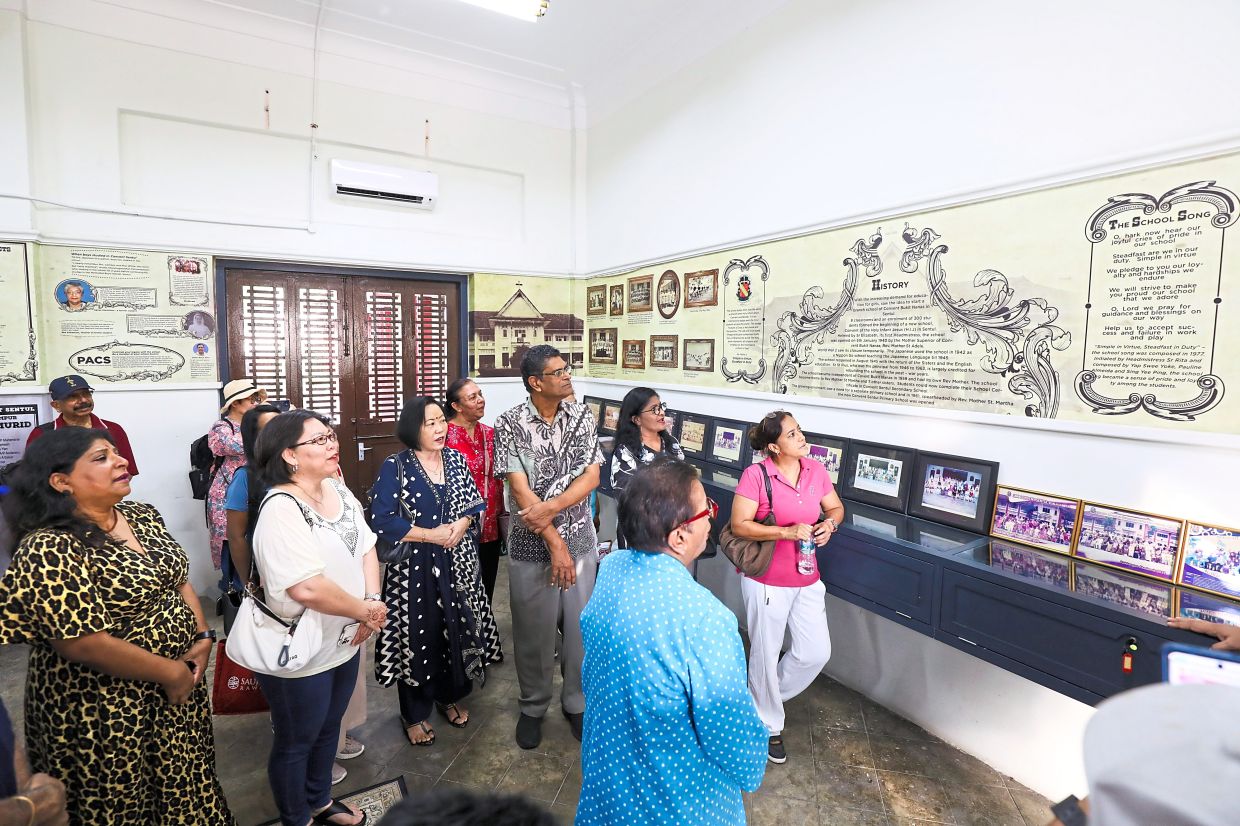
Participants also visited SMK Convent Sentul, where they were greeted by its alumni.
Persatuan Alumni Convent Sentul founder Datin Baljit Kaur said the school was opened on Jan 5, 1940, as the Convent of the Holy Infant Jesus, a branch of Convent Bukit Nanas, before becoming independent in 1959.
The group later passed Sentul Raya Boulevard, where a guide explained that the commercial centre was once an open communal space used by the railway community living in nearby railway quarters.
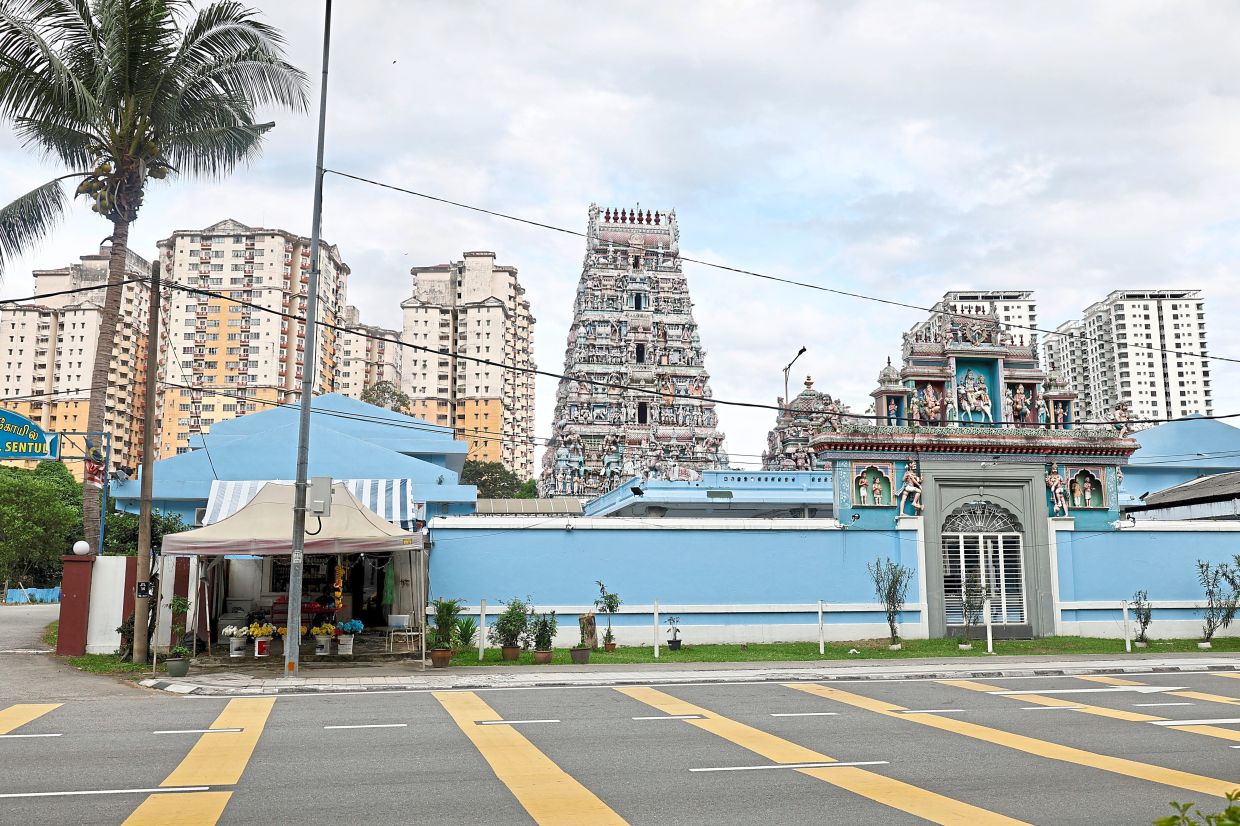
The tour included stops at several century-old places of worship that reflected Sentul’s multicultural heritage, including the Ahthi-Eeswaran Temple and Sri Lanka Buddhist Temple – both in Jalan Amra – as well as Gurdwara Sahib Sentul in Lorong Sentul Kecil, off Jalan Haji Salleh.
The Ahthi-Eeswaran Temple is managed by its board of trustees.
Temple board of trustees deputy president Palanivel KV Sathasivam said the temple was often regarded as the “Kashi of Kuala Lumpur”.
This is due to its location near cremation grounds, mirroring the Kashi Vishwanath Temple in Varanasi (historically known as Kashi), India.
Palanivel said the temple was built in 1937, with the first kumbhabhishekam (consecration ceremony) taking place in 1947, and a subsequent one in 1986 that unveiled the tallest rajagopuram (royal tower) in South-East Asia.
“The presiding deity, Lord Ahthi-Eeswaran is especially revered as a Swayambhu Lingam – a naturally formed stone, unlike crafted idols,” he said.
The Sri Lanka Buddhist Temple is managed by the Siri Jayanti Association.
The association’s president AK Nelson Sammie said the temple was founded by Sri Lankan Sinhalese Buddhists who lived in Sentul and worked at the railway administration.
He said the temple was originally built in 1917 in Jalan Haji Salleh.
“The government later relocated the temple to its current site in 1930. The building features architecture reminiscent of the Sri Lankan Theravada Buddhist style,” said Nelson.
He added that the temple’s white marble-compounded main Buddha statue was the largest indoor Buddha statue in Malaysia.
Gurdwara Sahib Sentul president Datuk Rajpal Singh said the house of worship began as a modest wooden structure in 1912 to serve the religious needs of Sikh railway workers, while also acting as a hub for education, social welfare and sports.
He said the building was known then as the Gurdwara Central Workshop.
“The building was renovated several times over the past decades to suit the needs at the time, including the establishment of a Punjabi school around 1928.
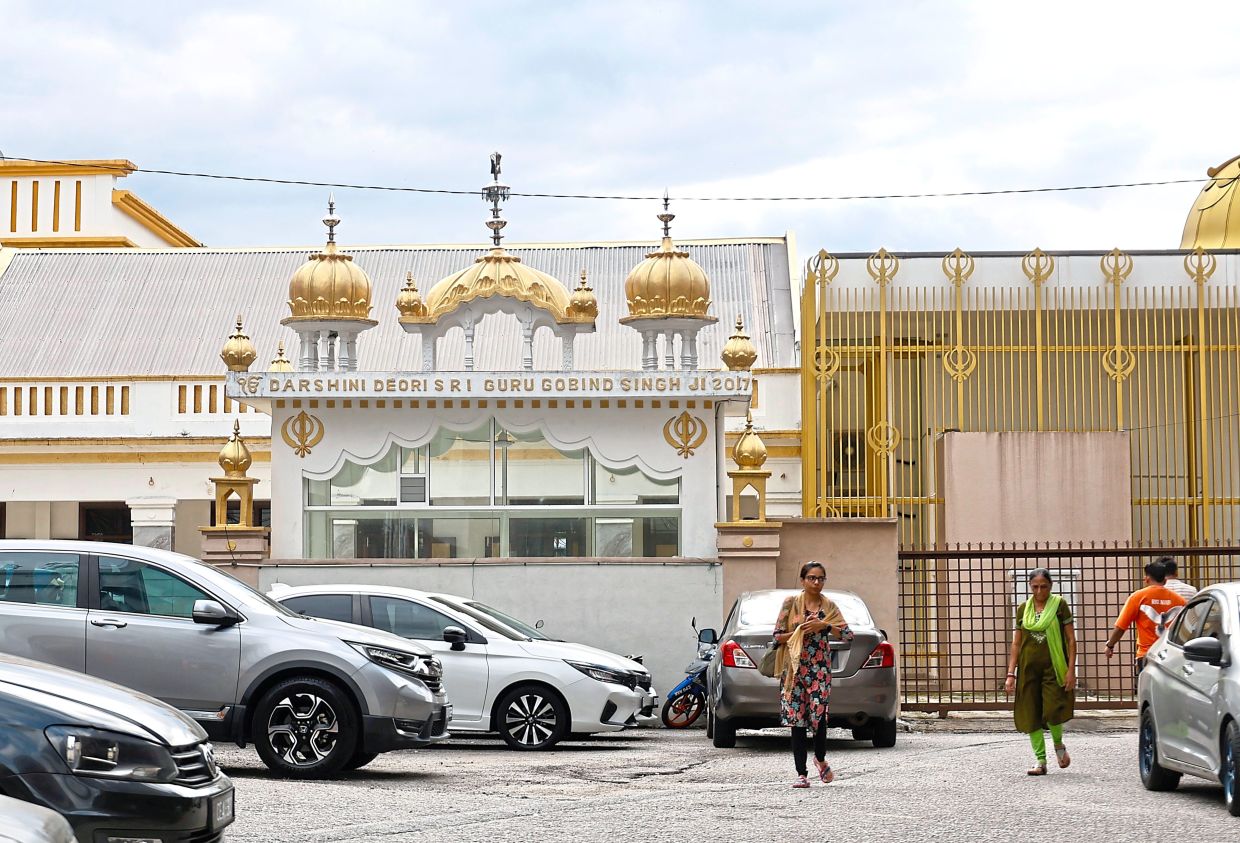
“The Punjabi school still operates today as Guru Nanak Punjabi School Sentul,” he said.
One of the lesser-known stops was Khutub Khanah Muthamizh, a Tamil cultural and literary centre established in 1930.
Better known as Mutthamil Padippagam, it is located on the first floor of a shop in Jalan Sentul.
The centre’s president P. Raman said it was funded by the local railway community to promote Tamil education.
“We started by renting a space and today, we own the building.
“We are one of the few remaining vital resources for Tamil literature in the country,” he said, highlighting the centre’s role in preserving the Tamil language in Malaysia.
The walk also featured KB Menon Tailors, a long-standing establishment on Jalan Haji Salleh. It was founded in 1933 by VK Sankunni, a migrant from Kerala, India.
A relative of the founder, Jalaja Sankar, said the shop remained popular for its craftsmanship.
“The business was managed by Sankunni and his descendants, before it was transferred to a new owner in 2010.
“Despite the change, it continues to operate under the same name, preserving its legacy,” she said.
The journey concluded at the Kuala Lumpur Performing Arts Centre (KLPac) in Jalan Strachan, which was built from the remains of the Sentul Depot, a railway workshop and warehouse dating back to the early 1900s.