
Johor Baru City Council (MBJB) will review all 23 of its identified flood hotspots next year to update its database and strengthen mitigation plans.
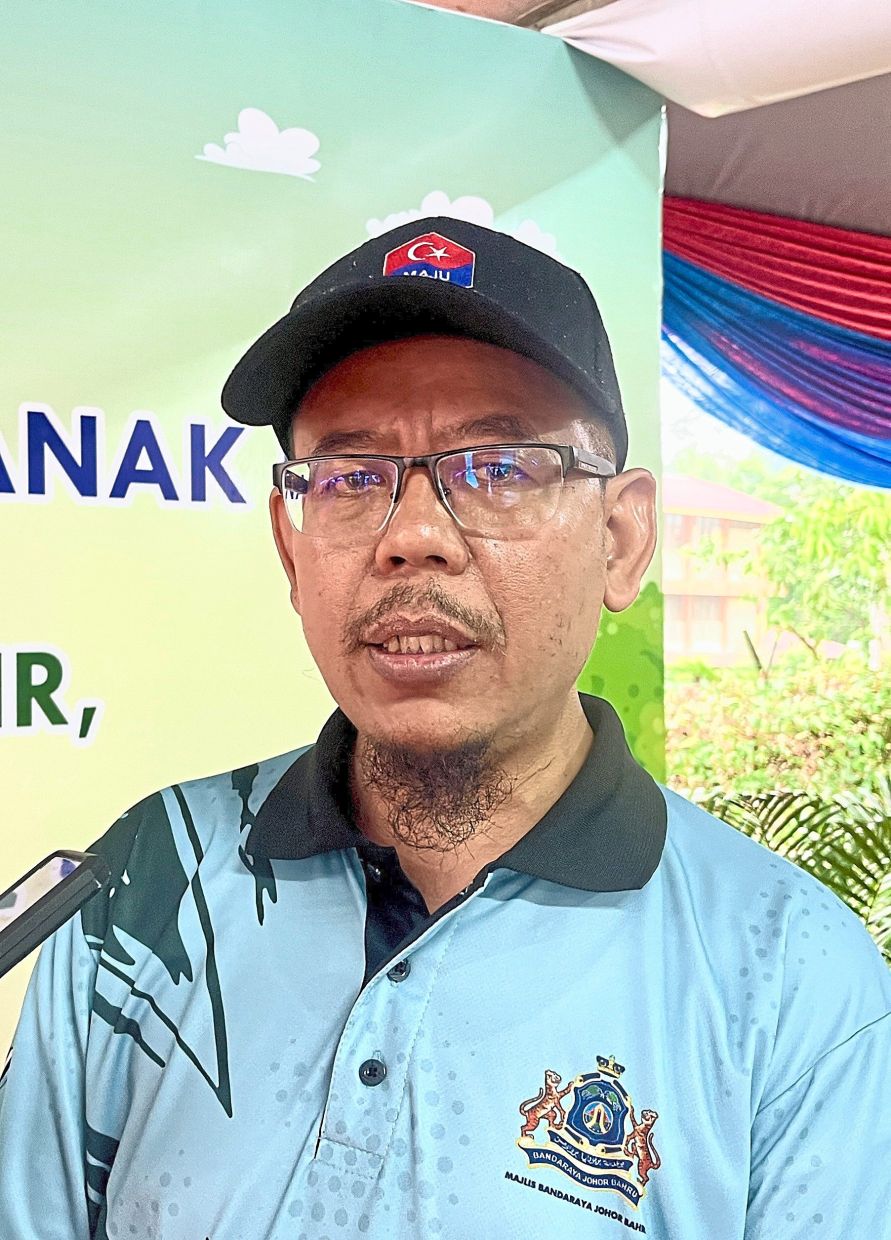
MBJB Engineering (drainage) senior assistant director Mohd Fadzil Suhaimi Talibin (pic) said current data reflected hotspots recorded several years ago, so there was a need for an update.
“The review will also rely on information from MBJB’s complaint channels, including the Public Complaints Management System and reports on social media,” he said at a tree-planting and fish-fry release programme at the Sungai Chat tributary in Johor Baru.
He said MBJB has resolved about 85% of issues at existing hotspots, with the remaining works targeted for completion next year.
“However, flood hotspots can never be declared 100% resolved as the problem can recur if we don’t continue maintenance.
“This is where public cooperation is vital, as technical solutions alone cannot prevent floods if residents continue to litter, block drains or build over drainage lines,” he said, adding that awareness programmes must be continued due to changing communities and new generations.
Mohd Fadzil also said MBJB differentiated between flash floods and monsoon floods, with the latter caused by river overflow and fell under the purview of the Drainage and Irrigation Department (DID).
He said major flood issues along Sungai Tebrau and Sungai Skudai required federal-level interventions.
“DID has allocations – over RM50mil for Sungai Tebrau and RM99mil for Sungai Skudai – and design work is underway.
“We hope these will help address hotspots that are beyond the city council’s jurisdiction.”
Within MBJB’s jurisdiction, Mohd Fadzil said the city had several pump locations to manage water levels, including seven along Sungai Chat, two at Sungai Sengkuang and one each at Sungai Segget, Sungai Air Molek, Sungai Abdul Samad and Sungai Pandan.
Another pump site at Sungai Sengkuang was currently being developed, he added.
Some low-lying urban areas were susceptible to flooding during high tide, he said, adding that the pumps were crucial when heavy rain coincided with tidal peaks.
“We have to withstand at least six hours – three hours of high tide and three hours of receding tide.
“If it rains heavily during this period, the pumps must function well,” he said, adding that maintenance was continuous, with MBJB’s flood squad on standby to tackle flooding in the city.
During the event, participants including MBJB councillors and school students released about 200 fish fry, planted frangipani trees and threw mudballs (containing beneficial microbes, soil, and organic matter to naturally clean the water) into the tributary to raise awareness about caring for the environment.