Residents in People’s Housing Programme flats (PPRs) across Kuala Lumpur are struggling with severe parking shortages that have greatly affected their daily lives and safety.
Some residents associations (RAs) are resorting to ingenious, though sometimes difficult, short-term solutions to manage the lack of parking while actively campaigning for permanent multi-storey facilities.
Double trouble
At PPR Kampung Muhibbah in Bukit Jalil, there is an unwritten rule that double-parking is acceptable.
This understanding was established over the years as the 2,844 high-rise units share just 500 parking bays.
“However, there are conditions,” said RA chairman Atar Haja, 57.
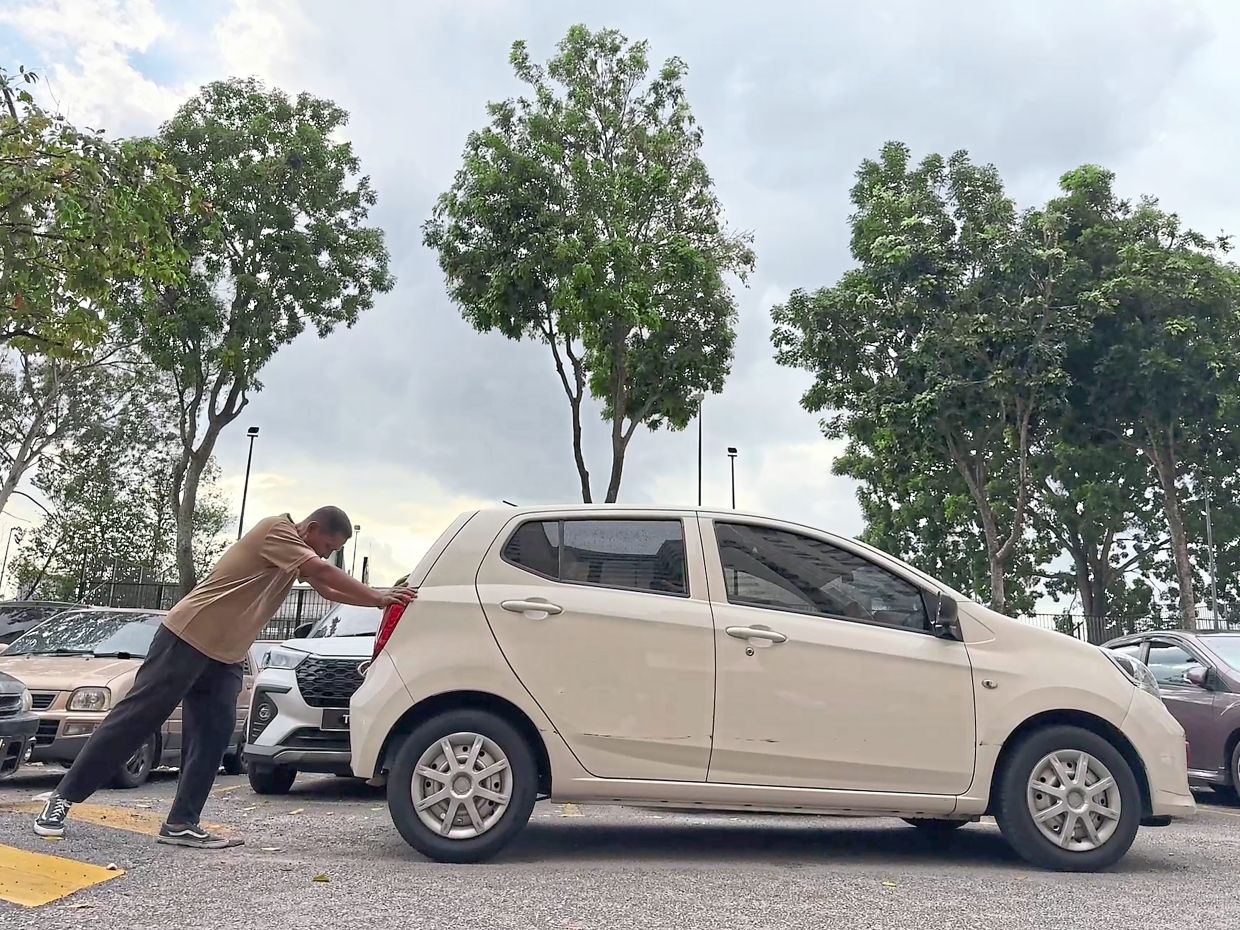
“Vehicle owners who double- park must not forget to release the handbrake.
“This is to enable a driver who wants to exit a parking bay to push the obstructing vehicle aside.”
Most times, this arrangement works well.
But as RA committee member Ismail Ibrahim, 58, puts it, “life is a mix of good and hard times.”
“Late at night or early in the morning, the bays are full and blocked by others.
“An exiting driver will need to put in extra effort to push a car from further down the line to create space for other cars to move,” said the retired army sergeant.
“But when bigger vehicles like four-wheel drives and minivans are involved, or when someone forgets to release the handbrake and fails to answer calls to move the vehicle ... this is when my phone will start ringing.
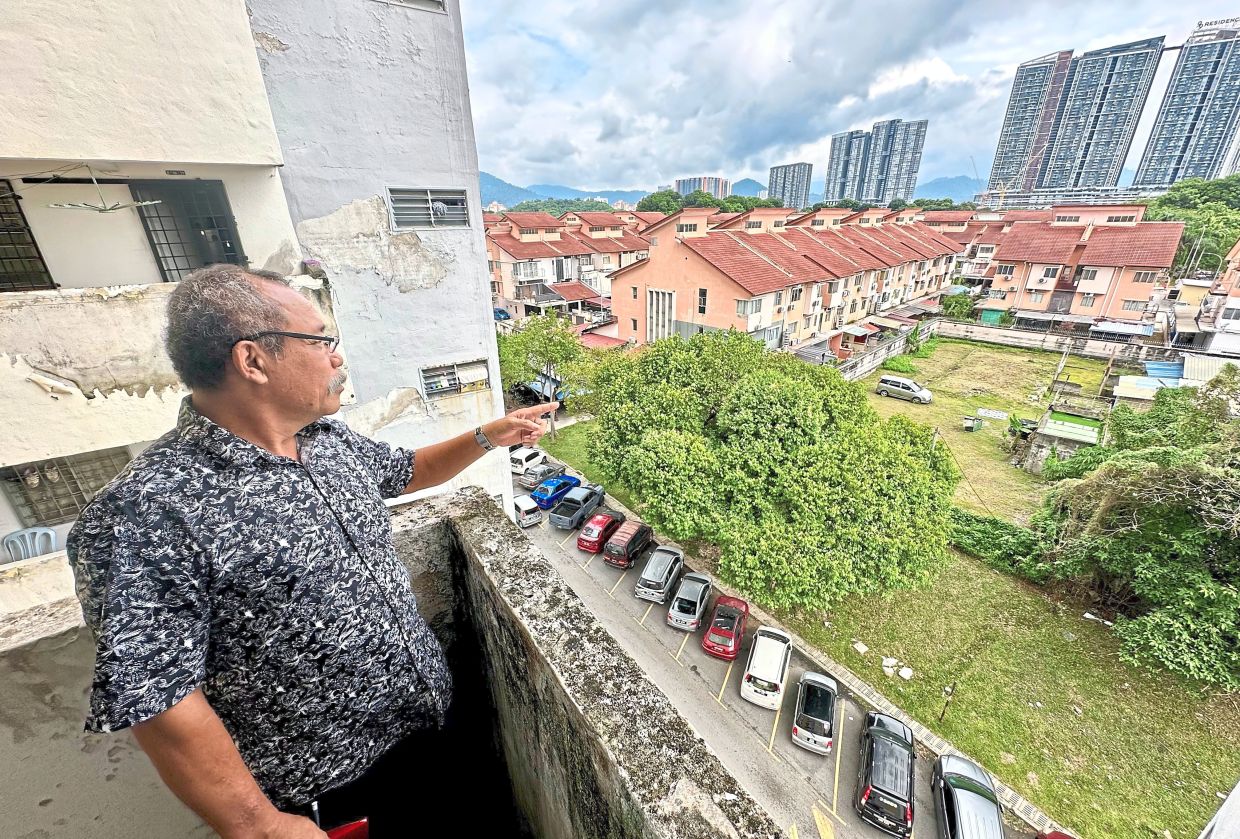
“This is when I’ll have to step in and help with the pushing.”
Ismail noted that it was usually the women and smaller-sized residents who require assistance.
In emergencies, Ismail and Atar have frequently experienced having to rouse committee members from sleep to remove obstructing cars.
Atar said, “We have a team of 10 to do the pushing or lifting. This is considered a last resort after attempts to contact the vehicle owner have failed, including going to their units in person to knock on their doors.”
Another major issue is the carpark getting flooded during a downpour.
“The water comes up to our shins because a nearby flood retention pond has been compromised, but we have been assured that this is being taken care of,” said Atar.
Quality of life affected
At PPR Taman Wahyu in Batu Caves, RA chairman Abdullah Uda Saidi, 63, a resident of 22 years, said prior to 2015, there were few parking complaints despite only 300 bays for 948 units.
“This changed after 2015 when more residents owned cars. You can say that parking issues have greatly affected our quality of life,” said the retired army warrant officer.
Abdullah Uda also said that parking issues were a frequent cause of arguments.
This happened when people forgot to release the handbrakes or when owners found dents in their cars because of excessive force applied while pushing them aside.
“It is also not uncommon to have our sleep disrupted at 3am by incessant honking when a car is blocked, or to have frantic parents posting on the residents’ chat groups that they are going to be late sending their children to school because they can’t get out of their parking bay,” he said.
For PPR Batu Muda RA chairman Reduan Hanafi, 65, the biggest worry was ensuring ambulances and fire trucks could access the affected area during emergencies.
With the housing project in Sentul having 2,132 units, the original design ratio was only one bay for every seven units, resulting in inner roads heavily congested with parked cars.
In his 28 years as a resident, Reduan said fire had broken out in four units.
“One of them was completely razed because the fire truck was not able to make it past a corner with cars parked along the housing area’s perimeter roads.”
At PPR Pantai Ria in Pantai Dalam, RA chairman Zakaria Othman, 72, said constant traffic gridlock added to the parking woes at the four-block flats of 1,260 units and some 500 parking bays.
These are caused by increased traffic along the main road of Jalan Kampung Pasir and its by-roads.
“The problem arose about 10 years ago when more motorists started using this route as a shortcut to travel from Jalan Kelang Lama to Bangsar,” said Zakaria.
“Combined with traffic from a nearby religious primary school and the partial obstruction of the single lane roads, the bad traffic jams often resulted in motorists arguing on the road.
“This gave rise to a lot of disharmony in our area.”
Coming up with solutions
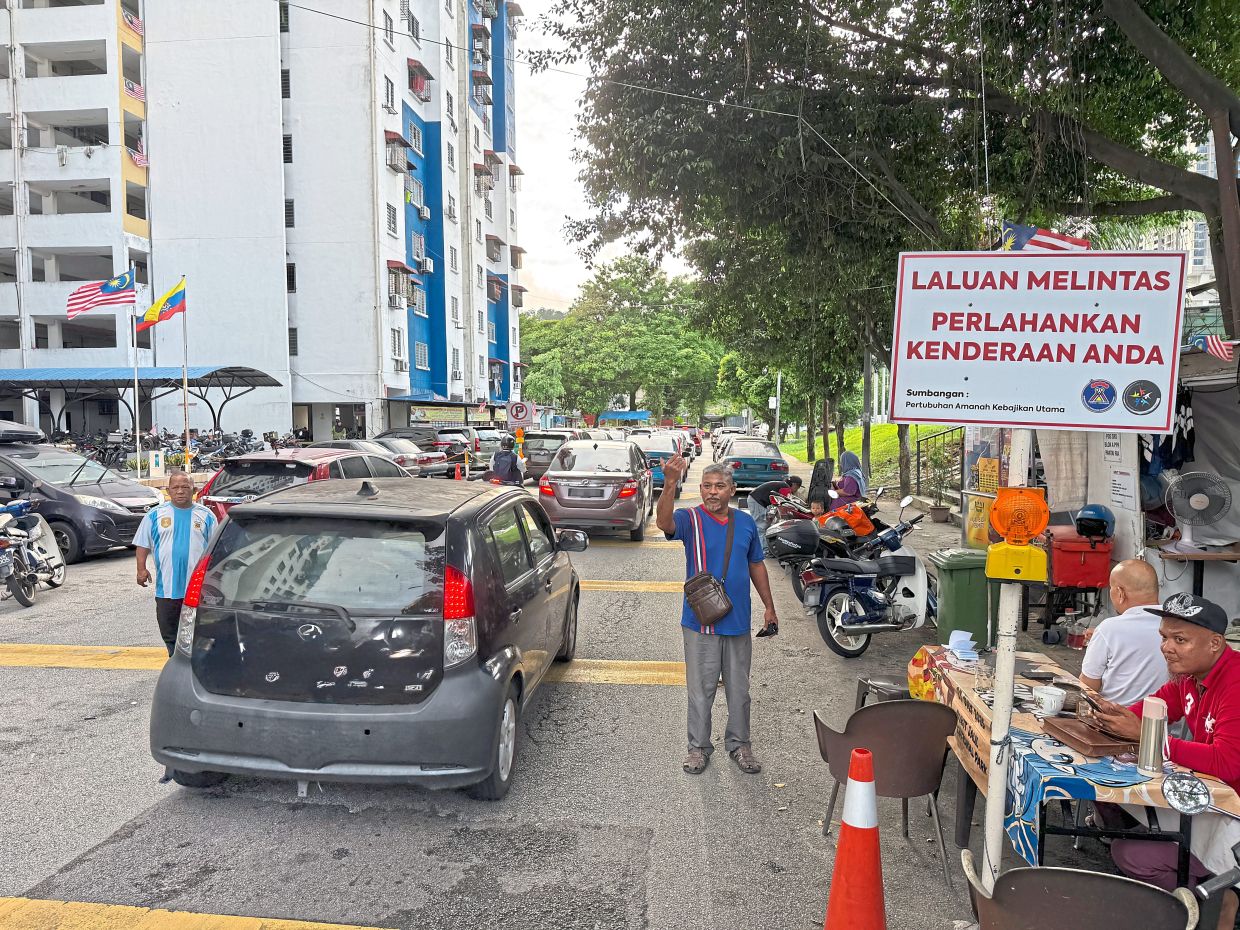
To deal with potential gridlocks, Zakaria said he had the support of volunteers from the area’s Rukun Tetangga (RT) to help direct traffic at peak hours, from 7am to 10am and 4pm to 7pm on work days.
One of the volunteers, resident Azman Abdullah, 57, a retired air force captain, said posts had been set up at each of the four blocks.
“This is so that our volunteers can monitor the entire length of Jalan Kampung Pasir, as there are double-parked cars all along this road,” said Azman.
Six volunteers from each block are rostered for duty daily, arranged by their respective block leaders.
Azman said there was no shortage of volunteers as residents saw this as an opportunity to socialise with their neighbours.
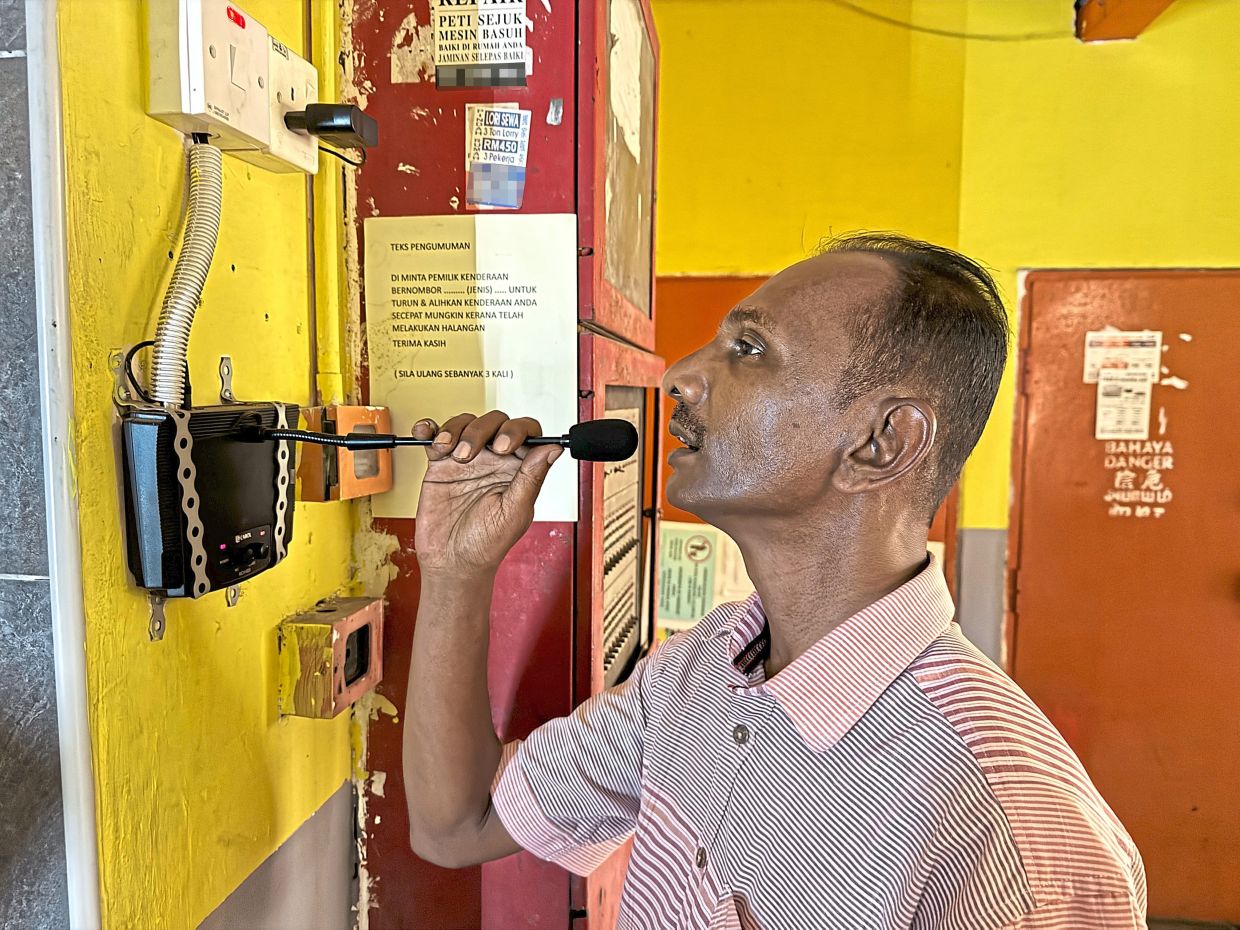
As a way to alert those who double-parked to move their vehicles, Zakaria said they have two public announcement (PA) systems for this purpose.
One is at the nearby Surau Al Hijrah, which called the area’s Muslim congregation to prayer.
The other PA system was newly set up last year at one of the blocks, installed at a cost of RM2,000 following a collection drive among residents.
“It also helps that we have a list of cars belonging to each resident,” added Zakaria.
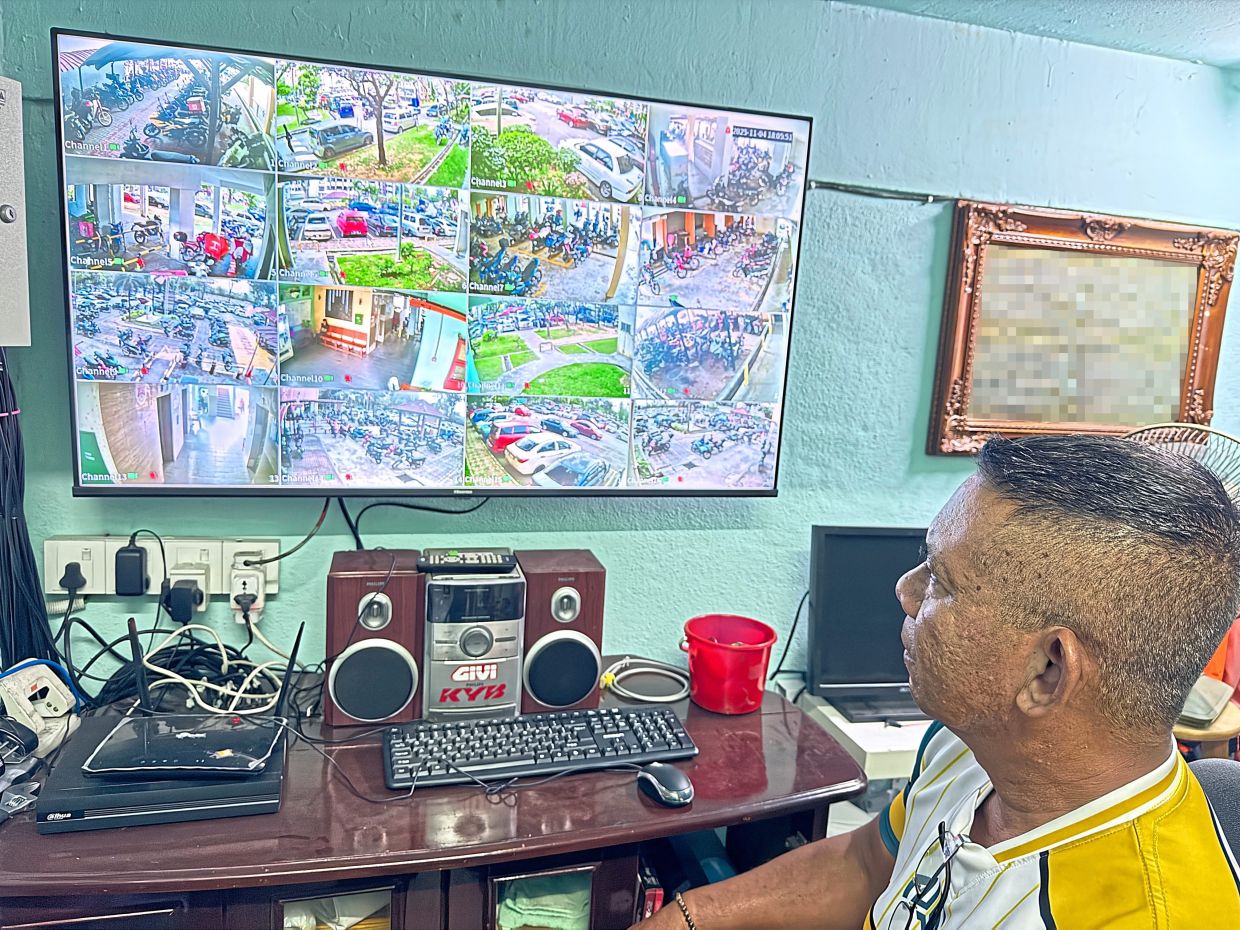
The same system, along with a closed-circuit television (CCTV)system for security and parking monitoring, is adopted by PPR Kampung Muhibbah.
Heads of PPRs Batu Muda and Taman Wahyu are actively campaigning for multi-storey parking facilities.
Reduan said the RA had identified an empty site, presently planted with banana trees beside one of the blocks, for a multi- storey carpark.
“We suggested this to Kuala Lumpur City Hall (DBKL) more than three years ago,” he said.
Reduan added that a former Barisan Nasional MP, in a campaign speech during the 15th general elections, had mentioned that the site with the banana trees would be approved for the building of a parking facility and a contractor would be appointed.
“But when Barisan lost (in the elections), the project did not materialise,” said Reduan.
Abdullah Uda said his RA had also identified a 0.02ha site, now occupied by an abandoned mechanical plant, but no approval was granted.
He added that it would be useful if DBKL could also address the problem of abandoned vehicles at PPRs.
“The red tape involving this is most frustrating as DBKL cannot just tow them away without the owners’ consent.
“But the owners are either uncooperative or not traceable. So the cars stay there,” he said.
At present count, PPR Taman Wahyu has some 70 bays taken up by abandoned cars, while PPR Kampung Muhibbah has 150 and PPR Batu Muda 100.
In regards to parking issues in PPRs, DBKL previously issued a statement explaining that it developed 14 multi-storey carpark facilities to address parking shortages.
Among the PPRs and public housing (PA) with the facility are PPR Pekan in Kepong, PA Seri Sabah in Bandar Tun Razak, PPR Jelatek in Titiwangsa and PPR Seri Pantai in Lembah Pantai.
According to information in the DBKL website, there are 67 PPRs and public housing projects in Kuala Lumpur.
The initial policy for the provision of carparks was four PPR housing units to one parking bay – a policy set based on the status of tenants who consist of the hardcore and urban poor, according to a media report.