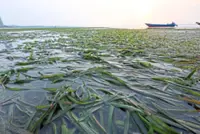
WHEN the tide recedes along Tanjung Kupang’s shoreline in Iskandar Puteri, Johor, a hidden marine meadow quietly reveals itself.
Just beneath the shallow waters, patches of seagrass provide shelter for young fish and become feeding ground for marine life such as dugong and green sea turtles (Chelonia mydas).
The seagrass meadow also acts as a vital carbon sink in the fight against climate change.
Often mistaken for seaweed, seagrass is a flowering plant rooted in the seabed, with its leaves stretching out towards the surface.
Dr Serina Rahman, the advisor to environmental non-governmental organisation Kelab Alami said Johor had the largest contiguous intertidal (area exposed during low tide and submerged during high tide) seagrass meadow in the peninsula, covering an area of 45ha which also consists of those in subtidal (always underwater) area.
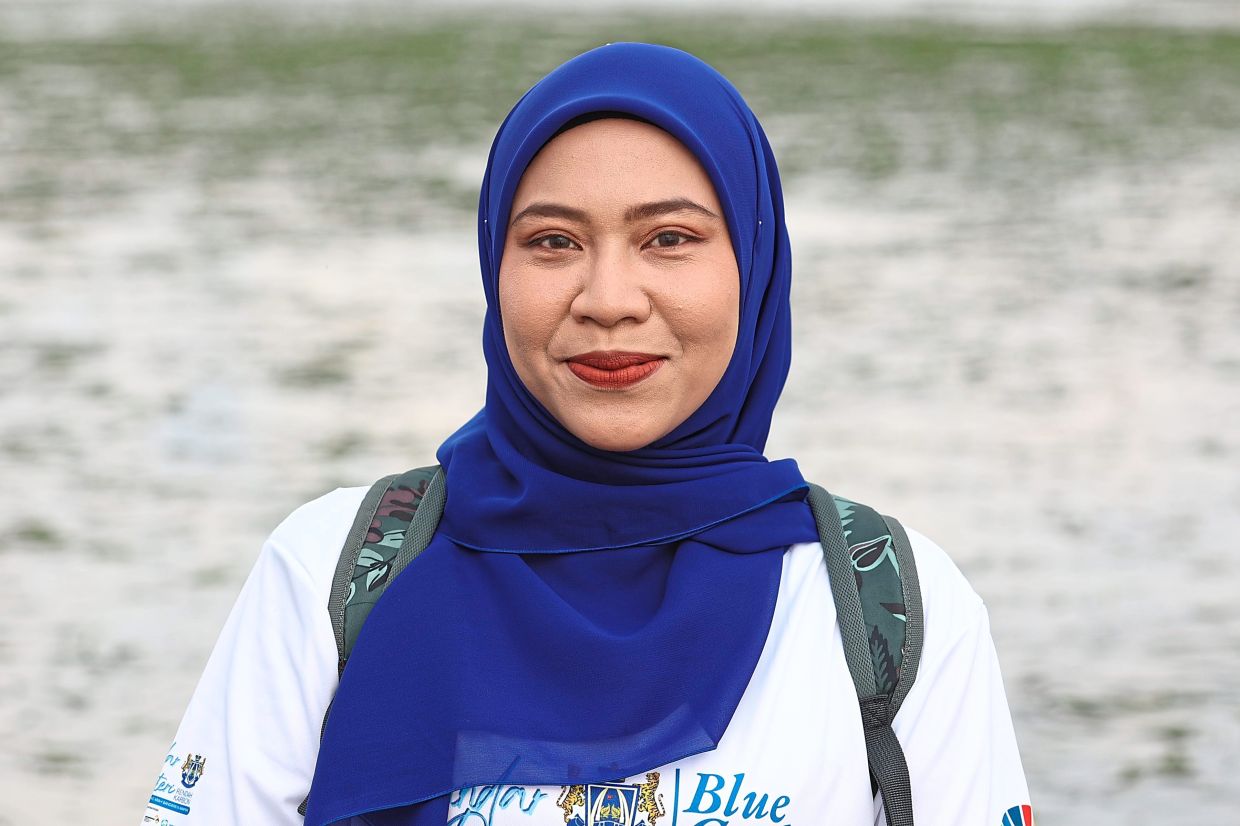
“Aside from Tanjung Kupang, there is a lot of seagrass at Pulau Sibu and Pulau Tinggi in Mersing as well as along the Mersing shoreline.
“Seagrass can also be found at Tanjung Langsat, on the eastern end of the Straits of Johor,” she told StarMetro.
Serina, a lecturer at National University Singapore’s Southeast Asian Studies department, highlighted that the underwater plant’s role in the ecosystem was far more important than most realised.
“Seagrass meadows are one of the most efficient natural carbon sinks, yet they are often overlooked because people are not aware of their importance.
“It protects the coast from storms, tsunamis and tidal waves and prevents erosion, which means it protects our homes and people,” she explained, adding that the seagrass also protected endangered marine species.
Although its presence signalled a healthy ecosystem, Serina said it was also highly vulnerable to pollution, coastal reclamation and rapid development.
“Coastlines are always attractive for various developments, like luxury housing, malls and even businesses.
“But in the process, we lose habitats that can sequester carbon 35 times more than tropical forests on land.
“So now, people realise protecting ‘blue carbon’ (referring to seagrass meadows and mangrove forests) is a way to ensure a more sustainable means of development, helping us to reduce carbon emissions,” said Serina.
She said seagrass grew naturally and could recover quickly from damage if coastal reclamation stopped, but seagrass replanting had shown very little success.
“If there is no damage to surrounding areas, seawater is allowed to flow and there is a source (undisturbed seagrass meadow, usually subtidal), then damaged seagrass can recover.
“Unfortunately, subtidal seagrass that is never revealed, even at the lowest of tides, is often damaged by development because it is unseen.
“To prove any success in seagrass restoration, planting sites must be monitored for at least a year, taking into account seasonality and the monsoon.”
Serina noted that one of the biggest challenges was ensuring that seagrass roots establish firmly enough to prevent them from being swept away during storms.
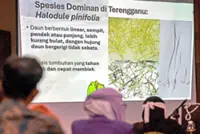
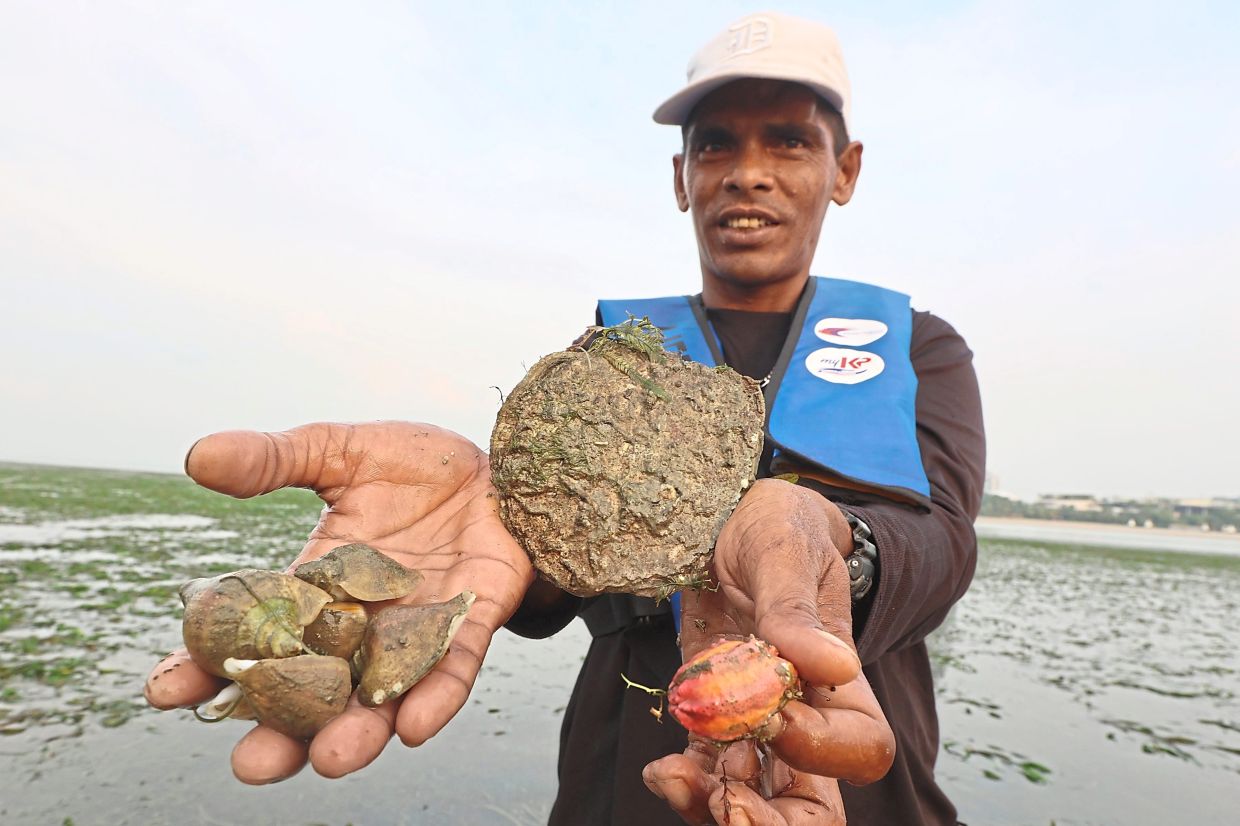
Recently, government agencies, academicians and volunteers visited the seagrass meadows in Tanjung Kupang to learn about the plant and its functions before carrying out a mangrove planting programme.
While conservationists work to protect seagrass beds, there is also a push to raise awareness among the younger generation.
Universiti Teknologi Malaysia (UTM) Language Academy Associate Chair Dr Nur’ain Balqis Haladin has taken a unique approach to introducing seagrass to a younger audience, through a book titled Adam’s Seagrass Adventure!
She said the book, written with her team, was aimed at introducing seagrass in a simple and fun way with colourful illustrations, to help children understand why the habitat matters.
“My main target is primary school pupils, to give them early exposure to seagrass.
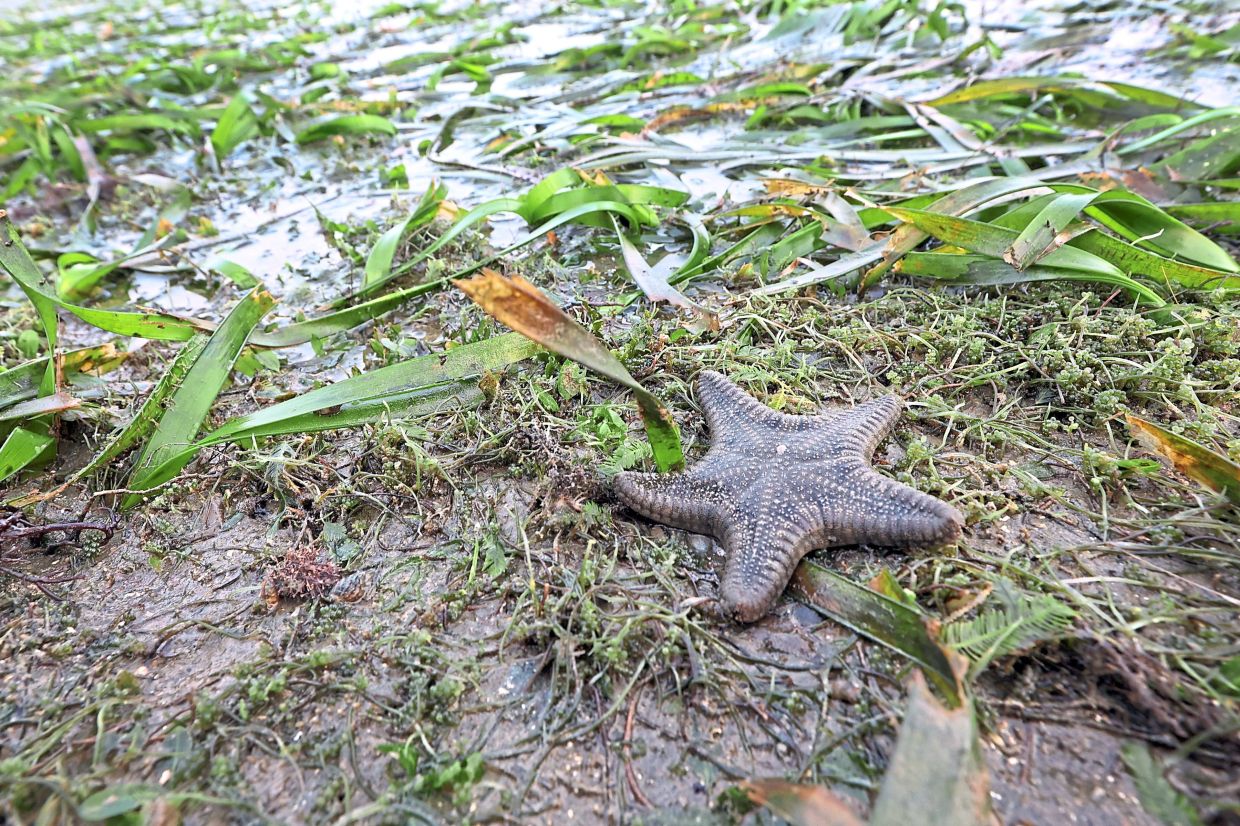
“Our pre-surveys showed that many children could not tell the difference between seagrass and seaweed.
“When I showed them pictures, some said the plant looked like padi while others thought it was seaweed, the kind that we eat,” Nur’ain Balqis added.
Serina pointed out that if people could not tell the plants apart or did not know about seagrass, they would not understand its importance.
She said the book was produced in 2023 using an allocation of RM20,000 from the Iskandar Puteri Low-Carbon Community Grant Programme 2.0 given out the year before.
Nur’ain Balqis described seagrass as “a wonder of the sea” because the plant absorbed so much carbon, yet it remained unknown to many.
Her inspiration for the book came from her first visit to Tanjung Kupang in 2008 as a university student.
“I was amazed from the first time I saw seagrass, and even spotted a seahorse back then.
“But today, such marine life has become rare while they could be easily seen before this.
“This also shows the impact of rapid development and climate change,” she added.
Nur’ain Balqis collaborated with Kelab Alami on the project and drew on Serina’s expertise.
“She was my main source of information, while Iskandar Puteri City Council (MBIP) provided financial support and guidance through the grant.
“It monitored the process, gave feedback and ensured the book aligned with its goals,” she said, adding that the book had been used in roadshows and outreach programmes.
Nur’ain Balqis said children enjoyed the book and even asked to purchase them, prompting her team to create a more affordable soft-cover version to make it more accessible.
Her team and MBIP are also considering coming up with an e-book version.
Looking ahead, Nur’ain Balqis hopes to expand her work by linking seagrass awareness with broader themes such as blue carbon and climate change.
“The first book is more of an introduction.
“In future, we may develop more research-based materials that highlight seagrass as part of the bigger picture of climate solutions,” she said.
Volunteer Joe Sian, who took part in the seagrass programme, said the visit to Tanjung Kupang was an eye-opener.
“I never paid attention to seagrass and honestly thought it was just a type of seaweed.
“Seeing it up close and hearing the academicians’ explanation and knowledge-sharing made me realise the plant’s importance.
“I told some of my staff, who also volunteered with me in the programme, that if we did not act now, we could lose it in the future,” the 56-year-old said.
Sian, who is site head at an insulin manufacturing and research and development facility, said the experience had inspired him and his team.
“My company plans to return to the seagrass site with 30 volunteers in January next year, as a way of raising awareness and supporting conservation efforts,” he added.