THE ancient Buddhist tradition of offering alms to monks (Pindapata) and making a collective offering to the monastic community (Maha Sanghikadana) embody the Buddhist virtue of dana (generosity).
Penang Buddhist Association (PBA), which is marking the 100th year since its founding, has continued to uphold this to nurture Buddhist education, safeguard cultural heritage and carry out charitable works while evolving to meet the needs of future generations.
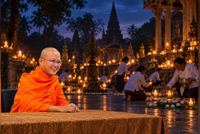
Some 500 devotees, who had arrived as early as 7am, braved the heavy rain to take part in the association’s Pindapata and Maha Sanghikadana session that reflected simplicity, humility and the close bond between monks and lay devotees.
During the event, themed “The Path of Awakening”, devotees lined the corridors of the association’s premises in Jalan Anson, each bearing bags of food to offer to some 90 monks.
The ceremony was followed by chanting of the sutta, a devotional recitation of the Buddha’s teachings by both devotees of Theravada and Mahayana traditions at the main shrine hall.
Later, the devotees, also known as Sangha members, were hosted to a communal lunch at the Metteyya Hall.
PBA chairman Chan Seong Lok described the occasion as a milestone in the association’s long history.
It was founded by Straits Chinese Buddhists to preserve the essence of Buddhism.
“This offering to the venerable Sangha is a timeless tradition that allows us to honour the Buddha, his teachings and devotees, express our devotion and accumulate wholesome merits for the well-being of all beings.
“We thank the Sangha for graciously accepting our offerings and for continuing to preserve, practise and transmit the precious dhamma (Buddha’s teachings) for the benefit of all,” he said.
The association’s assistant treasurer Yeoh Wee Lee said several programmes would be held throughout the year to commemorate the centenary, including a grand dinner for 1,300 guests in November.
He also revealed that the association had spent about RM2.5mil this year to restore its heritage building.
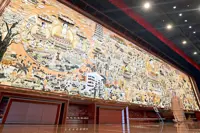
Completed in 1931, the PBA building departs from the traditional Chinese temple style often seen in Penang.
Instead, its founders adopted a Late Straits Eclectic design, blending Chinese motifs with Western ornamentation and architectural features adapted to the tropical climate of the archipelago.
In the decades that followed, PBA expanded its role within the community.
In the 1950s, a youth section was formed to organise activities such as picnics, study groups, hymn-singing and preaching sessions.
In 1964, in recognition of the needs of working parents, the association established a kindergarten that continues to operate till today.
The surrounding neighbourhood, Taman Nirvana, also reflects Buddhist influence through its street names.
Jalan Nirvana, the main road that connects Jalan Anson to Jalan Lim Eow Thoon, branches off to a number of side roads including Jalan Dharma, Jalan Deva Pada, Lebuh Bodhi and Jalan Kim Bian Aik.