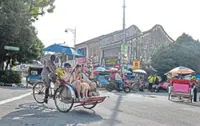
TRISHAWS remain a distinctive part of the tourist experience in Penang, with some riders known for their excellent service and engaging storytelling.
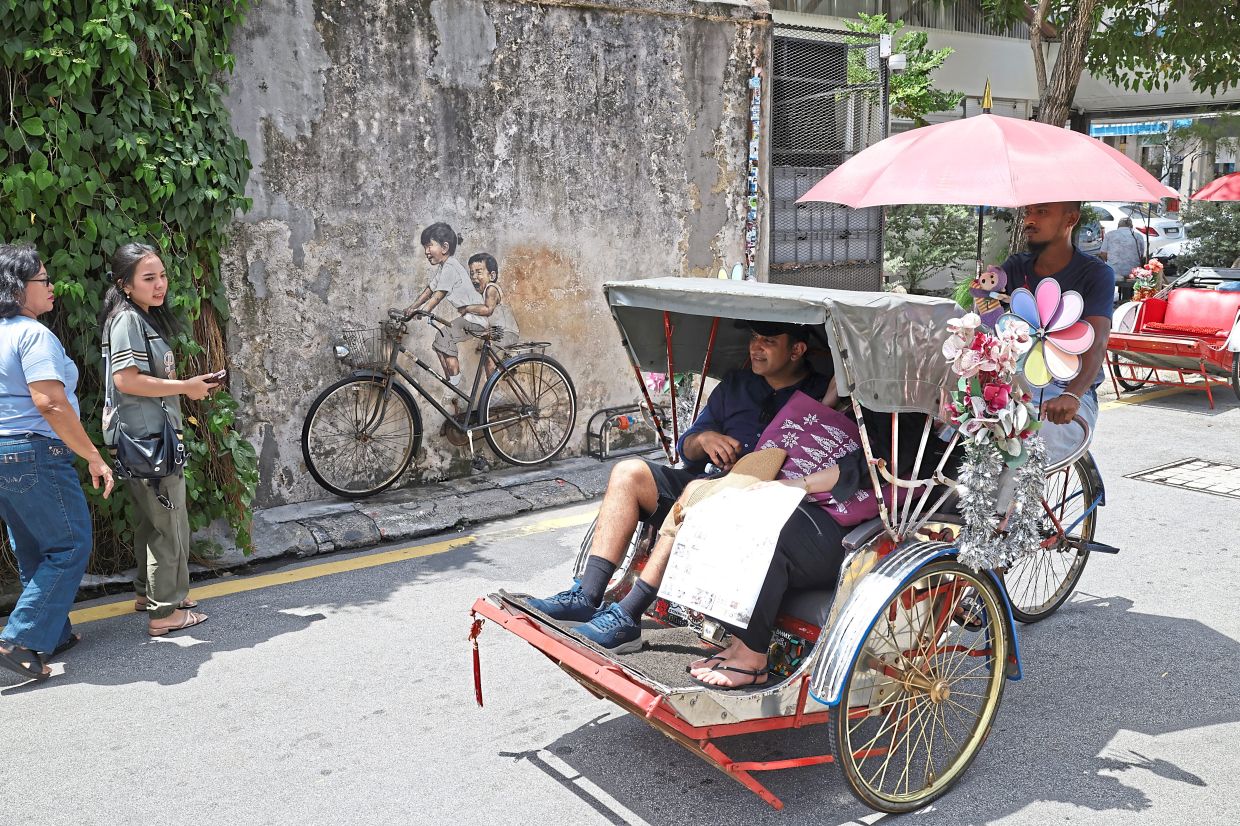
Beyond ferrying passengers, many also take on the role of informal photographers – capturing memorable shots for tourists at popular attractions such as Penang’s street murals.
However, the trishaw industry faces a pressing challenge.
It is grappling with an ageing workforce and vanishing traditional trishaw-making trade.
Today, only about 90 active riders remain, most of whom are over 50 years old.
Just four years ago, the number stood at around 120, highlighting a steady decline in people taking up the job.
Malaysian Association of Hotels (MAH) Penang chapter chairman Tony Goh said there was an urgent need to revamp the trishaw trade and make it attractive to the younger generation.
“It is clear that something needs to be done.
“The current conditions for trishaw riders are far from ideal and are increasingly difficult to sustain,” he said.
Goh said one possible solution was to consider motorising trishaws.
He said this would ease the physical burden on riders, especially since many had to pedal long hours to earn a living.
He added that with proper licensing, structured training and support, motorised trishaws could make the job less physically taxing and more appealing to younger generations.
“With the unpredictable weather, a motorised trishaw would be ideal for those interested in the trade.
“Many of the older riders no longer have the stamina to keep up, while the youth are not interested in taking over.
“This imbalance will only worsen if no action is taken,” Goh pointed out.
He also stressed that the Penang government should ensure trishaw riders were earning enough to support themselves.
“The state government should seriously look into this, as the trishaw trade is not just a tourist attraction, but a livelihood that deserves attention, respect and proper infrastructure.
“A more comfortable, modern and sustainable trishaw industry is possible with the right support in place,” he noted.
Penang Tourist Guides Association chairman Clement Liang said the biggest threat to the trade was the rapidly dwindling number of trishaw makers.
He said there were only two senior artisans in Penang who could make and repair trishaws.
Once these two trishaw makers retire, Liang said no one would be left to craft the traditional trishaws.
To overcome this, he said the relevant authorities should engage several manufacturers to produce a new generation of trishaws for the future.
“Perhaps a workshop or training programme can be organised to teach the younger generation how to make trishaws, as part of efforts to improve and sustain the trade,” he said.
Liang was also supportive of the idea to motorise trishaws, by upgrading them without compromising the traditional elements of the trade.
He said that only through such efforts could progress be achieved while also helping to preserve the state’s heritage in the long run.
Sustaining the industry
It is believed that Penang’s first trishaw took to the road in 1935.
In its heyday, the trishaw was a primary mode of transport for locals – used daily by students, traders, housewives and labourers alike.
Manually pedalled, these three-wheeled vehicles offer a slow yet scenic journey, ideal for those wishing to soak up Penang’s unique architecture and cultural charm.
Today, trishaws remain a feature of George Town, providing short guided loops through the city’s Unesco World Heritage zones.
An hourly ride typically costs between RM50 and RM70, offering tourists a nostalgic and immersive way to experience Penang’s heritage.
Penang tourism and creative economy committee chairman Wong Hon Wai said one of the initiatives carried out was the Penang Trishaw Riders’ Image Improvement Programme spearheaded by George Town World Heritage Incorporated (GTWHI).
He said the programme, launched during the Covid-19 pandemic in 2021, was meant to modernise the perception of trishaw riding by improving rider welfare and vehicle conditions.
It was also part of the state government’s effort to enhance Penang’s heritage image and revitalise the trishaw industry, especially in tourism hotspots like George Town and Batu Ferringhi.
During the launch, a total of 126 trishaw riders in George Town and Batu Ferringhi received basic equipment support and access to repair and upgrade services.
“With experience gained from the programme, we hope it will at the same time attract the younger generation to take up the trade and help the state manage trishaw services here,” said Wong.
He said complementing these efforts, Penang Island City Council (MBPP) also introduced an online trishaw licensing system – uLesen – to formalise the trade.
Through applications for lesen beca (trishaw licence) and lesen pengayuh beca (trishaw rider licence), he said the authorities could systematically collect rider data, streamline subsidy distribution and regulate service standards, ensuring a legal and safe experience for tourists.
Wong said these initiatives protected a popular tourism feature and made trishaw riding a viable, respected livelihood that might attract younger people seeking flexible, culturally rooted work.
“Although no longer central to local transportation, trishaws remain a symbol of Penang’s heritage and urban history, particularly in George Town.
“Their nostalgic appeal continues to attract visitors, especially through guided routes highlighted in Penang Global Tourism’s multilingual Visit Penang brochure,” said Wong.
He highlighted that the state had also integrated trishaw culture with other significant local cultural elements, such as the Penang Chingay parade.
He said trishaws and George Town’s street murals formed a “symbiotic tourism relationship”.
“Many visitors specifically take trishaw rides to visit murals such as ‘Little Children on a Bicycle’ and ‘Boy on a Motorcycle’ by Lithuanian artist Ernest Zacharevic.
“It was trishaw riders and taxi drivers who highlighted the importance of restoring these murals, as mural tourism is a key source of income for them,” he said.
In addition to these initiatives, Penang government continues to implement the Trishaw Riders Allowance Assistance Programme to ease the financial burden of trishaw riders.
As of 2025, the cumulative allocation for this programme has exceeded RM1mil.
The latest data from April 2025 shows that 93 registered trishaw riders, young and old, are receiving a monthly allowance of RM200.
“These programmes reflect the tangible support the state government provides to the trishaw community,” said Wong.
“It is not only a social welfare initiative, but also a cultural commitment to ensuring the continuity of trishaw heritage and recognising the important role that trishaw riders play in the cultural landscape of the city,” he said.
Youth on wheels
A small group of younger Malaysians have taken up what was once seen as an ageing trade.
One of them is Fariz Ahmad Fauzi, 27, who said the trishaw was not just a nostalgic ride for tourists, but a lifeline.
“This job gives me time with my family. It is flexible.
“I work hard, I earn more.
“That is how it is,” he said.
A father of an eight-month-old baby, Fariz has been pedalling through George Town’s streets for the past four years.
Originally from Bagan Dalam in Seberang Perai, he took up the trade after struggling to balance family life with work in his previous jobs.
He enjoys what he does now and hopes the tourism sector will improve to the pre-pandemic level.
On average, Fariz earns between RM1,800 and RM2,000 per month, and RM3,000 or even RM4,000 during peak tourist seasons.
“I am satisfied with this work. I am not rich, but comfortable.
“I do not need to punch in or out at work.
“I set my own hours and I get to meet people from all over the world,” he said.
Another rider, M. Ganapati, 38, was formerly a dispatch rider at a legal firm in George Town.
Today, he ferries tourists and locals through Penang’s narrow heritage lanes, while supporting a family of seven children with his earnings.
Originally from Alor Setar in Kedah, Ganapati now lives with his family in Sungai Pinang.
“This work is good, as long as you follow the rules and have a valid licence with the city council,” he said.
Ganapati said MBPP helped trishaw riders in obtaining proper documentation.
“Every year, MBPP personnel will visit us and offer assistance to ensure our trishaws are in good condition,” he added.
During festive periods and school holidays, Ganapati said he could earn up to RM5,000 a month.
“We meet all kinds of customers – friendly ones, funny ones and some who come back and ask for you by name.
“These experiences make the job more meaningful,” he said.
Meanwhile, Mohd Ammar Hakimi, 23, said he loved being a trishaw rider because it gave him time to be with his family.
He has been in the trade for the past three years and considers himself part of the new generation of riders.
“I always look at myself as a new-generation trishaw rider, taking over from the older generation.
“We may do things differently, but the heart of the work remains the same – connecting people to Penang’s heritage,” he added.
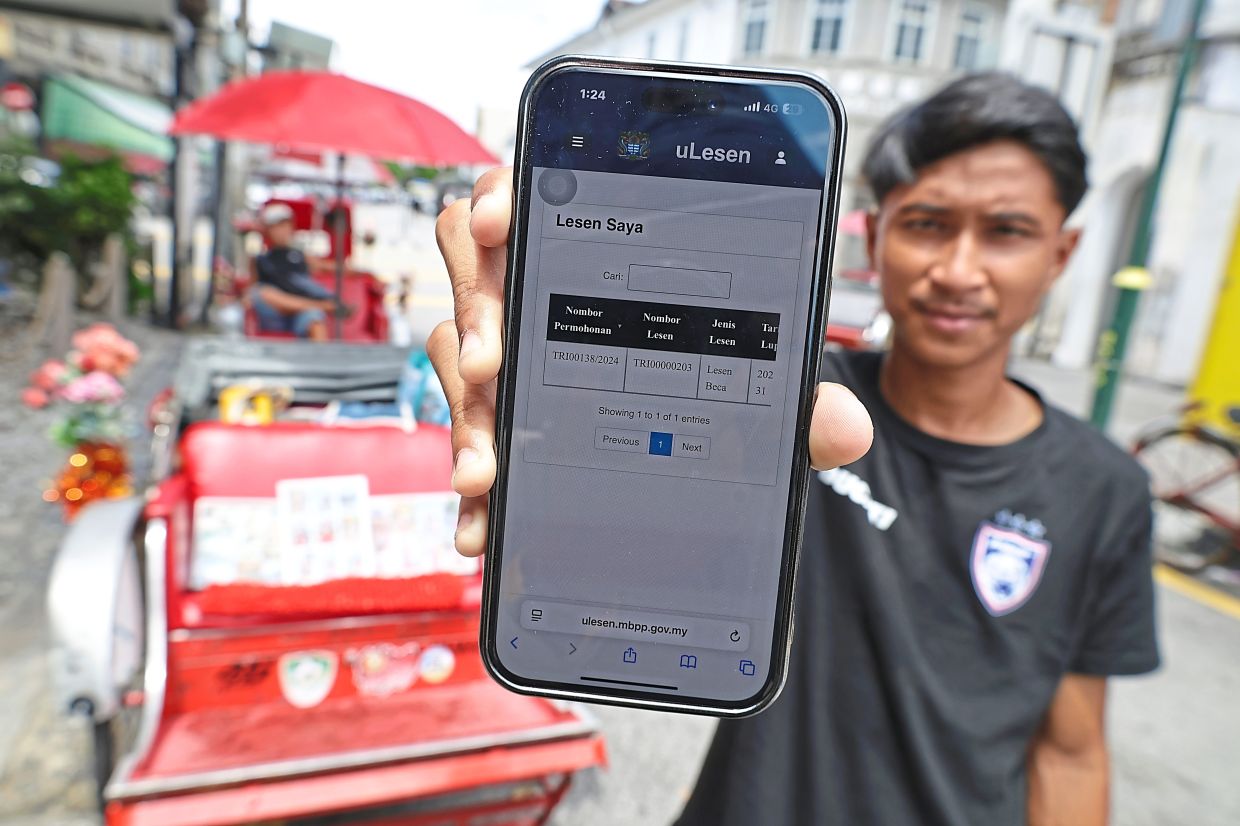

Mohd Ammar showing his licence via online trishaw licensing system uLesen.
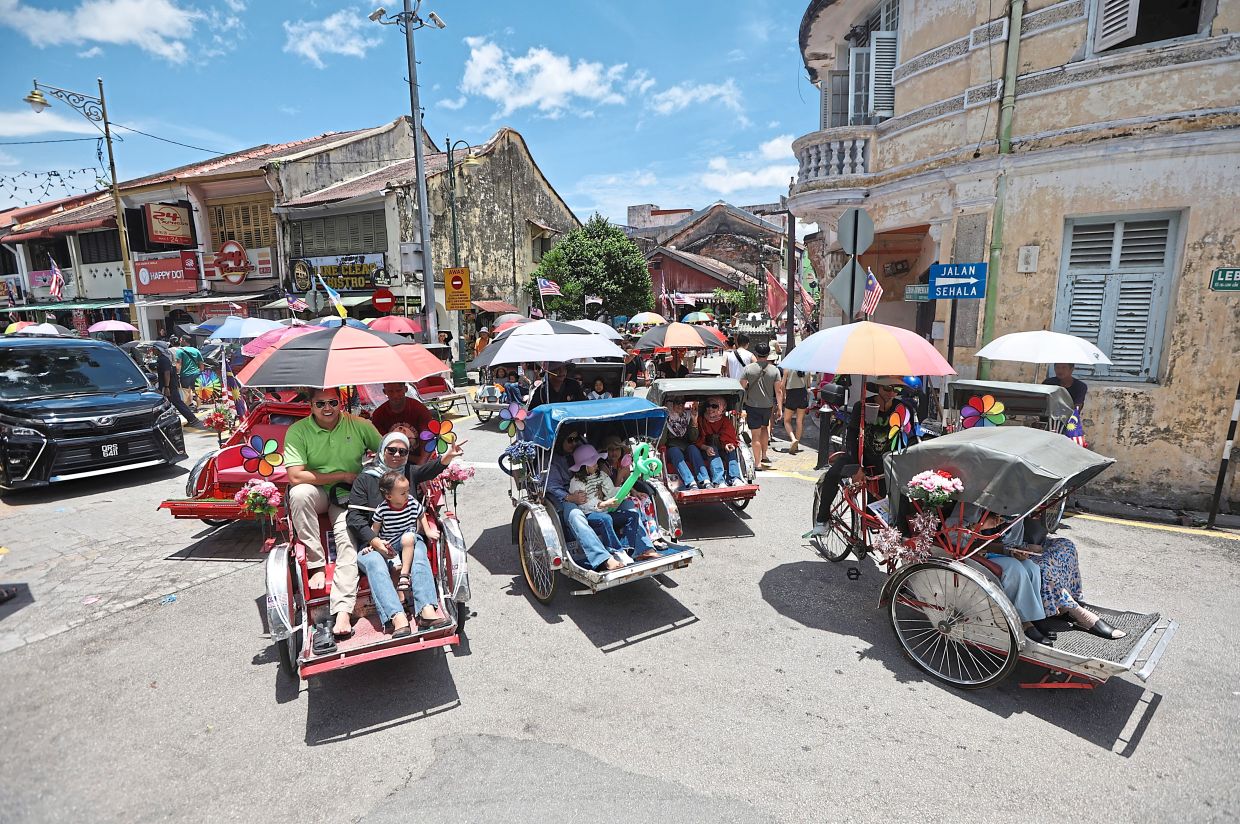
Trishaw riders ferrying passengers from Armenian Street during school holidays in George Town, Penang. — Photos: CHAN BOON KAI and ZHAFARAN NASIB/The Star
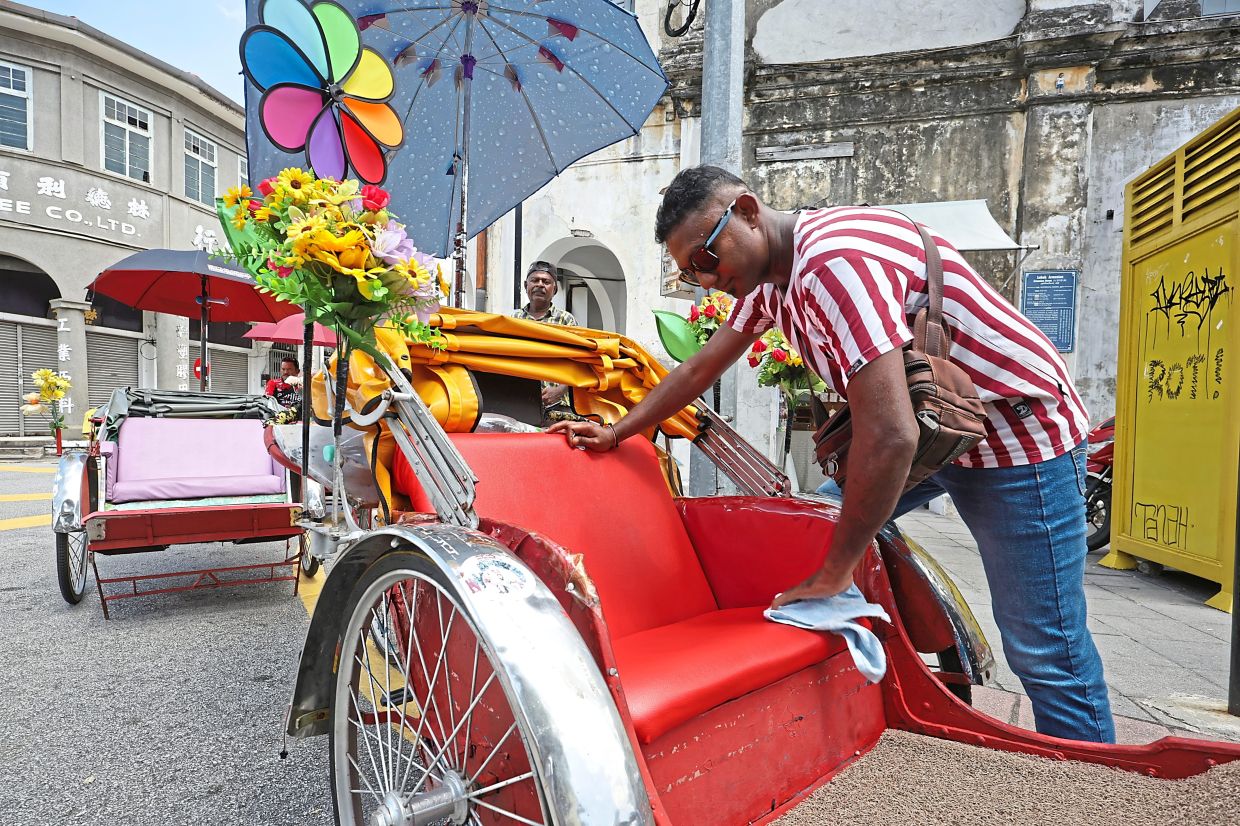
Ganapati wiping the seat of his trishaw while waiting for a customer at Armenian Street.
Trishaw riders have highlighted the importance of restoring murals, as taking visitors to these spots is a source of income for them.
According to Penang Tourist Guides Association, there are only two senior artisans in the state who can make and repair trishaws.