IT IS pitch dark at the Empangan Sungai Selangor lookout point in Kuala Kubu Baru, Hulu Selangor.
While this might not appeal to everyone, it’s perfect for stargazers.
The darkness only makes every star in the galaxy stand out, revealing their full glory.
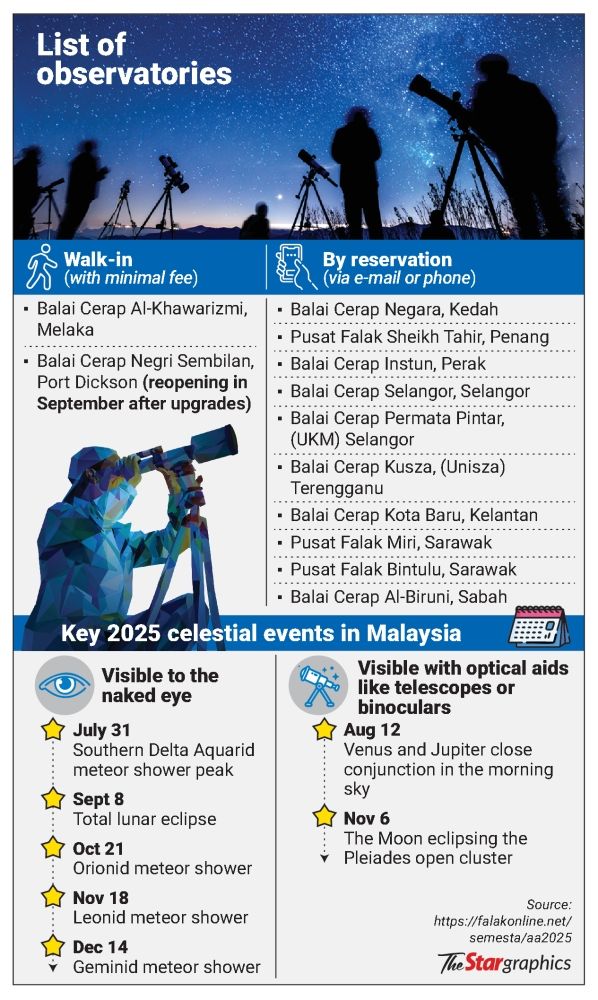
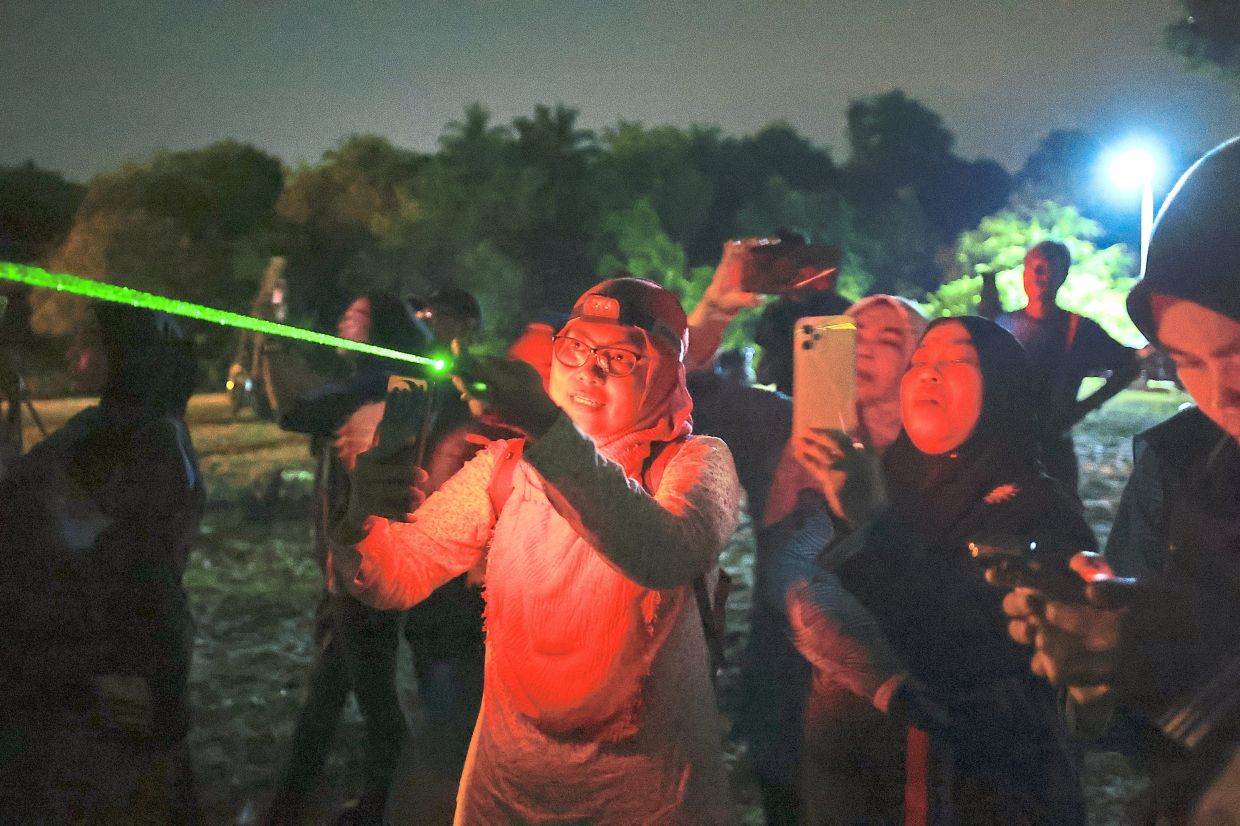
To get started, you’ll need a telescope, smartphone, tripod and red flashlight to minimise impact on your night vision.
First-timer Tristan Giles Fernando, 17, can vouch for the experience.
After downloading a stargazing app on his smartphone, he was completely engrossed, identifying and taking photos of the constellations – those recognisable patterns or shapes formed by groups of stars in the night sky.
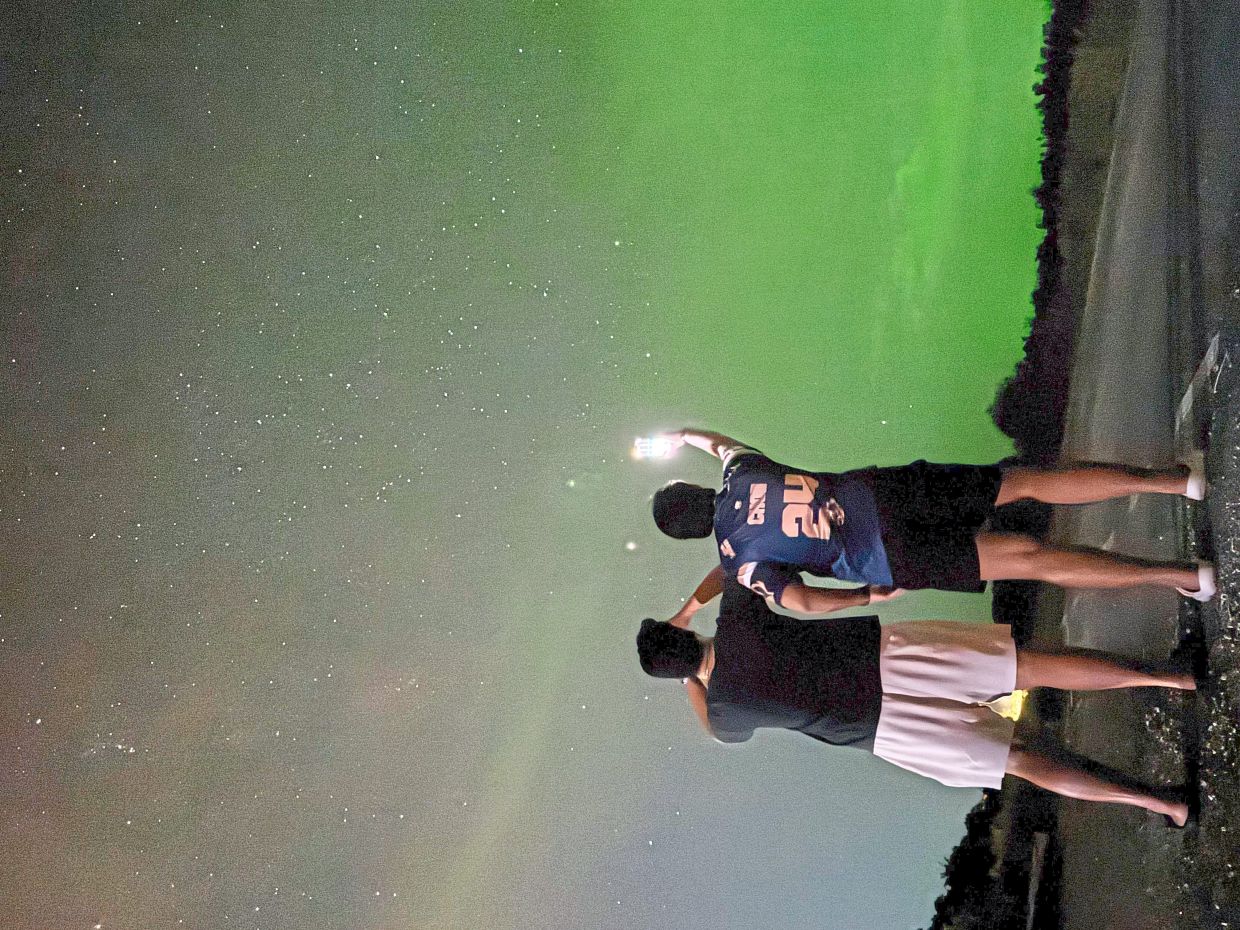
Tristan and his friends spent close to three hours at the spot, taking photos of the stars using nothing more than their smartphones mounted on tripods.
The experience was so enjoyable that one of his friends decided to plan a stargazing trip to Pantai Bumi Hijau and the Selangor Observatory in Sungai Lang, Sabak Bernam.
Young stargazer’s dream
What does one truly gain from looking at the night sky, staring into vast nothingness for long periods of time?
Fourteen-year-old Che Ku Muhammad Umar Che Ku Ahmad Fuad from Kuching, Sarawak, said “the answer lies in the stars and their ability to transform the dark sky into a canvas of shimmering light.”
“The first thing to know is how they are formed. All this is basic knowledge which can be found in our school Science textbooks.
“Then there is YouTube and the Internet,” he added.
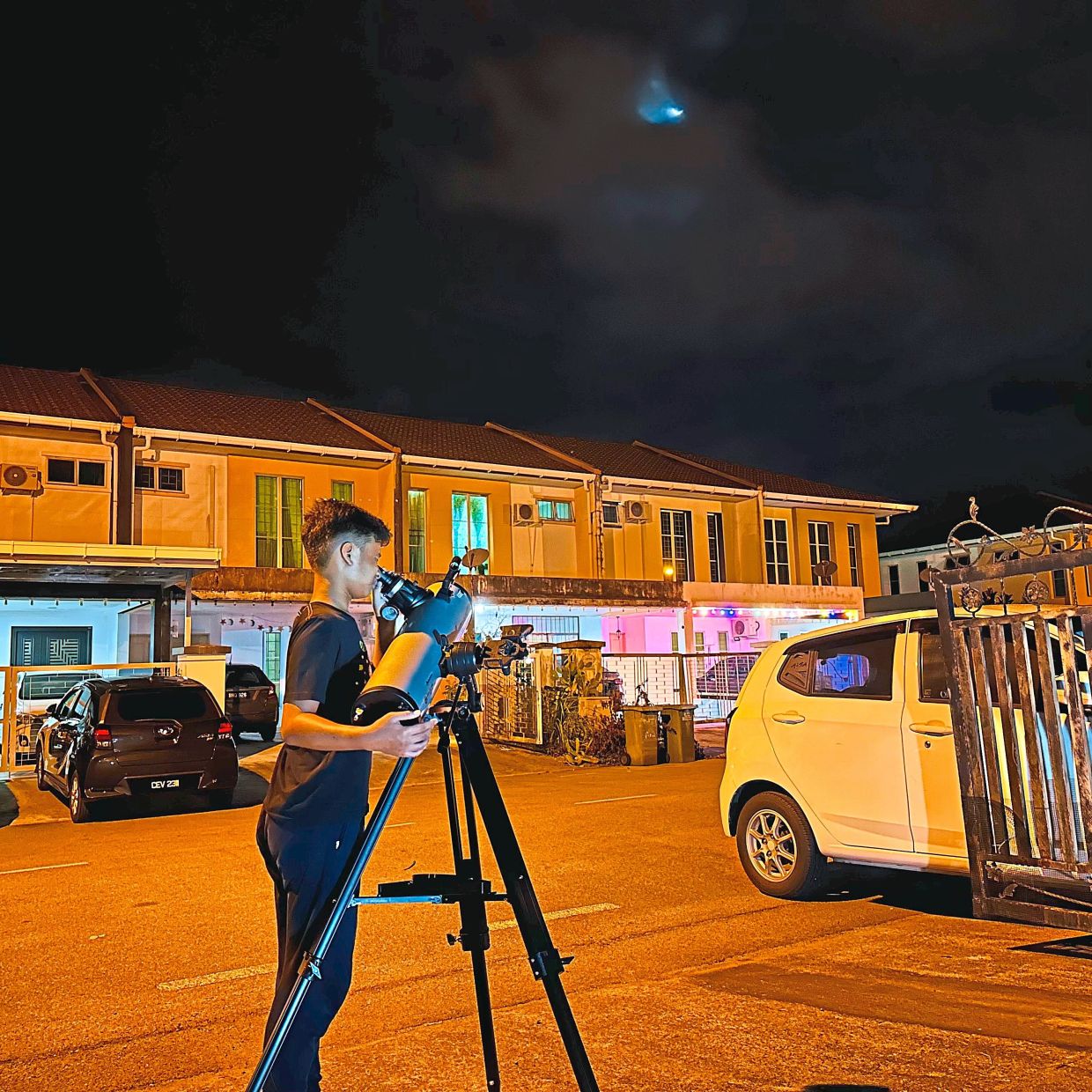
Having followed his parents for stargazing trips to Pantai Trombol in Petra Jaya, Sarawak, since he was 12, Muhammad Umar said Lundu and Tanjung Datu were ideal spots for stargazing.
The planets are his current objects of fascination, he told StarMetro.
“I regard them as fossils as they have existed even before dinosaurs walked the earth.”
Muhammad Umar, who uses his mother’s Celestron telescope to view the stars, said Jupiter, the largest and oldest planet in the solar system, was his current object of wonderment.
“The first time I went stargazing, it was an amazing experience.
“It made me ask questions about how they were formed.
“Eventually, this made me wonder how I came to be and what my mission is in the universe,” he added.
An only child, Muhammad Umar wants to be an aerospace engineer when he grows up.
He dreams of one day piloting his own inter galactic spacecraft to the Andromeda Galaxy – the closest galaxy to the Milky Way – a destination approximately 2.5 million light years from Earth.
He hopes to come up with a technology to make such travel possible.
It is no surprise to his mother. Nurul Zaitul Syeema Baharuddin, that he took an interest in stargazing as his father, Che Ku Ahmad Fuad Che Ku Abdullah, is a land survey teacher at Politeknik Kuching.
Land surveying is a profession that requires knowledge in field astronomy to determine the true meridian.
Nurul Zaitul, a housewife, said they took Muhammad Umar to stargazing events where they bonded as a family.
“His curiosity was piqued when we brought him along to witness a meteor shower,” she said, adding that her son is also in the Scouts movement and some of the trips would include his Scouting buddies.
“In an age where the younger generation has become so preoccupied with computer games and smartphones, I feel that looking to the skies is a way of broadening their knowledge and sense of awareness so that they will not become too self- absorbed,” added Nurul Zaitul.
Novel way to recharge
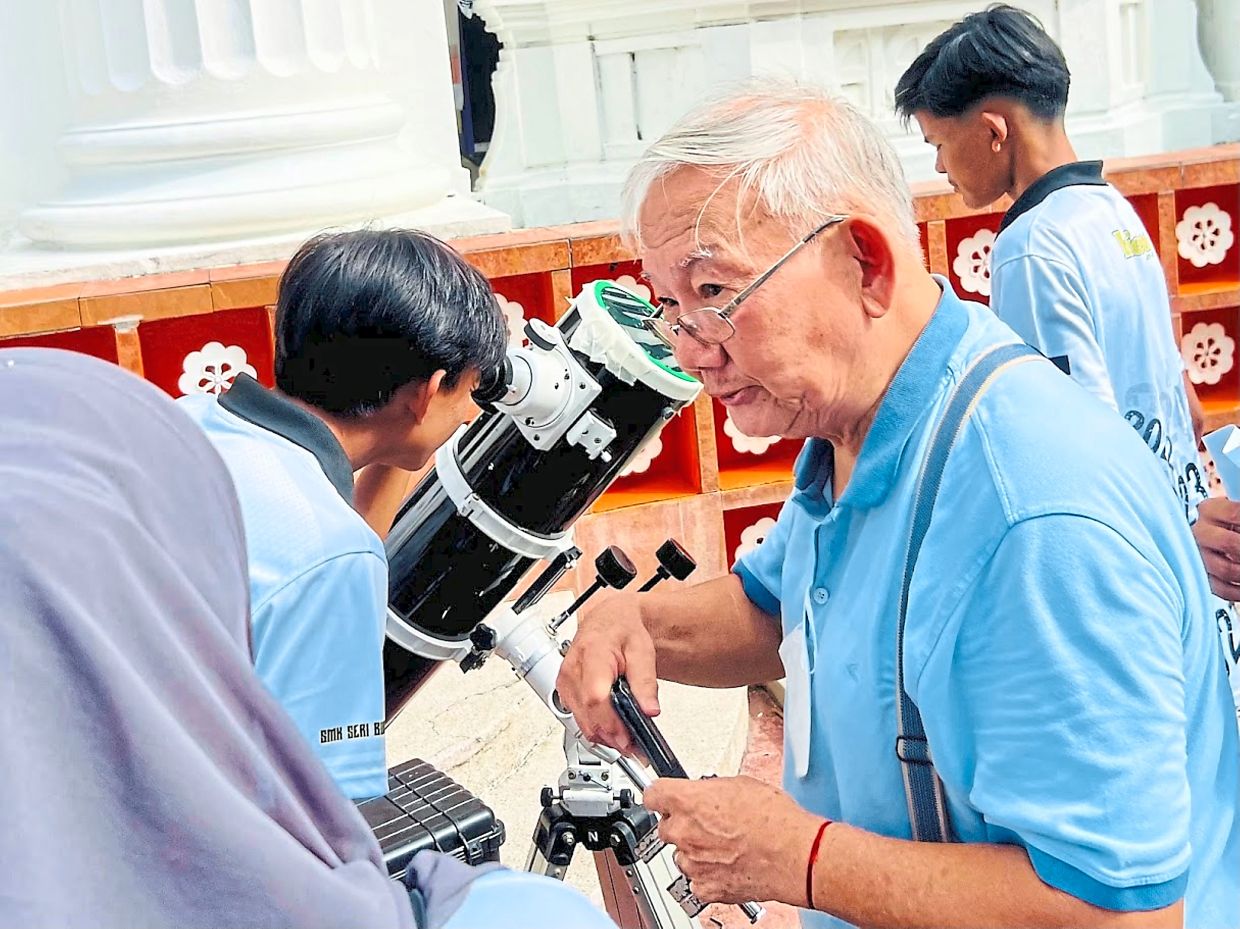
One avid stargazer, who has been making regular trips to unlit places for the clearest view of the night sky, is retired Physics lecturer Dr Chong Hon Yew, president of the Astronomical Society of Penang (ASP).
He was also president and later advisor of the Universiti Sains Malaysia (USM) Astronomy Club from 1986 to 2015.
“I was doing astrotourism long before the word was invented,” said Chong.
One of his favourite destinations was Pulau Singa Besar, an uninhabited island off Pulau Langkawi, which he visited almost every month from 1989 to 2001.
“You can see the Milky Way with your naked eye there.
“We’d go there with our telescopes to take pictures of nebula, which are giant clouds of dust and gas in space,” said Chong.
One trip that remained vivid in his memory was to Pusat Falak Sheikh Tahir at Pantai Acheh in Balik Pulau, Penang, for the 2004 Geminid meteor shower.
“Within the span of eight hours we saw up to 1,103 showers in one night.
“Every time the lights streaked across the sky, there were shouts of jubilation.
“The next morning, when it was time for me to teach a class, I realised I had lost my voice from all that shouting,” he added.
On a deeper level, Chong said these trips had helped him rejuvenate and destress.
“When you are under the sky, it is as if the stars are talking to you.
“It is an unexplainable feeling, like an indirect communication with the universe.”
Ultimately, these trips will certainly beckon the adventurous, said ASP committee member Kenny Loh, who was also a member of the USM Astronomy Club during his student days.
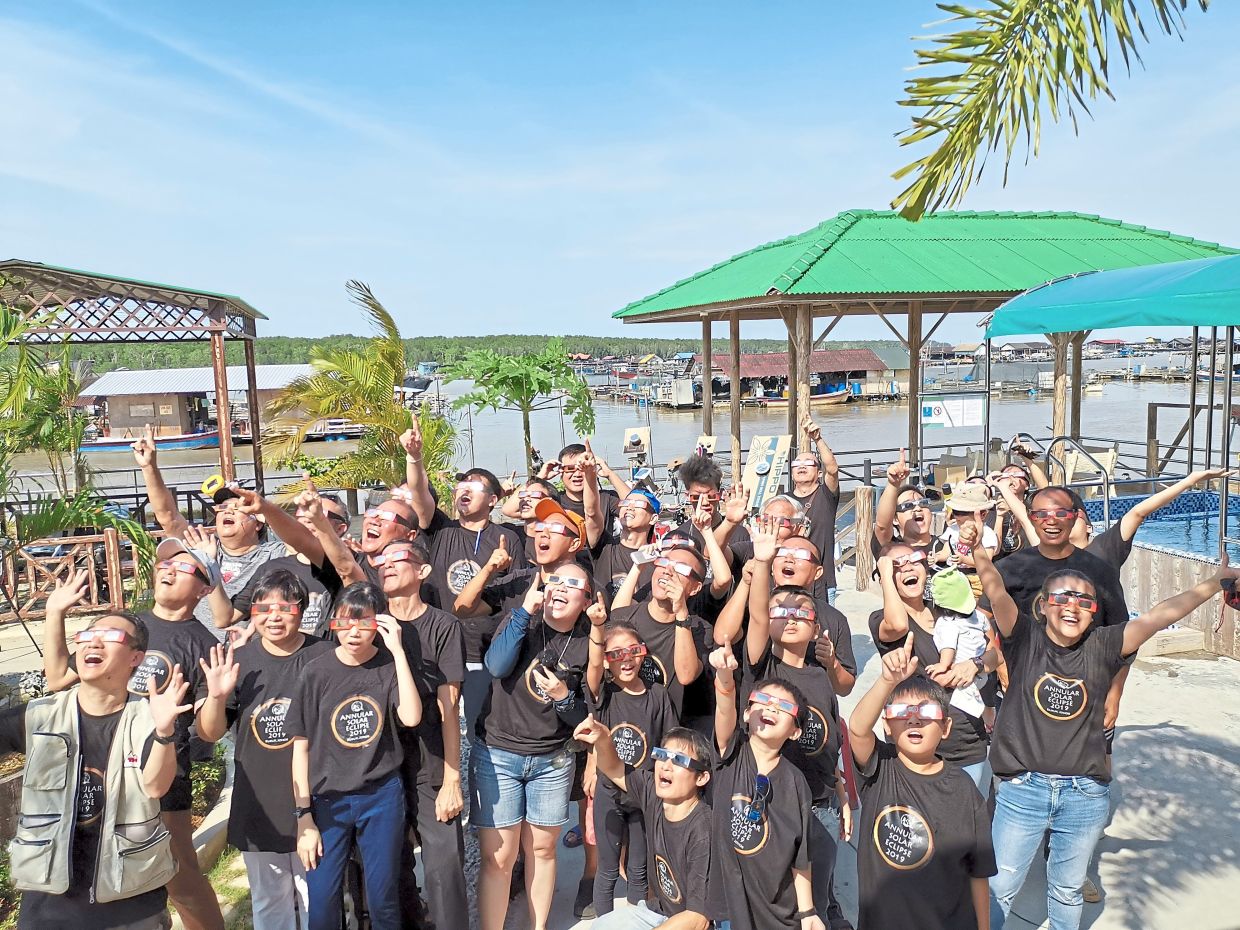
In 2019, the father of two organised a trip for ASP members to watch the annular solar eclipse in Pulau Kukup, Johor.
Two years ago, Loh was in Australia to witness the total solar eclipse and this year he will be taking a trip to Iceland with his wife to witness the Aurora Borealis, also known as the Northern Lights.
Loh, an avid astro photographer, also has a four-wheel drive vehicle to carry all his gear when he goes stargazing.
“The trickiest part about stargazing is patience. You may have just finished setting up your telescope only to spend 10 seconds observing one part of a sky before it is covered in clouds.
“One also has to be hardy and have some knowledge of survival skills as there are locations that have minimal light pollution and are devoid of basic comforts like electricity, water supply or toilets.
“In some locations, safety also needs to be looked into especially when it comes to ensuring that one’s vehicle does not obstruct traffic during such trips.
“Drivers should park in parking bays. Ideally, stargazers should go in a group as there is safety in numbers,” he said.
To overcome these challenges, Loh planned to set up remote telescopes to view the sky on a tablet from the comfort of his home in Penang.
He has established a connection with his friend’s observatory in Johor and plans to set up the next one in Perlis.
Skywatching tours
For Muhammad Mustaqim Rosden, who is marketing and communication director of an adventure travel and tour company, rising interest in astronomical activities and celestial events has led to the inclusion of more dark places in their packages.
This has resulted in stargazing being included in the itinerary to tours to Taman Negara and Pulau Tioman, both in Pahang.
However, the market has progressed to a point where they are able to organise trips solely dedicated to stargazing to locations like the Gombak Selangor Quartz Ridge, Pulau Mawar in Mersing, Johor, and tea plantations in Cameron Highlands, Pahang.
“We have organised over 30 astro tours since 2023 with each trip seeing about 50 participants.
“The average age of participants is between 25 and 70 years.
“Children whose parents are interested in astronomy and nature also tag along.”
Muhammad Mustaqim said children made up 40% of total participants while teenagers formed 30% and adults 30%.
“In private tours, children make up between 20% and 30% of the number of participants,” he added.
He also touched on challenges in ensuring a successful trip, with weather being the main one as it was beyond the organiser’s control.
Muhammad Jazlan Rozali, who runs a marketing consultancy business, said even if the weather was rainy or cloudy, the journey would ultimately be worth it.
According to the social media ad campaigner, the best spots are the ones with very minimal light pollution, which means that most of these places are usually away from the city.
“People who like stargazing also love nature and activities like hiking and camping.
“During the night what can you do? Look at the sky, of course.
“To me, it is so beautiful; nothing compares to it,” he added.
On how stargazing can be best promoted, Nurul Fatini Jaafar, rector of Akademi Falak Malaysia, an institution under Persatuan Falak Syar’i Malaysia, said it all boiled down to hands-on experience.
The founder of Sahabat Langit Utara, a community organisation, said the Orang Asli have their own names for constellations and star patterns that are woven into their local folklore and stories.
“During my fieldwork with the Semelai Orang Asli at Tasik Bera, Pahang, I was thrilled to discover they have their own interpretations of Orion, Taurus and the Pleiades.
“Examples are bintang peyh (meaning spring spear trap) which is part of Orion, bintang jekat (wild boar’s jaw) which is part of Taurus and bintang kerancong (mousedeer’s dung) which refers to the Pleiades cluster.”
Nurul Fatini suggested that parents and teachers take young ones to observatories and science centres to nurture their curiosity.
She added that it was time for tourism players, such as tour guides and resort staff, to be trained in basic astronomy, so that they can offer enriching nighttime experiences alongside daytime tours.
“I also wish to see more film and animation studios producing impactful content that portrays stargazing and celebrates our local astronomy heritage.
“Just like Moana inspired young viewers to learn about ancient Polynesian way-finding and celestial navigation, we need a culturally rooted film or programme that will boost public interest in science and astronomy, just like how the Angkasawan programme once did.
“Local councils and faith-based centres should include stargazing into weekend or monthly community programmes,” she said.