Essential workers usually sacrifice time with loved ones in service of the community, even during festive seasons.
This Hari Raya Aidilfitri is no different for some as they go about fulfilling their duties on public holidays.
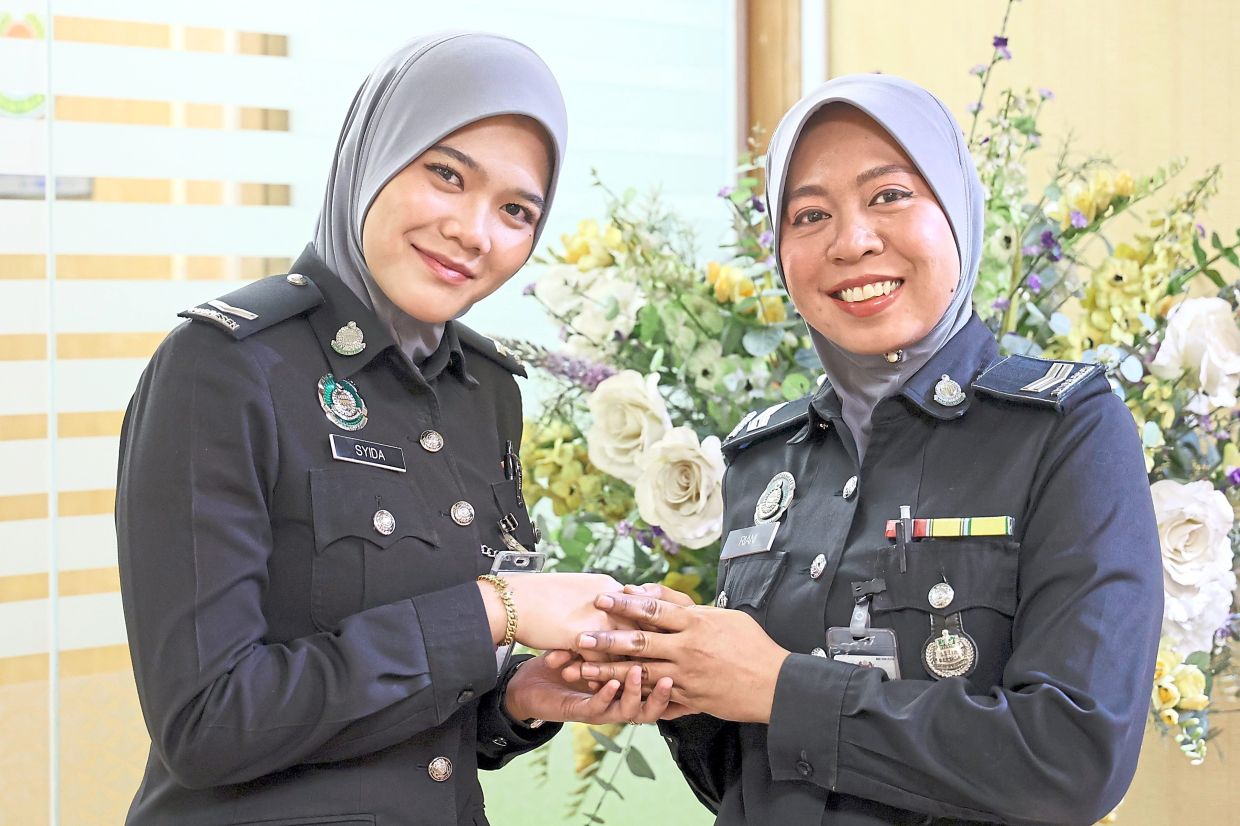
For Immigration officer Nurul Zurriani Kernain Mohd Kernain, 38, working during the first two days of Hari Raya Aidilfitri is nothing new.
She spent the first day of Raya working the afternoon shift at the vehicle exit zone, where traffic was especially heavy.
“Traffic in the evening of the first day of Hari Raya this year was heavier than usual.
“Many Singaporeans only got one day off, so they rushed home that evening after spending Hari Raya with their families in Malaysia or a short break here,” she told StarMetro in an interview at Bangunan Sultan Iskandar Customs, Immigration and Quarantine Complex in Johor Baru.
Nurul Zurriani grew up in Sarawak and Kedah before continuing her studies in Kuala Lumpur and settling down in Johor for work.
“My parents and siblings are now in Johor, so I am not alone. But the atmosphere is just not the same.
“The kampung vibe in Sarawak is totally different.
“There, we visit neighbours’ houses one after another. Here, we celebrate in a smaller circle,” she said.
Despite the hustle and bustle, Nurul Zurriani squeezed in a quick celebration before work.
“I spent a bit of time with my family in the morning. Just a quick meal, then I had to get ready for work.
“I did not even wear baju kurung because the outfit restricts movement, which is not suitable for work.”
She said that unexpected kind gestures lifted her spirits.
“One Singaporean-Chinese man gave me an ang pow.
“He told me that we celebrate together, even if we are not the same race. That really touched me.
“A little girl, maybe three or four years old, also handed me a lollipop and wished me ‘Selamat Hari Raya’.
“Such small things mean a lot,” she said, adding that many passing through the border had also wished her well.
Nurul Zurriani said those moments made long shifts worthwhile.
“When someone takes the time to acknowledge us, it reminds me that our work matters, even during the holidays.
“Even though I cannot balik kampung, I still feel appreciated. That is enough to keep me going,” she said.
For fellow Immigration officer Nurasyidah Suhaimy, 25, this year’s Aidilfitri was filled with moments of unexpected sweetness that reminded her why she loved her job.
“Out of nowhere, a little boy suddenly shouted ‘Selamat Hari Raya’ to me from a car before his whole family joined in.
“It caught me by surprise and honestly made my day,” said the 25-year-old.
What made this Raya even more meaningful for Nurasyidah was spending time with her family and experiencing the celebration for the first time as a wife.
“Last year, I was on shift and could not go back. It was my first Raya away from home.
“I remember hearing the takbir raya (recitation) while working at the counter. It really hit me and I almost cried.
“I looked at my phone and saw all the Raya photos coming in from my family. It felt very lonely,” she recalled.
This year, she applied for leave on the first and second day of Raya through her department’s replacement shift system.
She travelled back to Segamat to celebrate with her family. Her husband, who works with the police, joined in as well.
“He saw how we celebrated the festival, visiting relatives from house to house.
“It was his first time and I was so happy to share that tradition with him,” said Nurasyidah.
With the short break, Nurasyidah returned to work refreshed and with a heart full of gratitude.
“Raya with family is the best, but when I am on duty, the kindness of strangers and support from my team make it meaningful in a different way,” she said.
On standby
At Hospital Sultanah Aminah (HSA) in Johor Baru, the arrival of Hari Raya Aidilfitri is just another day spent on duty for head nurse Nora Othman.
“After being a nurse for 27 years, I see holidays during festive seasons as a bonus.
“I do feel a little sad,” said the 49-year-old from Batu Pahat.
Though away from home, Nora and her colleagues made sure the atmosphere in the duty room felt just as festive as outside the hospital.
“Every year, we put a lot of effort into decorating the wards and on-call rooms.
“Celebrating with my colleagues has been joyful.
“We even give duit raya to our junior staff, regardless of race,” she added.
Nora also praised the spirit of camaraderie among her colleagues.
“Without even being asked, my colleagues who are not celebrating Raya have taken on extra shifts to cover for us.
“This is truly the beauty of Malaysia. The sense of community and mutual support that transcend cultural differences,” she said.
In addition, she and the team enjoyed a mini celebration at the office through a potluck with doctors, nurses and janitors on duty.
Nora has been on duty since the night before Aidilfitri, though she took a short break on the second day of the festival.
“On the first day of Raya, I woke up much earlier to prepare food for my family while they slept.
“I then greeted all my family members before heading off for my shift.
“After years of marriage, my family is used to not having me around during festivals because of my responsibilities.
“My husband even jokes that HSA is my true hometown.
“I am truly blessed to have such a supportive and understanding family who have stood by me throughout my career,” said the mother of four.
Nora is set to be assigned to a new position by the end of this month, marking a next chapter of her career.
“I appreciate spending Raya with the HSA team this year, as this may be our last time celebrating together as a team.
“Regardless of having a break or not, we have shaped our own kind of joy,” she added.
Elsewhere, firefighter Elizabeth Nora Goda, 33, was on standby for emergencies during Hari Raya Aidilfitri for yet another year.
“We are the main fire station covering the entire Johor Baru city, so we need to ensure we have sufficient teams on duty.
“There may be fewer crew members than usual, but we always make sure no positions are left unfilled, especially during the festive season,” said the Muslim convert from Sarawak.
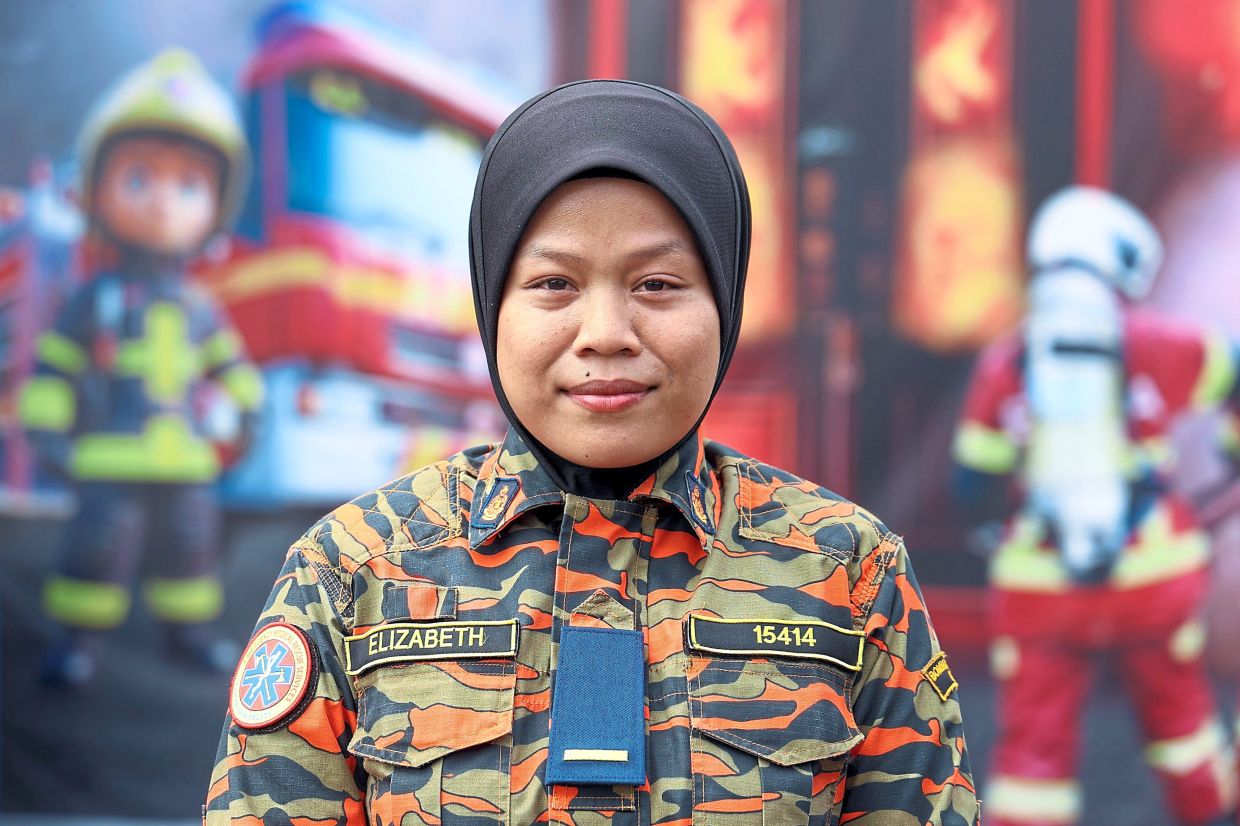
Elizabeth is the only female firefighter who stayed back, taking on both firefighting and medical emergency roles.
“Even though we cannot go home for the celebrations, we are grateful to be able to celebrate here with our fellow teammates.
“We had a potluck the night before Hari Raya and we even gave each other duit raya, which was heartwarming,” she said, adding that it had been three years since she last returned to her hometown in Bau, Sarawak.
She reminisced about the times spent with her family, who included several Muslim members, when they would cook together and invite their neighbours over for an open house.
On her work, she said, “We usually get four days of leave for festive celebrations, with some taking a break on the first day while the rest start on the following days.
“We never complain, as we always take turns going on festive breaks,” she said.
None of Elizabeth’s five siblings were able to take leave during this festive season either.
“Thankfully, I was able to have lunch on the first day with my sister, who is also based here in Johor Baru.
“After a simple celebration, I was back on duty that night.”
Elizabeth added that she was grateful to those who remembered firefighters during the festival, as some sent Hari Raya biscuits for them to share.
For traffic officer Kpl Muhammad Nur Zariq Ali, 35, Aidilfitri has rarely meant balik kampung or celebrating with family.
“The last time I had a proper Raya break was back in 2015.
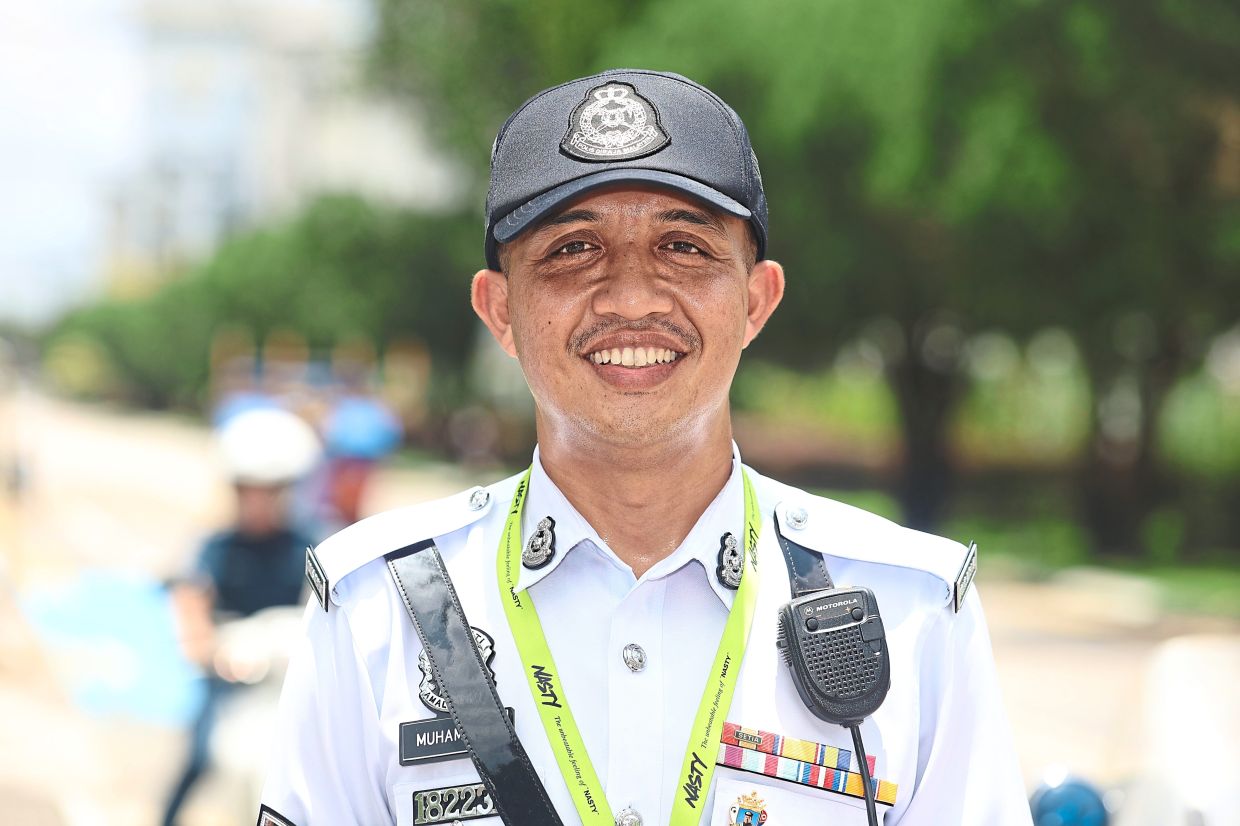
“My wife is from Terengganu and sometimes the family goes back there, other times to my hometown in Negri Sembilan.
“Most of the time, I do not want them to miss the experience just because I cannot be there.
“So I let them balik kampung without me,” he said.
Kpl Muhammad Nur said that after years of being on duty during festive periods, feelings of sadness and longing had gradually faded.
“At the start it was hard, but now I am used to it.
“The camaraderie among colleagues helps lift the mood.
“Many of them are from other states like Sabah, Sarawak, Perak and Kedah who are also unable to go home for Raya.
“We pray together in the morning and celebrate with each other.
“If you are alone, it is lonely. But when your team is like family, it is easier,” said Kpl Muhammad Nur.
He said that some of his superiors also invited those who could not go home, to join them for a meal.
“It has become a routine. We will gather at someone’s house or be invited by a colleague who lives nearby,” he said.
Maintaining cleanliness
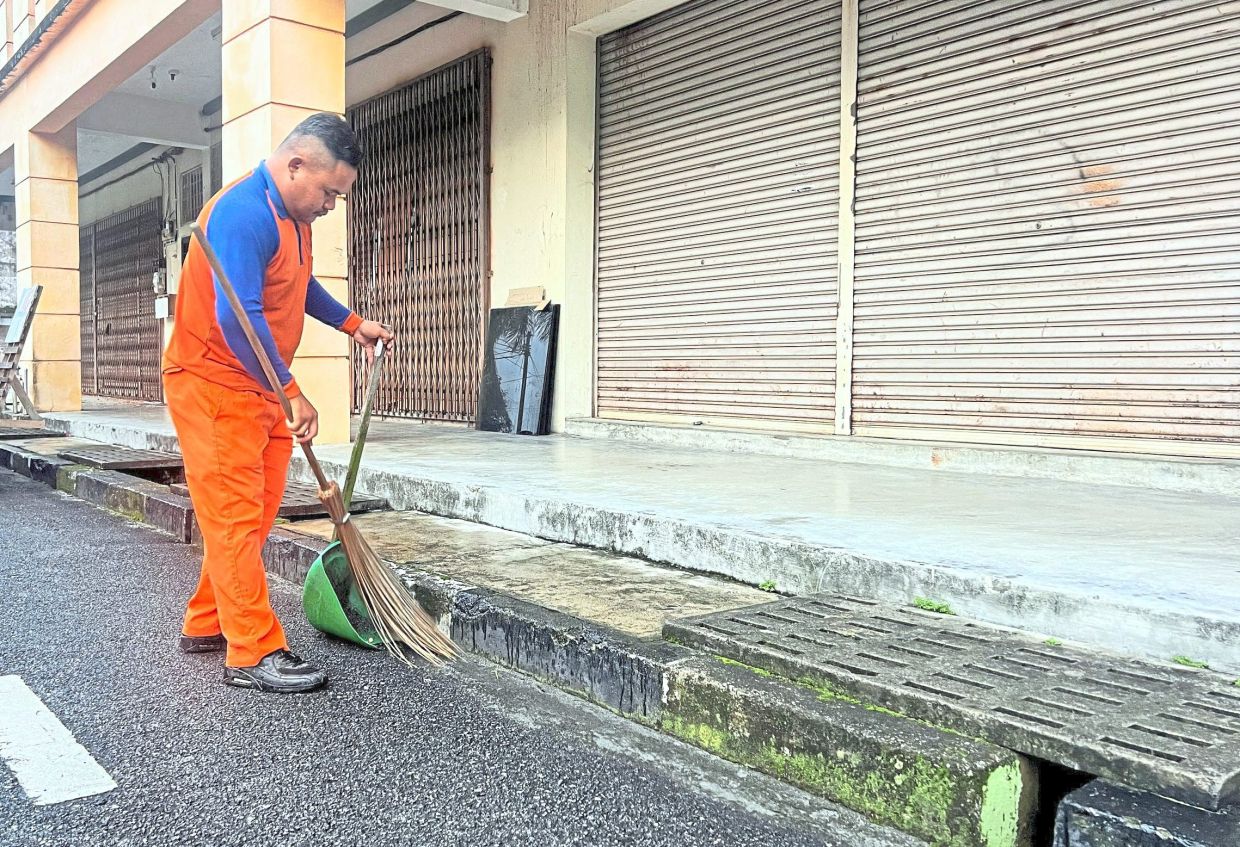
Similarly, Hari Raya Aidilfitri means another early morning on the streets of Pontian for Mohd Raihan Md Farid, whose job is to make sure the town stays clean.
The 27-year-old has been a street sweeper with SWM Environment Sdn Bhd for the last eight years and now leads a team of nine in Pekan Nenas.
“We start our rounds as early as 7am, even on Raya morning.
“While most are still asleep, we are already out clearing rubbish around shop lots and residential areas,” he said.
Over the years, Raihan has grown used to being on duty during the festivities.
This Raya marks his seventh time working on the first day of Syawal.
“It was difficult at first. You do feel a bit down seeing everyone else celebrating with their families while you are out working.
“But now, I see it as my responsibility,” he said.
Despite being away from full-day family gatherings, Raihan always makes time for Aidilfitri prayers.
“My family is very supportive. My wife and parents understand that this job does not stop just because it is Raya.
“We prepare earlier, from cleaning the house to cooking ketupat and rendang,” he said.
This year, he clocked in on Raya eve to clear out waste at bazaar locations and only returned home after midnight to join his family in getting the house Raya-ready.
“After prayers in the morning, I headed back out to the field.
“It may not be a full day of celebration, but we have found our own way to make it meaningful,” said Raihan.