



THE majie, a unique group of independent women from China who devoted their lives to serving families in Malaysia and Singapore, are nowadays not often spoken of.
However, their legacy was brought to life, thanks to an insightful talk titled “Remembering and Celebrating the Lives of Majie”.
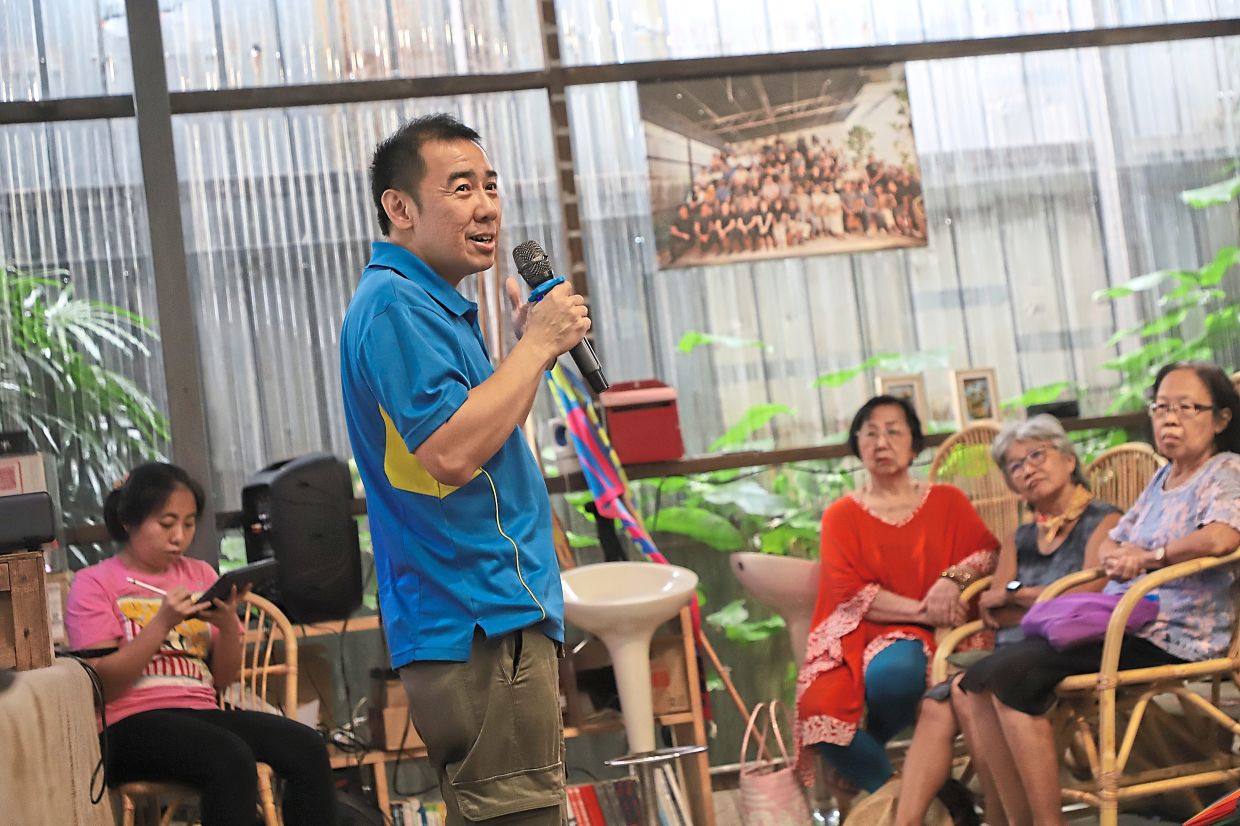
Held at Coex, located within the Hin Bus Depot in Jalan Gurdwara, Penang, the event was attended by some 60 people.
It shed light on the carers’ unwavering sisterhood, self- reliance and quiet cultural resistance against traditional expectations of marriage and family.
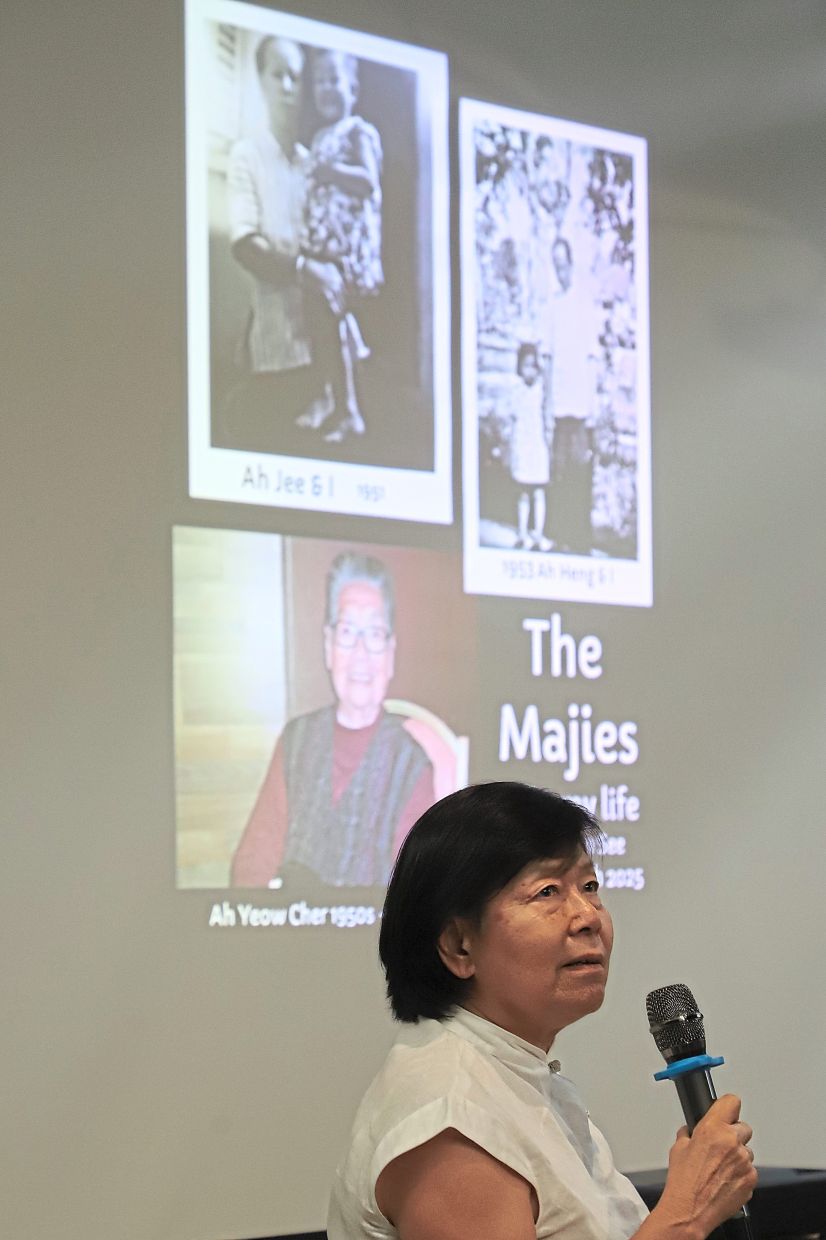
The talk was part of an extensive research effort led by retired academician Chan Lean Heng.
Working alongside her were China-based artist Chen Jialu and Malaysian educator- and-entrepreneur Soonufat Supramanium.
Their study delved into the lives of these remarkable women, many of whom undertook vows of celibacy and dedicated themselves to working as domestic helpers in wealthy households.
The majie also formed a tight-knit community that provided each other support and solidarity.
For audience members like Ooi Lean See, the discussion was deeply personal.
Raised by three majie in the 1950s and 60s, she recalled the profound bond she shared with Ah Yew Jer, the majie who cared for her and her siblings the longest.
Ooi sadly remembers when her beloved majie left to work for another family in Hong Kong in 1965 when the majie tradition was coming to an end.
“I still remember the day my mother told me that Ah Yew would be leaving us.
“It was heartbreaking but our family stayed in touch with her,” she recalled.
When Ooi travelled for work to Hong Kong in 1985, she was fortunate to reconnect with Ah Yew.
“Even after the Chinese government took back Hong Kong in 1997, she chose to stay rather than follow her employers to Canada.
“Ah Yew Jer remained in Hong Kong until her passing in 2007 at the age of 94.
“Despite being bedridden after an accident, she continued to receive visits from my family, a testament to the lasting relationships majie built with those they raised,” shared Ooi.
Ng Mai Quin, via a video testimony, spoke with deep fondness of her majie Ho Jer.
“As I was an only child, we were very close.
“I slept in her room and she took me to school every day, even after I told her to stop doing so during my Standard Three year when I had been getting teased by my friends,” said Ng, adding that her friends still talked about her majie during gatherings.
Ng’s majie would even tell the child’s cousins to let her win during games.
“There was even a little jealousy between her and my mother.
“When relatives or friends asked who my mum was, I would say it was Ho Jer,” she recalled with a smile.
Ho Jer remained with Ng’s family until Ng turned 17.
The beloved majie then returned to China, marking yet another painful farewell in the long history of separations that was common in the majie community.
Another audience member who shared his experience was Leong Keng Foong, 49, who came from Ipoh, Perak.
The majie had cared for him and earlier, his father when the latter was a child.
When she left in the 1980s to work in Kuala Lumpur, it was a moment of profound sorrow.
“My dad cried that day – the only time I ever saw him cry,” Leong remembered.
When she passed away years later, Leong honoured her memory by placing her ashes in a niche at the Sam Poh Tong Temple in Ipoh.
He did so to ensure that her contributions to his family would never be forgotten.
In uncovering the majie legacy, Chan traces her lifelong fascination with this community of carers to her childhood in George Town, Penang.
She described the majie as having been more than just domestic helpers; they were surrogate mothers, guardians and silent revolutionaries who defied societal norms.
The majie were women who left their homes in China, and came to Malaysia and Singapore in the 1930s.
They were part of a sisterhood who bucked convention by choosing not to marry.
They underwent a ceremony called sor-hei (combing up) at a temple, ancestral hall or at home where they had their hair combed into a bun or plaited, and where they undertook celibacy vows.
“I grew up in an ‘amah kongsi fong’ (a communal residence for caretakers and nannies) adjacent to a ‘majie kongsi fong’ on Stewart Lane,” said Chan.
“Here, these women lived and forged tight-knit communities.
“As a young adult, I became passionate about advocating for working-class women,” she said, linking her early exposure to the resilience and struggles of the majie to her own later dedication towards social justice.
Their legacy, as highlighted in the talk, was one of quiet resilience and enduring love that transcended blood ties.
Chan pointed out that as these stories continued to be uncovered and shared, the impact of the majie community’s sacrifices would grow as a vital part of Malaysia and Singapore’s cultural history.
“In 2024, together with Chen, I visited Guan Libo who was, at the time, the oldest surviving majie at 93, in Guangdong, China.
“Meeting and talking with her for two hours was electrifying.
“It motivated me to do something to commemorate the lives of the majie and their contributions,” said Chan.
“Throughout April, we will have similar events.
“Those interested can WhatsApp me on 012-987 3130 to check on the venues which will be decided upon later.”
The talk closed with a tribute penned by Chan that praised the majie community’s role in redefining womanhood through economic self-reliance, cultural resistance, and solidarity.
“Indeed, they are the pioneers, who subverted patriarchal structures, offering a historical precedent for discussions on gender equality and reproductive rights.
“They exemplified how marginalised groups can carve out spaces of agency within oppressive systems, leaving a blueprint for future movements advocating not only equality, but social justice that is grounded on gender justice beyond individualistic competency!
“In essence, the majie represents a remarkable example of grassroots agency and feminism in Chinese ‘her story’, showcasing how ordinary women navigated and resisted patriarchal structures through economic agency and collective solidarity,” Chan reiterated.
