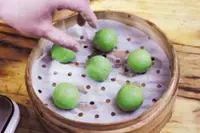

According to Chinese folklore, nian gao is closely tied to the legend of the Kitchen God (Zao Jun).
It is believed that before Lunar New Year, the Kitchen God ascends to heaven to report on the household’s deeds to the Jade Emperor.
To ensure a favourable report, families offer sticky and sweet nian gao, hoping to either seal the Kitchen God’s lips with its gluey texture or sweeten his words.

Nian gao, meaning “year cake” in Mandarin, is synonymous with good fortune and prosperity.
Its sticky texture symbolises family unity and its name sounds like “higher year”, signifying progress and success.
Now that the festival has ended and kuih bakul has had time to solidify and become less sticky, it’s time to enjoy the new year treat and extend the enjoyment a little longer.

Depending on the size of the kuih bakul, the centre may remain gooey so chilling it in the refrigerator may help solidify its texture.
Alternatively, oiling the knife will also help keep it from stick ing while slicing.
Avoid cutting the slices too thick as they won’t melt inside, leaving the centre hard instead of gooey.
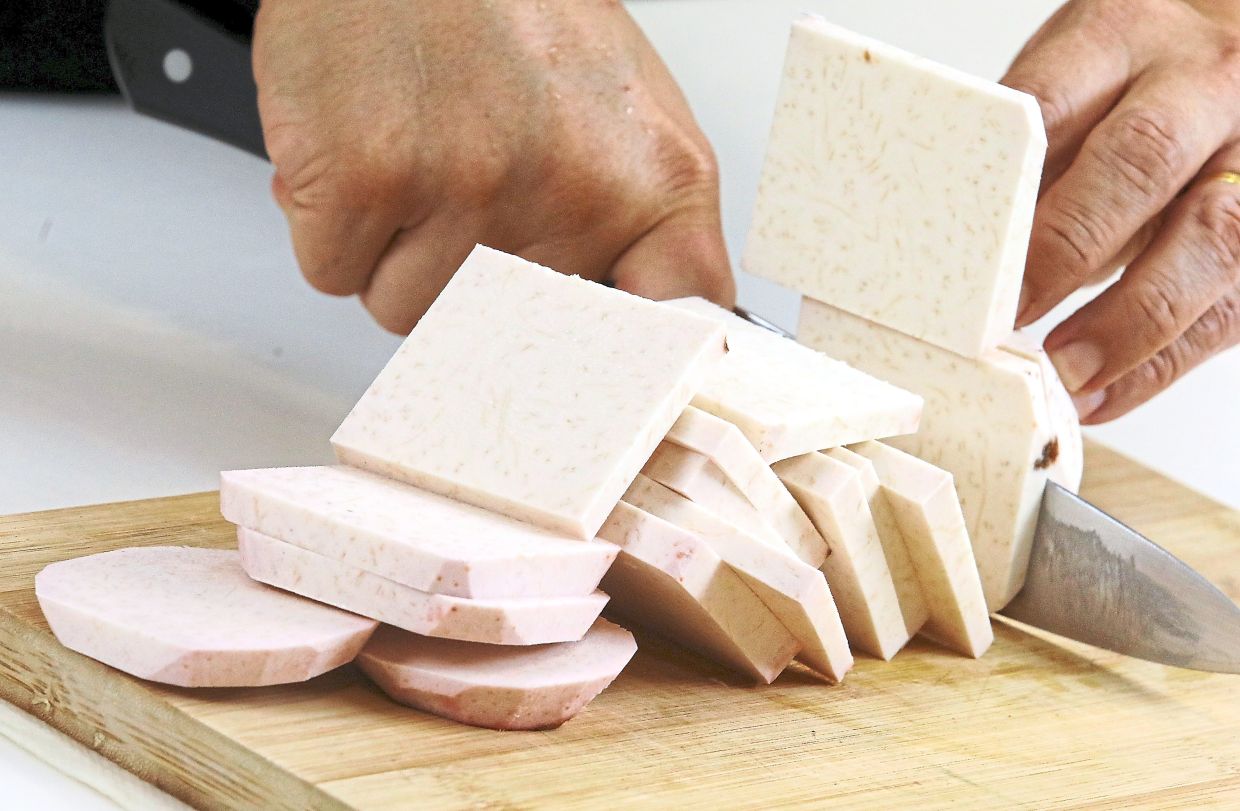
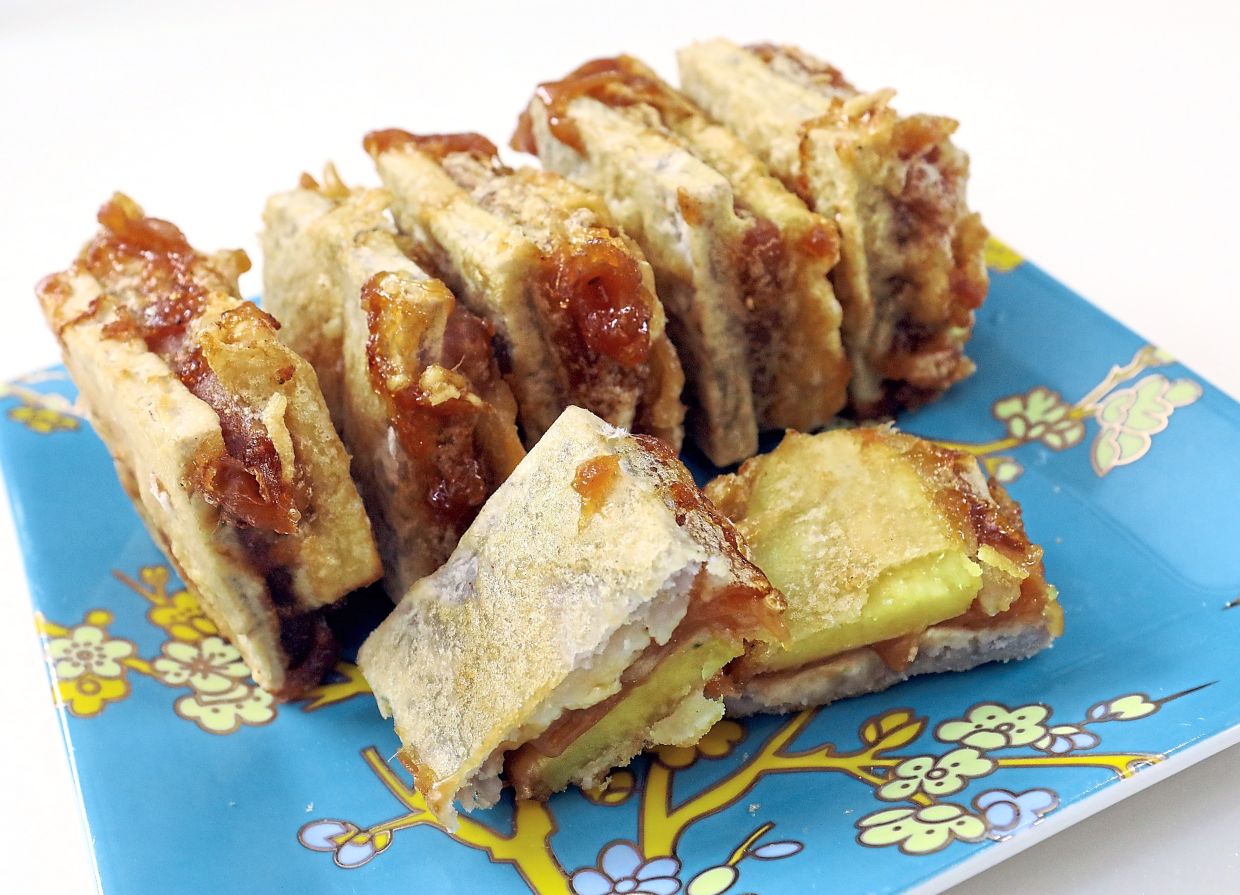
The traditional way to prepare fried nian gao is to sandwich each slice between sweet potato and taro, but some families just fry nian gao in batter.
Whichever way you prefer to enjoy it, frying nian gao offers a delightful contrast between a crunchy golden crust and lusciously chewy centre.
It’s an irresistible snack that reminds us that although the celebrations may have ended, the year has just begun.
Fried kuih bakul
Ingredients
500g kuih bakul
500g sweet potato
700g taroBatter140g rice flour
30g cornstarch
1 tbsp baking powder
1 tsp salt
200ml ice-cold water, add more if needed
2 cups cooking oil for fryingDirectionsPeel sweet potato and taro and cut into slices about ½cm thick.
Remove banana leaf wrapping from kuih bakul and cut into slices about ½cm thick.
If it’s too sticky, chilling it in the fridge for an hour makes slicing easier.
In a bowl, sift the dry ingredients together and whisk in ice-cold water until you get a smooth batter with a thick consistency.
Heat the oil to 165°C, testing with a wooden chopstick until bubbles form around it.
Dip a slice of sweet potato and a slice of taro in the batter, sandwich the kuih bakul in between and dip again until completely coated in batter with even coverage.
Carefully lower into the hot oil and fry until light golden, about two to three minutes per side.
Remove with tongs and drain on paper towels.
Serve warm for the best texture.