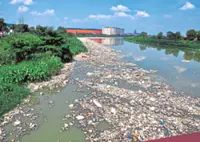
THE Selangor Water Management Authority (Luas) has ordered the factory involved in the contamination of Sungai Kabul to remove any potential pollutants that can cause further disruptions to water supply.
Selangor tourism, environment, green technology and Orang Asli affairs committee chairman Hee Loy Sian said the contaminants had caused water supply cuts to 463 areas in the state on April 30.
He said it was also the source of further disruption to 472 areas in Selangor on Tuesday when pollutants were detected in Sungai Beranang.
Both incidents triggered the temporary shutdown of the Jenderam Hilir Raw Water Pump Station and Sungai Semenyih Water Treatment Plant, but the second incident also affected the Bukit Tampoi Water Treatment Plant.
Hee said a Luas patrol unit detected diesel odours in Sungai Berangan at 2.30am on Tuesday, which had been carried by heavy rain from Sungai Kabul.
He said the agency had issued the clean-up notice to the owners of the premises under Section 121(1) of the Luas Enactment 1999, while the Selangor Environment Department issued a stop-work order effective May 1.
“The premises owners are carrying out the removal of pollutants to prevent further contamination and are cleaning the sump pit according to the predetermined procedures,” Hee said in a statement.
Mitigation measures taken by Luas, Air Selangor, Kajang Municipal Council and the National Water Services Commission also included the monitoring of Sungai Kabul and Sungai Semenyih as well as placement of three oil booms, 20 oil pads and five bags of activated carbon.
As of 8am yesterday, Air Selangor announced that water supply in the 472 areas in Selangor affected by the unscheduled disruption had been fully restored.
Hee said the Selangor government would not compromise with any party guilty of water pollution and that stern action would be taken in accordance with the provisions of the Luas Enactment 1999.
Klang Valley has suffered repeated water supply distruptions over the years due to contaminants in the rivers, which forced the shutting down of water treatment plants.
Already a subscriber? Log in
Get 20% OFF The Star Digital Access
Cancel anytime. Ad-free. Unlimited access with perks.