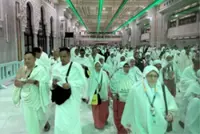
Muslims around the world commemorate Hari Raya Haji by sacrificing four-legged animals such as lambs, goats, cows, bulls and camels.
The meat is then distributed to the poor and deserving people in the community as well as the participants and their family.
The celebration takes place on the 10th day of Zulhijjah, the 12th and last month of the Muslim calendar, which also marks the end of the haj pilgrimage period.
In Malaysia, Hari Raya Haji is also known as Hari Raya Korban or Hari Raya Aidiladha.
The korban, a word that is derived from the Arabic word qurbani which means “sacrifice”, is conducted at mosques.
This year’s celebration on July 31 will be different, as it takes place amid the ongoing Covid-19 pandemic and the recovery movement control order (MCO).
Mosques that are proceeding with the sacrificial rite, have to adhere to strict guidelines.
Federal Territories Islamic Religious Department (Jawi) director Mohd Ajib Ismail said everyone involved in the korban activity at mosques must avoid the 3Cs — crowded areas, confined spaces and close conversation.
He reminded everyone to keep a 1m distance from each other, and to wear a face mask at all times.
“Mosques must have a designated access for entry and exit for the participants. They must record visitors’ details and temperature.
“Children under 12 and those with chronic medical conditions such as high blood pressure, diabetes and heart problems are not allowed, ” he said.
In the guidelines issued by Jawi, only mosques in the green and yellow zones are allowed to hold korban activities.
There are currently 89 mosques and 560 surau in the Federal Territories, including Kuala Lumpur, Putrajaya and Labuan.
Mohd Ajib also reminded the management of mosques to ensure that the slaughter and meat processing was done at an open space.
“They must limit participants to only 20 people at a time and ensure all of the equipment are sanitsied before and after the slaughter, ” he said.
Mohd Ajib added that the religious houses must obtain approval from the Veterinary Services Department (DVS) and report to the health district office before conducting korban.
The slaughter can also take place at DVS-licensed abattoirs.
Masjid Ar-Rahimah chairman in Kampung Pandan, Mohd Shah Hasin, 68, said seven cows had been ordered from a supplier for Raya Haji.
“The slaughter will be done at the supplier’s abattoir and the meat will be distributed to the surrounding households after the Zohor (afternoon) prayer.
“The mosque will still conduct the congregational prayer this year at 8.30am but the number of visitors will be capped at 1,000.
“The congregation is reminded to bring their own prayer mat and perform wuduk (ablution) at home before coming to the mosque, ” he said.
Hassan Al Fadhli Abdul Rahman, 52, an imam at Masjid Imam Al Ghazali in Bandar Sri Menjalara, Kepong said the korban would be done at the mosque’s compound.
“We have obtained the approval from Jawi and DVS. We will be slaughtering eight cows this year, ” he said, adding that the mosque would not be hosting distribution at its compound but would send the meat to houses instead in an effort to limit contact.
The imam said the congregational prayer would be held on the second day of Aidiladha on Aug 1.
“People coming are reminded to bring their own prayer mat or else they will not be allowed entry, ” he said.
Already a subscriber? Log in
Get 20% OFF The Star Digital Access
Cancel anytime. Ad-free. Unlimited access with perks.