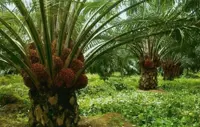
SIBU: Sarawak will need to accelerate the adoption of mechanisation to overcome its reliance on foreign labour.
Deputy Chief Minister Datuk Amar Douglas Uggah Embas said presently, the oil palm industry in the state, especially in the plantation sector, was labour intensive and highly dependent on foreign labour.
In 2016, the plantation sector had a total of 115,000 workers who were employed in various capacities of which 80% were foreigners while locals made up only 20% including those from peninsula Malaysia and Sabah.
Uggah Embas said there was a lack of interest among locals to work in the plantation sector.
This, coupled with the difficulty in employing foreign workers, meant that mechanisation was the way forward for the plantation industry.
“I am optimistic that in the long run, mechanisation will be a practical solution to reduce the high dependency on foreign labour,” he said.
“However, a strong commitment by the top management is a prerequisite for a successful mechanisation programme in the plantation sector.”
Uggah Embas’ speech was read by his representative, Assistant Native Land Development Minister Datuk Roland Sagah Wee Inn, at the opening of the Sarawak International Palm Oil Week (SIPOW 2018) yesterday.
SIPOW was held in collaboration with Malaysia Investment Development Authority, Malaysia Biomass Industries Confederation, University of Nottingham Malaysia and NRG Exhibitions.
The other critical issue facing the oil palm industry that needs to be addressed was the issue of sustainability due to negative campaigns by foreign non-governmental organisations aimed at importing countries, particular-ly the European Union.
Uggah Embas said he was optimistic that the introduction of the Malaysian Sustainable Palm Oil certification scheme could help address the issue as it involved compliance with international standards and environmental requirements.
“A deadline has been set for the industry to be certified and for smallholders. The government has set Dec 31, 2019, for them to be certified,” he added.
Uggah Embas also called on industry players, scientists, agronomists and engineers to pool their R&D expertise and resources together in solving the issue of lower oil extraction rate and fresh fruit bunch from oil palm planted on peat soil.
Separately, he said in the next 12 to 13 years, the plantation sector in the state was replanting an estimated area of 443,538ha or an average annual replanting area of 34,118ha with an estimated 2.5 million tonnes of tree trunk which will be an important source of sustainable raw material for the biomass industry.
Sarawak is the largest producer of palm oil in the country comprising 1.56milha or 27% of the total planted area of 5.8milha in the country.
Last year, the state earned RM12.2bil in exports from palm oil.
Already a subscriber? Log in
Get 20% OFF The Star Digital Access
Cancel anytime. Ad-free. Unlimited access with perks.