THE fundamental philosophy of both Japanese and French cuisines relies heavily on the intrinsic taste of ingredients, making them natural companions that bridge culinary creations from both worlds.
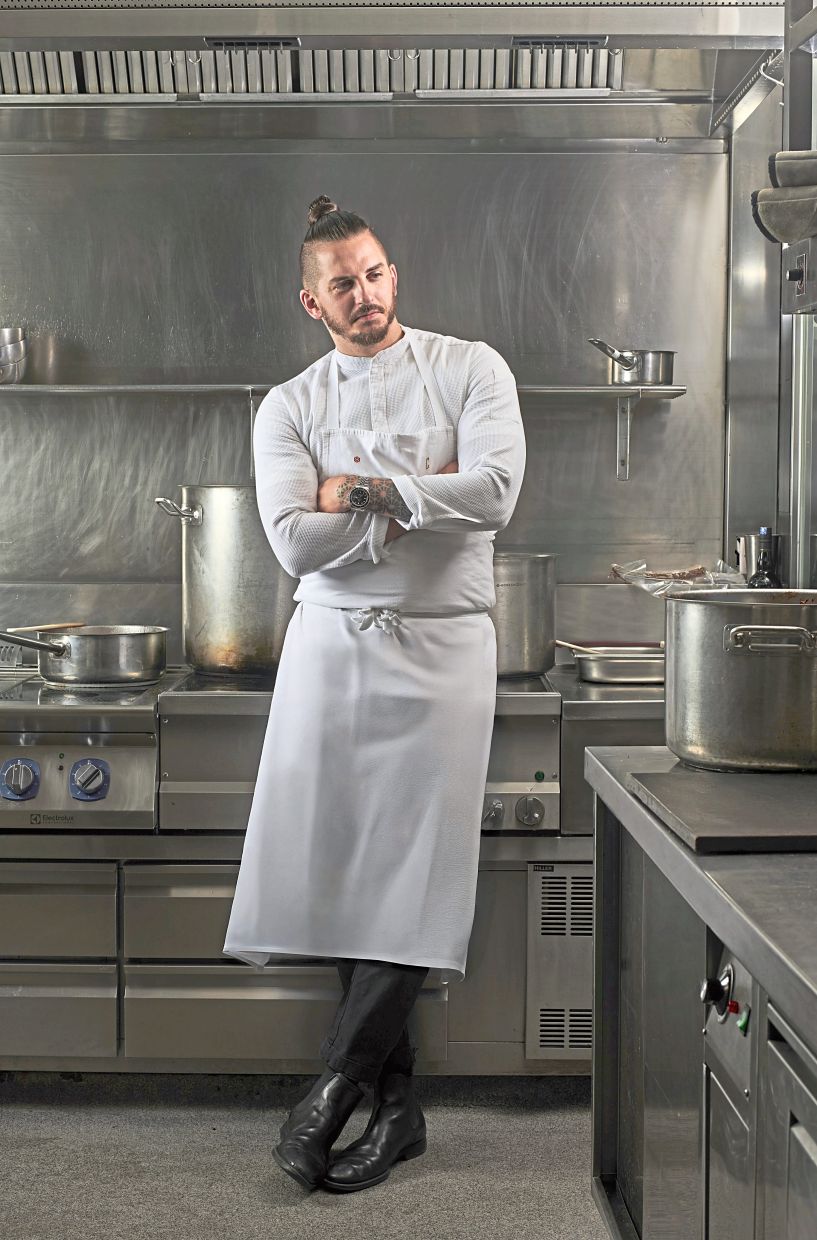
With experience honed across both traditions, celebrated French chef Charles Coulombeau believes that French and Japanese produce take centre stage in both cuisines.
“There are many similarities between French and Japanese cuisines, as both require years to master technique and gain an understanding of each ingredient to let it shine.
“Japanese cuisine is simpler but demands respect for the product, hence, there is a strict codex or a certain way to prepare ingredients.
“When I prepare French dishes, on the other hand, I cook with feeling and intuition,” he said.
Coulombeau, known for his Michelin-starred restaurants in France called La Maison dans le Parc in Nancy and Yozora in Metz presented an original five-course dinner menu at EQ Kuala Lumpur’s rooftop restaurant, Sabayon.
Framed by a majestic view of the skyline, the menu blended classical French technique with Japanese influences alongside contemporary global accents.
One of the bite-sized treats in the opening course, titled “Three Chapters into Chef Coulombeau’s Career”, reflected the chef’s culinary journey through a thoughtful progression of textures and tastes.
A presentation of green peas, mushrooms and a star-shaped nori represented key milestones in his rise to the top.
“Peeling peas was the first task assigned to me during my training and it taught me that small details truly make the difference.
“Mushrooms represent my time working in Burgundy, while the nori cut into a star symbolises my time in Japan, which gave me the artistic direction to achieve Michelin recognition for my restaurants,” he explained.
This trio of ingredients, accompanied by wine jelly and croutons, brought together multi-layered textures.
It was served alongside two other canapes featuring avocado, pear and sake as well as lamb, lime and tarragon.
Next came a slice of cured Hamachi offering a mild, sweet seafood character, paired with pickled cucumber and topped with coriander.
The dish was matched with Izumibashi Junmai Ginjo Megumi (sake) from Kanagawa, which lent a palatable floral lift, structured body and a delicate sweetness to the finish.
Highlighting one of the Japanese snacks, a tamagoyaki stuffed with finely chopped leeks showcased the natural essence of the ingredients.
Caviar topping the smooth, flawless egg added a hint of savouriness, while citrusy yuzu elevated the profile further.
This was accompanied by Domaine Vacheron Sancerre Blanc 2018, featuring a crisp, mineral finish.
The scallop, served in a vibrant pool of carrot and marigold sauce, was a standout.
Marinated in shoyu, the plump, medium-cooked shellfish was beautifully caramelised with a torched char, harmonising with shredded carrots, peeled cherry tomato globes and scallop mousse.
The dish was further elevated by Sichuan peppercorns, which delivered a spicy, numbing kick.
“The peppercorns were cooked with sugar before being deep-fried.
“It is a detail I crafted specifically for the Malaysian palate, something that might not suit diners in France,” said Coulombeau.
The course was rounded out by the silky Chateau Miraval Cotes de Provence Rose 2021, which offered notes of raspberry and nectarine.
Guests were offered a choice between duck and wagyu beef served alongside sushi rice, beef cheek and blackberries with parsnip puree and meat jus.
Preserving the meat’s natural flavour, the wagyu was seared to perfection.
Its intense marbling melted on the first bite, releasing exceptional richness.
The braised beef cheek was equally tender, having been slow-cooked with vegetables
and red wine to build deep complexity.
Meanwhile, the shari (vinegared rice) draped in a spinach blanket was accented with blackberries for a touch of acidity.
The course was paired with a full-bodied Saintes Pierres de Nalys Chateauneuf-du-Pape Rouge 2017, which fine-grained tannins complemented the rich red meat.
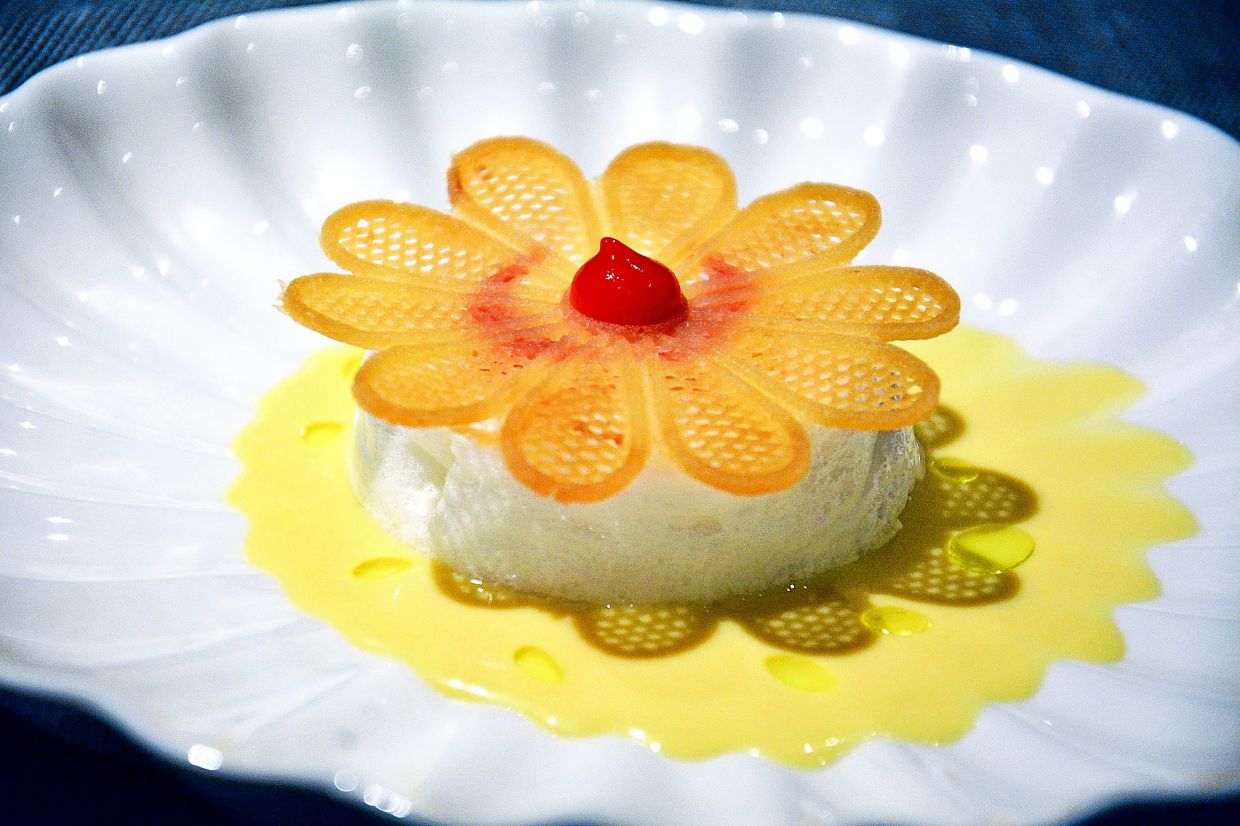
Wrapping up the meal was the orange blossom dessert with passion fruit and jalapeno, crowned with a flower-shaped honey-and-sugar tuile with honeycomb pattern across its petals.
With a souffle-like lightness made from whipped egg whites, the dessert offered a delicate citrusy sweetness balanced by the crisp tuile.
It was accompanied by Oremus Tokaji Aszu 3 Puttonyos, a Hungarian dessert wine with notes of apricot and pineapple that provided a decadent finish.
To conclude the evening, guests were treated to bergamot candy and nougat.
During his residency, Coulombeau also collaborated with Malaysia Airlines where members enjoyed dining privileges.
SABAYON, EQ Kuala Lumpur, Equatorial Plaza, Jalan Sultan Ismail, Kuala Lumpur
(Tel: 03-2789 7839). WhatsApp 012-583 5319. Business hours: 6.30pm-11pm (Monday-Saturday).
This is the writer’s personal observation and is not an endorsement by StarMetro.