Human Writes: Where’s the urgency for climate change action in Malaysia?


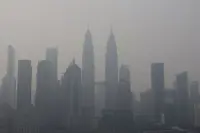
As recently as 2019, Malaysia built a new coal-fired plant while the rest of the world is turning away from this most polluting of energy sources. — AP

As we step into 2021, we face crunch time for climate action. We have less than a decade left to achieve the massive global goal of halving carbon dioxide emissions by 2030 (relative to 2010).

If not, we risk global temperatures rising above 2°C – beyond which, scientists warn, climate change may be irreversible and catastrophic. We’ve already had the five warmest years on record in the last decade, as well as record wildfires, droughts, hurricanes and storms. Plus, polar ice is melting faster than anticipated.

There has been progress in some countries and some areas. Renewable energy – solar and wind – are now the cheapest energy, a big step forward. But overall, we’re limping not running forward.

Malaysia has barely begun the energy transition to renewables: solar makes up just 0.4% of our energy mix. We are still stuck on coal, the most polluting fuel there is, which comprised 58% of the peninsula’s energy mix in 2018. We even built a new coal plant in 2019 – in Jimah, Negri Sembilan.

Malaysia ranks near the bottom in the global Climate Change Performance Index, which compares climate protection performances of countries that are responsible for 90% of greenhouse gas emissions. In 2021, Malaysia dropped down to 56th place, to the bottom 10 nations. (By comparison, our neighbours Indonesia and Thailand did much better, in 24th and 26th place.)

Where is our action and urgency on the issue? Do you see climate laws being tabled or politicians pushing for this?

One obvious indicator is that we no longer have a ministry with "climate change" in the title (the former “Energy, Science, Technology, Environment & Climate Change Ministry”), points out Nithi Nesadurai, president of the Environmental Protection Society Malaysia. “Climate change” was dropped from the ministry's title.

Malaysia has made a commitment to reduce its emissions by 45% by 2030, relative to 2005 levels. A lot needs to be done to achieve this, says climate expert Renard Siew.

A Climate Change Act was previously discussed but we have no official plans or timelines on this, he says. The Act should require mandatory reporting on carbon emissions. “You can’t manage what you don’t measure, ” he says.

Perhaps what is most critical is reforming the energy sector. We almost completely depend on fossil fuels, while transitioning to renewable energy is complex and takes time. And we need to address our high “reserve margin” excess of 48%.

“We produce much more electricity than we need. Even so, embarrassingly, there are pockets of communities which do not have access to electricity, ” says Nesadurai. Disappointingly, the government recently cancelled reform plans under MyPower, an agency under the Energy Commission.

Nesadurai suggests we should also:

  • Remove subsidies for fossil fuels to create a level playing field for renewable energy.
  • Encourage the use of public transport and create bicycle lanes.
  • Transform the agriculture sector so it is based on regenerative agriculture or agroecology (with organic farming as a priority), and use more biofertilisers and nonchemical pesticides rather than agrochemicals.
  • Capture methane from palm oil mills and solid waste dumpsites and convert it to energy.
  • Convert biomass from oil palm plantations into energy.

We also need to protect forests, peatland and mangroves as they act as carbon sinks, ie, they absorb carbon. This requires engaging with state governments who view forests as a resource for income and can easily degazette “protected” areas.

Orang Asli communities are fighting several state governments to save their land. In Selangor, the state government wants to degazette their land in Kuala Langat for development, while Perak has dismissed the concept of “ancestral lands” over a dispute in Gerik. Several communities are fighting encroachment on their land in Pahang while quarrying in Nilai, Negri Sembilan, has caused problems.

Forest statistics for Malaysia include palm oil and timber plantations. But how can we compare such monocultures with the rich mega-biodiversity of rainforests? There is an urgent need for transparency in this field.

“There does not appear to be political will to seriously address climate change. The irony is that taking action will benefit the economy and mitigate against risks to the country and economy, ” says Nesadurai.

He says an institutional framework is needed so climate change is mainstreamed at all levels of government and considered in all decision-making.

The planet is at a climate crossroads now. Scientists have said that ideally we should cap the temperature rise at 1.5°C and emissions should peak by 2020. Right now, the planet is heading towards a 3°C rise – in other words, catastrophe. So we need immediate, strong political action to reverse this calamitous course. I just hope we act before it is too late.


Human Writes columnist Mangai Balasegaram writes mostly on health but also delves into anything on being human. She has worked with international public health bodies and has a Masters in public health. Write to her at lifestyle@thestar.com.my. The views expressed here are entirely the writer's own.

Get 20% OFF The Star Digital Access

Monthly Plan

RM 13.90/month

RM 11.12/month

Billed as RM 11.12 for the 1st month, RM 13.90 thereafter.

Best Value

Annual Plan

RM 12.33/month

RM 9.87/month

Billed as RM 118.40 for the 1st year, RM 148 thereafter.

Follow us on our official WhatsApp channel for breaking news alerts and key updates!

Next In Living

Heart And Soul: Hit film 'Dear You' evokes an overwhelming emotional response
Lonely end for race track: 132-year-old Aqueduct runs its last race
How this Malaysian couple helps clean up hoarder homes
Why hoarding disorder deserves more understanding in Malaysia
This mental trick may help you get more exercise
China's bull wrestlers fight to keep the centuries-old tradition alive
How to spot hidden price increases or 'shrinkflation'
Feeling drowsy at your desk? A 5 minute stroll will perk you up
What’s in your dog’s food? How to make sure your pet is getting quality meals
'Dutch sashimi': Getting the young to swallow herring

Others Also Read