
The man who just took charge of the top tourist attraction in Rome, Italy wants to set the record straight: the Colosseum won’t be hosting any electronic dance music parties on his watch.
Simone Quilici, director of the Archaeological Park of the Colosseum, shared his plan to bring concerts to the almost 2,000-year-old amphitheatre in an interview with an Italian newspaper in early October, and social media proceeded to do what it all too often does.
“Massive raves” were imminent, multiple accounts trumpeted alongside AI-generated images of multicolour light beams shooting from the arena into the heavens.
Quilici told The Associated Press that he heard complaints from archaeologists and ordinary Romans, dismayed their cultural heritage could be so desecrated.
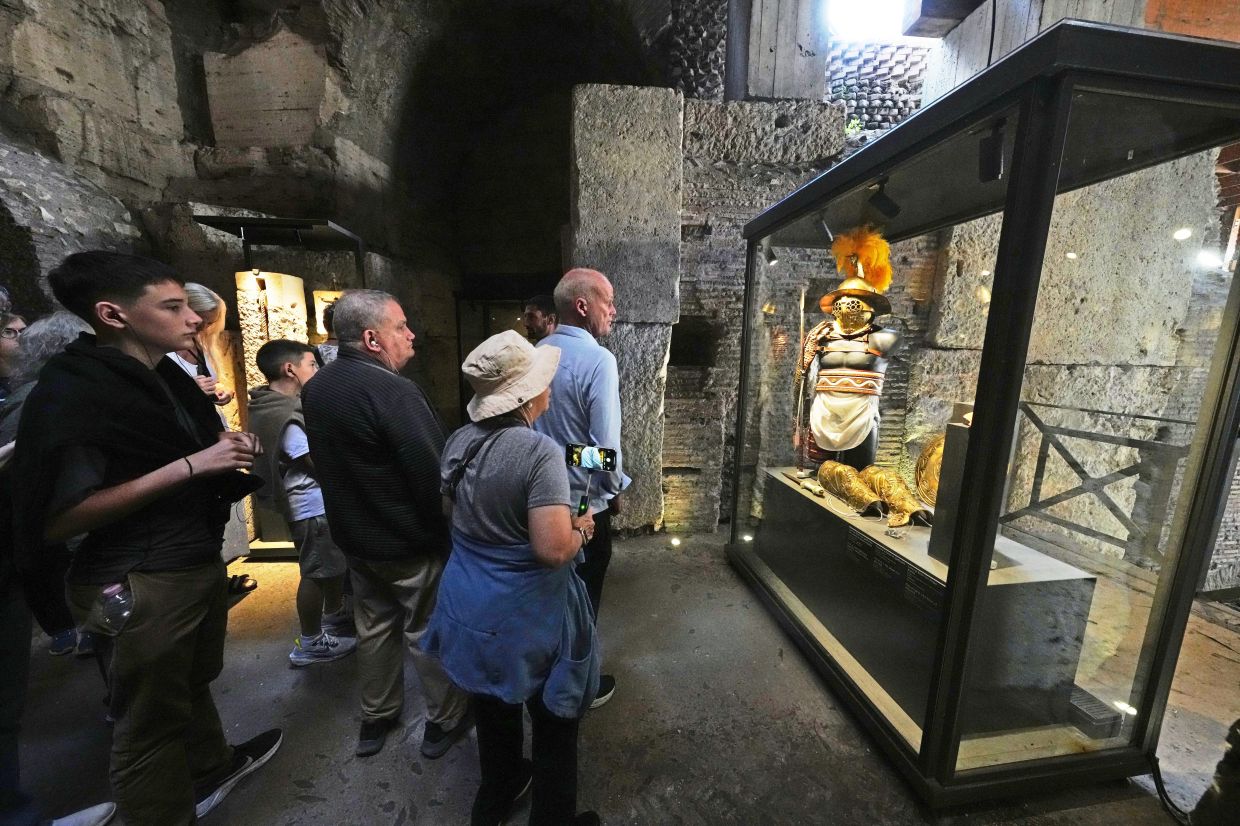
Even electronic music fans expressed concern online about the damage a whomping bass beat would inflict on an ancient structure that continues yielding new wonders, like the emperor’s secret passage that opened on Oct 27.
Concerts must respect the Colosseum as a “sacred space”, Quilici said, as it is integral to Roman identity and has become imbued with religious significance. Today, it is the site of the Via Crucis (Way of the Cross) procession during Easter, traditionally presided over by the pope.
“The music must be carefully controlled. I mentioned certain artists – not by accident – who haven’t been ‘rock’ for some time, who play calm music and attract a calm audience, because the important thing is that it’s not a wild crowd,” Quilici, 55, said recently in his first interview with foreign media since taking over on Oct 20.
“I joked about rock in moderation – that’s what I meant, a more subdued kind of music. But it was reported the opposite of what I said.”
Concerts could be acoustic or jazz, he said, offering Sting as an example. The amphitheatre could host poetry readings, dance performances and theatre productions once the existing small platform is expanded. Also in the plans: historical re-enactments of gladiatorial battles rooted in academic research.
“There are people who are extremely knowledgeable about daily life in past eras, with a remarkable level of scientific accuracy. So these activities are very welcome within the Colosseum park,” Quilici said. He stressed such presentations would be the antithesis of the shabbily costumed centurions who besiege the Colosseum by night, posing for photos with tourists and then harassing them for payment.
The Colosseum’s first concerts and performances will take place in no less than two years, he added.
Only a handful of concerts have taken place within the Colosseum over the years, including Ray Charles in 2002, Paul McCartney in 2003 and Andrea Bocelli in 2009. All were billed as special events and audience numbers were severely restricted.
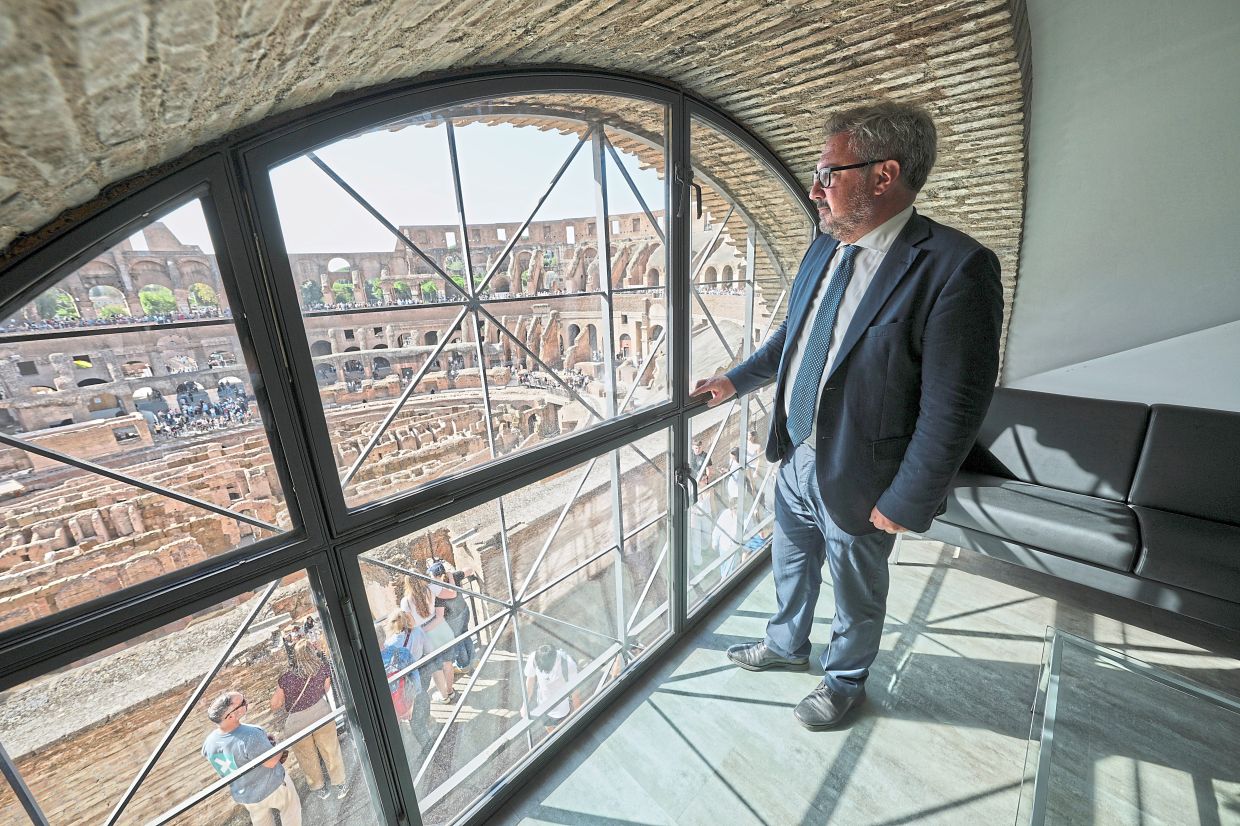
“Unfortunately, as everyone knows, tourism is a commercial activity – an industry that does not always connect with culture,” he said on the Colosseum’s uppermost balcony. “Bringing cultural activities into the mix would enrich this place, making it not only a site to visit, but also a place where one can experience and enjoy artistic events.”
Visit other ruins
Peering down into the arena’s ruins from high above, the bustle of tourists brings to mind the cross-section of an anthill. The Colosseum had almost nine million visitors last year, up from seven million the year before, according to data provided by the park.
Even in October, well outside the high tourist season of summer, the place was packed.
That’s partly due to the Vatican’s Jubilee year, held once every quarter-century, which continues to draw large tour groups of pilgrims. It’s also because the Colosseum is one of just two must-see spots for short-staying tourists, along with Vatican City, and “already is at maximum capacity”, Quilici said.
Therein lies the other great ambition for his tenure: inducing tourists to go elsewhere.
The park he oversees includes not just the Colosseum, but also other sites directly adjacent like the Roman Forum, which was the heart of the ancient city’s society, and Palatine Hill, where Rome was founded and the emperor’s palace is located.
Tickets lasting 24 hours include all three destinations. Still, one-third of buyers visit only the Colosseum, according to park data.
If Rome’s an open-air museum, as is often said, that’s like catching a glimpse of Leonardo da Vinci’s Mona Lisa through the crowd at the Louvre, then leaving without even looking at the other masterpieces in the room.
“Last year, tourists in Rome didn’t stay just two-and-a-half days; their visits increased to four days. So there’s also the opportunity to use the Colosseum as a starting point for exploring less-visited places,” he said.
Likewise, relatively few visitors go to the nearby Circus Maximus, the sprawling grounds of Rome’s high-adrenaline chariot races, depicted in the 1959 film Ben-Hur.
The Appian Way, known as “the queen of roads”, goes even more overlooked, despite becoming a Unesco World Heritage Site last year. Its giant paving stones provide passage into a golden countryside that evokes long-gone centuries and provides welcome respite from Rome’s tourist-thronged centre.
Both the Circus Maximus and the Appian Park, which Quilici administered before the Colosseum, are free to visit.
All these sites and more are near to one another, though somewhat disjointed – archaeological islands mostly separated by busy roads. Quilici hopes to create new access points to his park as well as connections with others to better manage the crowds and establish one consolidated area for exploration and discovery.
“It’s a collective effort, one that requires cooperation from all the different administrations,” he said.
“However, it’s more a matter of management than of infrastructure costs. Choices that sometimes can be simple decisions like limiting traffic – not necessarily involving major expenses, but rather a courageous choice to restore life to the heart of the city of Rome.” – AP