
Wild animals are elusive, but there is a great chance of stumbling onto many of them when you go hiking after a downpour.
Most amphibians and reptiles go into a state of minimal activity and metabolic depression when it is dry; a bout of heavy rain sends them scampering out again. Your hiking trip then also becomes a herping trip.
Herping is the hobby of searching for reptiles and amphibians, like birdwatching.
This is a slang among both professional and amateur herpetologists, and they label themselves as herpers too.
Reptiles and amphibians are a source of food for animals higher up the food chain, so when they appear after the rain, so do their predators. That means a greater chance of spotting those wildlife too.
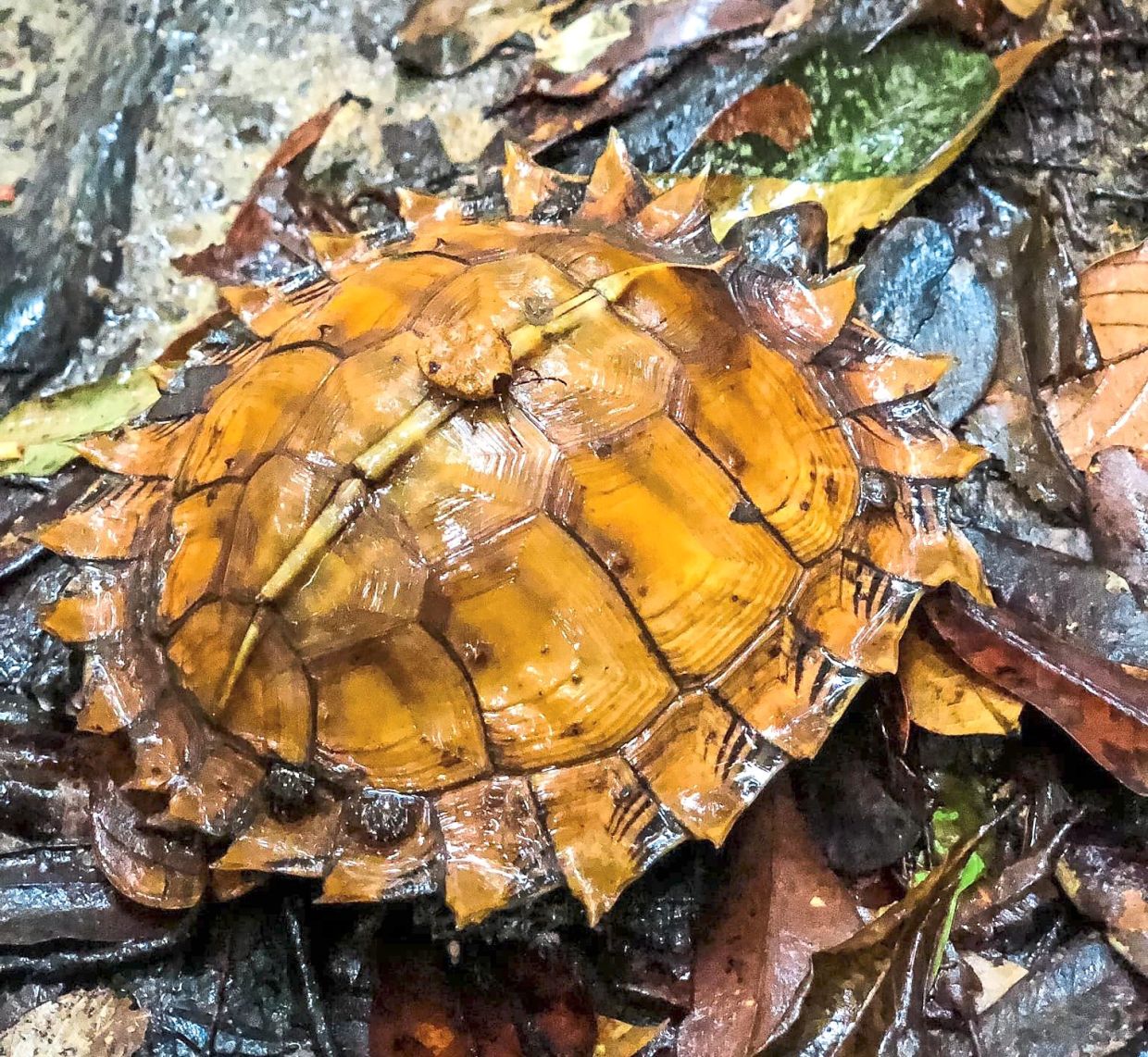
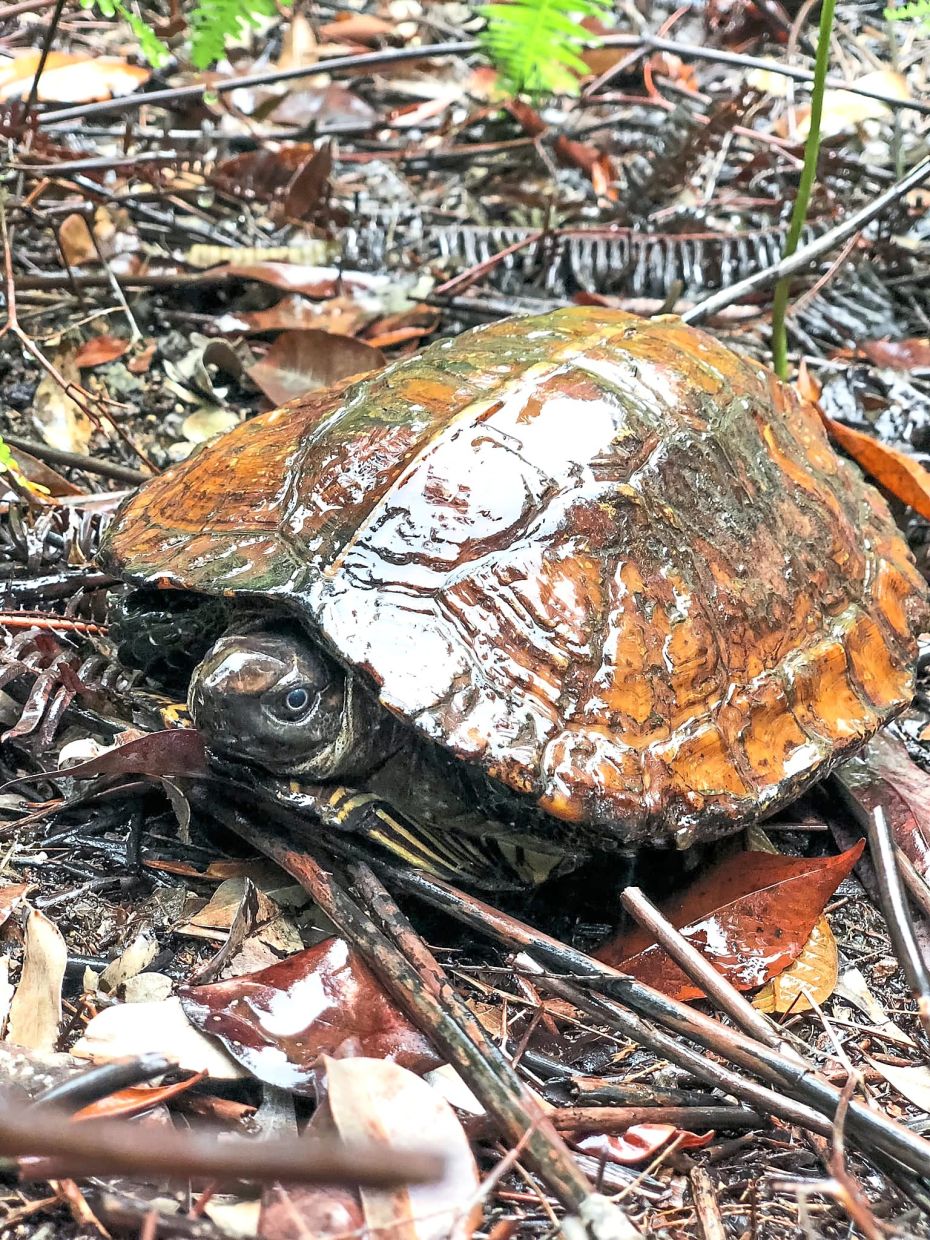
If you are at least 500m above sea level, you may come across the spiny turtle (Heosemys spinosa), which are more numerous on the northern side of the Penang Hill range.
Young spiny turtles are delightful finds because their shells have sharp, spiky edges. They lose the spikes as they grow. They also have a striking yellow-patterned underbelly and red feet.
The rain stimulates mating behaviour, which is why they are more likely to be seen during wet weather.
Tortoises are rare, though. You can differentiate them from turtles by looking at their limbs. Turtles have webbed, clawed feet while tortoises have club-like forelegs and elephantine (or cylindrical) hind limbs.
No hiker wants to run into an angry snake while going through the thick brush, but we cross paths with these long, slithery creatures more often than we wish. Here’s one more detail about them – they are shy.
Still, one must be cautious. Should you surprise a snake and it shifts its position to face you, move back slowly and off to the side.
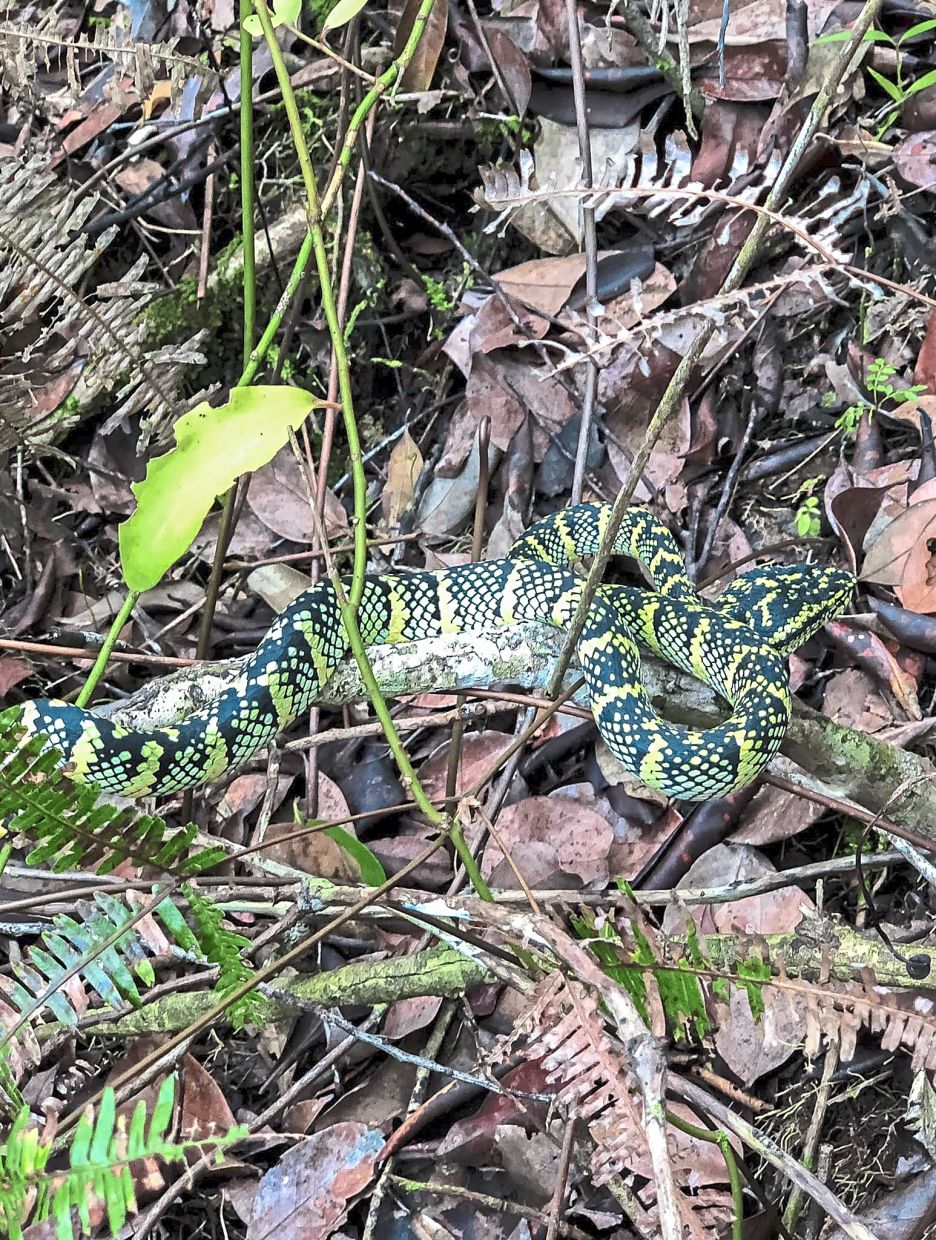
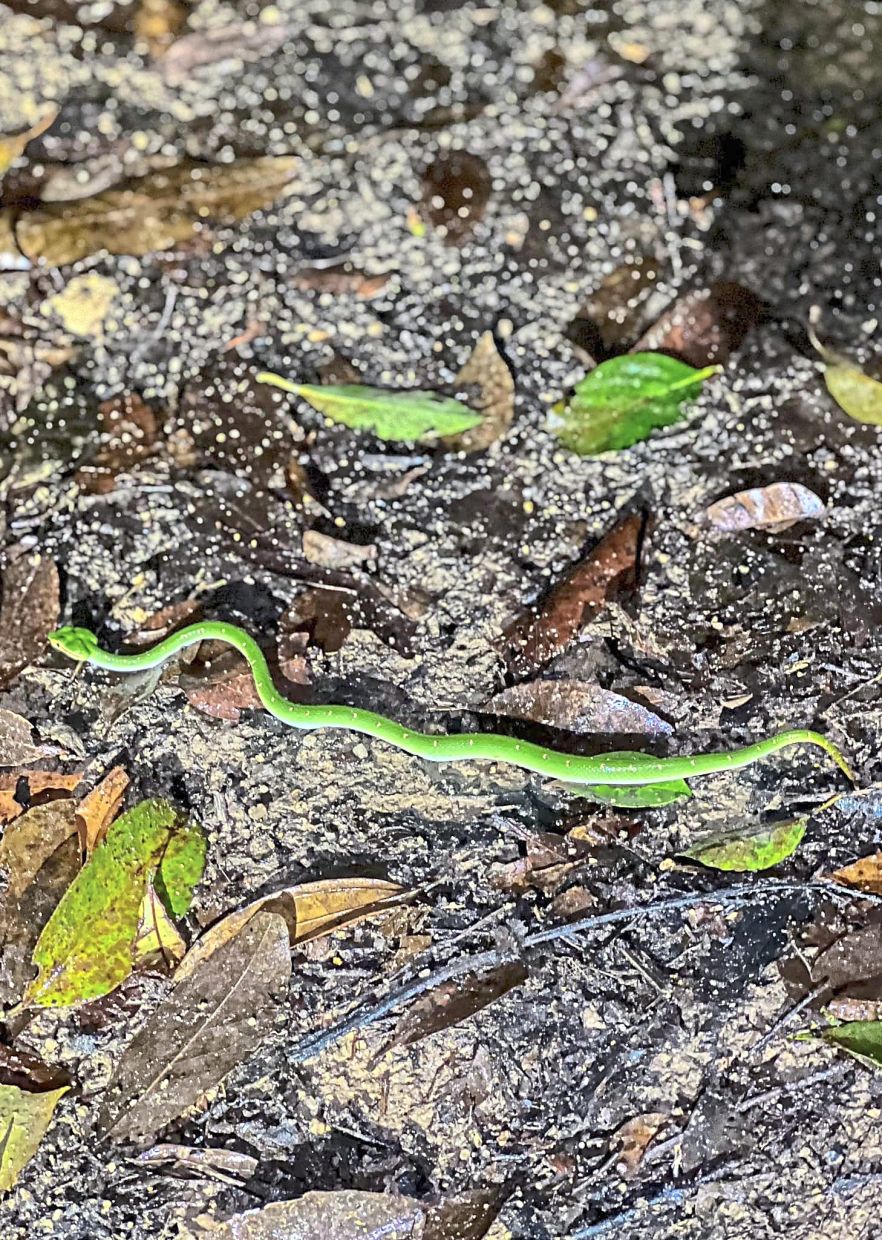
The Wagler’s pit viper (Tropidolaemus wagleri) is venomous. The males and females look different, something known as dimorphism. Females have brilliant black and yellow striations, while the males are plain green with small white and red dots and are many times smaller.
Coral snakes, despite their name, are not found among sea corals but in the uplands.
The banded Malayan coral snake (Calliophis intestinalis) is a small and venomous snake that preys on smaller snakes. They are known for their single, bright orange vertebral stripes. You can’t miss them as they slither along the dull, brown leaf litter.
They are shorter than a shoelace but thicker. They hardly bite us “gigantic” humans, but do not test them because, although their store of venom is so little, it will still hurt.
The keeled rat snake (Ptyas carinata) is another common snake along the trails. While non-venomous, they are often mistaken for the deadly king cobra (Ophiophagus hannah) due to their large size and similar brownish grey colouration, plus the ability to menacingly flare their head.
But this species can be easily differentiated from the cobra by its checkered pattern towards the tail section.
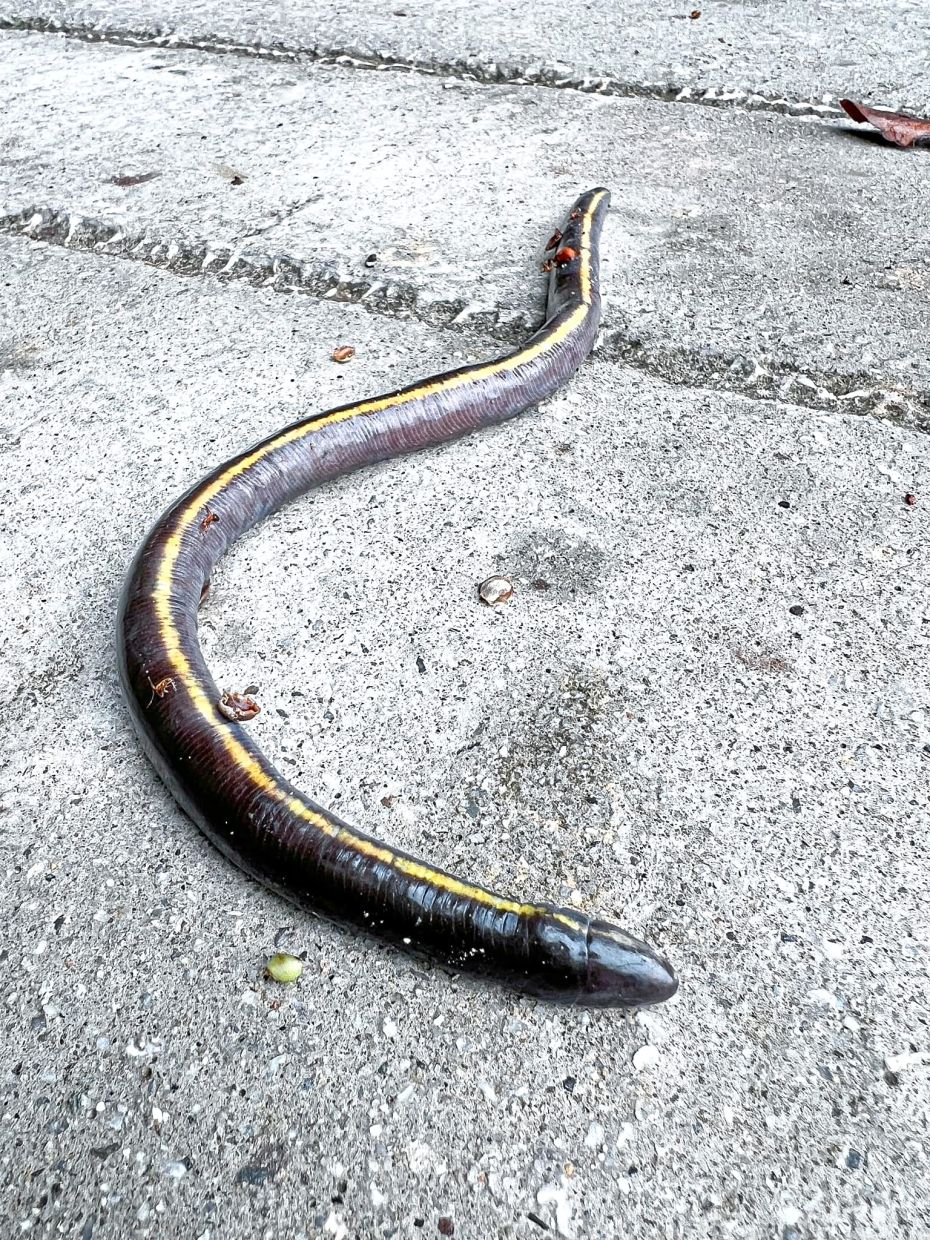
One may get confused when looking at the yellow-striped caecilian (Ichthyophis) because it looks like a cross between a snake and an earthworm. The difference is that a caecilian – a limbless amphibian – is much larger than an earthworm and has a pair of eyes, like snakes.
Compared to a snake, the caecilian is way shorter and has moist skin instead of scales. These are hard to spot as they live underground and only surface after dark.
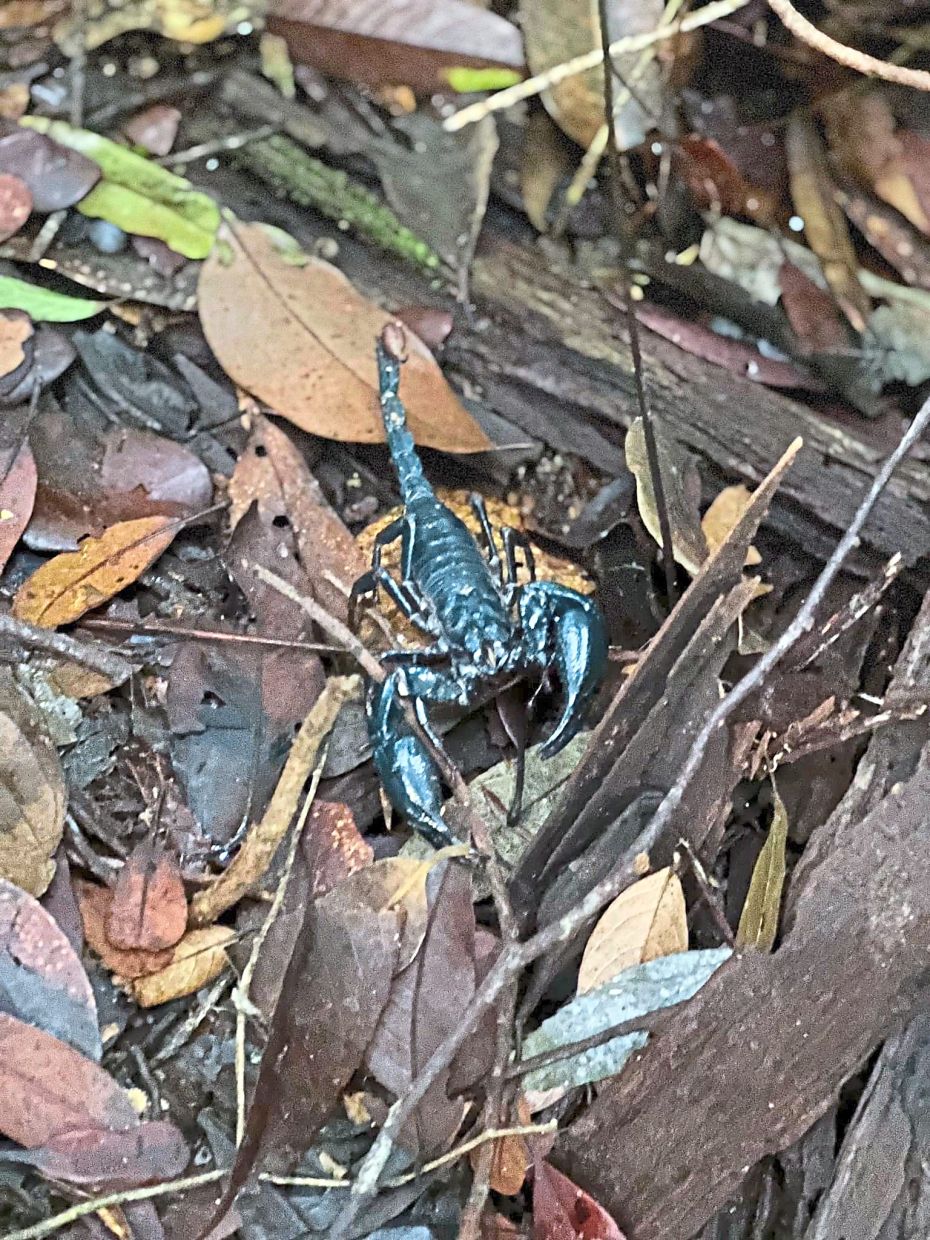
The giant blue scorpion or Asian forest scorpion (Heterometrus Spinifer) can be found anywhere on the hills and has a distinct blue hue that glows under moonlight.
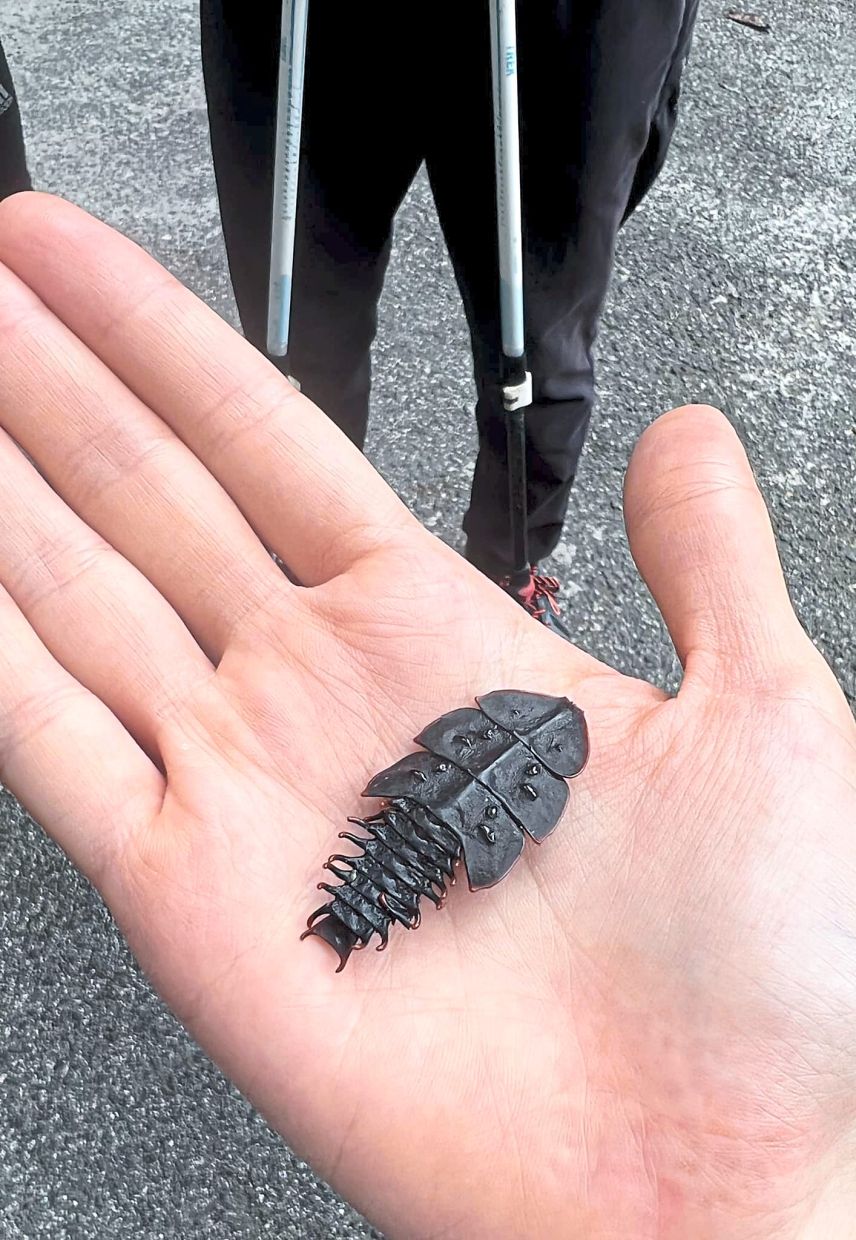
Then comes the trilobite (Platerodrilus sp.) looking like something that popped right out a fossil stone. The female and larvae have flat arrow shaped heads, with spiny sections all the way to the tail.
The males are much smaller and do not look anything like the female and larvae. What more, they can fly.
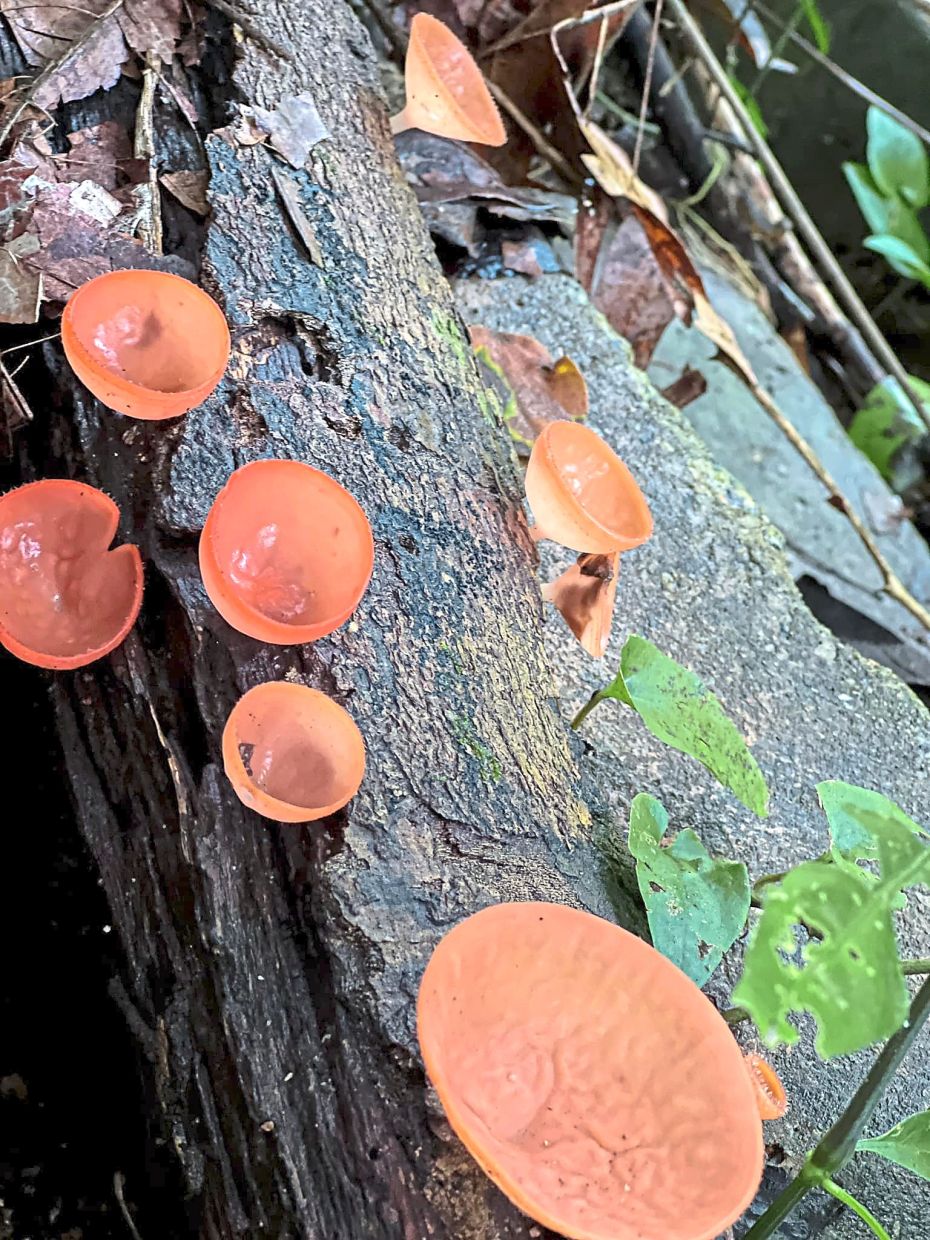
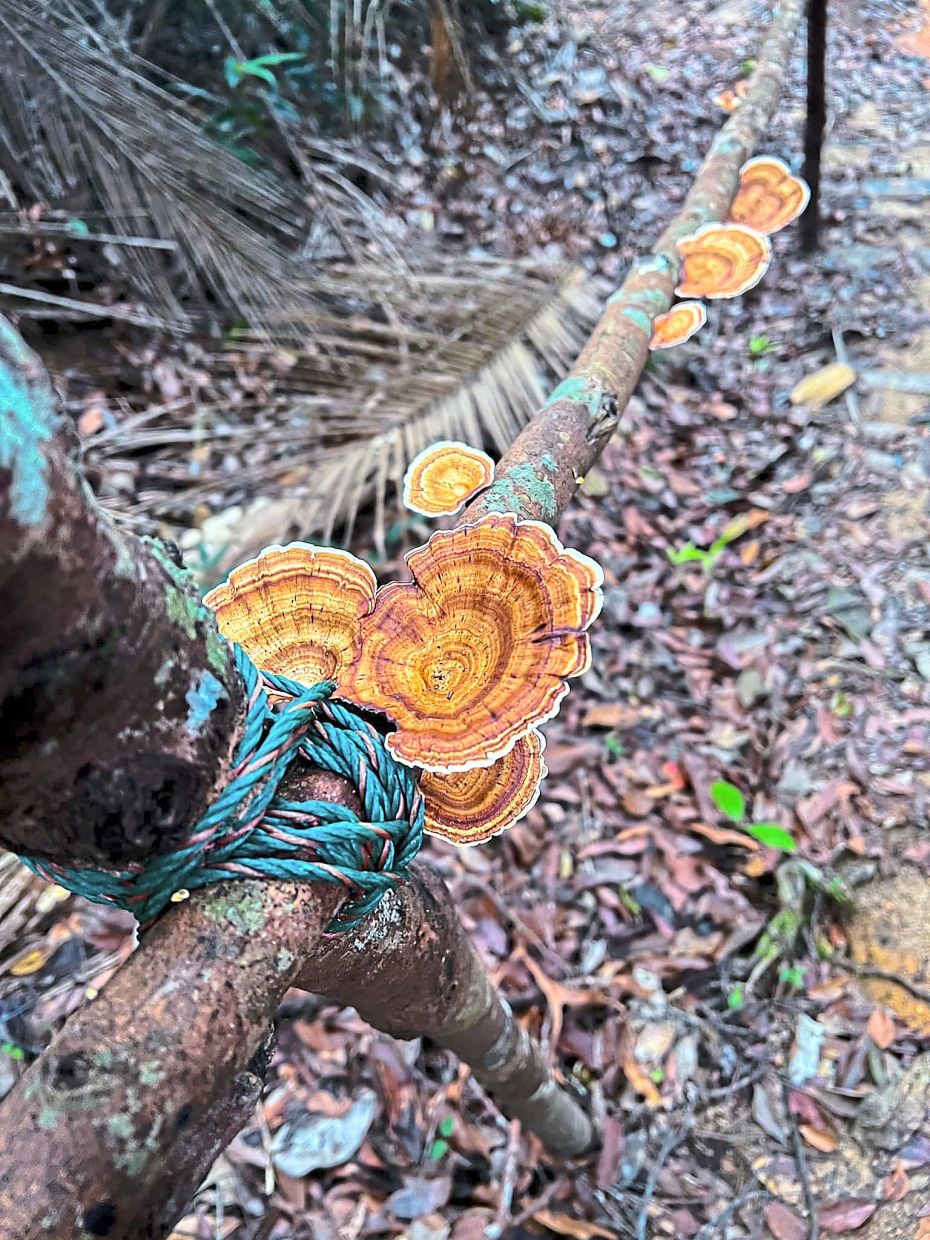
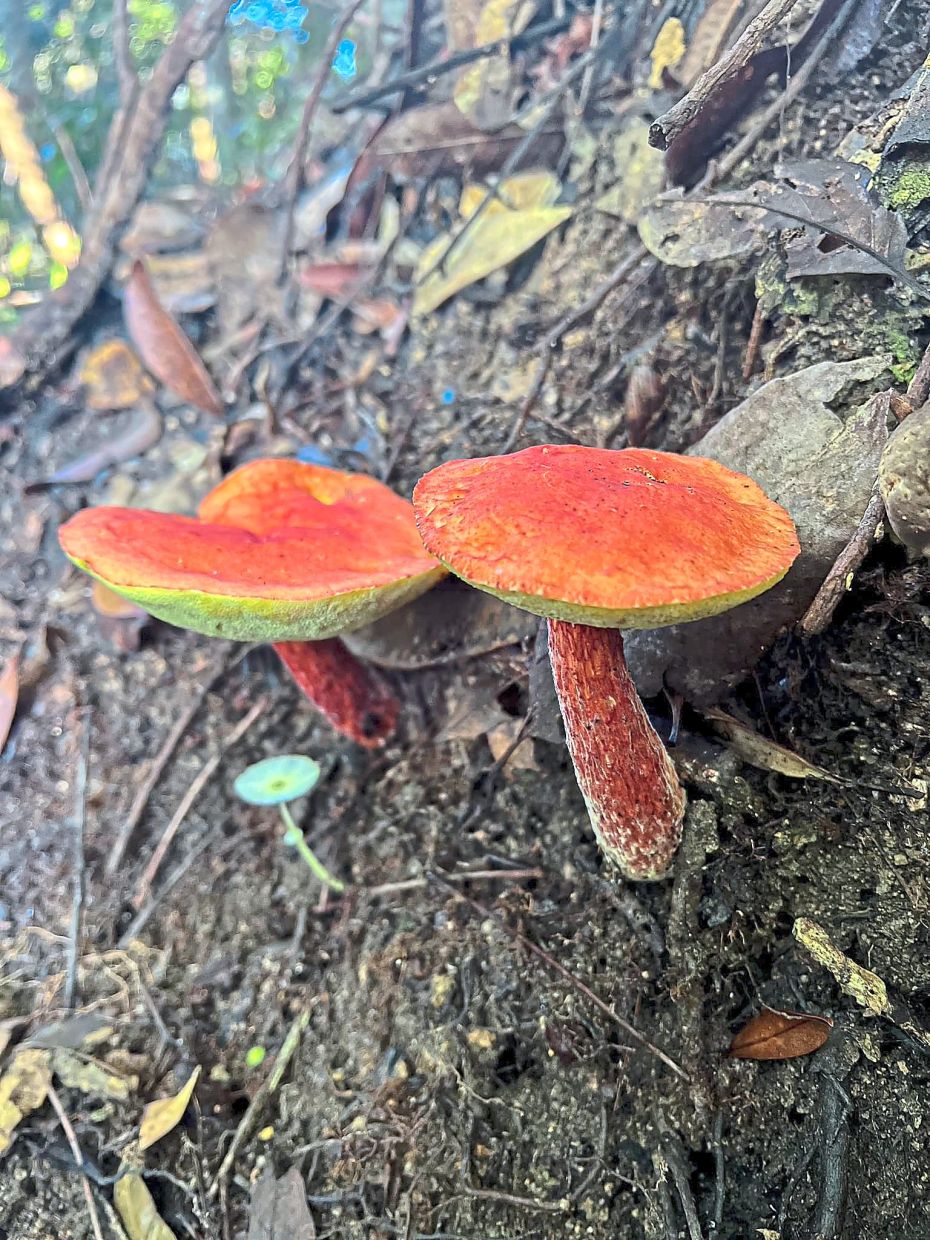
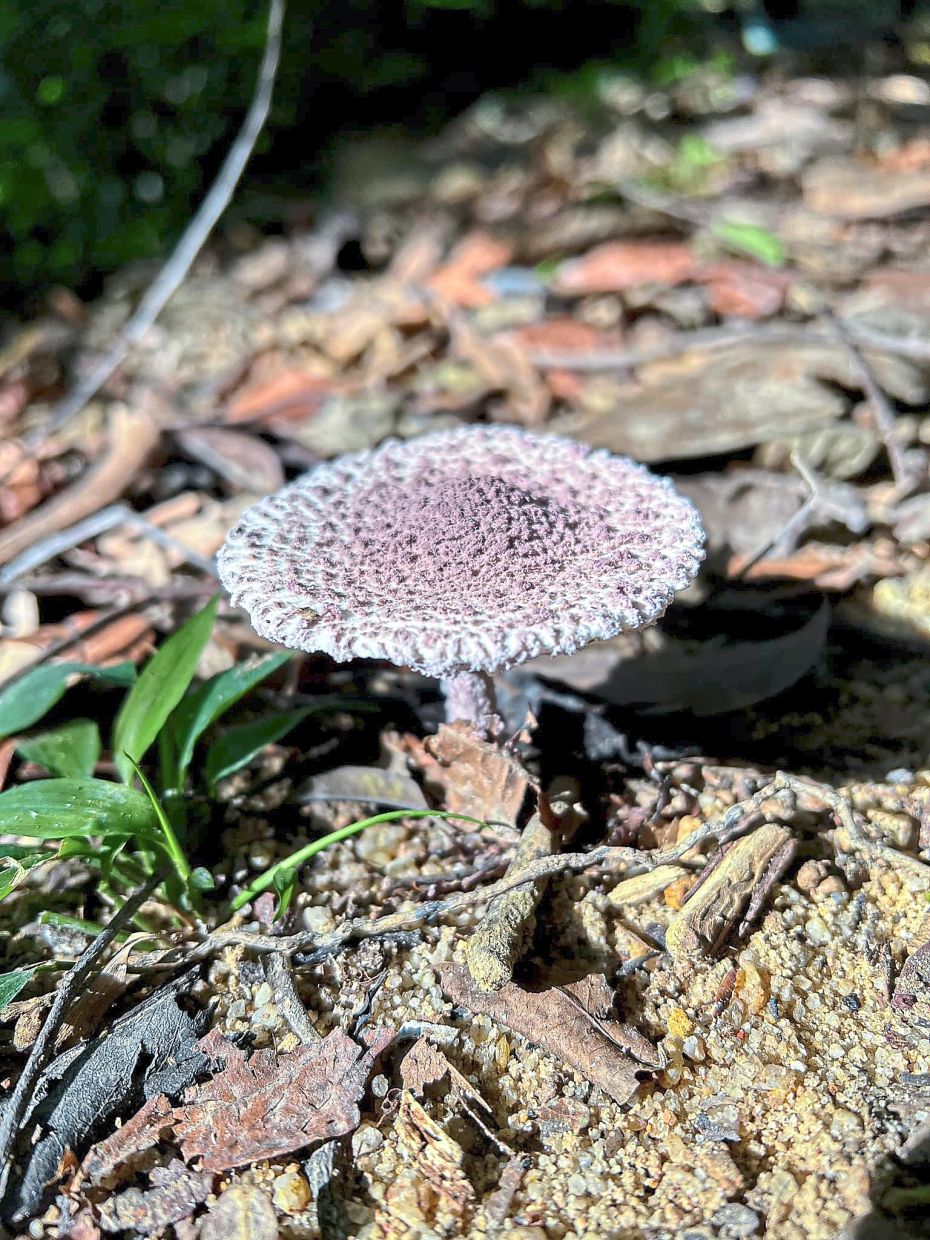
Always have your camera ready and start mushroom-hunting as trillions of mushrooms will sprout after it rains. By morning, fresh mushrooms in all shapes, colour and sizes will appear.
As attractive as they are, avoid touching them as you may risk accidentally ingesting toxins.
Also, never be fooled by the cute antics of long-tailed macaques (Macaca Fascicularis). These little monkeys are always on the lookout for the chance to raid your bags for food and may turn aggressive, especially the alpha males.
It is best not to make eye contact with macaques and to maintain your distance if you are alone. If you find yourself confronted by an aggressive macaque, do not run!
Walk normally or stand your ground. If the macaques charge at you, your last resort is to squirt water from your bottle at it. They are afraid of this. Squirting water at feral dogs works too.
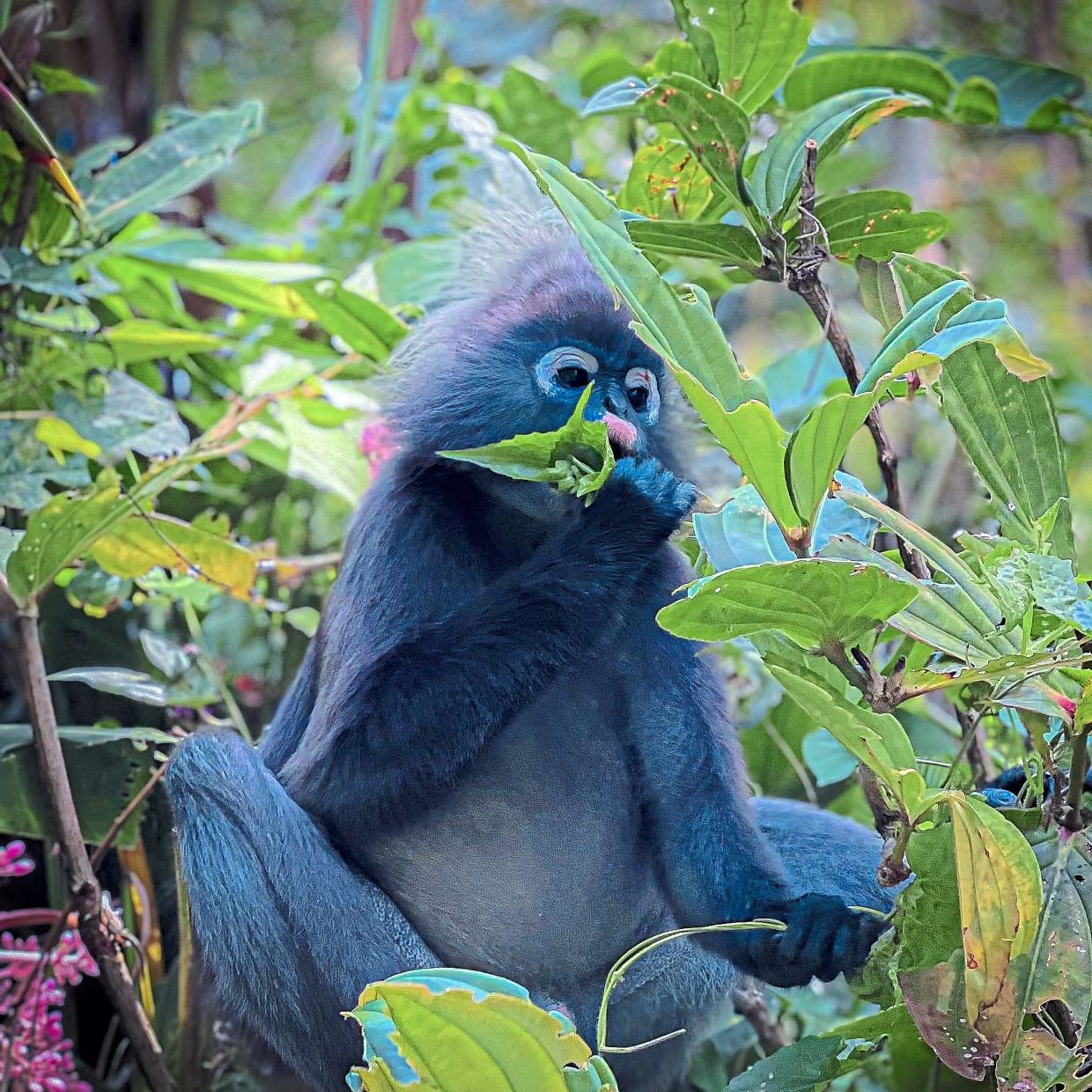
Co-existing with the macaques are the rather shy Cantor’s langur (Trachypithecusobscurus halonifer). Their young have striking orange-golden fur, which turns black as they mature.
They are docile and will tolerate your efforts to photograph them. The white circle patterns around their eyes earned them their other name – the spectacled langur.
Penang Hill has a myriad of wildlife nestled along its trails and trail running requires our utmost attention to the ground we are stepping on, so it is easy to spot critters.
Already a subscriber? Log in
Get 20% OFF The Star Digital Access
Cancel anytime. Ad-free. Unlimited access with perks.
Gallery
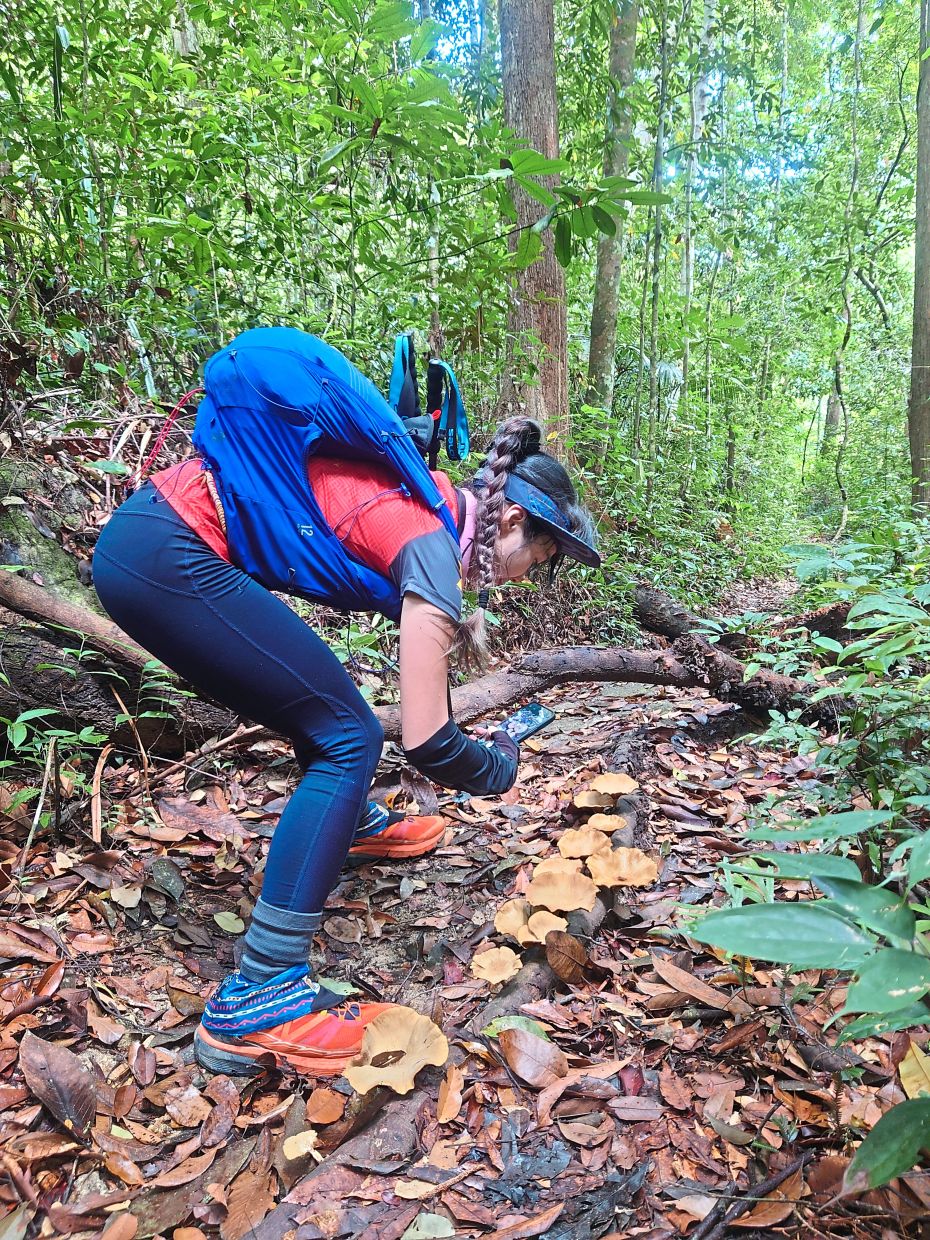
The writer pausing during her hike on the Penang Hill range to take a close-up picture of mushrooms sprouting out of a log.
The giant blue scorpion’s coloration glows under the moonlight.
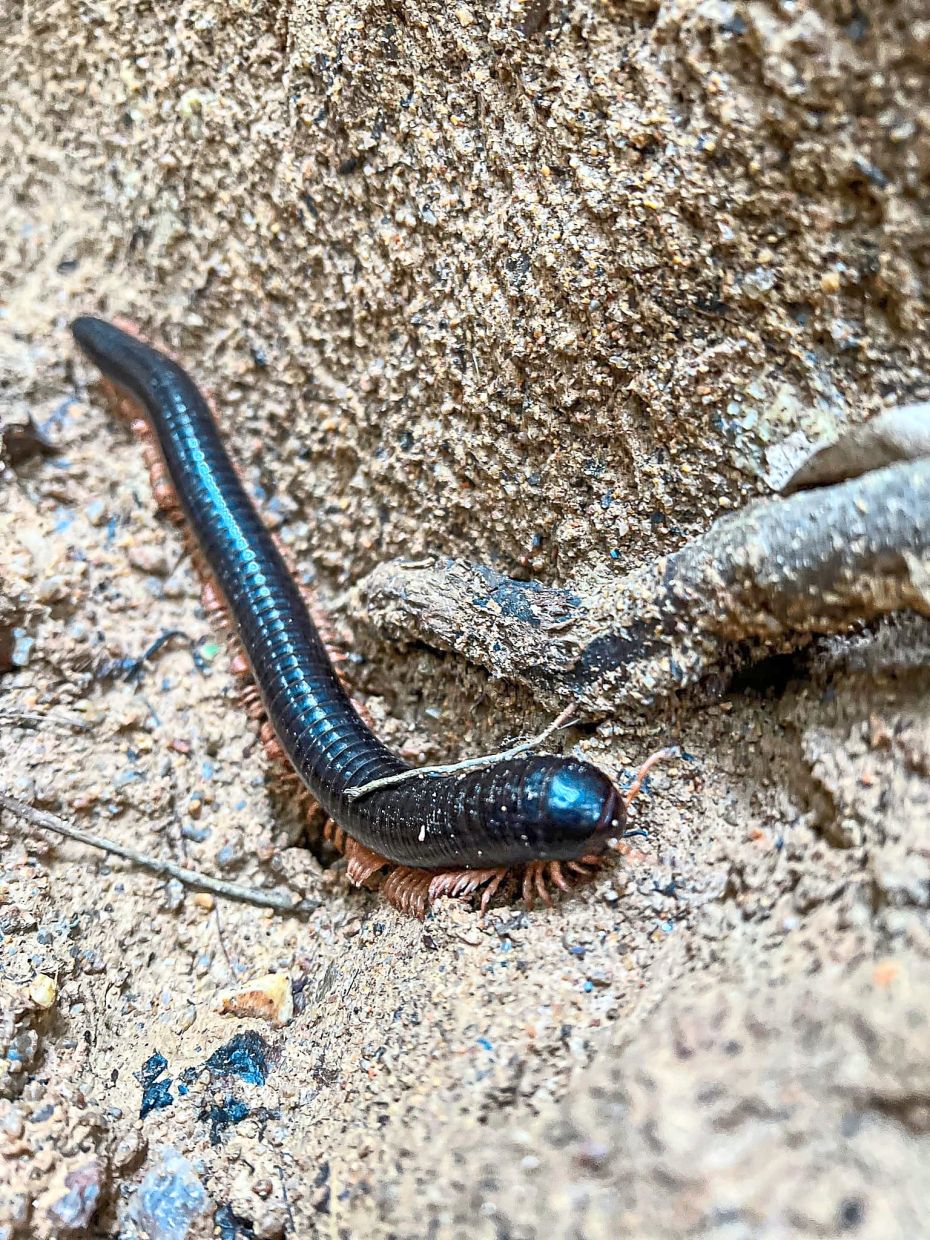
A giant millipede slithers its way through the forest.
Dead caecilian
A dazzling variety of mushrooms sprout along hiking trails to satisfy shutterbugs.
A dazzling variety of mushrooms sprout along hiking trails to satisfy shutterbugs.
Cantor’s langur, also called the spectacled langur, is rather shy.
The shell of a spiny turtle loses its ring of spikes when it reaches adulthood.
A dazzling variety of mushrooms sprout along hiking trails to satisfy shutterbugs.
A venomous female Wagler’s pit viper.
Male Wagler's Pit Viper
A trilobite